In Brief
- The WHO suspect the hantavirus has spread through human-to-human contact aboard the MV Hondius.
- Human-to-human transmission has only ever been documented for one strain.
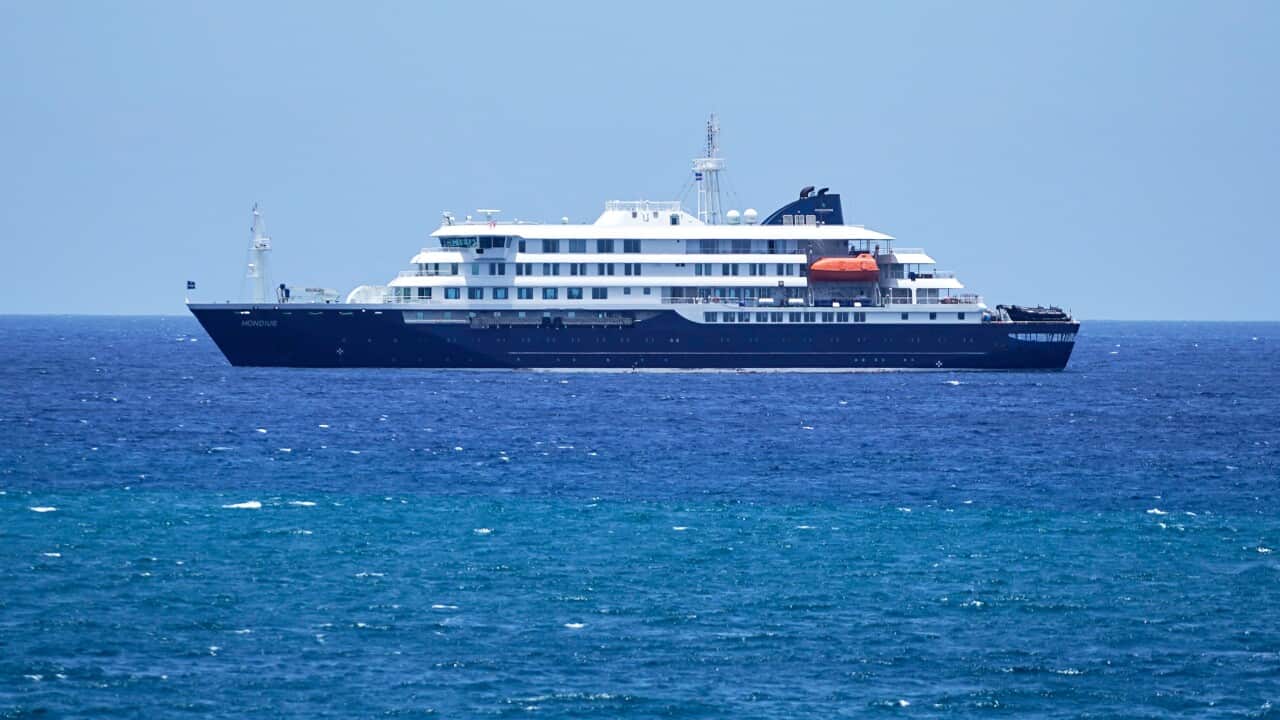
A luxury cruise ship is heading to Spain's Canary Islands after a hantavirus outbreak killed three people and left others critically ill — prompting the World Health Organization (WHO) to confirm something rarely seen: the virus spreading from person to person.
A Dutch couple and a German national have died since the outbreak began in early April. There are seven suspected cases, while 149 people — including four Australians — remain on board.
So what exactly is going on, and how worried should the rest of us be?
Human-to-human contact suspected, says WHO
Hantavirus is a family of viruses carried by rodents, such as mice and rats, that typically spreads to humans through contact with infected droppings, urine or saliva.
News that makes sense
Your trusted source for staying up-to-date with the world around you. Get free daily news updates and analysis, straight to your inbox.
It rarely passes between people.
Human-to-human transmission has only ever been documented for one strain — the Andes strain, which circulates in South America — and even then, only among people in very close, sustained contact.
That's what appears to have happened on the MV Hondius, though laboratory testing to confirm the strain is still underway.
"We do believe that there may be some human-to-human transmission that's happening among the really close contacts, the husband and wife, people who have shared cabins," Maria Van Kerkhove, the director of epidemic and pandemic preparedness and prevention at the WHO, told reporters in Geneva.
The WHO said it had been told there were no rats on board, and that its working assumption was that the Dutch couple — who travelled through Argentina before joining the cruise — were infected before they boarded.
Other cases may have been exposed during shore excursions to remote islands where rodents and seabirds live, which were part of the cruise itinerary.
Dr Renata Muylaert, a disease ecologist and epidemiologist at the University of Sydney, told SBS News: "A plausible scenario is that initial human exposure occurred on land ... followed by person-to-person transmission in the enclosed environment of the ship."
"While this route is way less common, it has been documented for Andes hantavirus and would differ from a direct rodent infestation scenario on board, which is less likely given the ecology of wild reservoir hosts."
Muylaert says confirmation of the strain matters — not just for understanding this outbreak, but for informing biosecurity measures on cruise ships that pass through hantavirus-endemic regions.
Is this another COVID-19 scenario?
Simply put, no.
The idea of human-to-human transmission in a virus not known for it might easily prompt flashbacks to the early days of COVID-19.
But experts say the comparison doesn't hold.
COVID-19 spread so rapidly because it moved easily through the air between strangers, often before anyone knew they were sick.
Hantavirus doesn't work like that. Even the Andes strain — the only one known to pass between people, requires sustained close contact — like sharing a household, or in this case, a cabin.
"Spread between people is very unusual and so wider spread to the public is extremely unlikely," Professor Andrew Pollard of the Oxford Vaccine Group said.
Dr Charlotte Hammer, infectious disease epidemiologist at the University of Cambridge, said the elevated risk sits firmly with those on board.
"The risk to those on the ship is somewhat higher as there is a higher potential for shared exposure or transmission either through human-to-human transmission, which is rare but possible, or through a shared exposure either onboard the ship or during land activities."
Situation 'blown out of proportion', says passenger
The WHO has assessed the risk to the global population as "low", with no evidence of spread beyond the ship and into the wider community.
That's a picture reflected by at least one passenger on board.
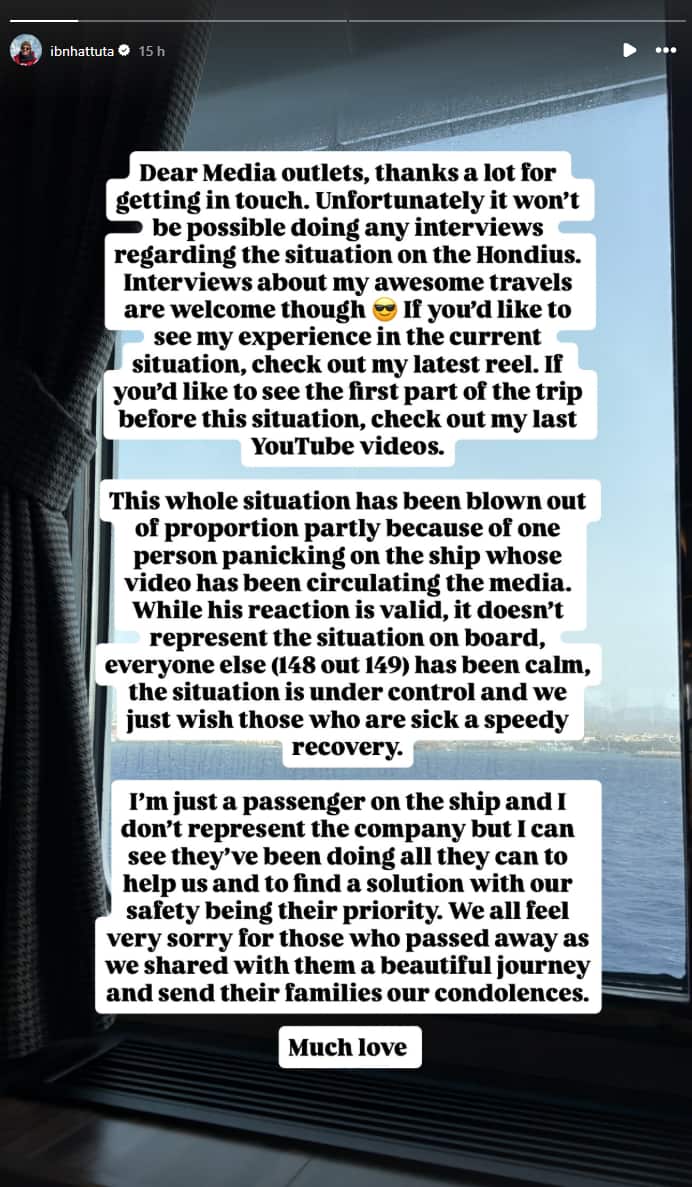
Travel influencer Kasem Hato said the "whole situation has been blown out of proportion", and that calm prevailed among the vast majority of those still on the ship.
"Everyone else (148 out of 149) has been calm, the situation is under control and we just wish those who are sick a speedy recovery," Hato posted on Instagram.
That's in contrast to a tearful plea posted by American travel blogger Jake Rosmarin, also on board, who said: "We're not just headlines: We're people with families, with lives."
Professor of infectious diseases and global health at the University of Sydney, Dr Meru Sheel, says the pandemic at least left a useful legacy: better international coordination.
"Globally, there is an emphasis on a coordinated response and facilitated information sharing across countries," she told SBS News, pointing to the involvement of governments, the WHO and the cruise industry in managing the Hondius situation.
Cape Verde, the ship's intended final destination, refused to allow passengers ashore.
Spain has agreed to receive the vessel, where passengers and crew will be assessed, treated and repatriated.
— With additional reporting by Reuters and Alyssa Chandler.
For the latest from SBS News, download our app and subscribe to our newsletter.







