In brief
- The three-month fuel excise cut is scheduled to end on 30 June.
- Treasurer Jim Chalmers has poured cold water on the idea it could be extended in the upcoming budget.
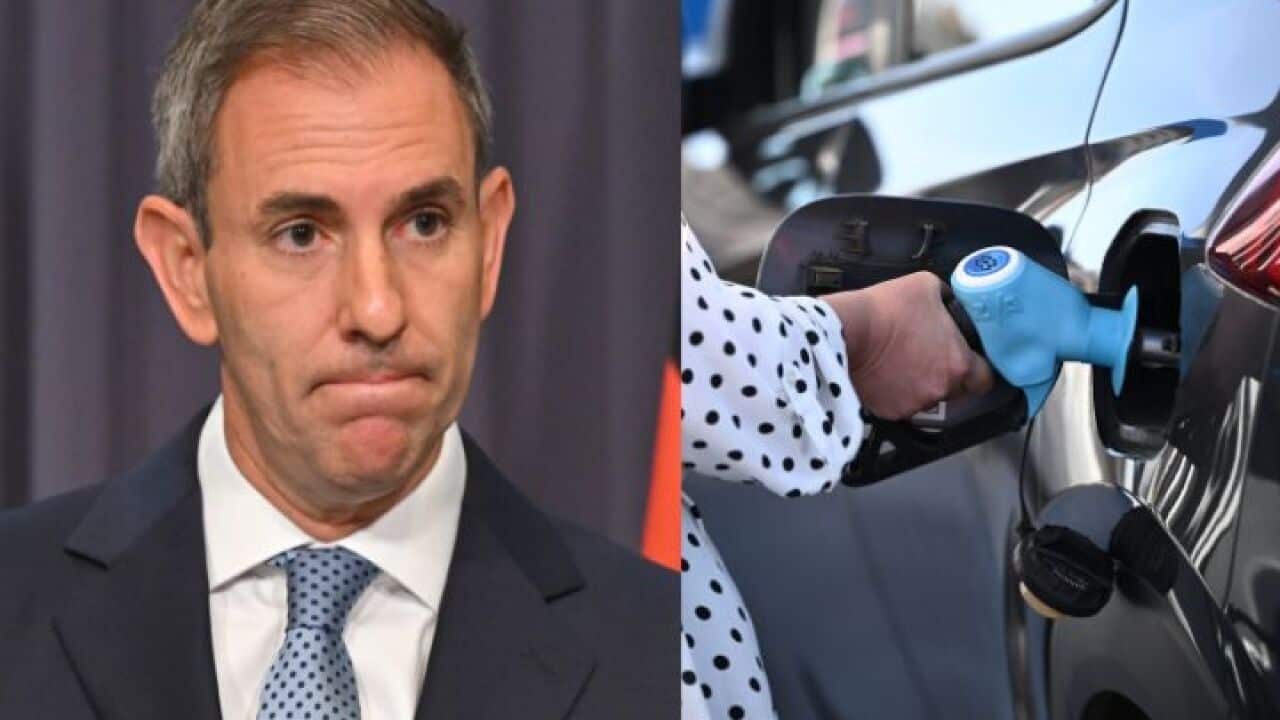
Australians shouldn't expect the reprieve from the fuel excise to be extended in next week's federal budget, with the federal government insisting the measure was always temporary.
And with global oil prices sitting well-elevated, motorists are being warned to brace for more pain at the petrol pump in the coming weeks.
On 30 March, facing public pressure amid soaring fuel costs, the federal government announced it would halve the fuel excise on petrol and diesel for three months to 26.3 cents per litre. The measure is due to end on 30 June.
Amid global volatility prompted by the war in the Middle East, there was speculation the government could extend the reprieve measure past its end date — but on Monday, Treasurer Jim Chalmers appeared to pour cold water over that prospect.
News that makes sense
Your trusted source for staying up-to-date with the world around you. Get free daily news updates and analysis, straight to your inbox.
"People shouldn't expect to see in the Budget [next] Tuesday night an extension of that, because we've made it really clear that it's a temporary thing," he told reporters in Canberra.
"Now, if we get closer towards the end of that three-month period ... obviously we've got a range of contingencies, but people should expect that petrol tax cut will be in the Budget until the end of June."
A government source has confirmed Labor has not ruled out reconsidering extending the excise after the budget, if the price of petrol soars again.
The measure has in the past month soothed costs for consumers faced with soaring bills due to the war, which pushed up fuel prices by 33 per cent, according to Australian Bureau of Statistics figures for March. The data did not factor in the fuel excise.
The average petrol price across the country in the past week was at 183.4 cents per litre, while diesel stood at 254.3 cents, according to the Australian Institute of Petroleum.
That compares to figures from exactly a month ago, when petrol was 240.1 cents per litre and diesel pump prices were 312.7 cents.
However, global oil prices have soared over the last week amid concerns that the war in the Middle East could worsen and lead to a longer disruption in oil supplies.
Global oil benchmark Brent crude futures briefly reached US$126.41 ($175.37) last Thursday, the highest since 9 March 2022, before closing at US$115.98 ($160.9) a barrel.
Australia's regional benchmark, Tapis crude, was trading at US$125 ($173.41) late last week — surpassing highs from previous weeks.
"It's certainly higher than anything we've seen since the conflict in Iran began, which was the previous high of US$121 a barrel," NRMA spokesman Peter Khoury told SBS News.
Khoury says wholesale petrol prices are expected to move up this week — and then onwards to the retail pump price.
"Unfortunately, if these increases are sustained and look like they will be, they will flow on to the wholesale prices, and then that will inevitably be passed on to the unleaded price.
"But we do expect, unfortunately, those [current petrol and diesel] prices will end up going up if the oil prices stay high."
The unpredictability of the geopolitics surrounding the war is also playing a huge part.
Chalmers said the global oil prices were "a real roller coaster".
"You know, it's been at 80 bucks, it's been more than 120 bucks a barrel. And so we are hostage to that volatility when it comes to the impact on fuel prices here and on inflation."
But he said the budget was prepared with "a whole range of contingencies", in preparation for any scenario.
"If the economy deteriorates quicker and worse than what we're anticipating in the budget, of course, we will consider our options at that point, but there is cost of living relief in the budget."
States and territories have moved to shore up supply, vowing to introduce fresh legislation to crack down on misreporting fuel prices and petrol hoarding.
In NSW, the state government says it will introduce draft laws to place larger fines on service stations that fail to report a price for fuel or fail to notify if a type of fuel becomes unavailable.
In South Australia, the government is introducing laws which would, among other things, allow on‑the‑spot fines for people who breach rationing rules.
For the latest from SBS News, download our app and subscribe to our newsletter.







