In Brief
- Experts warn that the disruption in the Strait of Hormuz won't return to normal quickly, even with a diplomatic resolution.
- Ships have been deterred from entering the strait first because of insurance costs and then safety fears.
Over three weeks into a conflict that United States President Donald Trump initially promised would be a "little excursion", there is still no clear end in sight for the war in the Middle East.
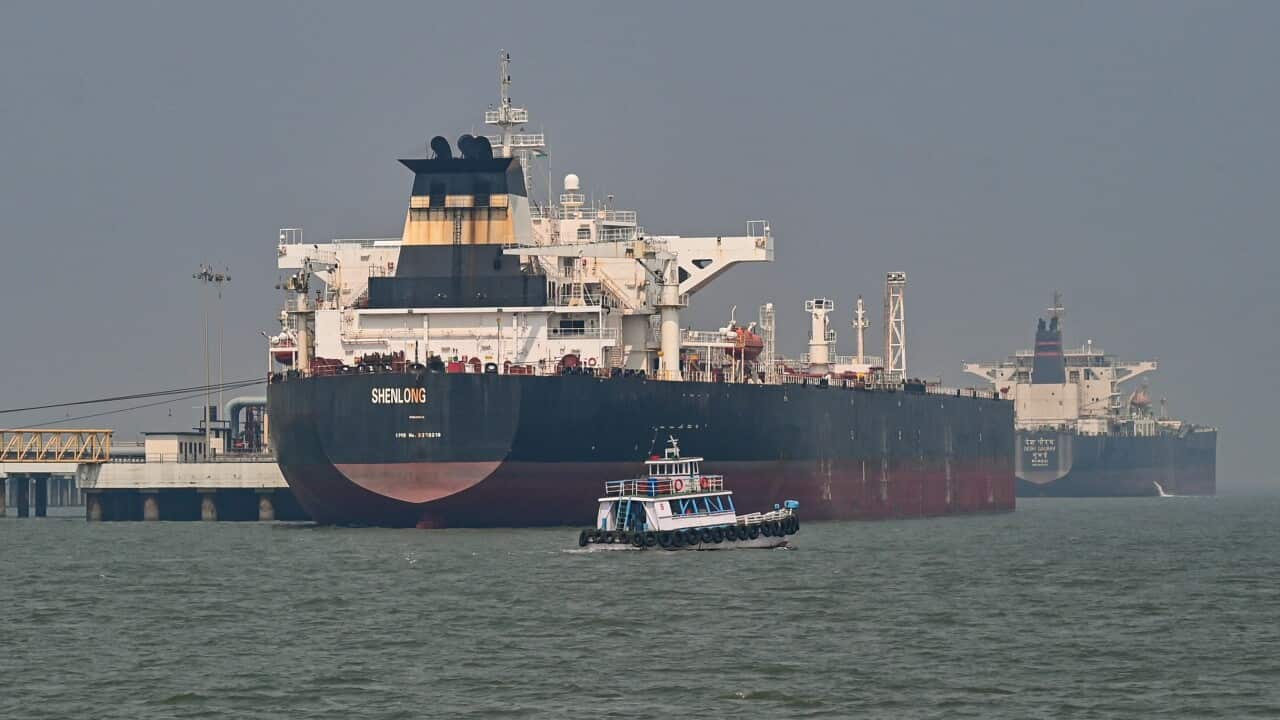
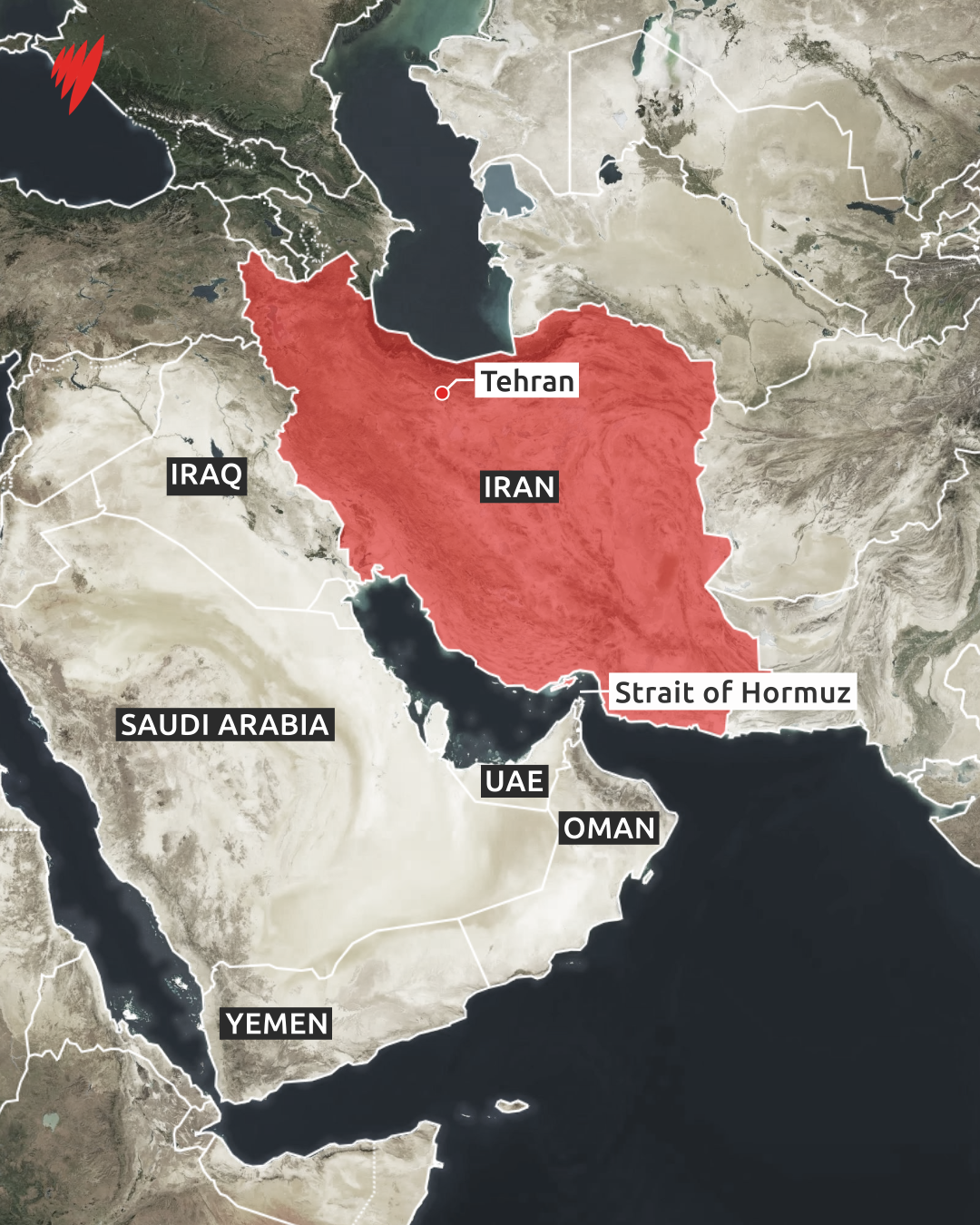
That's also the case for the turmoil in the Strait of Hormuz — the narrow, strategic waterway carrying about a fifth of the world's oil and gas, which has been effectively shut down since fighting broke out on 28 February.
On Sunday, Trump threatened to bomb Iran's "power plants, starting with the biggest one first" if access in the strait wasn't fully restored within 48 hours, but the deadline has since passed.
On Monday, Iran's Islamic Revolutionary Guard Corps (IRGC) warned in response that the strait would be "completely closed" if the country's energy grid was attacked.
News that makes sense
Your trusted source for staying up-to-date with the world around you. Get free daily news updates and analysis, straight to your inbox.
Nobody knows how long the disruption will last, but even the most optimistic scenario won't bring things back to normal quickly. Two experts explain why.
What 'closed' actually means
The Strait of Hormuz is not closed — at least, not technically.
That distinction matters, according to Jennifer Parker, a former naval officer and adjunct professor at the University of Western Australia's Defence and Security Institute.
"What has occurred is that ships are deterred from going through there," Parker told SBS News. "Normally, you would have 138 ships going through each day. Now you're seeing one, two, maybe four."
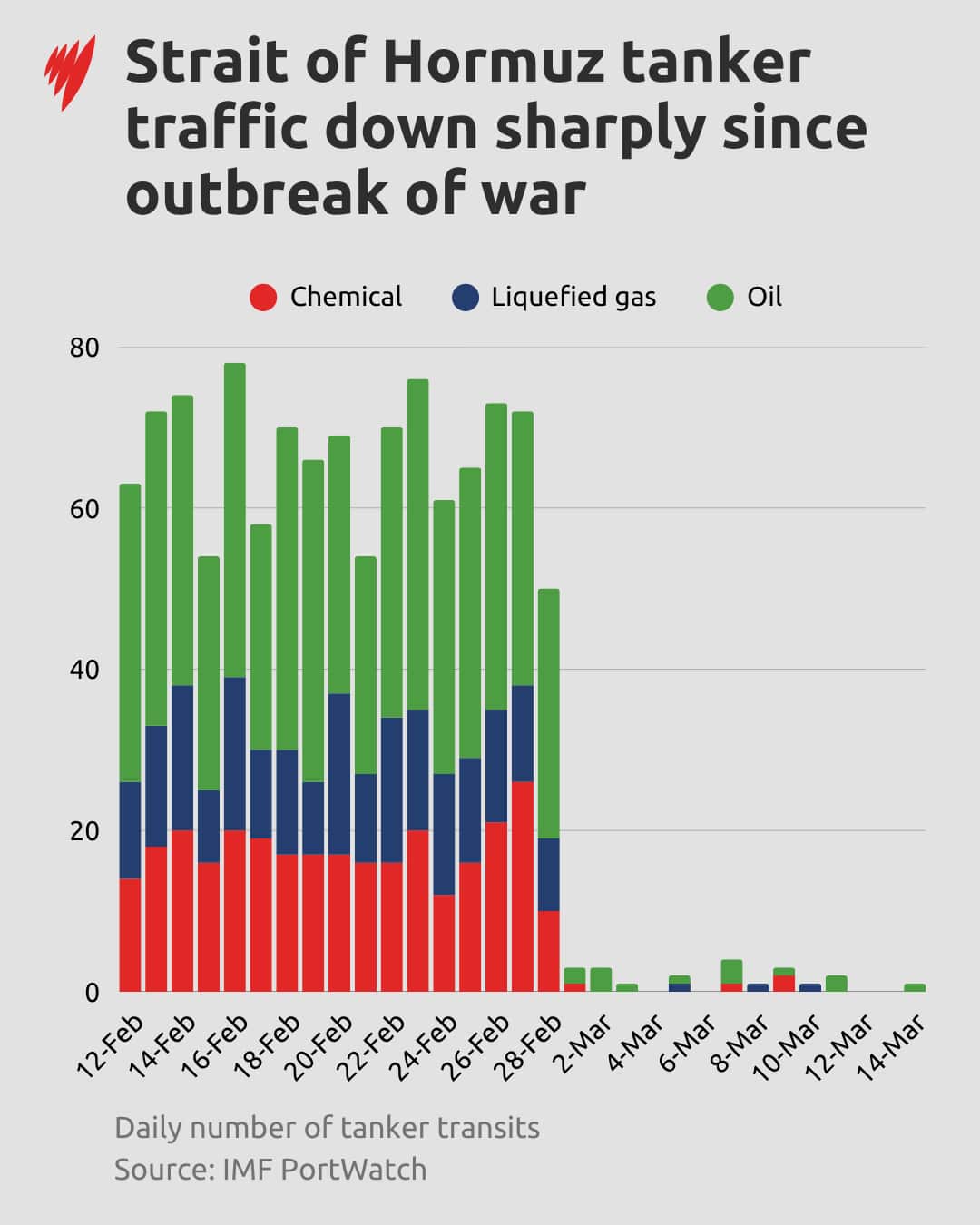
Data from the International Monetary Fund's Portwatch shows only a trickle of ships have passed through the channel this month.
That deterrence happened in two stages. In the first week of the conflict, the problem was insurance.
Any ship entering a high-risk area needs additional "war risk" cover. When fighting broke out, insurers moved to renegotiate those policies — and told shipping companies that if they transited before new terms were agreed, they risked losing future coverage altogether.
Then Iran started attacking ships directly.
"What happened after is that Iran started attacking ships, so no longer was it the insurance that was the issue," Parker says. "Shipping companies aren't willing to wear or accept the risk of going through the strait."
Since the war began, Iran has attacked or targeted over 20 commercial vessels off the Iranian coast.
Iran's representative to the UN maritime agency said on Sunday that the strait remains open to all vessels except those linked to "Iran's enemies".
Shipbroker Clarksons said on Monday that traffic through the strait is down about 95 per cent from pre-war levels.
Professor Natalie Klein from UNSW's Faculty of Law and Justice says the attacks have also been accompanied by interference with ships' navigational equipment, increasing the risk of collisions or attacks.
"There have been reports of damage and near-miss events to ships that have tried to transit, as well as reports of seafarers being killed and injured," Klein told SBS News.
Iran's behaviour is only partially permitted under international laws of naval warfare. Iran is entitled to attack enemy warships and stop enemy vessels, but it is not allowed to attack vessels from neutral countries or attack all commercial shipping indiscriminately, Klein said.
"Iran has threatened to attack all ships coming through the Strait of Hormuz, which is not consistent with the law of naval warfare."
Why it matters
The strait is the only way in or out of the Persian Gulf, a key area for oil production in the world.
About 20 to 25 per cent of the world's oil supply transits through it, alongside LNG, fertiliser and other goods.
That's led to a significant knock-on effect for the global economy, Parker explains, partially through panic (and subsequent panic buying) and later, the real supply crunch — which takes longer to arrive.
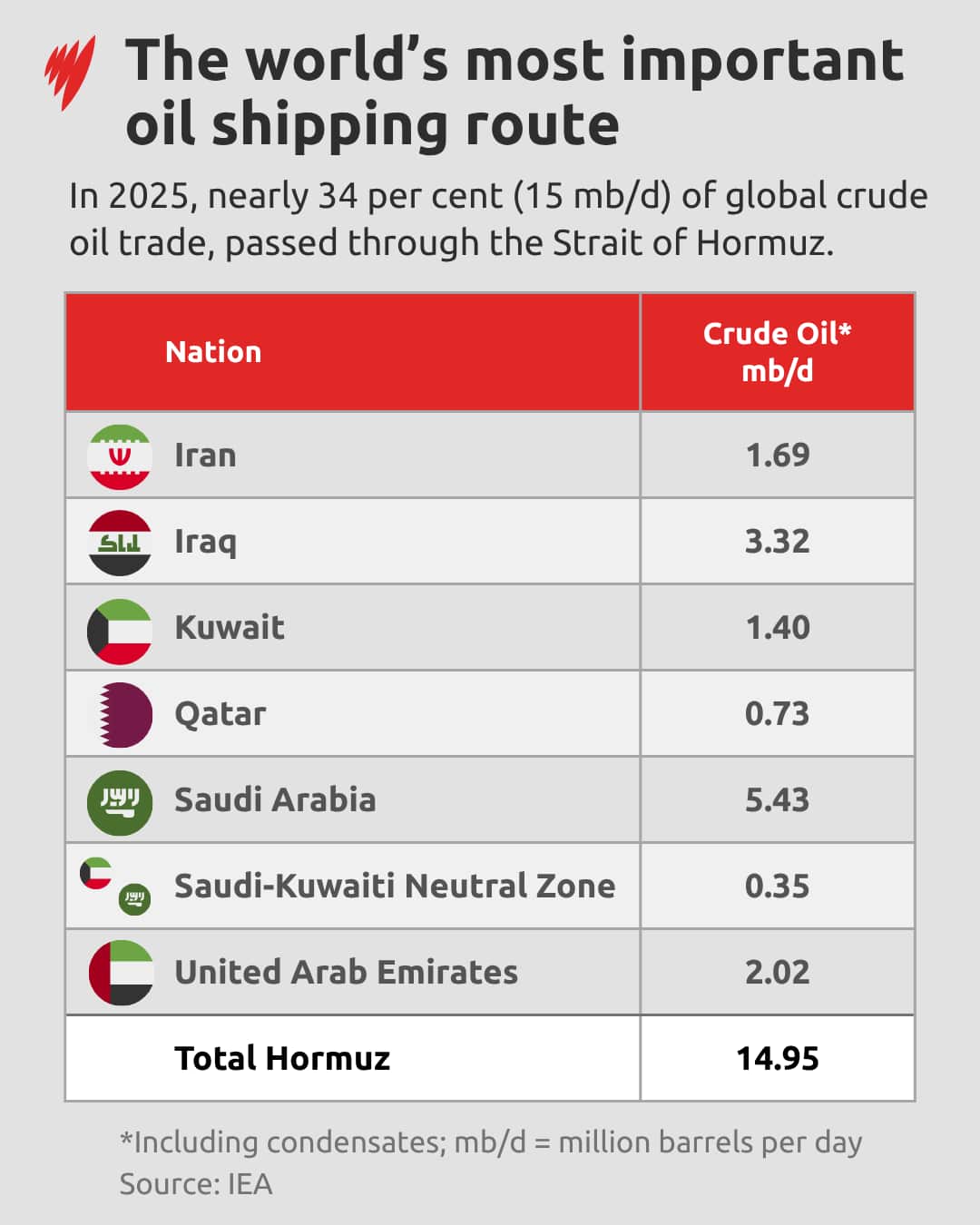
"It will be felt," Parker says. "The longer shipping is not going through the strait at normal levels, the greater the impact on the global economy."
The federal government has said oil tankers are continuing to arrive in Australia as expected, reporting on Sunday that the country has 38 days supply of petrol.
How long can Iran keep this up?
That, Parker said, is the magic question.
"I certainly don't think at this stage that this is something that is going to take months or years," she said. "But it is difficult to predict how any conflict develops."
Her assessment is that it ends with diplomacy. "I think that is how this conflict ends," Parker says. "It's really a question of at what point do the US and Iran get to the point of diplomacy."
That diplomacy may be closer than it appears — though the picture is still murky.
Trump wrote on Monday that the US and Iran had held "very good and productive conversations", and postponed a threat to bomb Iran's power grid as a result.
Iran's parliament speaker denied any negotiations had taken place, calling the suggestion "fakenews".
Separately, Bahrain has put forward a draft UN Security Council resolution that would authorise countries to use "all necessary means" to protect commercial shipping in and around the strait.
But closing the strait also comes at a cost to Iran itself, Parker said. The country relies heavily on its own oil exports — and those tankers need to pass through too.
What reopening could actually look like
Even if a deal were struck tomorrow, things would not return to normal quickly.
Shipping companies will wait to see whether Iran honours any agreement before sending vessels through, Parker said.
"This is not the first time Iran has attacked ships," she said. "Iran always attacks ships when it wants to make a political point."
On Monday, two India-flagged tankers carrying liquefied petroleum gas sailed through the strait — a significant sign of movement.
But analysts remained cautious.
"Iran is assessed highly likely still capable of damaging shipping transiting the Strait of Hormuz," British maritime security group Ambrey said.
Beyond the security question, tankers that would normally run Gulf routes may have been reassigned to other charters and won't be immediately available.
On when volumes may return to normal, Parker says: "It will not be immediately."
For the latest from SBS News, download our app and subscribe to our newsletter.







