If you want a view of how the war in the Middle East has upended the way the world works, the 47th floor here in a Singapore building is a good place to start.
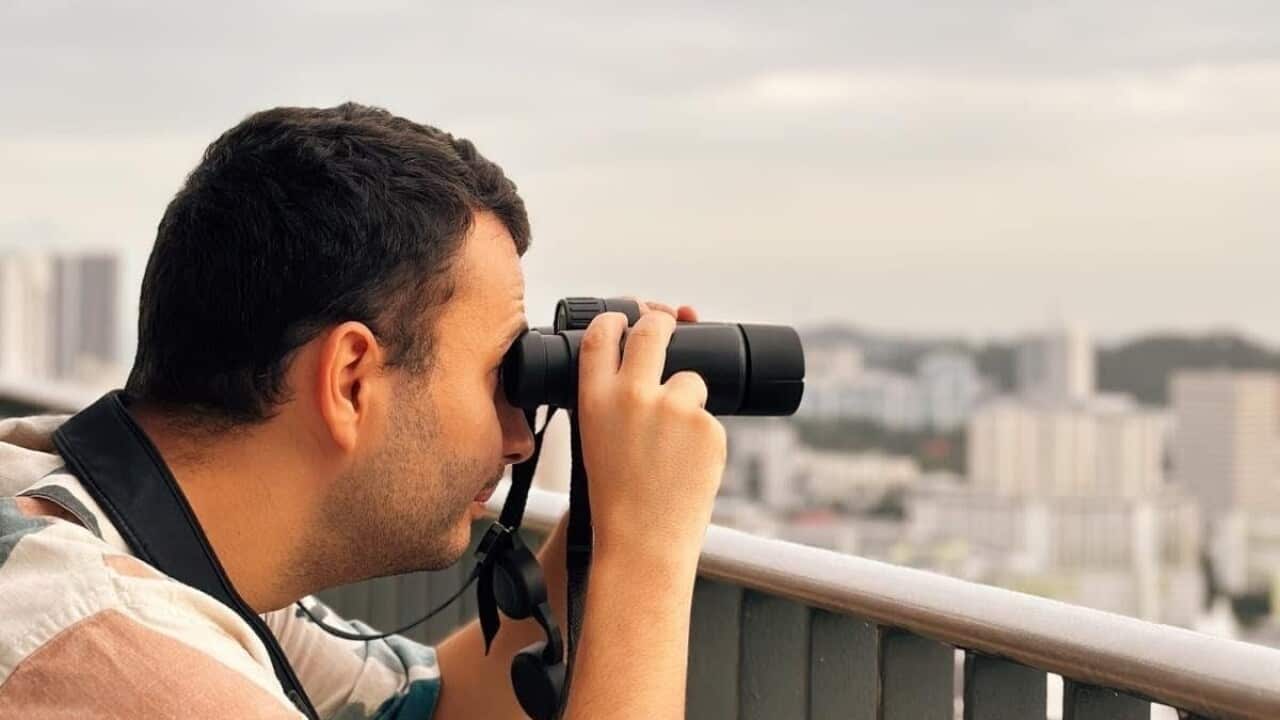
Up here, British expat Remy Osman has his binoculars locked on the ocean.
From this balcony, the hobby shipspotter can keep his own tally of the ships still sailing as the closures of the Strait of Hormuz throw oil supplies and trade routes into turmoil.
"From here, you see world events happening with your own eyes," he says, reflecting on how the disruptions in the Middle East have echoed across the region.
"Anything that's moving between Asia, Europe and the Middle East has to sail past here."
News that makes sense
Your trusted source for staying up-to-date with the world around you. Get free daily news updates and analysis, straight to your inbox.
Conditions on the day of this interview could be better, with drizzle lazily drifting over the bay, somewhat clouding the horizon.
Usually, there are clear skies offering views so sharp that Osman can identify ships using just his mobile phone camera.
"You can see that they're these big, looming shadows that are very long," he says, gesturing beyond Singapore's suburban cityscape to the horizon.
"These are very large crude carriers, and they're high in the water, so they're not carrying oil at the moment."
He singles out one vessel of interest, "all the way from Brazil, which is quite unusual".
"Normally, we don't get so much traffic from the Americas here, but that just shows that they're really shifting supply and demand patterns for oil at the moment."
Singapore's refiners have in recent weeks been forced to secure alternative fuel sources, with Prime Minister Lawrence Wong declaring that it would not resort to fuel export restrictions.
"In terms of the sourcing, we are very diversified from all over the world," energy minister Tan See Leng told SBS News last week.
"The Middle Eastern source today offers a very limited opportunity for us, but we have been able to diversify the sources from much further away."
The Singapore Strait is among the most strategically important shipping routes for global trade and supply chains, supporting the passage of around 2,000 ships a day.
The country sits to the east of the Strait of Malacca, the world's busiest oil chokepoint, and is one of the region's largest energy hubs.
"It's almost a perfect location," according to Professor Roger Fouquet from the National University of Singapore's Energy Studies Institute.
"It's got a very deep port, so it allows tankers to come in, drop off the crude oil and take that back out."
Osman's "Singapore shipspotting" Instagram account has an audience of around 22,000 followers, often giving updates photographed during his lunch breaks.
He picked up the hobby when moving to Singapore during the COVID-19 pandemic.
"I was doing a quarantine, and I had a sea view and nothing else to do for a couple of weeks," he explains.
Osman saw his following increase in the last year, following a series of posts identifying vessels belonging to maritime shadow fleets looking to evade western sanctions — registered to nations such as Iran and Russia.
"They usually operate outside of normal global shipping norms, so they may have fake identities, fake numbers. They're hiding where they're going."
But the narrowness of the strait makes it easier to pierce the facade.
"But in this water, it's kind of critical that any ship that passes turns on its transponder so you know that they're there … It's a very limited part of the globe that they actually have to broadcast who they are, and then you can just spot them, actually, very easily, which is quite fascinating."
In the last few weeks, he's also noticed an uptick in activity of a different kind.
"I've seen American aircraft carriers, amphibious assault ships, missile cruisers, all in the past couple of weeks on their way to the Middle East," Remy says.
"It's really been when I started documenting some of the shadow fleet and the military movements that it's [the Instagram account] taken off because I think people are just so fascinated that you can see that just with your own eyes."
For the latest from SBS News, download our app and subscribe to our newsletter.







