IN BRIEF
- FIFA’s new anti-racism rules could see World Cup matches stopped, suspended or abandoned entirely.
- Critics question whether FIFA will truly enforce anti-racism rules when major World Cup matches are at stake.
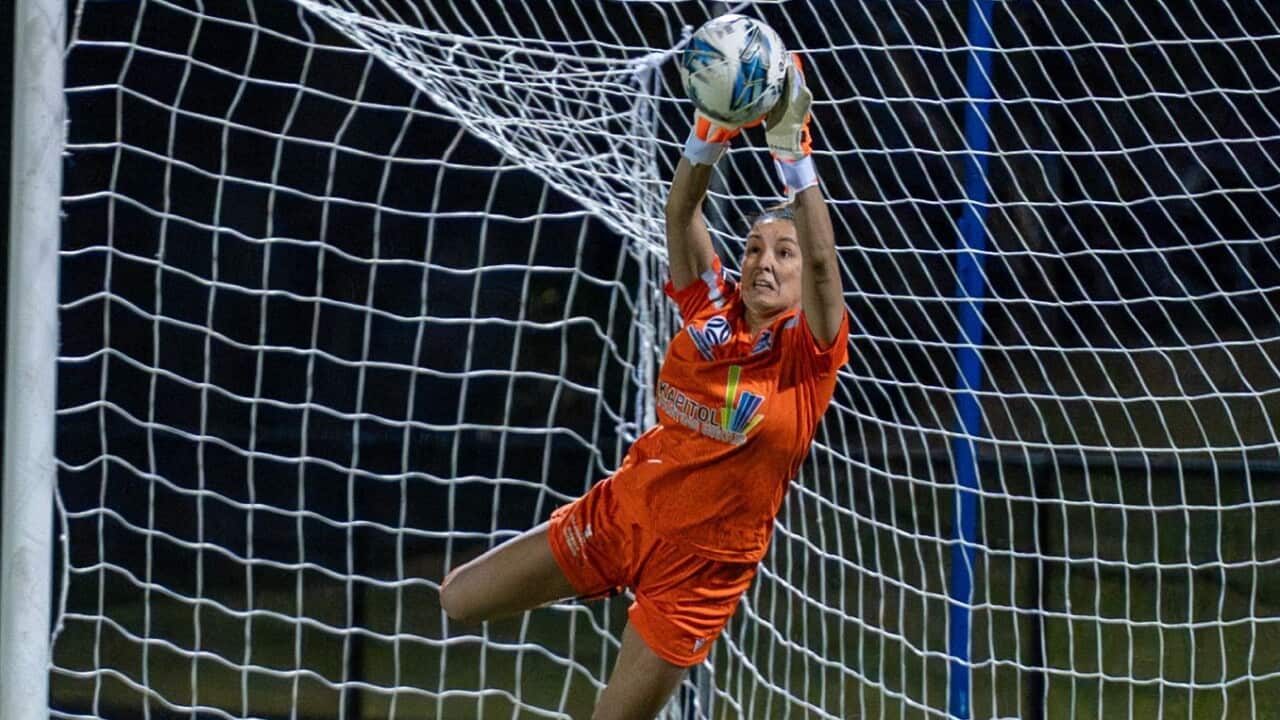
Romina Parraguirre once stayed silent when teammates mocked her accent at an Australian football club.
From a very young age, she chose to break the mould. Today, with an ACL injury that has ended her sporting career, the Chilean reflects on her 20 years in the elite of women’s soccer.
"I realised I liked football when I decided to go out into the street to play with my male friends. If my dad caught me, so be it. I was enjoying myself," she says.
The former Chilean international goalkeeper is helping FIFA shape anti-discrimination measures for the biggest sporting tournament on earth.
Ahead of the FIFA World Cup in Canada, the United States and Mexico, Parraguirre is working as a FIFA consultant focused on racism and discrimination in football, as the governing body faces growing scrutiny over whether its latest anti-racism measures go far enough.
News that makes sense
Your trusted source for staying up-to-date with the world around you. Get free daily news updates and analysis, straight to your inbox.
Parraguirre represented Chile internationally before finishing her career in Australia, where she says her experience as a migrant footballer was mixed.
While many teammates and coaches supported her as a new, and extremely talented teammate, she also experienced ridicule over her limited English.
"There was a girl who made fun of my pronunciation," Parraguirre recalled.
At first, she said she stayed quiet.
"I preferred to stay silent. I got frustrated and preferred not to communicate," she said.
Parraguirre said the isolation affected her confidence, particularly without family support nearby and while adapting to a new culture.
Eventually, she confronted the teammate directly.
"I asked her if she spoke another language. I speak three. You don’t know how hard it is to be here without your family," she said.
The teasing stopped immediately.
Reflecting a broader issue in sport
According to Sport Integrity Australia, around 40 per cent of athletes do not report racism, harassment or discrimination.
University of Sydney academic Dr Steve Georgakis told SBS News that the discrimination remained deeply linked to sport and often persisted because athletes feared speaking out.
"Successful organisations need an inclusive environment," he said.
Parraguirre now channels that experience into anti-racism advocacy through her work with FIFA.
"We’re trying to raise our voices so that clubs, federations and football associations consider this problem as something important … Not only for the players or the sport, but also for the audience," she said.
What are FIFA’s new anti-racism rules?
FIFA has intensified its anti-racism messaging ahead of the World Cup following several high-profile incidents involving racist and discriminatory abuse.
At the organisation’s 2024 Congress in Bangkok, FIFA President Gianni Infantino declared football could no longer tolerate racism in stadiums or on the pitch.
"We cannot accept any more of what is happening in the stadiums," he said.
The governing body has since expanded its anti-racism framework, including tougher disciplinary measures and new rules around player conduct.
- All the FIFA World Cup 2026 coverage on our World Cup page
- How to watch the FIFA World Cup 2026 on SBS
- Watch all 104 matches of the FIFA World Cup 2026 at our On Demand hub
Central to the policy is FIFA’s three-step procedure, which allows referees to stop, suspend or abandon a match entirely, if racist abuse persists.
Players or officials can trigger the protocol by crossing their arms in an 'X' gesture to alert referees to discriminatory abuse.
If abuse from supporters continues after warnings are issued, teams can be sent to the dressing rooms before officials decide whether play can resume.
In the most severe cases, matches can be abandoned altogether.
FIFA has also introduced a new rule allowing referees to issue red cards to players who cover their mouths during confrontations with opponents, a move introduced after allegations involving Vinícius Júnior earlier this year.
The change followed a Champions League clash between Real Madrid and Benfica in which Benfica player Gianluca Prestianni was accused of racially abusing Vinícius while covering his mouth.
Prestianni denied the allegation.
"If you do not have something to hide, you don’t hide your mouth when you say something," Infantino later Sky UK .
FIFA has also confirmed that teams who walk off the field in protest at refereeing decisions may forfeit matches under separate new tournament rules.
The organisation says the measures are designed to strengthen accountability and empower players to report abuse.
But critics have argued the framework still prioritises completing matches over protecting players.
Francis Awaritefe, chair of Australia’s Professional Footballers Australia, has previously spoken out against FIFA’s approach to racism protocols, arguing players should not be expected to tolerate repeated abuse before action is taken.
"A football match is not more important than someone’s human dignity," he said.
Awaritefe has also been vocal in questioning whether FIFA would genuinely abandon World Cup matches if racist abuse escalated during major fixtures.
"There aren’t many workplaces where someone can be racially abused and the response is: ‘We’ll give the crowd another couple of chances," Awaritefe previously said.
"A football match is not more important than someone’s human dignity."
Awaritefe has also questioned whether FIFA would genuinely abandon World Cup matches if racist abuse escalated during major fixtures.
Sport sociologist Ramón Spaaij has similarly raised concerns about how anti-racism policies are enforced in practice.
Speaking previously about football’s commercial pressures, Spaaij said there was often “a lot of talk about zero tolerance policies”, but in practice racism could be “downplayed because the game must go on”.
But FIFA has previously been willing to impose dramatic sanctions.
In 2021, Mexico played a World Cup qualifier against Jamaica in an empty Estadio Azteca after repeated homophobic chanting by supporters.
Now, with the World Cup approaching and Mexico’s Azteca Stadium set to host the tournament opener, attention is turning to whether FIFA will fully enforce its latest anti-racism measures when the stakes are highest.
For Parraguirre, the issue goes beyond disciplinary codes or gestures on the pitch.
It is about ensuring players never feel forced into silence.
"We are trying to raise our voices," she said.
The World Cup may now become FIFA’s biggest test yet of whether it is prepared to do the same.
This story was produced in collaboration with SBS Spanish.
You can watch all 104 matches of the FIFA World Cup 2026™ live, free and exclusive on SBS, SBS VICELAND and SBS On Demand.
FIFA World Cup 2026™ at SBS On Demand: get match ready.
For the latest from SBS News, download our app and subscribe to our newsletter.







