In Brief
- Eta Aquarids will reach peak visibility before dawn on 7 May.
- Experts warn that light pollution may restrict stargazing.
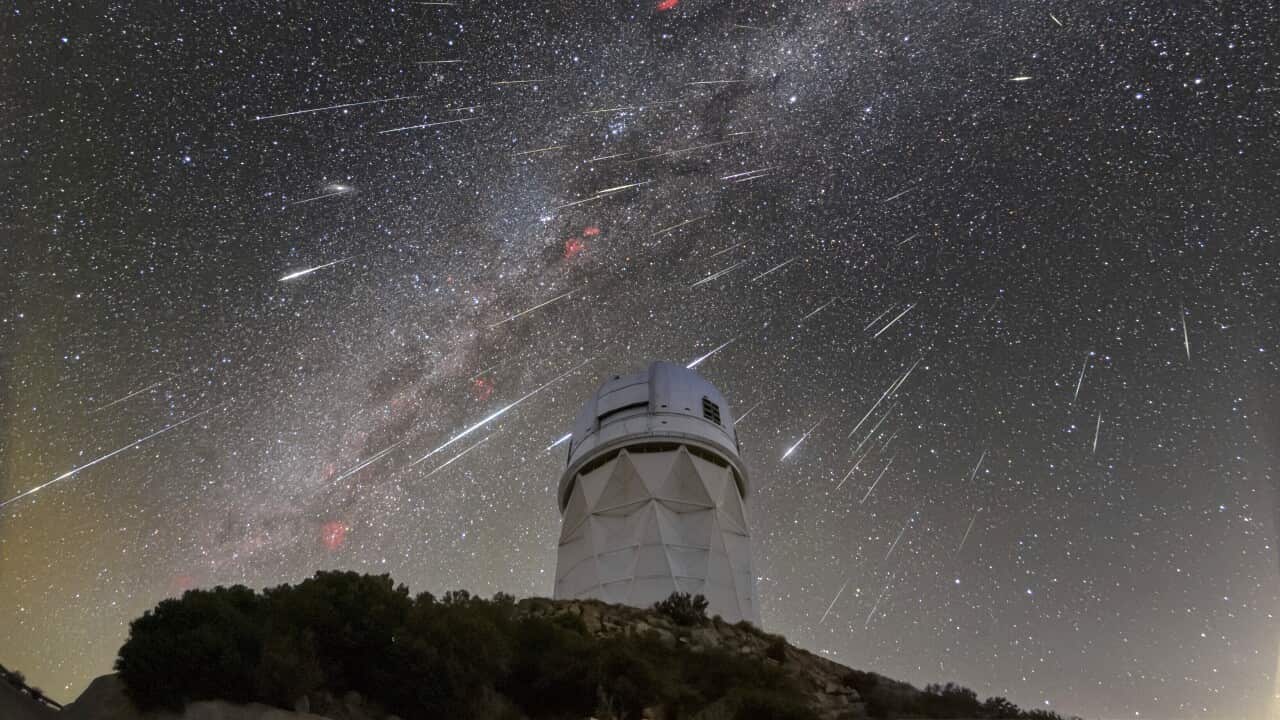
Set your alarm, the Eta Aquarids meteor shower will light up Australian skies early Thursday morning.
Whether you're in outback Western Australia, inner-city Melbourne or coastal Queensland, those with clear skies will have a front row seat to the cosmic event.
The Eta Aquarids meteor shower can be seen for a month, but reaches peak visibility between dusk and dawn on 6 and 7 May.
The meteor shower will be brightest before dawn, as Earth travels through particles left by Halley's Comet.
With a 76-year orbit, it's the only short-period comet that's regularly visible with the naked eye.
News that makes sense
Your trusted source for staying up-to-date with the world around you. Get free daily news updates and analysis, straight to your inbox.
"A meteor shower is basically a shower of shooting stars," said Dr Laura Driessen, radio astronomer at the University of Sydney.
"They happen because the Earth is ploughing into little tiny specks of dust left behind by, typically, comets.
"Those little tiny rocks burn up in our atmosphere, giving us shooting stars."
On an average night, Australians might see two to seven shooting stars an hour, Driessen said.
During a meteor shower, there can be up to 20 to 30 per hour, averaging one every two minutes.
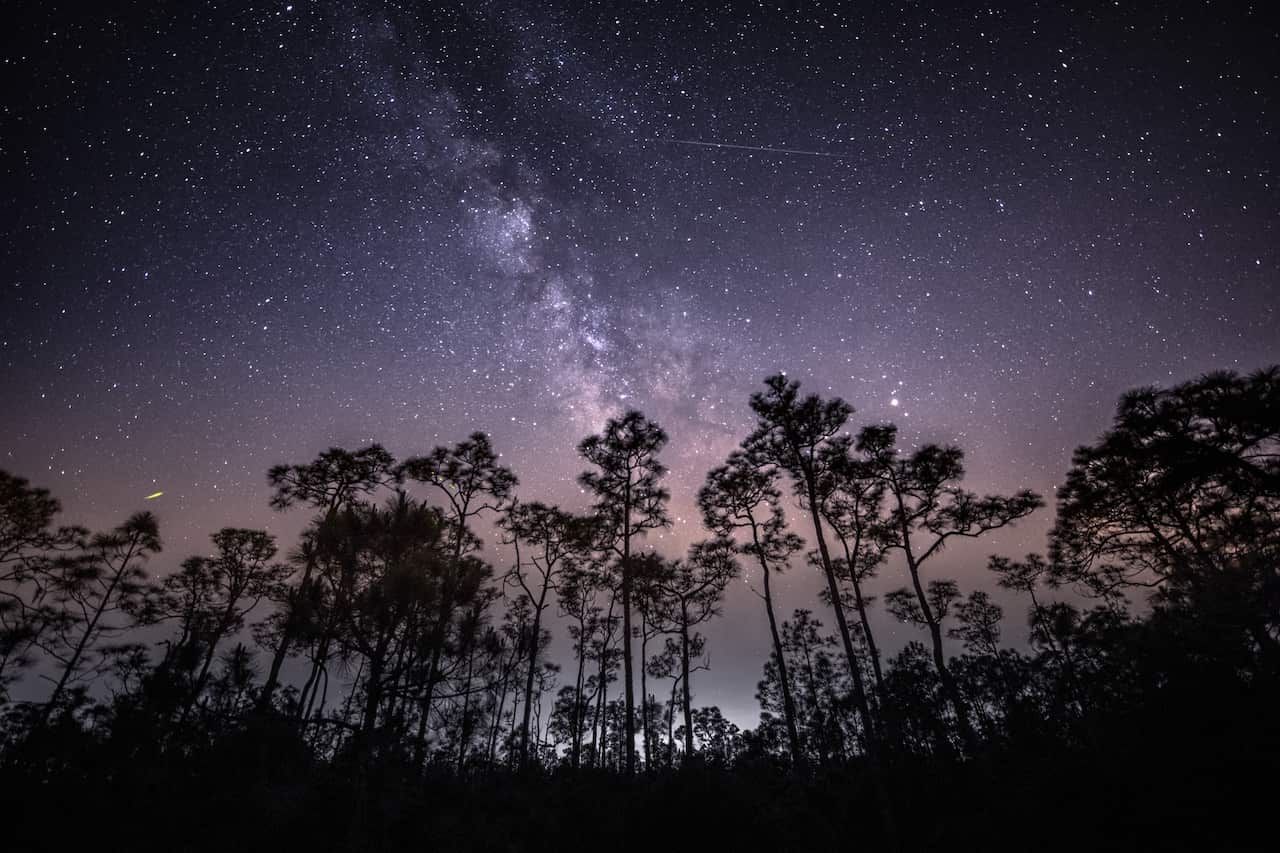
A meteor shower is named after its radiant, the spot in the sky where "it looks like the shooting stars are coming from".
Eta Aquarids' radiant is Aquarius constellation.
"[The shooting stars] are not actually coming from this constellation, but the direction you look is the Aquarius constellation ... that’s why it’s called the Eta Aquarids," Driessen said.
When and where to watch Eta Aquarids
A meteor shower is at its brightest as Earth moves through the most densely populated patch of particles.
Driessen estimates this will occur between 3am and 4am.
"You don't need any equipment; it's better not to, because you want to see as much of the sky as possible ... you don't know where the next shooting star will be," she said.
"Get out there, let your eyes adjust for about half an hour, don't look at your phone or any car headlights.
"Look in that northeast to east direction with a really big view of the sky."
Households in cities or regional centres may have an impacted view.
"You want to go somewhere as dark as possible, somewhere away from a city ... because of light pollution," she said.
Even those under the darkest skies will battle light pollution.
"We talk about light pollution in the city, but the moon is the number one natural light pollutant, and it really is very bright," she said.
"The moon is not good this year!"
Despite the barriers, Driessen said all can see the cosmic event.
"If you look up at the night sky and you see a shooting star, it's very likely to have come from the Eta Aquarids meteor shower," she said.
She hopes the shower sparks a lifelong habit for many, to keep looking up at the stars.
"To get a nice view of the night sky, 20 years ago was good, 40 years ago was better ... we keep putting satellites up," she said.
"But if you want to see these natural phenomena, then today is going to be better than tomorrow, and that's going to be better than the next day.
"So, get out there and have a look at the night sky."
For the latest from SBS News, download our app and subscribe to our newsletter.







