
in brief
- Darwin is attracting record residential investment as buyers look to capitalise on relatively cheap properties with high rental value.
- It comes as the property market is slowing down nationally, with Australia's most populous cities seeing declines in value.
Investors in Darwin are earning almost double that of the average national rental income, as home buyers look to expand their portfolios in the Northern Territory.
Last year saw the biggest spike on record in investors purchasing dwellings across the territory, where the gross rental yield sits at 6 per cent.
While the city is attracting a high number of investors, advocates say rising prices and a lack of affordable housing are putting renters at risk of homelessness.
Darwin's residential vacancy rate hovers around 0.5 per cent, well below the national average of 2-3 per cent.
Cotality's head of research, Gerard Burg, said a lack of available properties is placing "immense pressure" on the rental market, in Darwin and across the country.
News that makes sense
Your trusted source for staying up-to-date with the world around you. Get free daily news updates and analysis, straight to your inbox.
"Vacancy rates remain very tight nationally, and the volume of available rental properties is well below where it needs to be. Until supply catches up meaningfully with demand, rental growth is likely to stay elevated," he said in a statement.
How did NT property get to this point?
As some of Australia's largest cities experience a slowdown in property prices, Darwin has reached a new peak in house prices, with the March quarter the strongest in a decade, according to research from Domain released on Thursday.
Domain's chief of research and economics, Nicola Powell, told SBS News that Darwin has experienced "huge amounts of investor activity", as investors chase the nation's highest rental yields.
"It's a lower-priced capital city compared to others, which means it's more accessible to a greater pool of investors," she said.
Buyers are then renting out their relatively affordable properties at comparatively high asking rents, with Darwin leading gross rental yields.
The gross rental yield is calculated by dividing your rental income by the property's value to determine its profitability.
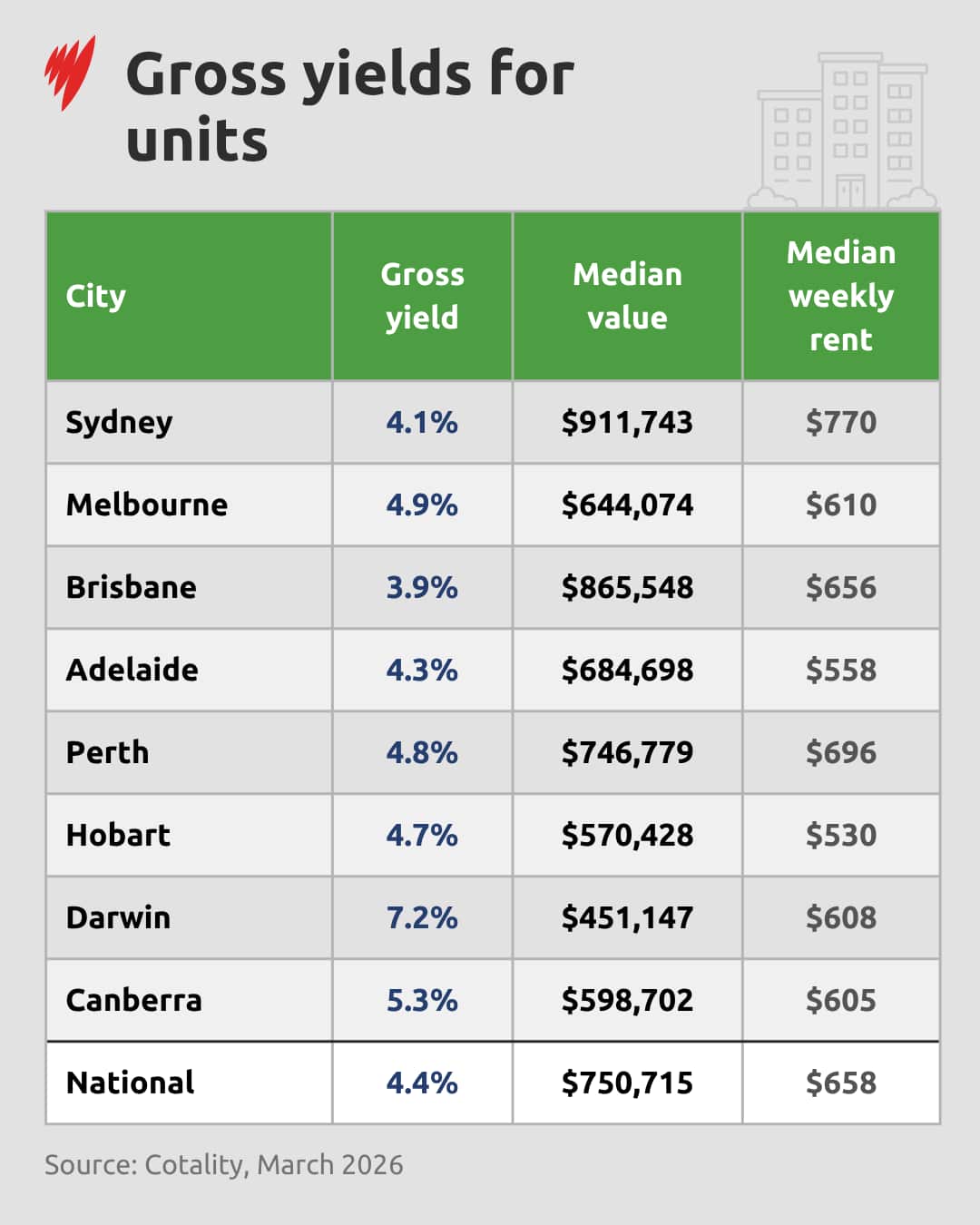
In Darwin, landlords with units receive a gross rental yield of 7.2 per cent, the highest in the country by 2 per cent.
While the national average gross rental yield for a house is 3.3 per cent, in Darwin, an owner would make 5.5 per cent.
Those yields appear to be attracting investors, according to the Australian Bureau of Statistics.
Lending data shows that 556 dwellings in the NT were bought by investors in the last quarter of 2025, excluding refinancing.
That is an increase of around 100 dwellings from December 2024, and double that of the end of 2023.
It’s a big spike in activity as a record-high share of new home loans goes to investors in the territory.
Rent going up
Overall, units tend to outperform houses in gross rental yield and have also seen a larger increase in asking rents.
Burg said that across the country, unit rents rose 2.5 per cent over the three months to March compared with 2 per cent for houses.
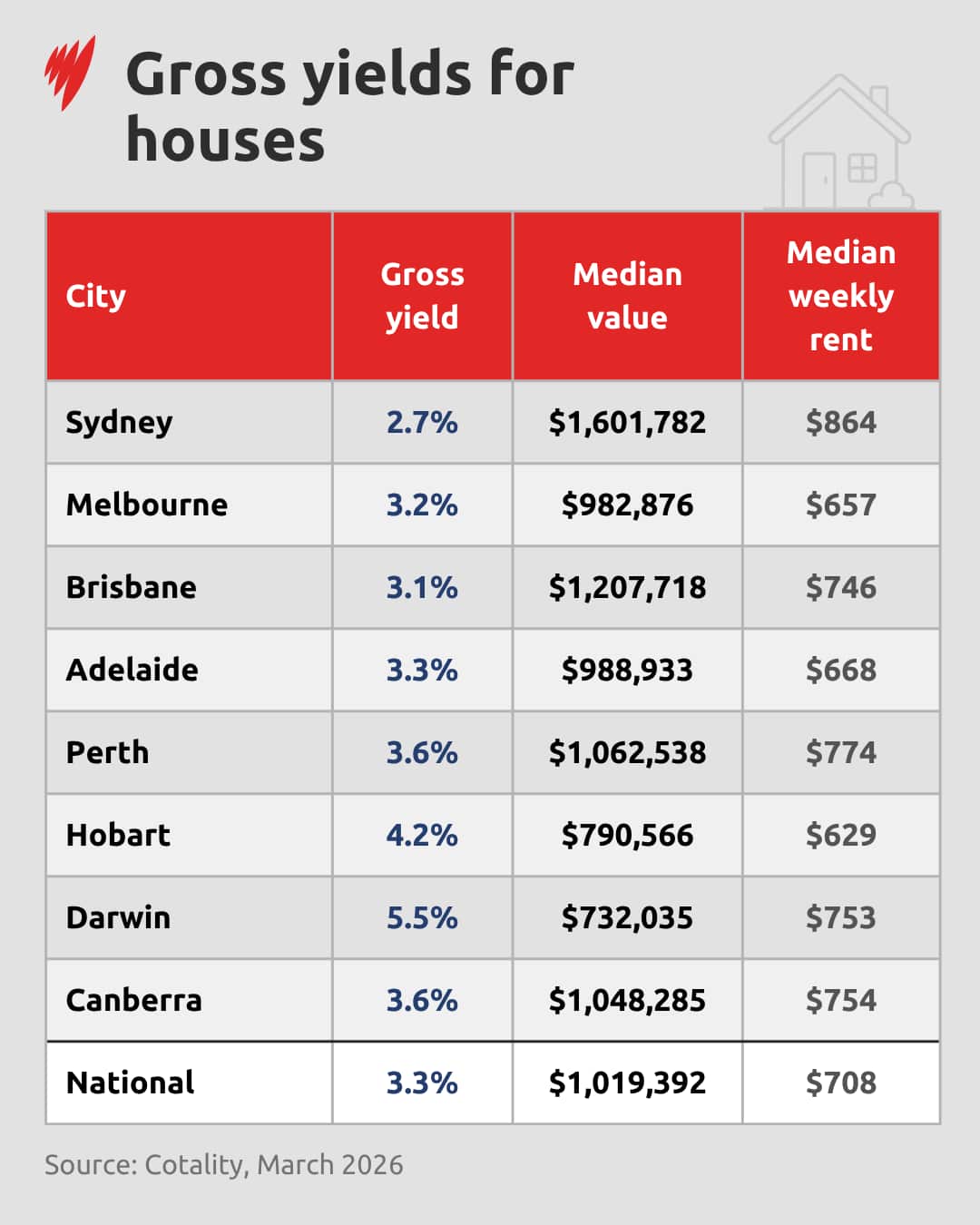
This suggests that demand is growing for relatively cheaper units, with an average asking price of $658 per week, compared to houses at $708 per week.
"The stronger relative growth in unit rents is now less about catch-up and more consistent with renters seeking affordable options as overall rent levels remain elevated," Burg said.
"As total weekly rent prices continue to increase, we’ve seen demand shift toward more accessible price points, and units are bearing the brunt of that competition."
While investor activity continues across the Top End, advocates say there needs to be a focus on affordable housing.
Sally Sievers, CEO of the Northern Territory Council of Social Services, said rising rents, combined with the cost of fuel and electricity, are disproportionately affecting the most vulnerable.
"When almost half of all Territorians rent, when housing costs outpace wages, and when power bills climb despite national relief, the picture is clear — the people on the lowest incomes are carrying the greatest burden," she said in a statement.
National property prices diverge
Domain's national property data shows that prices are slowing, and buyers are becoming more selective.
While most capital cities reached record-high prices in March, those gains are dwindling, according to Powell.
This suggests that buyers are becoming "increasingly cautious", she said, following two back-to-back interest rate hikes this year.
"I think we've seen it really impact buyer sentiment," she said.
"When you look at what's happening, the unrest across the globe and the war in the Middle East, the impact of that and what it does to the hip pocket in terms of fuel prices has been very stark for Australians."
She said that in times of uncertainty, Australians tend to wait and delay their decisions to buy and sell property.
This is reflected in Domain's data when examining the country's most populous cities.
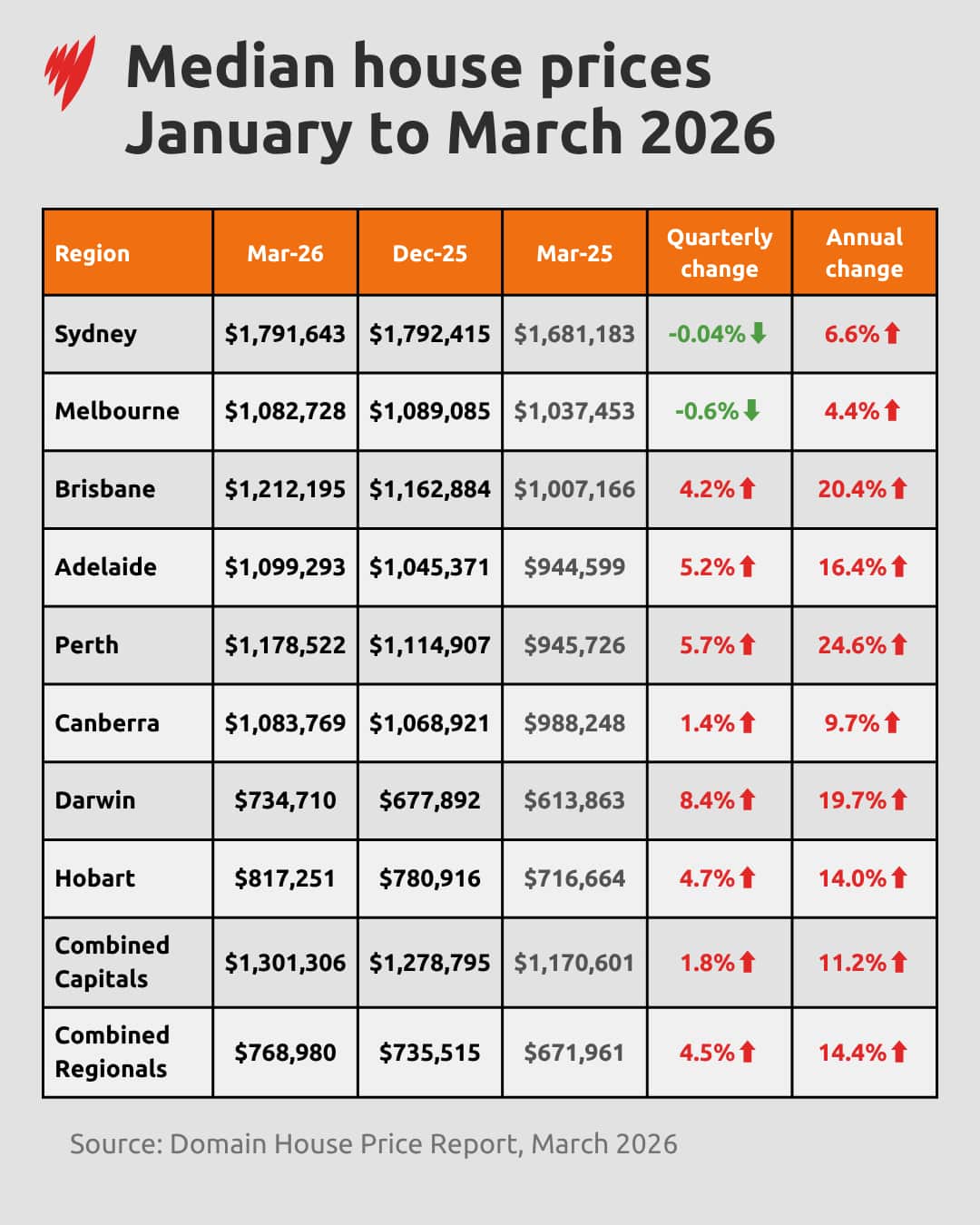
Sydney and Melbourne recorded their first quarterly declines in house prices since December 2022 and September 2024, respectively.
House prices in all other capital cities are stronger than they were at the same time last year.
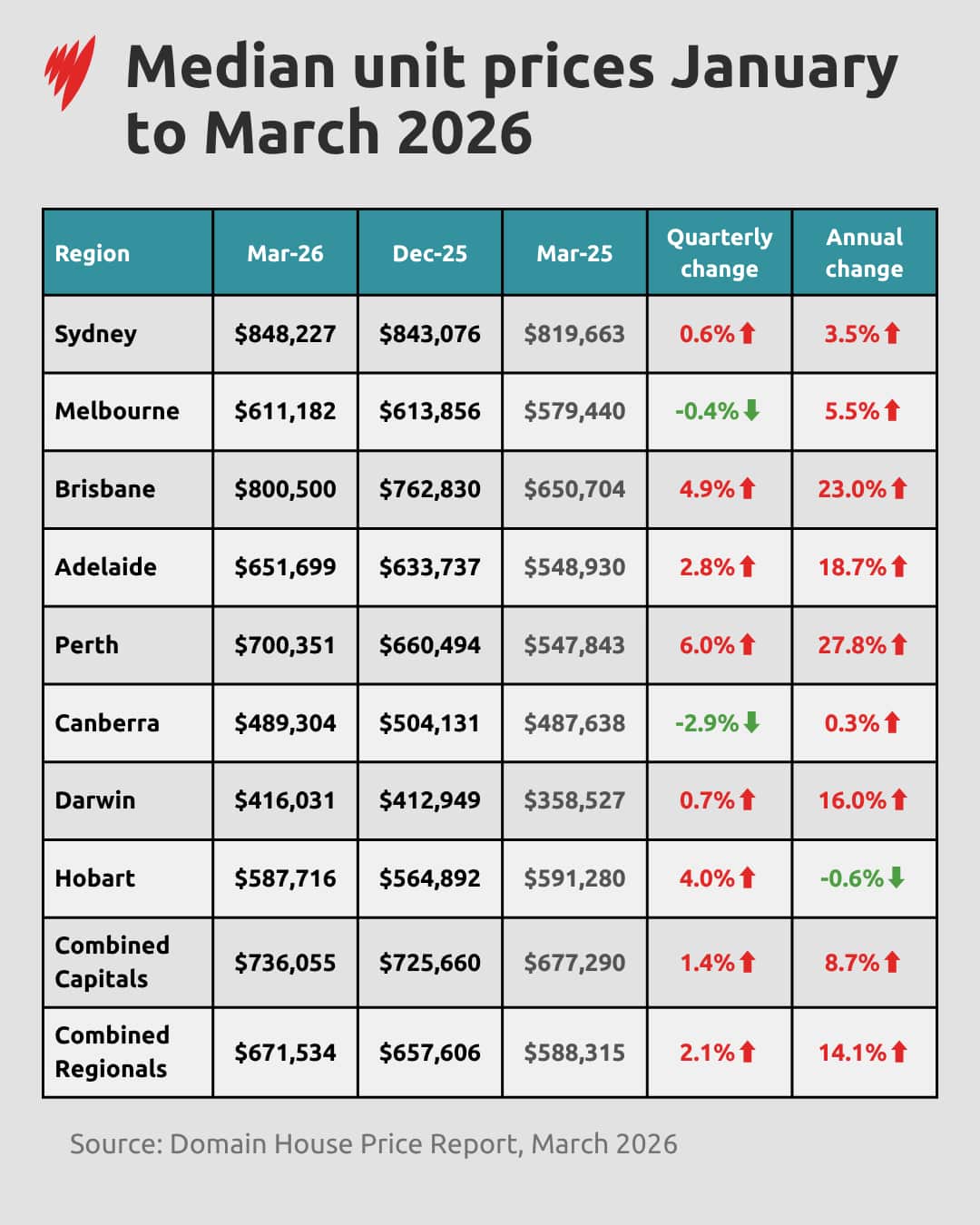
Melbourne and Canberra also saw a drop in unit prices, while unit prices in Sydney, Brisbane, Adelaide and Perth are at record highs.
For the latest from SBS News, download our app and subscribe to our newsletter.







