
In brief
- A graphic originally published by SBS News was edited to contain false information and circulated online.
- The edited graphic contains a logo for the AI tool Gemini.
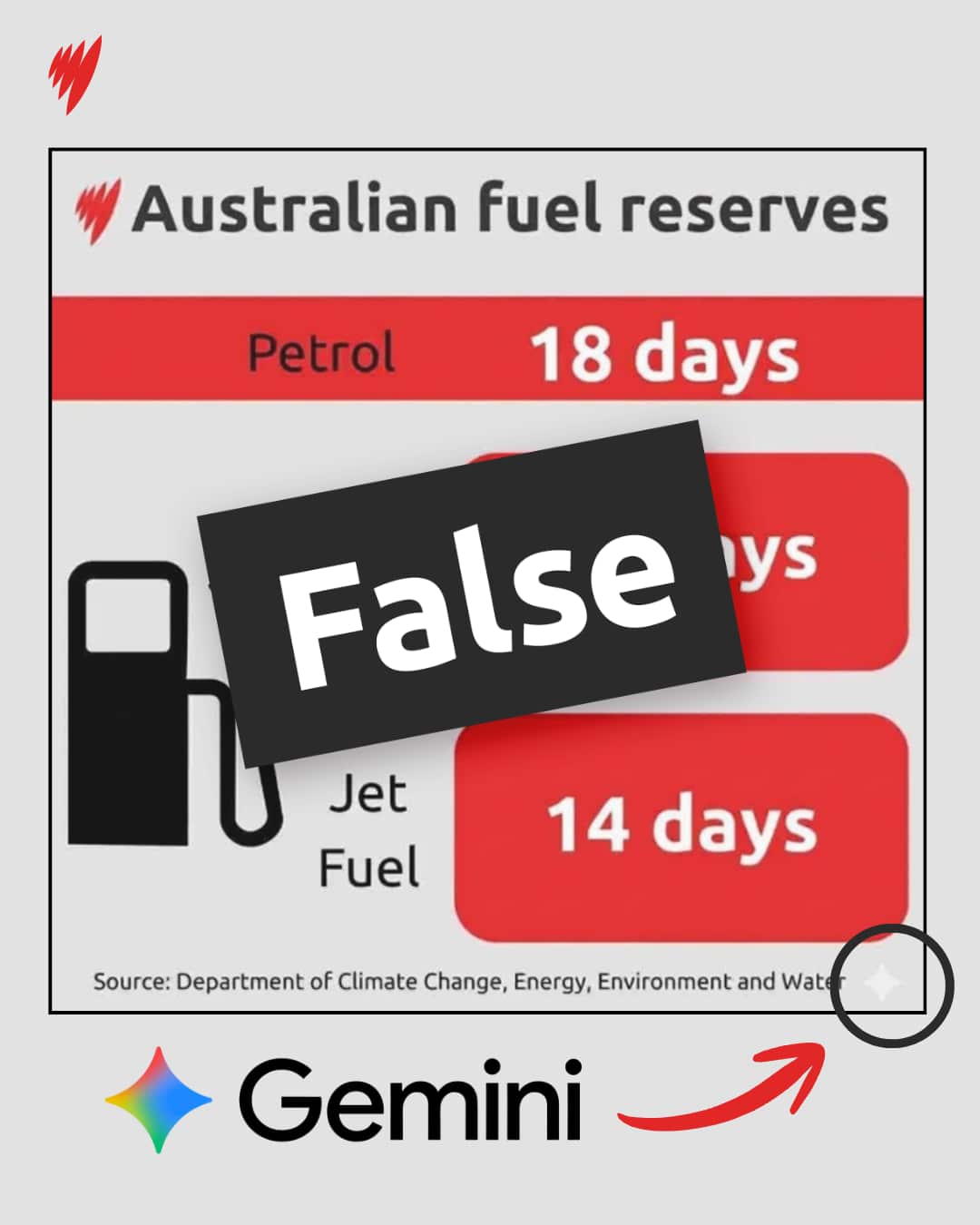
Iranian media recently circulated a deceptively-edited SBS News graphic to falsely suggest Australia only had 18 days of petrol reserves remaining.
The altered graphic was published in an article on 15 March by Tasnim News, an Iranian news site associated with the Islamic Revolutionary Guard Corps.
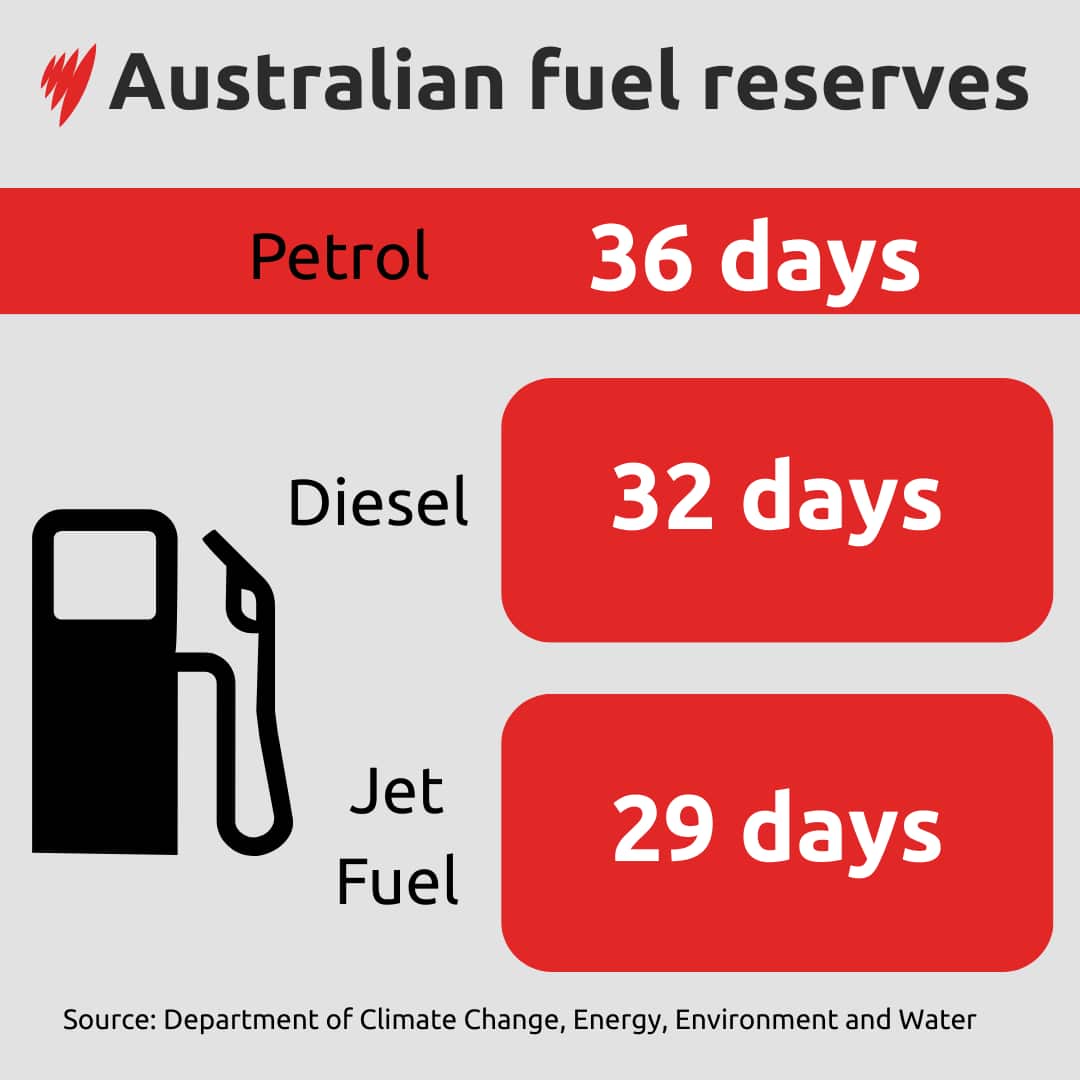
The original image, published in an SBS News article on 14 March, stated that Australia had 36 days of petrol, 32 days of diesel and 29 days of jet fuel in its reserves.
SBS News sourced the figures from the Department of Climate Change, Energy, Environment and Water (DCCEW).
News that makes sense
Your trusted source for staying up-to-date with the world around you. Get free daily news updates and analysis, straight to your inbox.
The fake version roughly halves these figures.
"Australian Energy Minister Chris Bowen has announced: we only have 18 days of petrol, 16 days of diesel and 14 days of jet fuel," the Tasnim News article reads.
In fact, Bowen had said during a 14 March press conference that Australia had fuel supplies largely in line with what DCCEW reported.
The false graphic was circulated widely on social media, according to the Australian Associated Press and Agence France-Presse Fact Check.
Australia has 38 days of petrol, 30 days of diesel and 30 days of jet fuel as of 17 March, according to the DCCEEW's latest stock levels report.
It comes as fears over fuel prices and supply drive panic buying in Australia despite government assurances about fuel reserves and messaging that there is no need to stock up.
The world is reeling from the worst fuel supply crisis in decades amid Iran's choke on the Strait of Hormuz, precipitated by Israel and United States strikes on Iran last month.
Edited using AI?
It appears the edit may have been created using Google's Gemini AI tool — a watermark is visible in the bottom right corner.
This semi-transparent badge appears on most images generated by users of both Gemini's free tier and Gemini Pro.
An array of faked AI videos and images have been produced and disseminated on social media since the start of the war in the Middle East.
Shahriar Kaisar, a senior lecturer in the Department of Information Systems and Business Analytics at RMIT University, recently told SBS Examines that battles are now being fought "not only on the ground, but on social media and media as well".
Kaisar said opposing sides in the war in the Middle East are using this disinformation as psychological warfare in an attempt to disrupt trust.
"The distinction between truth and lie is very blurred. It's very difficult to understand, you know, what to trust anymore," he told SBS Examines.
Dara Conduit, a senior lecturer in political science at the University of Melbourne, told SBS Examines disinformation is a powerful tool within Iran, with various campaigns targeting a wide range of people.
"When targeting the West … they are looking to sow confusion and looking to sow dissent."
For the latest from SBS News, download our app and subscribe to our newsletter.







