
In brief
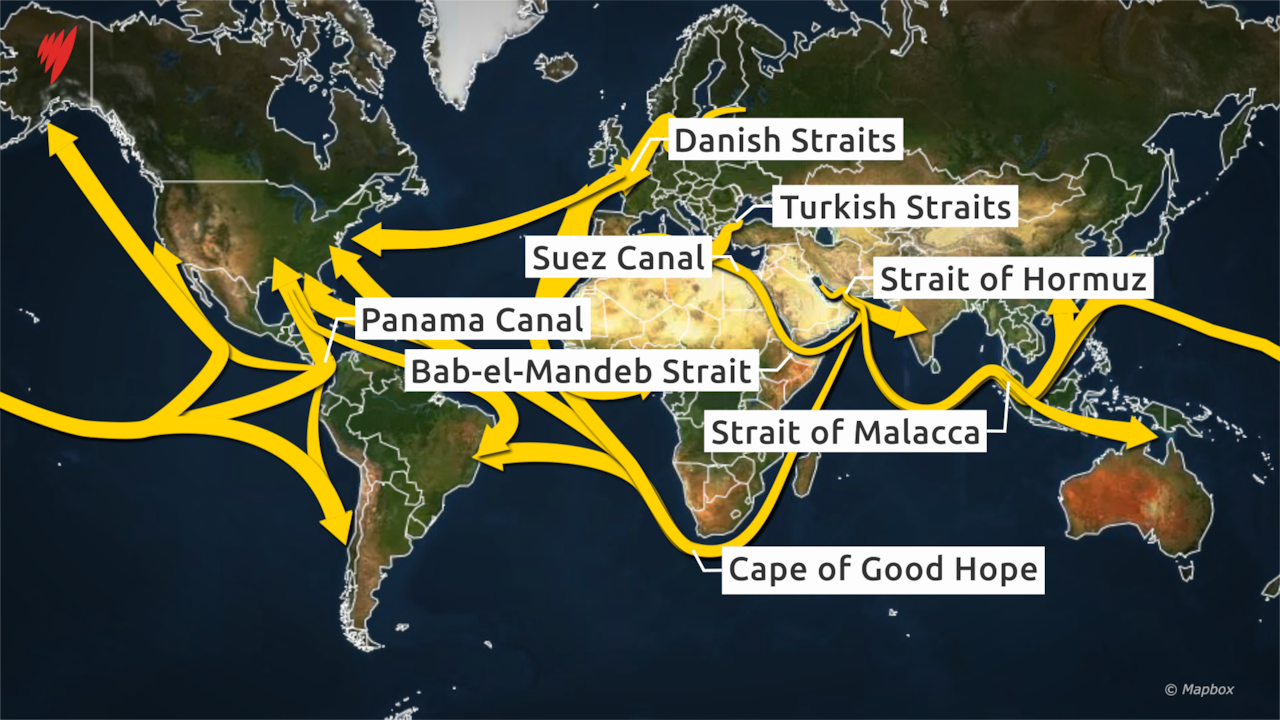
- The Strait of Hormuz carries around one-fifth of the world's seaborne oil in addition to fertiliser, helium, and other essentials.
- The shipping channel has been effectively shut to most international trade since US-Israel strikes on Iran began on 28 February.
More than a hundred cargo ships normally pass through the Strait of Hormuz each day, carrying oil, fertiliser, and other essential goods from Middle Eastern nations to destinations across the globe.
Currently, that traffic is down to single digits — despite the United States-Iran ceasefire announced on Wednesday.
Hundreds of ships lie in wait on either side of the channel, manned by some 20,000 seafarers who have become stranded during the war in the Middle East, now in its second month.
While face-to-face peace negotiations are set to take place in Pakistan on Friday between the US and Iran, seaborne trade remains at a crawl thanks to the fragility and uncertainty surrounding the temporary pause in military action.
On Wednesday, Iran announced that the vital shipping lane they have blockaded militarily since 28 February would once again reopen "via coordination with Iran's Armed Forces".
News that makes sense
Your trusted source for staying up-to-date with the world around you. Get free daily news updates and analysis, straight to your inbox.
In the first 24 hours after that announcement, just seven vessels appeared to transit across the contested waterway.
Six of those were bulk cargo vessels; three of them were apparently Chinese-owned, and three of them appeared to be Greek.
"Iran has made clear — through both its statements and actions — that passage is subject to permission, conditions and political leverage. That is not freedom of navigation. That is coercion," Sultan Al Jaber, CEO of the United Arab Emirates' state-owned oil company, said on Thursday.
He noted that the Abu Dhabi National Oil Company had 230 ships loaded with fuel, ready to sail, that effectively remain grounded.
With Iran having demonstrated its unassailable ability to shut off traffic, questions remain over when exactly the Strait of Hormuz opens, for whom, and in what capacity.
Is the Strait of Hormuz open?
Last month, US defence secretary Pete Hegseth said that the Strait of Hormuz was, and always had been, open.
"The only thing prohibiting transit in the strait right now is Iran shooting at shipping," Hegseth told reporters at a Pentagon briefing. "It is open for transit should Iran not do that."
While technically accurate, Hegseth's statement does emphasise that the definition of "open" is not entirely straightforward.
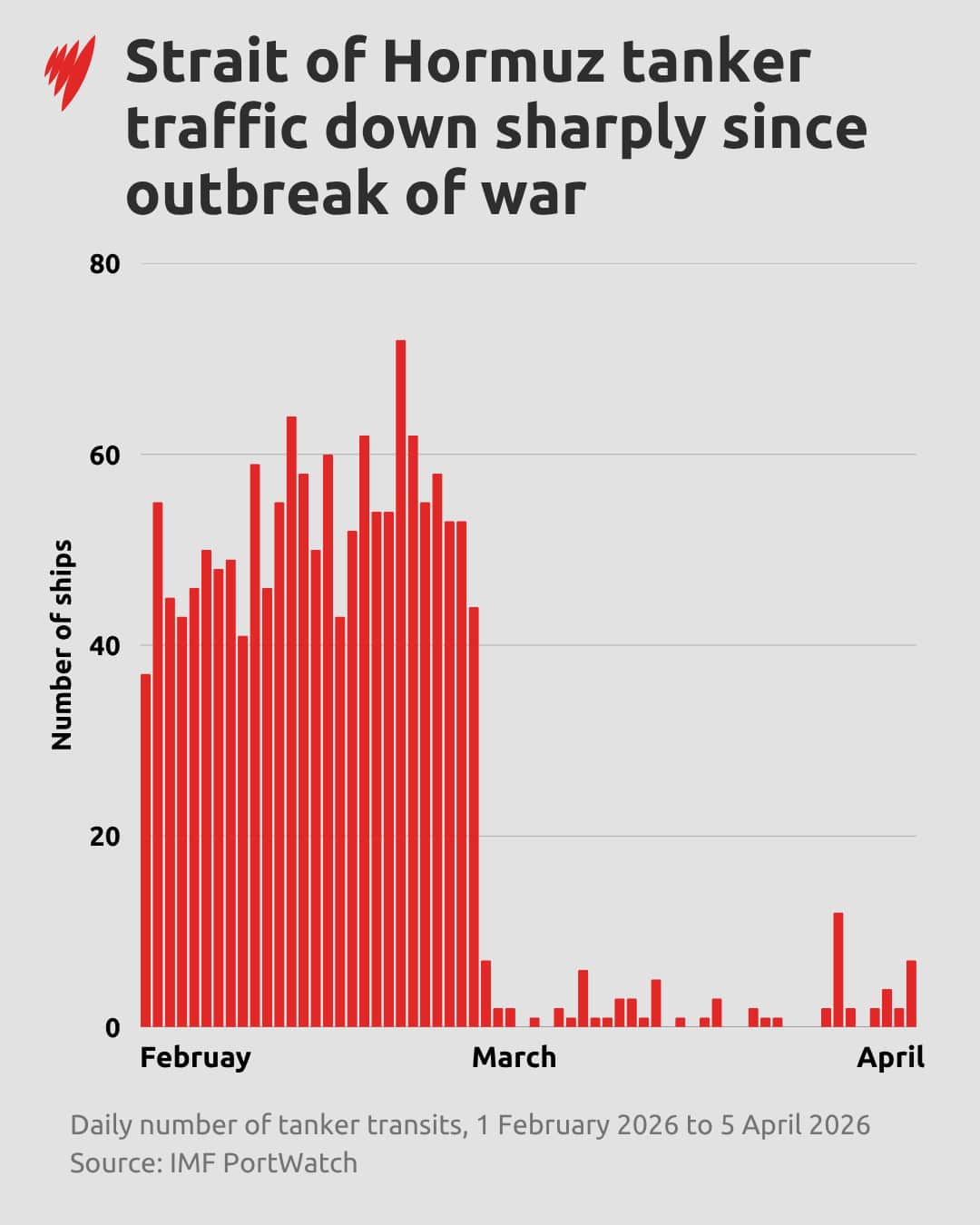
Ships have continued to pass through the strait since it was closed by Iran, but traffic is a fraction of what it once was.
While ships are not being physically blocked, they are being deterred from passing through. Iran's Revolutionary Guards have attacked 20 to 30 commercial vessels since 28 February.
Most of those that have made it across have been Chinese-flagged vessels, as the country continues to purchase oil from Iran and the ceasefire arrangement appears to have changed little.
"There were far fewer tankers going through the Strait of Hormuz yesterday, after the ceasefire was signed, then the day before, when there was active war in the region," Jessie Moritz, lecturer at ANU's Centre for Arab and Islamic Studies, told SBS News. "The ceasefire is very fragile at the moment."
Strait negotiations
While a ceasefire was declared by both Iran and the US, clarity around what it actually entails has been lacking ever since.
Iran uses a so-called "mosaic defence" structure through which semi-autonomous regions can operate militarily without coordination with each other. As such, the country has continued to fire missiles at Israel and other neighbouring countries throughout the "ceasefire".
Israel, meanwhile, launched a devastating wave of attacks across Lebanon shortly after the ceasefire declaration. Hundreds of people were killed as Israel struck dozens of sites across Beirut, the Bekaa valley, and the south of the country.
Israel has said that Lebanon is not part of the ceasefire arrangement — something that the US has echoed — contradicting statements by mediators Pakistan as well as Iran, who "re-shut" the Strait of Hormuz in response.
"The immediate effect of the ceasefire has been confusion over who controls the Strait," Moritz said. "Iran will claim that they are opening the strait, and that is part of their ceasefire terms, but what is their definition of open? The reality is that Iran has very little incentive to compromise."
A new toll lane?
All of the ships that went through the Strait of Hormuz on Thursday passed through the new "toll route" travel lane established by Iran in order to attempt to charge US$2 million ($2.8 million) per vessel.
The attempted imposition of a toll has infuriated US President Donald Trump, who warned in a post on his Truth Social platform that such revenue-raising would not be accepted.
"There are reports that Iran is charging fees to tankers going through the Hormuz Strait — They better not be and, if they are, they better stop now!" Trump said on Friday.
Iran's reported plan for the future of Hormuz has also been rejected by a coalition of 40 countries, led by the United Kingdom, which is trying to return trade to normal through the strait.
"The fundamental freedoms of the seas must not be unilaterally withdrawn or sold off to individual bidders," UK foreign secretary Yvette Cooper said in a speech in London overnight. "Nor can there be any place for tolls on an international waterway."
"It's going to be difficult to get [Iran] to back off of that idea. Very difficult," Moritz said. "They have every incentive and every reason to try to maintain this and to make it the new status quo."
How long could Iran keep the Strait of Hormuz shut?
Trump and members of his cabinet have called on other nations to help open the strait, but Iran has demonstrated that even the largest military in the world can't force it to release its grip on the waterway.
"This is a regime that thrives on chaos and, as part of its strategy, they use the deaths of innocent civilians in Iran to justify their regime," Moritz said. "The more of a hammering Iranian civilians get, it empowers the regime, to an extent.
"I'm not saying that Iran has come out well of this war, because the Iranian people are having an absolutely horrific time, but the regime has a strategic advantage."
Whilst American objectives in the conflict have been ill-defined, key sticking points around sanctions, Iran's nuclear enrichment capabilities, and its military support for regional proxies like Hezbollah and Hamas remain.
"The conditions that led to this conflict have not changed fundamentally," Moritz said. "What we'll see over the next 48 hours is this balance between how much Iran is willing to give up in order to reduce the bombings in Lebanon, and how much the US is willing to give up in order to open more trade through the Strait of Hormuz.
"The most likely outcome, in my view at the moment, is that we're going to see several months of contestation over the Strait of Hormuz and a very gradual reopening rather than a sudden shift."
Economists have long cautioned that the domestic impacts of the conflict are likely to be delayed for some time and could potential remain with us for months if not longer when they do arrive in earnest. The longer trade is strangled off the Iranian coastline, the heavier the financial storm that Australians will have to endure.
Still, Mortiz argues that Iran will not be able to maintain its position forever. At some point, it will need to cash in its most powerful bargaining chip, not least of all because of the damage the current situation is doing to its relationship with China.
"In the long term, this hurts everyone, including the Iranian regime," she said, noting that US-imposed sanctions on the country have given rise to the waves of protests seen within the country in recent years, which are slowly eroding its power and support.
"The Iranian regime is not fully immune to all forms of pressure," she said, adding that diplomacy may be the more effective strategy.
For the latest from SBS News, download our app and subscribe to our newsletter.







