The historical significance of Botany Bay is seared into the consciousness of most Australians of any background.
(Transcript from World News Australia Radio)
But for Australians of one particular background, the significance of the bay has an extra historical significance many know nothing about.
News that makes sense
Your trusted source for staying up-to-date with the world around you. Get free daily news updates and analysis, straight to your inbox.
And, now, it has led to a delicate dilemma involving two communities and the New South Wales government.
To one community, it marks the beginning, the starting point of its very existence in Australia.
To the other, it is one dot in a long history stretched out thousands of years before that.
If that sounds a bit like the so-called history wars, Australia's long-standing debate over the retelling of British colonisation of Aboriginal land, you are close.
But this is a different twist on the story -- a modern-day dispute between the Aboriginal and French communities over a museum in a small, picturesque corner of Sydney.
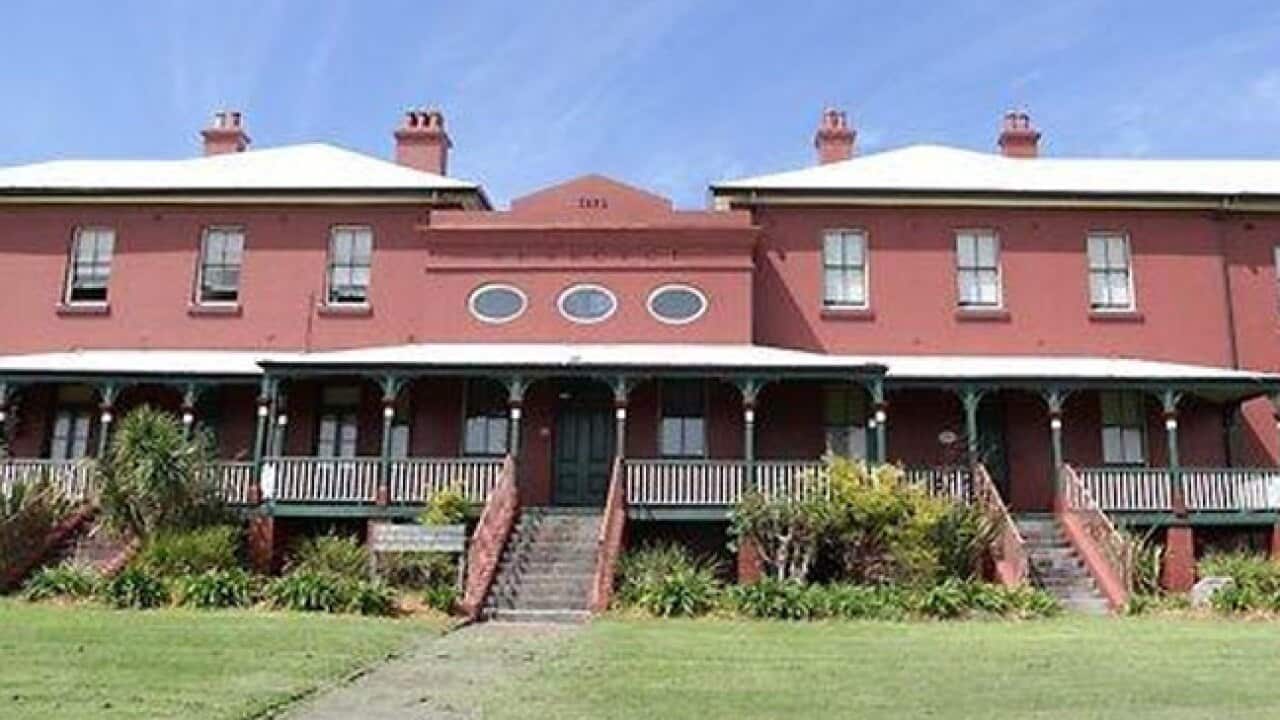
The New South Wales government is facing a decision on how to go forward with quarter-century-old Laperouse Museum in a classic case of where two communities collide.
In 1788, just six days after the first fleet of convicts arrived in Botany Bay to establish a British colony, French explorer Jean-Francois de Galaup Laperouse reached the bay.
The British would move on to today's Sydney Harbour two days later, and Comte de Laperouse would move his ships on to other lands just six weeks later.
But the entrance to the bay where the French stayed, now the south-eastern Sydney suburb of La Perouse, remains the very essence of French history in Australia.
And Friends of the Laperouse Museum secretary Tony Gentile says the French community wants its own section of the museum, separate from Aboriginal displays.
"It's just that we think that the Laperouse story, if you turn it into six weeks in Australia among 7,000 years of Aboriginal history and culture, the essential Laperouse story, which was part of the bicentennial gift, would be lost."
The French-Australian community, with backing from the French government, donated items of the museum to Australia as a bicentennial gift in 1988.
A historic cable station in the 1880s, it now houses up to 2,000 artefacts, relics and exhibits covering both Comte de Laperouse's voyage and local Aboriginal history.
But the La Perouse Local Aboriginal Land Council wants an integrated museum that, as it sees it, puts the French history into the context of those thousands of years.
By various accounts, La Perouse is the only Sydney suburb where Aboriginal people have had an unbroken connection since sea levels stabilised, believed to be 7,000 years ago, to form today's coast.
And with the Land Council now owning the Aboriginal reserve there, it stands as the only suburb where Aboriginal people have kept their territory from European settlement to today.
The chairwoman of the Land Council, Marcia Ella-Duncan, says the museum needs to tell the story of the area in full, chronological order as one piece.
"From the Aboriginal community perspective, we have occupied this land from time immemorial and have continued our occupation and association with the area. And so we certainly want an interpretation that reflects that continuing association -- you know, our traditional spiritual, cultural association with the area. So, the position that I took, in representing the Aboriginal community, was that it needs to be ... in chronological terms, reflect the whole history and not just part of it."
Both sides of the argument are quick to acknowledge the importance of the other culture's story.
The disagreement is only over how best to present the story of the place.
Tony Gentile, an Italian immigrant whose French ties come through his mother, argues La Perouse is the only realistic place to tell the French story in Australia.
He says it is an almost unbelievable story and needs to stand alone.
"The meeting between Laperouse and Governor (Arthur) Phillip is almost like a meeting of the Americans and the Russians on Mars, in terms of the times. So it is a particular story, and it has a particular meaning to the area. It is where the very first Catholic burial occurred, of Pere Receveur. It is a place where the very first Catholic mass was said in Australia. The area here has French Street. It has Frenchman's Road and Perouse Road. And the reason they're called that is because the Frenchmen would walk across to go to Sydney Cove to talk to the English. You know, so it's got a separate history, and it's got a separate theme, if you wish, to the Aboriginal theme."
Pere Laurent Receveur was a chaplain with the expedition who died during the six-week stay, then was buried on the headland where the museum sits.
Marcia Ella-Duncan remembers learning all about that as a schoolchild in La Perouse.
Ms Ella-Duncan, sister to rugby union's famed Ella brothers, says the French history in the area is indelibly imprinted on her mind, dating back to one of her earliest memories.
Every Bastille Day at the local public school, the kids would march down to the monuments to Comte de Laperouse and Father Receveur and sing the French national anthem.
"There's quite a notable photograph, in fact, of me and my three brothers. I think I might have been all of two or three years old. My brothers were at school -- they're in school uniform. It's obviously Bastille Day, they're down there singing the anthem. And the photograph is with the French consul-general, I think, in his full formal regalia, you know, that headwear and full military, or naval, uniform. It's quite a notable photograph, actually. I'm not going to deny that that's part of my history, part of my growing up. Why should I, you know, try to deny or diminish that part of my community's history?"
New South Wales Heritage Minister Robyn Parker has declined to be interviewed about the issue.
She's merely said the government expects to announce its decision before too long.
History professor David Carment, who chaired a committee assessing the issue for the Minister, says he would love to discuss it but has been told a decision is coming soon.
And Foreign Minister Bob Carr, a history buff who comes from nearby Maroubra and is a patron of the museum, did not respond to a request for an interview.
It is a delicate issue, and Tony Gentile and Marcia Ella-Duncan, then, are left to explain it.
Mr Gentile says, on top of everything else, the story of Comte de Laperouse is actually about much more than the six weeks in Australia.
He says it is about French exploration in this part of the world, ranging from Samoa, where some of his men were killed, to the Solomon Islands, where he disappeared.
"We recently had a visit from Philippe Laperouse, who is the great-grandson of the explorer. And he made a special trip. He was in Melbourne to address a conference, made a special trip to Sydney. And it's a pilgrimage place for a lot of French people when they come to Australia. This is very, very common amongst French tourists to Australia, French citizens who come to Australia for business. It is almost a -- using a French word -- a de rigueur place to come and visit. (chuckling ... )"
But, of course, for Marcia Ella-Duncan's community, it is not about a place to come and visit.
It is a place the Kameygal people first owned, a place where they had plenty of fish, plenty of fresh water, plenty of natural shelter those thousands of years ago.
To Ms Ella-Duncan, it is all one story.
"I think, when we get into the argument about, you know, should we have a separate room, or a separate floor, or a separate area, then I think that starts to diminish that whole full, complete story. And, you know, I say that on behalf of the Aboriginal community and the French community."







