In brief
- Several parties have announced migration policies in the past year.
- Labor says housing construction needs a chance to "catch up", while One Nation says it plans to end "mass migration".
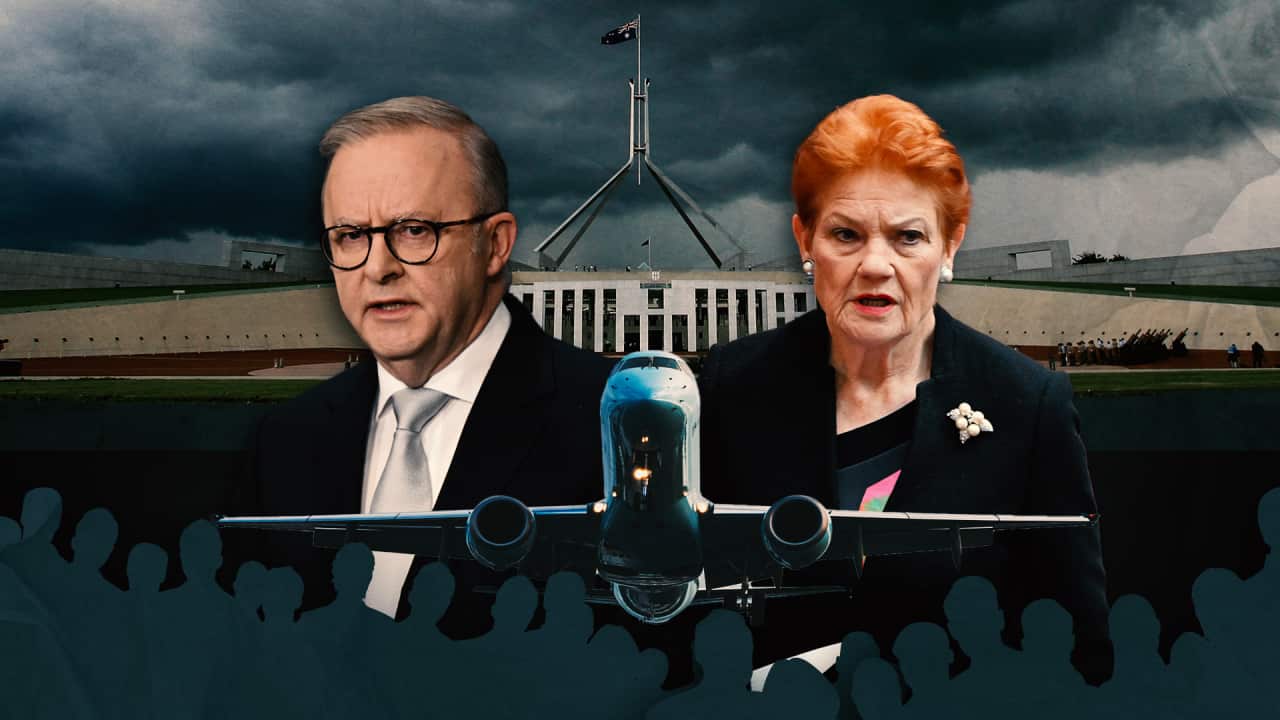
After weeks of headlines dominated by One Nation, the federal government has unveiled its long-awaited migration reforms.
Notably, Home Affairs Minister Tony Burke did not name Pauline Hanson's party during his 35-minute National Press Club speech on Thursday, and he was quick to point out the policy had been in the works since last year.
"It's simply demonstrably wrong to suspect that somehow this is a recent bit of work done to deal with a political climate; it's not," he said.
Yet some analysts say it's difficult not to see the government as responding to the rise of One Nation, which has overtaken Labor on the primary vote and is the favoured party on immigration, according to some polls.
Nine newspapers reported Prime Minister Anthony Albanese was concerned about the optics of using a forum like the Press Club to draw more attention to an issue being dominated by One Nation — a claim Burke rejected on Thursday.
News that makes sense
Your trusted source for staying up-to-date with the world around you. Get free daily news updates and analysis, straight to your inbox.
One Nation announced its migration policy earlier this week, promising to end "mass migration" by cutting temporary visas by 750,000 over three years and delivering net negative migration to ease pressure on housing, healthcare and infrastructure.
That follows the Coalition's plan announced in April, while the Greens' policy platform is the same one it took to the 2025 federal election.
With the political battle lines drawn on one of the most major issues facing Australia, where do these parties stand on migration?
Labor
The government wants to reduce Australia's net overseas migration (NOM) figure from its current level of 292,100.
It has forecast figures of 245,000 for 2026-27 and 225,000 each year thereafter.
Burke acknowledged in his address there were housing pressures, but rejected claims Australia was experiencing mass migration.
"We need immigration to soften enough that housing has a chance to catch up," he said.
He outlined three parts to the reform: who arrives, who stays and who leaves.
Among the most consequential changes are those affecting students, backpackers, visa overstayers and "visa hoppers".
International students will no longer be able to bring their family members to Australia, though there are some exceptions, including for PhD students.
To extend their visas, a student will now have to transfer to a higher course, such as from a bachelor's degree to a master's.
A ballot system and cap will be introduced for second and third-year working holiday-makers. There will be 45,000 second-year places and 5,000 third-year — down from the current 57,000 and 31,000 respectively.
Visa overstayers, estimated at 77,000, will be detained, reviving a policy in place before 2015. The government is now chasing more facilities, compliance officers and beds to prepare.
However, it said the enforcement would not resemble the mass deportations and arrests seen in the United States.
The points test, which determines which skilled migrants are admitted to Australia, will be revamped to treat construction-related qualifications as equivalent to university degrees.
Tweaks to ministerial directions will also prioritise visa applicants with in-demand skills, including in healthcare, construction, education and law enforcement.
One Nation
One Nation released its migration policy document on Monday, promising to reduce the number of temporary migrant places by 750,000 over three years.
After three years of net-negative migration, a strict NOM cap of 130,000 would be implemented.
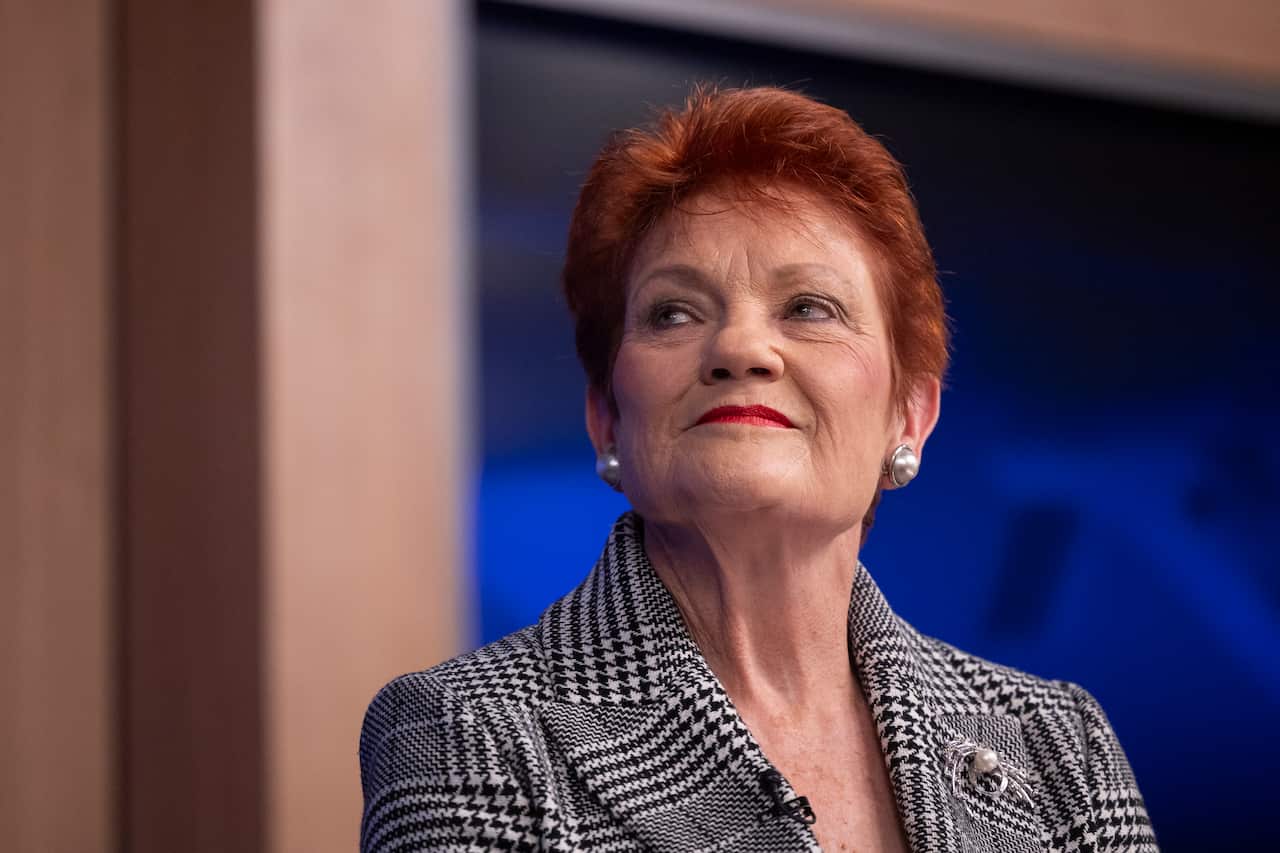
International students, recent graduates, and their family members would be targeted, with places reduced by almost 470,000 over three years.
Temporary skilled visas would be cut by just over 100,000, and family members would no longer be eligible to receive visas.
The party also promised a crackdown on illegal migrants.
No changes are proposed to the working holiday program, or the Pacific Australia Labour Mobility scheme, which allows businesses to employ Pacific Island workers.
One Nation leader Pauline Hanson said the plan would return Australia's temporary migrant population to 2017 levels.
The Coalition
In April, the Coalition revealed its Australian Values Migration Plan, which promised to reduce the government's "out of control migration".
It proposed linking Australia's migration intake with the number of new homes built each year, which is around 170,000.
Adhering to an Australian values statement — covering issues such as freedom of religion, English as the national language, and a "fair go for all" — would become a legally binding visa condition.
A fast-tracked refusal process for unfounded protection claims would be established, along with additional funding for law-enforcement deportations.
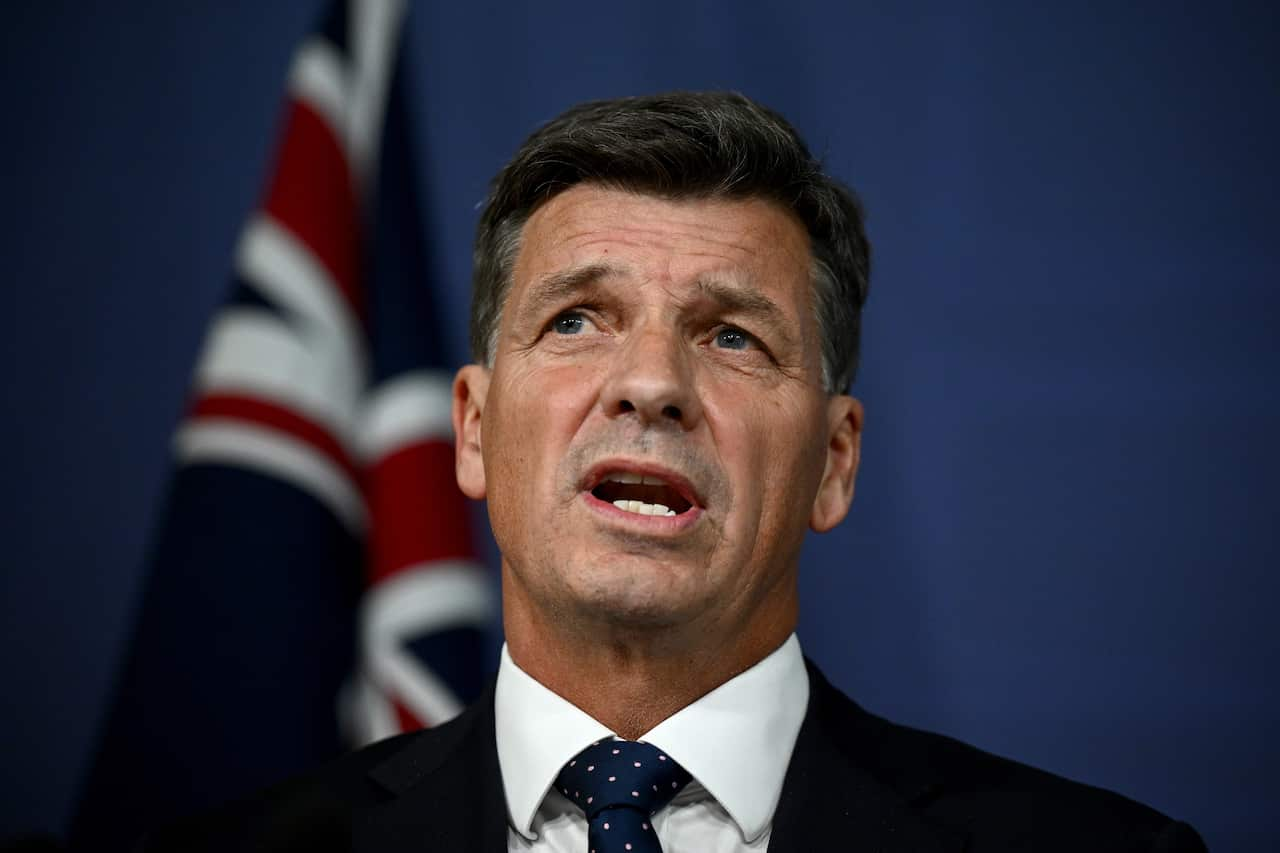
"The Coalition will pursue a values-based migration scheme that puts Australian values first, and shuts the door to those who hate our country or abuse our legal system to stay here without a right to do so," Opposition leader Angus Taylor said.
Taxpayer support for home ownership would be prioritised for Australian citizens, while non-citizens would wait longer for access to social security benefits.
Temporary protection and safe haven enterprise visas would become the dominant onshore protection visas for people who arrive in Australia illegally.
The Greens
The Greens are the only party listed here that have not proposed cuts to migration.
A key plank of its policy platform is to expand Australia's humanitarian intake to 50,000 places per year — up from the current 20,000.
It wants to provide pathways to permanency for those on temporary protection visas, as well as ending indefinite and offshore immigration detention.
The party would clear the backlog of family and partner visa applications within three years, and cap family reunion visa wait times at 12 months to end delays.
It rejects the link between migration and housing, instead advocating for stronger renter protections and better supplies of public and affordable housing.
The Greens criticised Labor's changes, particularly the expansion of detention centres.
"Labor wants to take Australia back to the Abbott era of immigration policy. Back to Tony Abbott's playbook. Back to 2015 — an era that Donald Trump says inspired his immigrant crackdown," Greens leader Larissa Waters said.
"They’re not doing that because it will have any impact on the housing crisis, or the cost of living. They’re trying to outdo Pauline Hanson."
For the latest from SBS News, download our app and subscribe to our newsletter.







