
The capture of Nicolas Maduro and the announcement that the United States will "run Venezuela" is no doubt being closely monitored by its longtime allies Iran, Russia and China — but the developments will affect each nation differently.
US President Donald Trump's announcement that the US will "run" Venezuela and tap its huge oil reserves after snatching the leftist leader out of the country during a bombing raid on Caracas received mixed international reactions.
Trump's announcement came hours after a rapid attack in which special forces grabbed Maduro and his wife, while airstrikes pounded multiple sites, stunning the capital city.
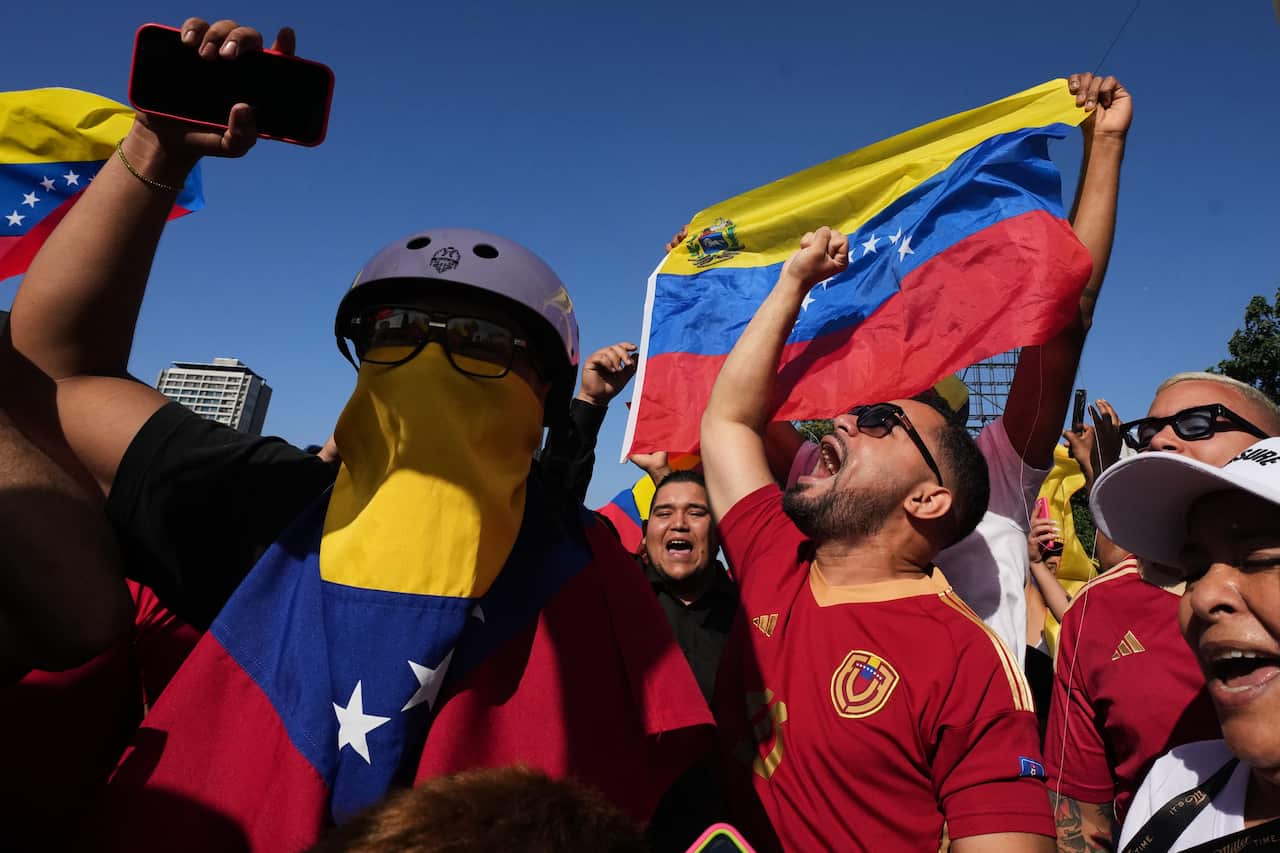
The UN secretary-general Antonio Guterres said he was "deeply alarmed".
News that makes sense
Your trusted source for staying up-to-date with the world around you. Get free daily news updates and analysis, straight to your inbox.
"Independently of the situation in Venezuela, these developments constitute a dangerous precedent. The Secretary-General continues to emphasize the importance of full respect — by all — of international law, including the UN Charter," his spokesperson said in a statement.
"He's deeply concerned that the rules of international law have not been respected."
Venezuela's allies have condemned the developments — but the ramifications will be different for each.
Moscow
The Russian Foreign Ministry has called the US' actions "deeply concerning and condemnable" in its first response to the events in Venezuela and is now demanding the release of Nicolas Maduro.
In October, Russia and Venezuela signed a "strategic co-ordination" treaty, deepening military ties. Moscow pledged to "stand ready" to support its South American ally. It supplied air defence systems and anti-ship missiles.
None of it helped Maduro.
While Russia may be criticising the American intervention in Venezuela, there's one aspect of the operation that's likely pleasing to Russian President Vladimir Putin, as he continues his war in Ukraine: The idea that great powers write the rules for themselves, that the 'international rules-based order' is dead and buried and it's the strong who determine what's right and what’s wrong.
Still, it hasn't been a good couple of years for Russia's interests abroad, losing key allies in Damascus — and now Caracas.
Even more concerning for the Kremlin, should the US gain control of Venezuela's oil reserves, it would allow Washington more control over global supply, and therefore prices.
It's energy exports that fund the Russian war machine.
Beijing
Hours before Maduro's capture, a Chinese delegation met the now-deposed president — the visiting dignitaries providing him with no protection from what was to come.
Beijing issued a statement declaring it is "deeply shocked and strongly condemns the US's blatant use of force against a sovereign state".
Will it alter President Xi Jinping's calculus when it comes to Taiwan? Probably not.
The Chinese President is playing a long game. He'll also likely want to draw a contrast with Washington, suggesting it's China that is committed to respecting international law.
If the US is drawn into a long-term commitment in South America, drawing resources and attention away from the Indo-Pacific, it will suit Beijing just fine.
In recent years, about 80 per cent of Venezuela's oil exports have gone to China. Trump has said it will allow sales to continue.
Tehran
It's been a busy start to 2026 in geopolitics. Little more than 24 hours ago, President Trump made headlines when he warned the Iranian government that should peaceful protesters be shot, the United States is "locked and loaded and ready to go".
Tehran dismissed the threat, warning the United States against adventurism. They might be re-thinking their approach today.
Obviously, decapitating the Iranian regime would be a lot more challenging than what has occurred in Venezuela. Even the US military’s top units would struggle to find the Ayatollah and drag him from his bed.
But President Trump has already taken military action against Iran; providing the key strikes against nuclear facilities during Israel’s 12-day war in June.
Cheering from the sidelines is Israel, with key political figures urging Iran to "pay close attention" to what’s happening in Venezuela.
Havana
"I think Cuba is going to be something we'll talk about".
This brief comment from President Trump deep into his overnight press conference will have got the attention of the leadership in Havana.
US Secretary of State Marco Rubio's parents fled Cuba in 1956 and he's a vocal critic of the communist government.
Cuban President Miguel Diaz-Canel Bermudez has denounced the US operation in Caracas calling it a "criminal attack".
Even if the US doesn’t run the same playbook in Havana, Cuba will be severely impacted by events in Venezuela. It sends huge amounts of oil to the island nation, which is facing its most severe economic crisis in decades.
An interesting aside — many of the guards who protected Maduro were Cuban, as he'd grown to distrust his own personnel.
Copenhagen
Did this sub-heading take you by surprise?
It shouldn't.
Though Denmark is no ally of Venezuela — it will be closely watching the developments.
The nation has not liked President Trump's rhetoric regarding Greenland, a Danish autonomous territory. Trump's made it clear he "wants it", but so far has done little about it.
Some ham-fisted attempts to curry favour for the US among Greenlanders have gone nowhere. Free red baseball caps didn't do the trick.
The idea the United States would ever take the island by force has always seemed unlikely; Denmark is a NATO ally after all.
But now? Nothing can be ruled out. President Trump could simply declare US bases in Greenland have been annexed and there's little the Danes could do about it.
For the latest from SBS News, download our app and subscribe to our newsletter.







