
United States President Donald Trump has said the US has captured Venezuelan President Nicolas Maduro and his wife and removed them from the country, after a wave of airstrikes on the South American nation.
"The United States of America has successfully carried out a large scale strike against Venezuela and its leader, President Nicolas Maduro, who has been, along with his wife, captured and flown out of the Country," Trump said in a post on his Truth Social platform.
"This operation was done in conjunction with U.S. Law Enforcement. Details to follow, Trump said, adding that there would be a news conference at 11am local time (3am AEDT) at his Mar-a-Lago residence in Florida.
Venezuelan vice president Delcy Rodriguez has said the Venezuelan government does not know the whereabouts of Maduro or his wife, Cilia Flores.
"We demand immediate proof of life of President Nicolas Maduro and the first combatant Cilia Flores," Rodriguez said on Saturday morning in an audio clip played on state television.
News that makes sense
Your trusted source for staying up-to-date with the world around you. Get free daily news updates and analysis, straight to your inbox.
Earlier, the Venezuelan government released a statement condemning US "military aggression" after the nation's capital and other areas were hit with airstrikes.
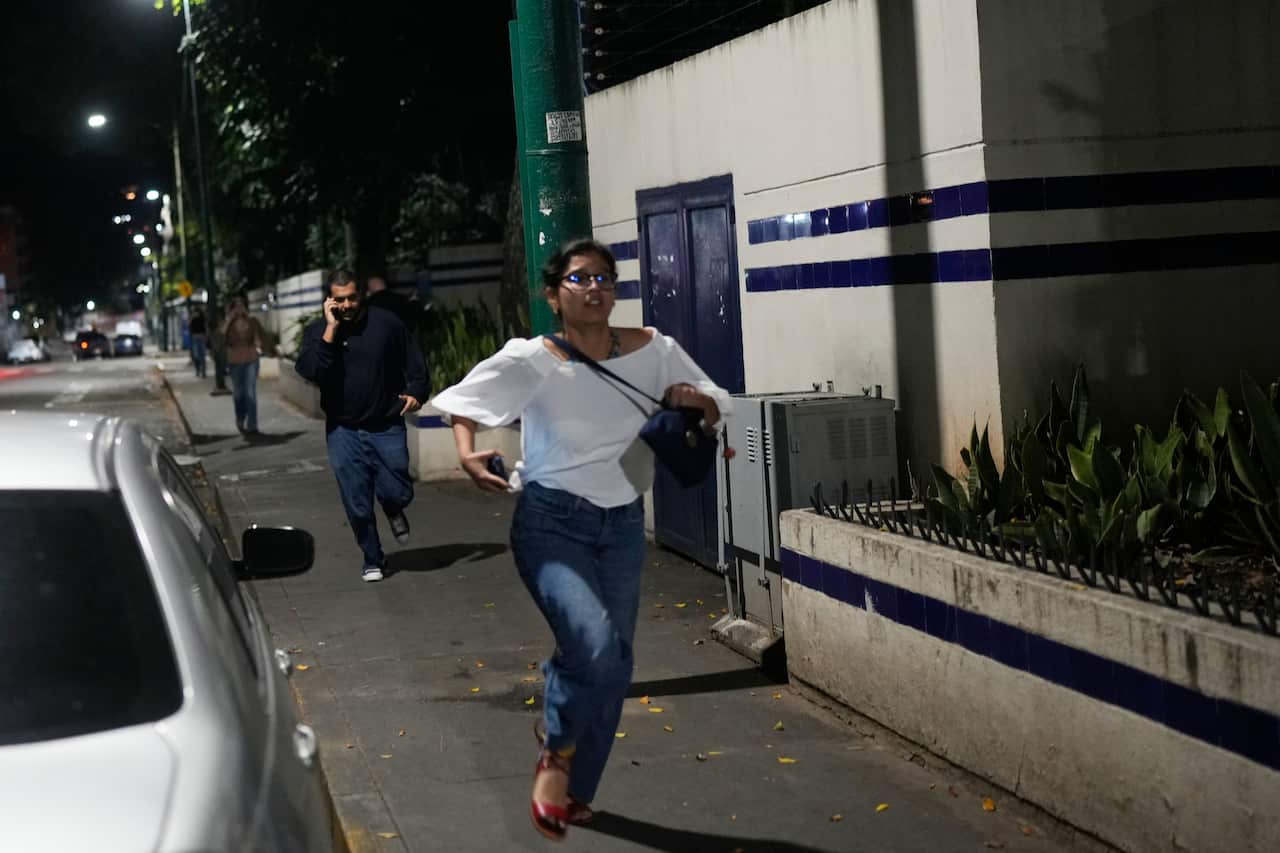
Attacks took place in the capital of Caracas and the states of Miranda, Aragua and La Guaira, the statement said, prompting Maduro to declare a national emergency and call on social and political forces to "activate mobilisation plans".
Multiple explosions rocked Caracas at around 2am local time on Saturday morning and columns of black smoke and aircraft could be seen, according to Reuters witnesses and posts circulating on social media.
A power outage affected the southern area of the city, near a major military base, witnesses said.
Venezuelan defence minister Vladimir Padrino Lopez said US forces had "desecrated our soil, going so far as to strike, using missiles and rockets fired from their combat helicopters, residential areas populated by civilians".
The South American country would launch a "massive deployment of all land, air, naval, riverine and missile capabilities... for comprehensive defence," Lopez said in a video statement shared on social media.
Trump has repeatedly promised land operations in Venezuela. He has not publicly detailed his aims but has privately pressured Maduro to flee the nation, Reuters has reported.
The US has made a major military buildup in the region, including an aircraft carrier, warships and advanced fighter jets stationed in the Caribbean.
Trump has sought a "blockade" of Venezuelan oil, expanded sanctions against the Maduro government and staged more than two dozen strikes on vessels the US alleges were involved in trafficking drugs in the Pacific Ocean and Caribbean Sea.
Trump said on Monday it would be "smart" for Maduro to leave power.
The Venezuelan government said in its earlier statement that the goal of the attack was for the US to take possession of the country's oil and minerals, adding that the US "will not succeed".
"In strict adherence to Article 51 of the Charter of the United Nations, Venezuela reserves the right to exercise legitimate self-defence to protect its people, its territory, and its independence," the statement read.
"We call upon the peoples and governments of Latin America, the Caribbean, and the world to mobilise in active solidarity in the face of this imperial aggression."
The US has not made such a direct intervention in Latin America since the invasion of Panama in 1989 to depose military leader Manuel Noriega, over similar allegations.
For the latest from SBS News, download our app and subscribe to our newsletter.







