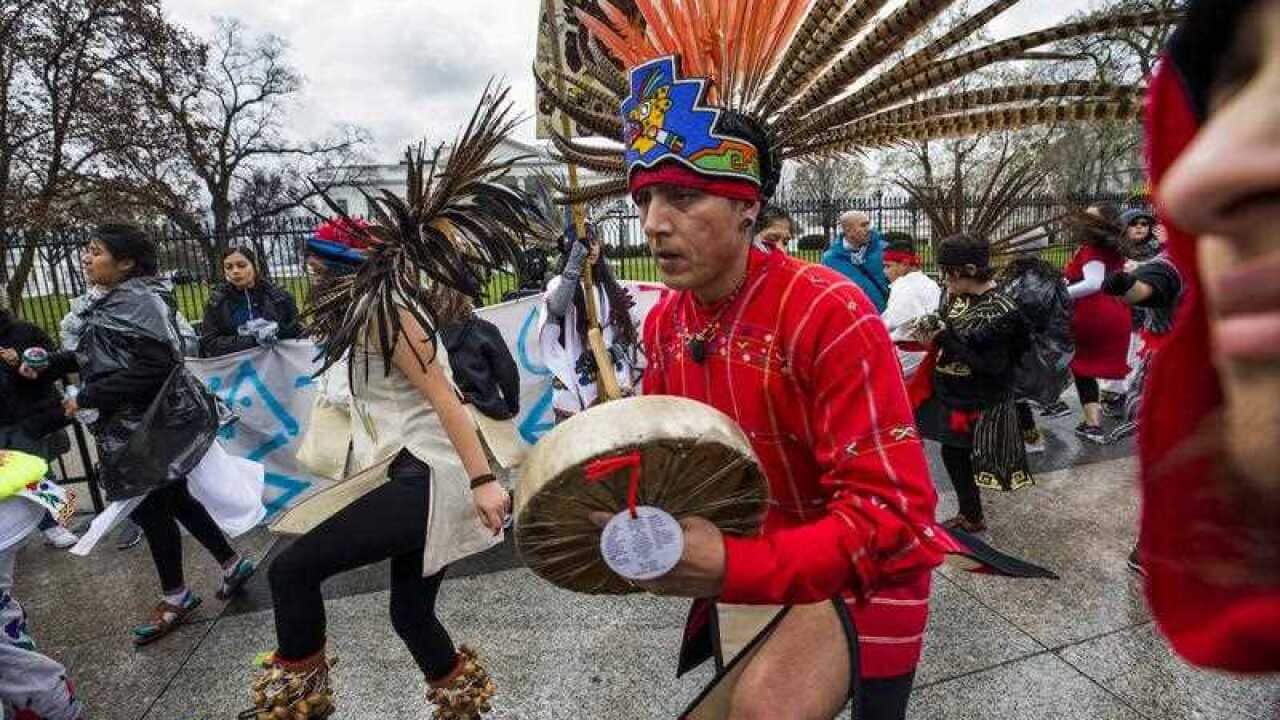
Chanting "water is life," and shouting out tribal calls, a circle of dancers beat on drums during the protest joined by as many as 600 people opposed to the Dakota Access Pipeline, part of which runs through lands inhabited by the indigenous groups.
Demonstrators of all ages marched through the capital before gathering outside the White House, many wearing traditional dress and feathered headdresses and draped in colorful printed blankets.
"The government is violating our public right to clean water," Sarah Jumping Eagle, 44, a member of the Oglala Lakota tribe, told AFP.
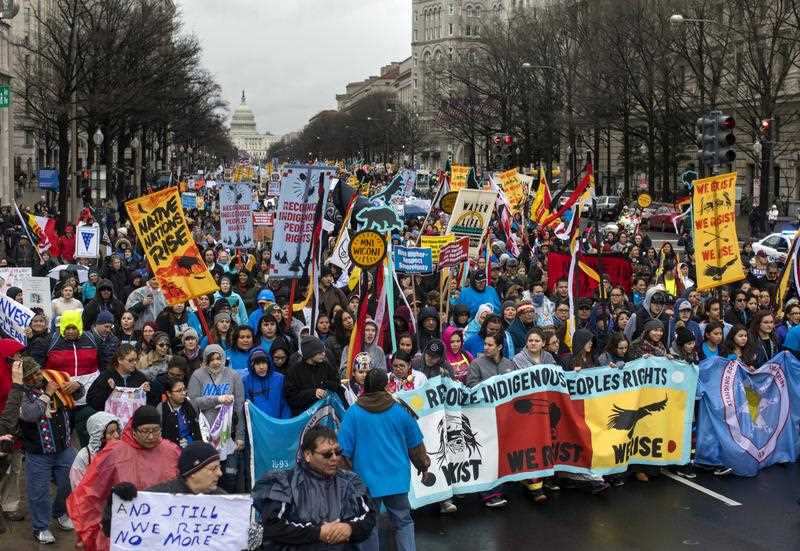
A physician, Jumping Eagle arrived in Washington late Thursday after making the long trek from North Dakota with several other demonstrators, to show her concern over the potential for oil spills and contamination from the nearly-completed construction project.
News that makes sense
Your trusted source for staying up-to-date with the world around you. Get free daily news updates and analysis, straight to your inbox.
"We know that we have to protect the water for future generations," she said.
"People are tired of the government not listening to us and not listening to the word of the people," she added.
"They are supposed to represent us and not corporations."
Melanie Carpenter said she was not from the tribes affected, but is standing in solidarity with protesters.
"I'm living on occupied land," she said. "If we're ever going to live in peace we have to honor where we came from, and part of that is respecting people who were here first."
In the first week of his presidency, Donald Trump signed executive orders to revive the Dakota Access project, along with a second pipeline put on hold by the Obama administration, Keystone XL.
Native Americans and their supporters camped out for nearly a year at the North Dakota pipeline route, physically blocking construction at the site.
Many who had camped throughout the winter finally ended their protest last month, after authorities gave them an ultimatum to quit the site.
The Standing Rock Sioux tribe and their backers say the pipeline threatens the Missouri River and the Lake Oahe reservoir, a key drinking water source.
They also worry about the impact on nearby sacred lands.
During warmer months, the encampment sometimes swelled to thousands of demonstrators, drawing international attention.
The Dakota pipeline, which will transport more than 500,000 barrels of crude oil each day, is expected to become operational later this month, according to Energy Transfer Partners, the company handling the construction.







