

Key Points
- Foreign Minister Penny Wong has spoken with US secretary of state Marco Rubio.
- She said the pair discussed the Strait of Hormuz, which has been effectively closed by Iran during the war in the Middle East.
Australia does not want to see the United States, Israel and Iran war in the Middle East continue to escalate, Foreign Minister Penny Wong has told her US counterpart.
Wong spoke with US secretary of state Marco Rubio on Friday morning, discussing the conflict in the Middle East and Iran's escalating retaliatory action in response to initial strikes by the US and Israel in February.
The pair discussed how the choking of the Strait of Hormuz — a key route for around a fifth of the world's oil and gas exports on Iran's southern border — was impacting the global economy and energy security.
Wong condemned Iran's attacks on merchant vessels in the Strait of Hormuz, strikes that led to global oil and petrol prices skyrocketing.
"We agreed that the international community must keep working together to ensure critical waterways are not held hostage by the Iranian regime," she said in a statement.
"Australia does not want to see the conflict continue to escalate."
The call follows similar discussions throughout the week with Wong's counterparts from the European Union, Malaysia, Singapore and South Korea.
She said Iran's actions, particularly in the Strait, have put pressure on "households, industries and supply chains".
The Australian Consumer and Competition Commission said petrol and diesel price rises between 20 February and 11 March varied widely between Australian capital cities, but had increased by nearly 50 cents on average.
Australia 'glaringly absent' from strait action
Overnight, the United Kingdom, Japan, France, Germany, Italy and the Netherlands issued a statement stating they were prepared to assist in the region and open up the Strait of Hormuz after persistent Iranian attacks.
"We express our readiness to contribute to appropriate efforts to ensure safe passage through the Strait. We welcome the commitment of nations who are engaging in preparatory planning," the statement said.
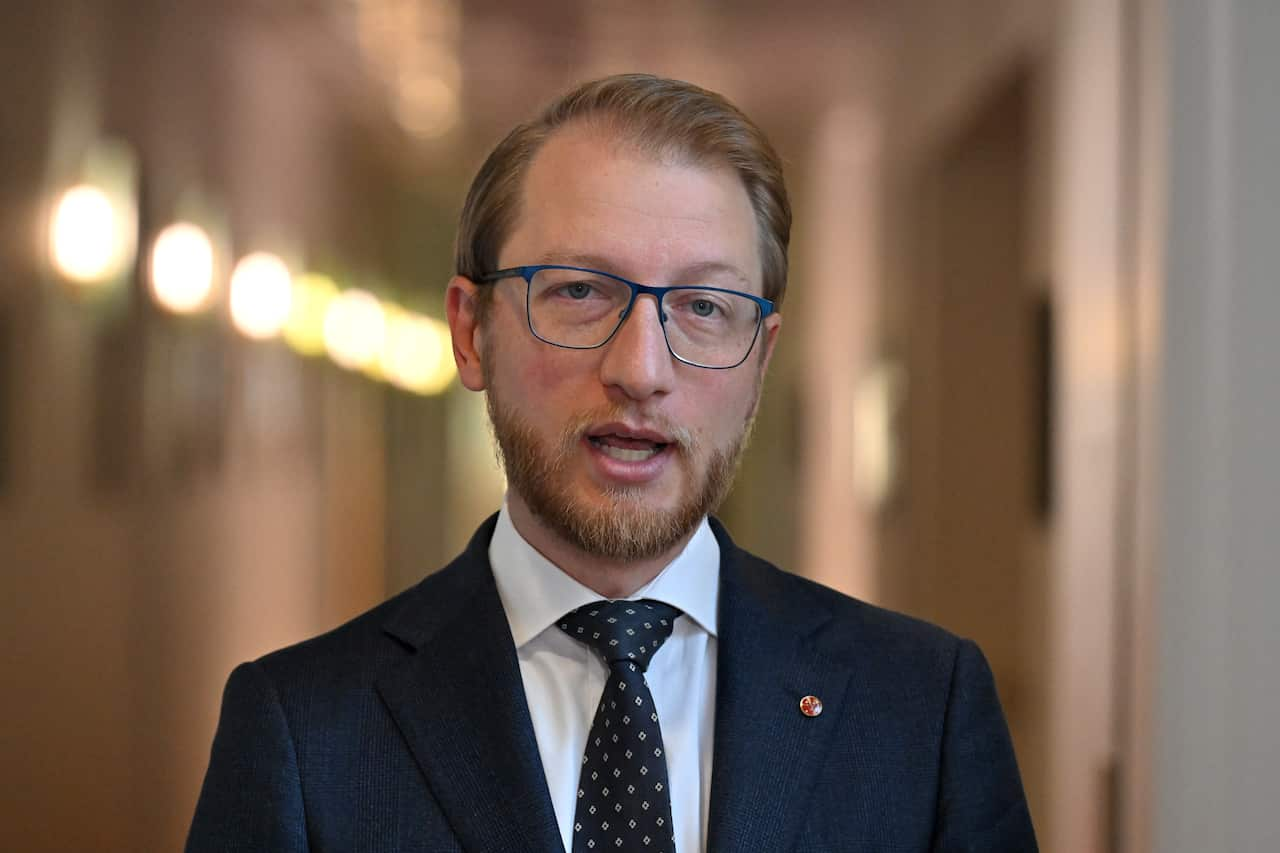
Opposition defence spokesperson James Paterson said Australia was "glaringly absent", asking the government to explain why it was "missing in action".
"With petrol and diesel prices at record highs and experts warning of potential shortages of other critical goods like fertilisers and petro-chemicals, Australia's national interest is clear," he said.
Amid the criticism that the government is not doing enough, Prime Minister Anthony Albanese pointed to the deployment of an E-7 Wedgetail aircraft, which has long-range reconnaissance capabilities, for the airspace about the Gulf States.
"We want to see the Strait of Hormuz opened," the prime minister said on Friday.
"We're offering support, and have support on the ground in the region, including an E-7 aircraft, including the AMRAAMs (missiles) that we've supplied to the United Arab Emirates, and we’re working with our allies, including, once again, calling for the Iranian regime to allow freedom of navigation."
For the latest from SBS News, download our app and subscribe to our newsletter.





