
Prime Minister Anthony Albanese has urged Australians to "do their bit" through "uncertain times" caused by the ongoing war in the Middle East in his first national address.
The three-minute address was pre-recorded and broadcast across the country at 7pm on Wednesday, as the economic fallout from Iran's blocking of the Strait of Hormuz intensifies.
Notably, the prime minister refused to label the global fuel supply chain disruptions — that have caused crude oil to skyrocket and caused localised shortfalls due to panic buying — a crisis.
Albanese broke convention for the rarely used method of communication, which has typically been used to announce major national developments such as involvement in the Iraq War.
"My fellow Australians. By nature, we're an optimistic country. But I understand that right now it’s hard to be positive," he said in his opening remarks.
News that makes sense
Your trusted source for staying up-to-date with the world around you. Get free daily news updates and analysis, straight to your inbox.
"The war in the Middle East has caused the biggest spike in petrol and diesel prices in history. Australia is not an active participant in this war.
"But all Australians are paying higher prices because of it."
The address contained no new measures, instead reiterating announcements made in previous days.
These included the National Fuel Security Plan adopted by the National Cabinet on Monday, a three-month fuel excise cut of 26.3 cents per litre and a slashing of a heavy vehicle road user charge for truck drivers.
He advised Australians to go on their Easter breaks but conserve fuel where possible and "do their bit" to get through the challenging times ahead.
"If you’re hitting the road, don’t take more fuel than you need — just fill up like you normally would. Think of others in your community, in the bush and in critical industries," Albanese said.
"And over coming weeks, if you can switch to catching the train or bus or tram to work, do so."
He acknowledged economic shocks would "be with us for months".
Albanese noted that if the situation gets worse, "we can coordinate the next steps together", but didn't elaborate on what that would mean.
SBS News has been told by a senior cabinet source that fuel restrictions are not imminent, instead urging voluntary measures, but the situation is highly volatile.
Minutes following the address, Opposition leader Angus Taylor was quick to label it a "re-run" that lacked "more detail" or a "clear plan".
"There's a lack of confidence around Australia, there’s confusion around Australia about the state of the fuel system," he told 7News.
Pressed about what else the government could do, Taylor demanded "daily updates on what the situation is".
A rare address saved for times of crisis
The address stands in stark contrast with the last few times the nation was addressed, most recently by former prime minister Scott Morrison in March 2020 at the outset of the COVID-19 pandemic.
In February 2009, former prime minister Kevin Rudd used the method to deliver an apology to the Stolen Generations.
Former prime minister John Howard addressed the nation in 2003 to announce that Australia would be joining the war in Iraq.
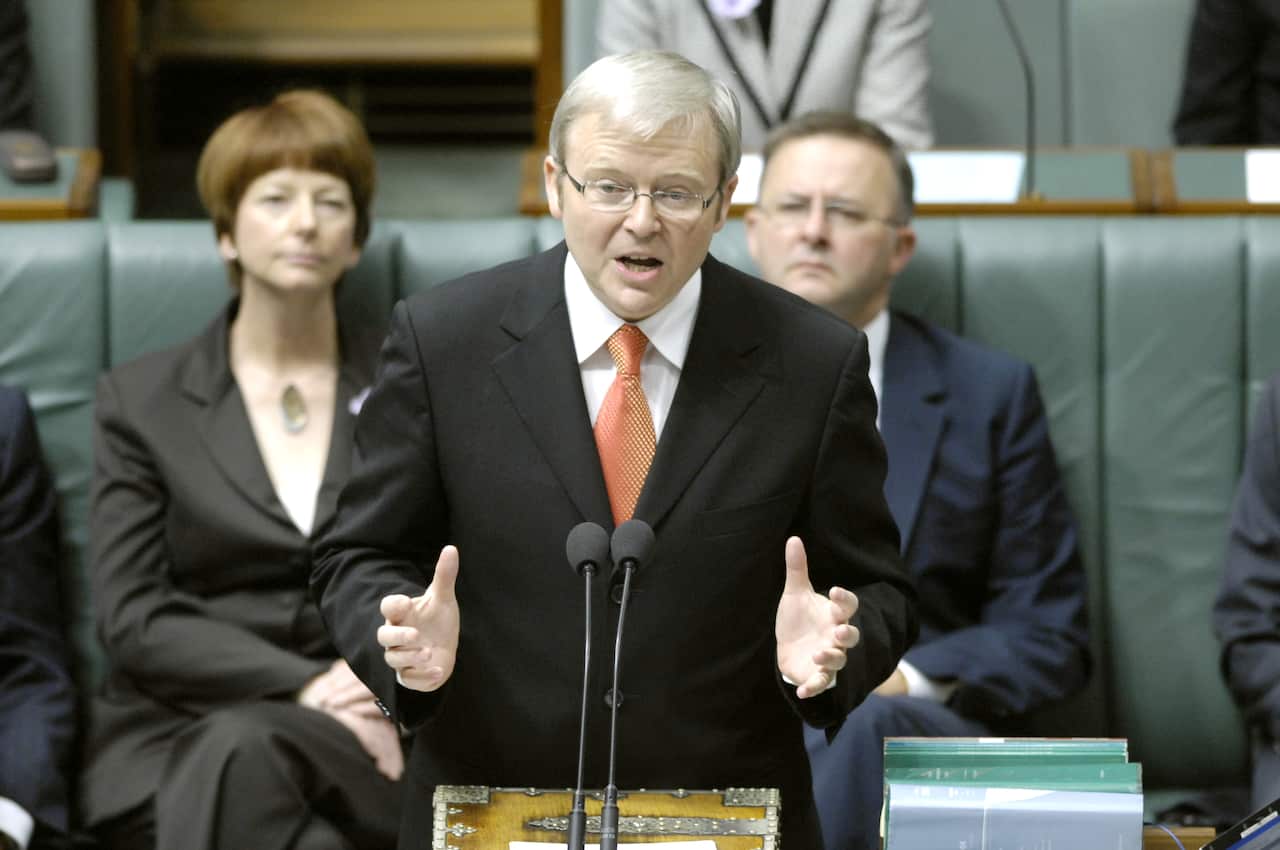
Australia is currently at level two of a four-stage national fuel response plan, and the government has continued to assure the public supply levels remain steady, although demand has spiked prices.
Albanese is expected to further address questions about Australia's position and the possibility of a recession on Thursday, when he appears at the National Press Club.
For the latest from SBS News, download our app and subscribe to our newsletter.







