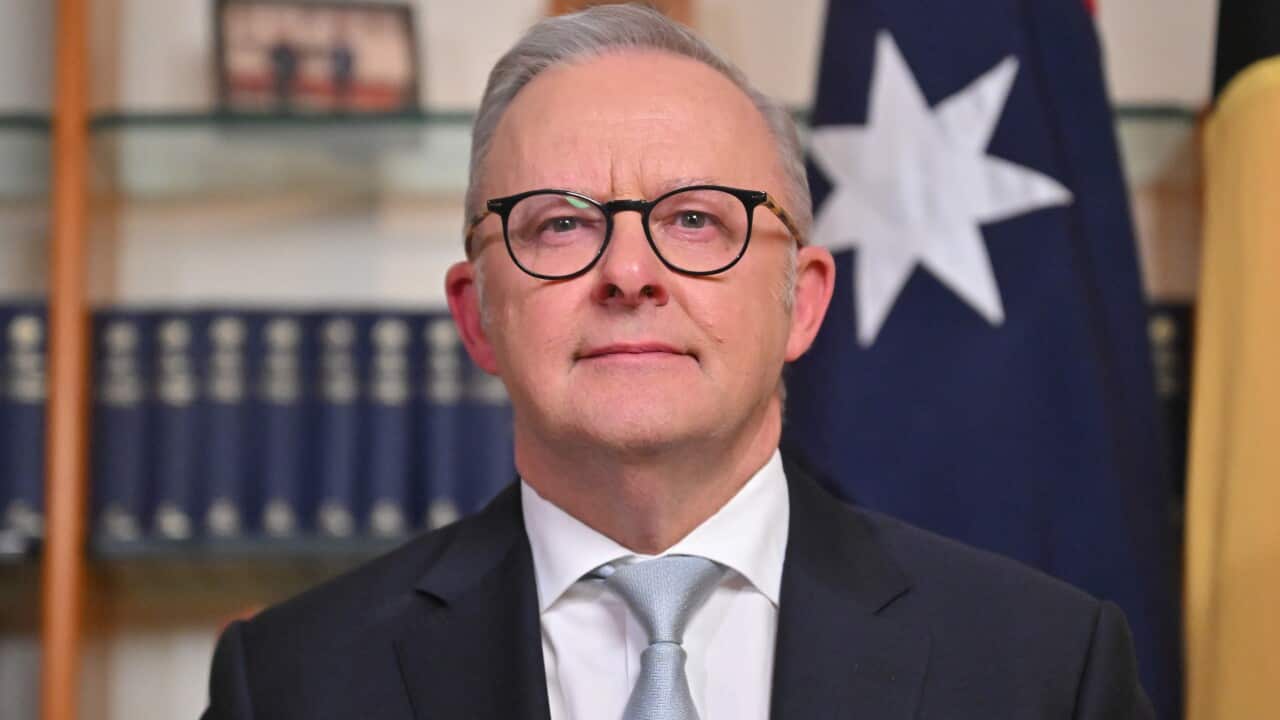
When Anthony Albanese pulled the very rarely used lever of a national televised address, he set the nation on edge.
The prime minister's office confirmed the coordinated broadcast event before lunch, a full eight hours ahead of airtime.
Journalists reported it would detail the government's response and how Australians could help save fuel for those who needed it.
Nails were bitten to the quick. The information vacuum left plenty of room for speculation, and for the ghosts of COVID-19 announcements to haunt.
Because former prime ministers have used addresses to the nation for major moments — such as Scott Morrison during the COVID-19 pandemic and John Howard committing troops to the Iraq war — there was a strong expectation it would contain a major announcement.
News that makes sense
Your trusted source for staying up-to-date with the world around you. Get free daily news updates and analysis, straight to your inbox.
Speculation ranged from fuel rationing to a potential troop deployment.
Albanese has maintained that there are reliable and secure fuel supplies, meaning mandatory restrictions are not imminent.
Adding to that, he and Foreign Minister Penny Wong have repeatedly ruled out sending Australian troops into an "offensive" role in the war.
But as we keep being reminded, these are unpredictable times — and Australia is not in the driver's seat of this conflict.
By dinner, Albanese's primetime moment had come, and it was dutifully watched across the country.
The prime minister spoke of optimism, but conceded it was hard to be positive, warning that "economic shocks" caused by the conflict will continue for months.
There was a reminder that the government has a four-stage plan, and Australia is only at stage two — largely about voluntary measures the population can take to conserve fuel.
Albanese also detailed his government's decision to halve the fuel excise for all drivers and cut the charges for truck drivers to alleviate the spiralling cost burden.
That was followed by a light touch suggestion for how to continue with travel plans over Easter.
"You should go about your business and your life as normal. Enjoy your Easter," he said, adding "don’t take more fuel than you need" and switch to public transport over the coming weeks if you can.
There was reassurance and a promise to protect the nation.
"So that if the global situation gets worse and our fuel supplies are seriously disrupted over the long term, we can coordinate the next steps together."
But it is the final seven words that linger — hinting at what may come next.
"We can coordinate the next steps together."
While fuel continues to flow for now, everyday Australians are becoming increasingly familiar with the Strait of Hormuz — the vital waterway Iran has effectively closed — following maps and social media posts tracking maritime choke points, often accompanied by countdowns to 'day zero' of fuel reserves.
The reference to "next steps" is ominous because it's not clear what they are.
It could be fuel rationing or fuel capping, but the federal government has not outlined exactly what fuel reserve level would trigger that kind of response.
Australia is the sixth-largest country in the world, and voters are watching as nearby nations like Indonesia have introduced fuel rationing.
For weeks, the nation has been told not to panic or panic buy, but Albanese's address to the nation has heightened anxieties of dark days ahead.
Our lives and our wallets have been drawn into a foreign war, triggered without consultation by our closest ally, the United States, in tandem with another ally, Israel.
Australia has drawn the ire of US President Donald Trump, featuring multiple times in social media posts where the commander in chief has vented about a lack of backup in the war.
The speech had no new announcements and did not tackle the war protagonists once or admonish either side of the conflict directly.
It was domestically targeted, but did it hit the mark?
It set off the country like a tuning fork.
And it's laid the foundations for the possibility of a grim time ahead once the wrappers from this weekend's chocolate eggs have been placed in the wheelie bin.
For the latest from SBS News, download our app and subscribe to our newsletter.







