In Brief
- A battle over the redrawing of congressional maps has escalated in the United States.
- It comes as Donald Trump hopes to secure a majority in November's midterm elections.
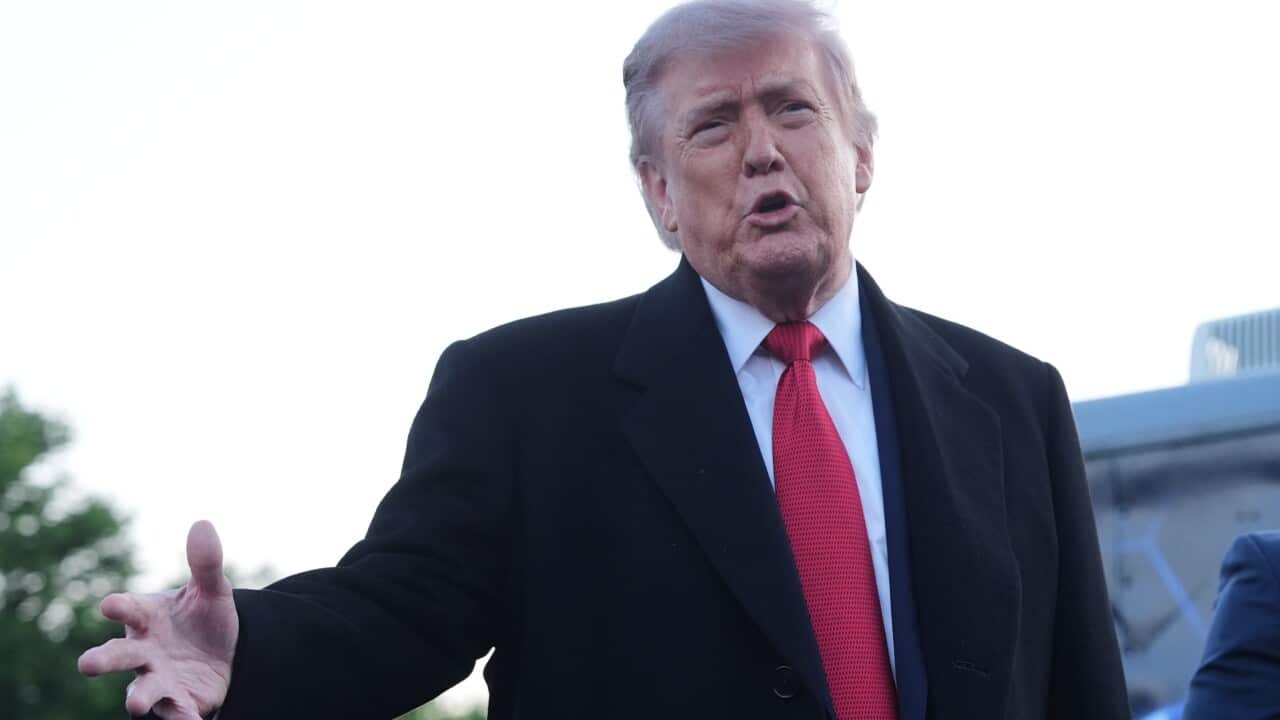
United States President Donald Trump has a plan to hold Congress, as a tough midterm election battle looms. Whether it will work, is looking increasingly unlikely.
It centres on a battle playing out across the United States over the redrawing of congressional maps — a fight that has unfolded over the past year and could determine whether Trump gets to keep control of the House of Representatives following November's midterm elections.
The idea was simple, in theory: have Republican states redraw their electoral lines to effectively take seats from Democrats, thereby securing a majority in the House.
But Democrats have adopted the same playbook in retaliation, spelling trouble for Trump.
Experts are concerned that the brazen vote-grabbing could be dire for democracy and theorise Trump's strategy was never really going to work.
News that makes sense
Your trusted source for staying up-to-date with the world around you. Get free daily news updates and analysis, straight to your inbox.
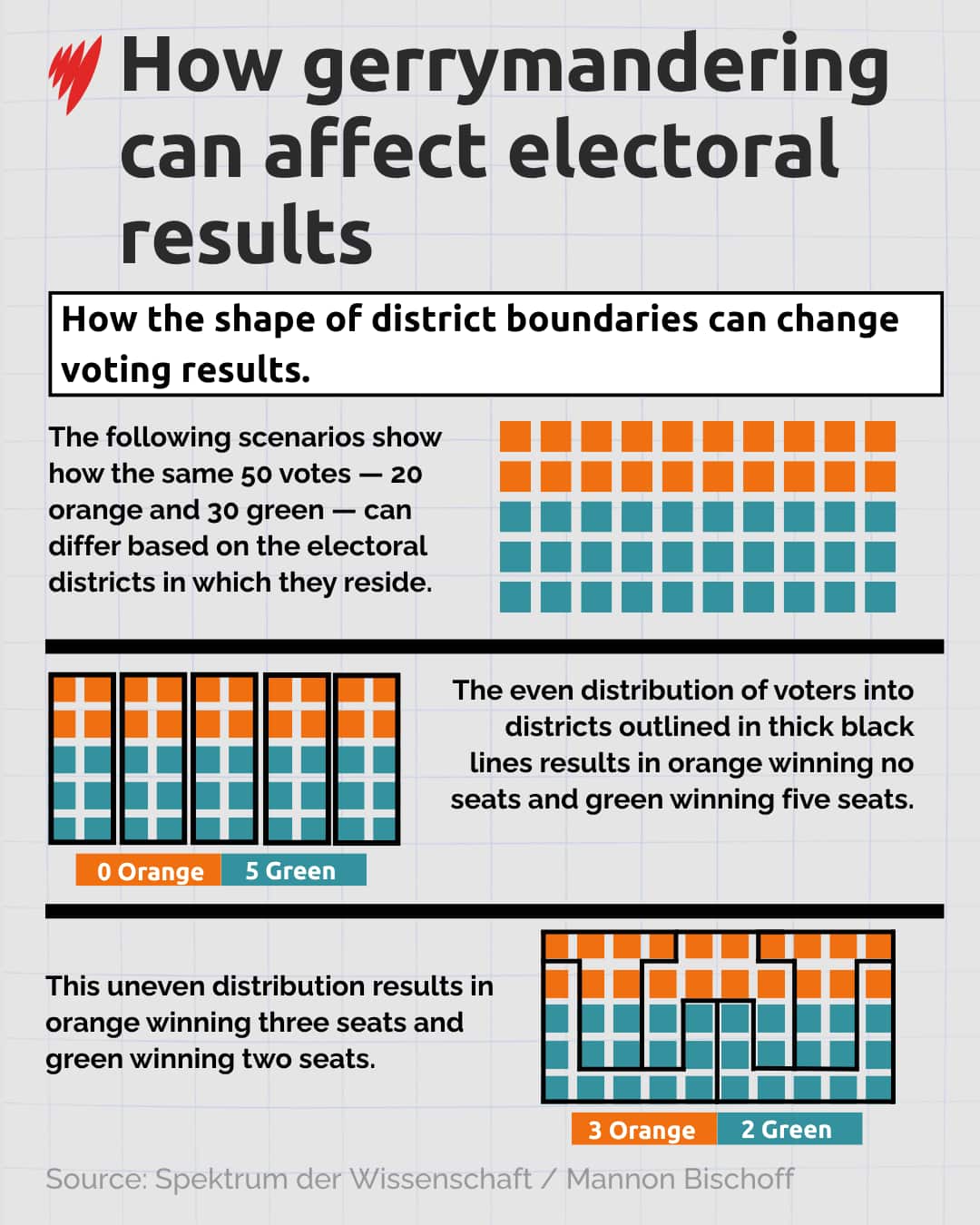
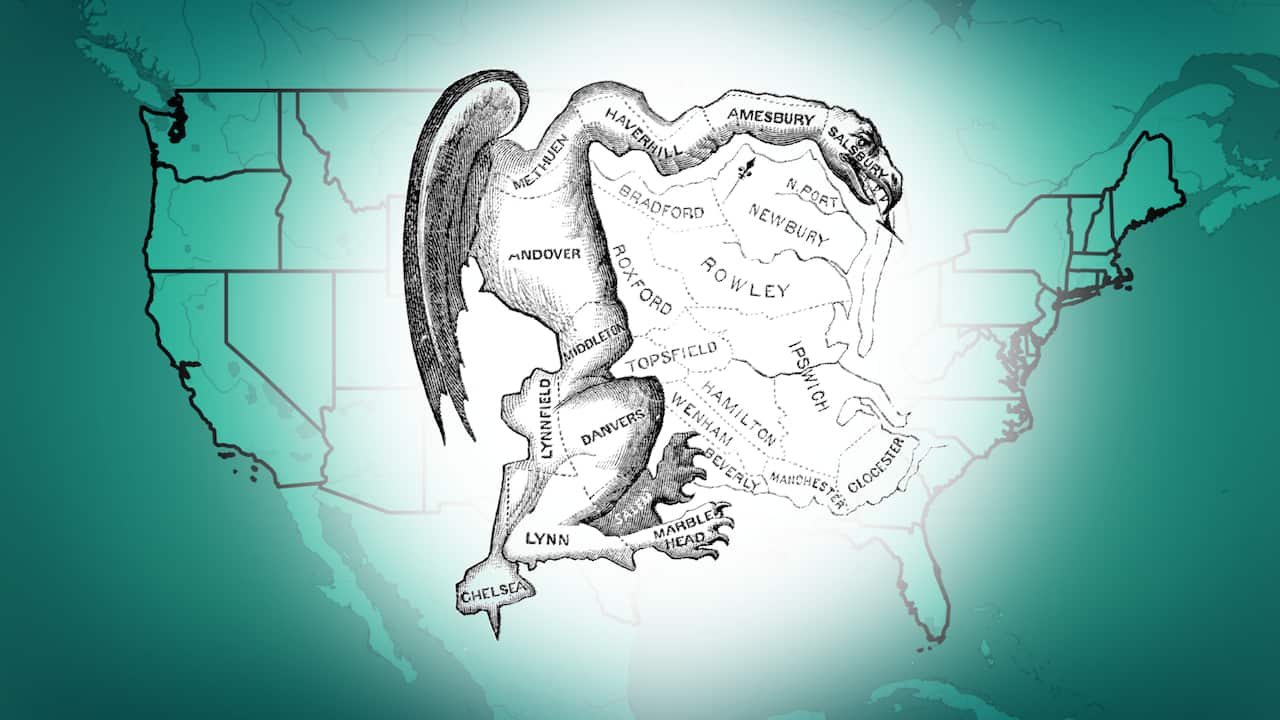
Gerrymandering explained
To understand the fight, let's understand how congressional districts work in the United States.
Unlike in Australia, where independent commissioners draw electoral boundaries, most US states allow their own legislators to redraw congressional districts — the rough equivalent of electorates.
That means the party in power in a given state has enormous influence over how those lines are drawn, and, by extension, over how easy or hard it is for the other side to win seats.
"What we see in the House of Representatives is what they call gerrymandering," Jared Mondschein, Research Director at the United States Studies Centre at the University of Sydney, told SBS News.
"That is where the party in control of the state legislative bodies decides what those maps look like."
The practice is widely seen as undemocratic, though one that federal courts have no power to regulate.
How the map wars started
The current redistricting race was born in Texas.
Last year, Trump pressured Republicans there to tear up their existing congressional map and draw a new one targeting five seats held by Democrats.
Trump was blunt about his intentions, saying at the time he was "entitled to five more seats".
Once Texas had completed the redraw, other Republican-led states began to follow.
Democrats, watching their seat count shrink, decided they had no choice but to respond in kind.
California voted overwhelmingly in favour of new boundaries that could cost Republicans up to five seats. In Virginia, voters approved a new Democratic-drawn map in April that could flip four Republican House seats — prompting Republican senator Ted Cruz to call it a "brazen abuse of power and an insult to democracy".
Virginia state senator Louise Lucas, who orchestrated the redraw, was less diplomatic.
"You all started it and we f---ing finished it," she said.
Mondschein said: "What started with Texas is now continuing through Virginia and Florida."
"It's one state after another, and it's a bit of a race to the bottom."
The broken-winged pterodactyl
Mondschein says you only need to look at the maps themselves to see what gerrymandering does in practice — and that it's happening on both sides.
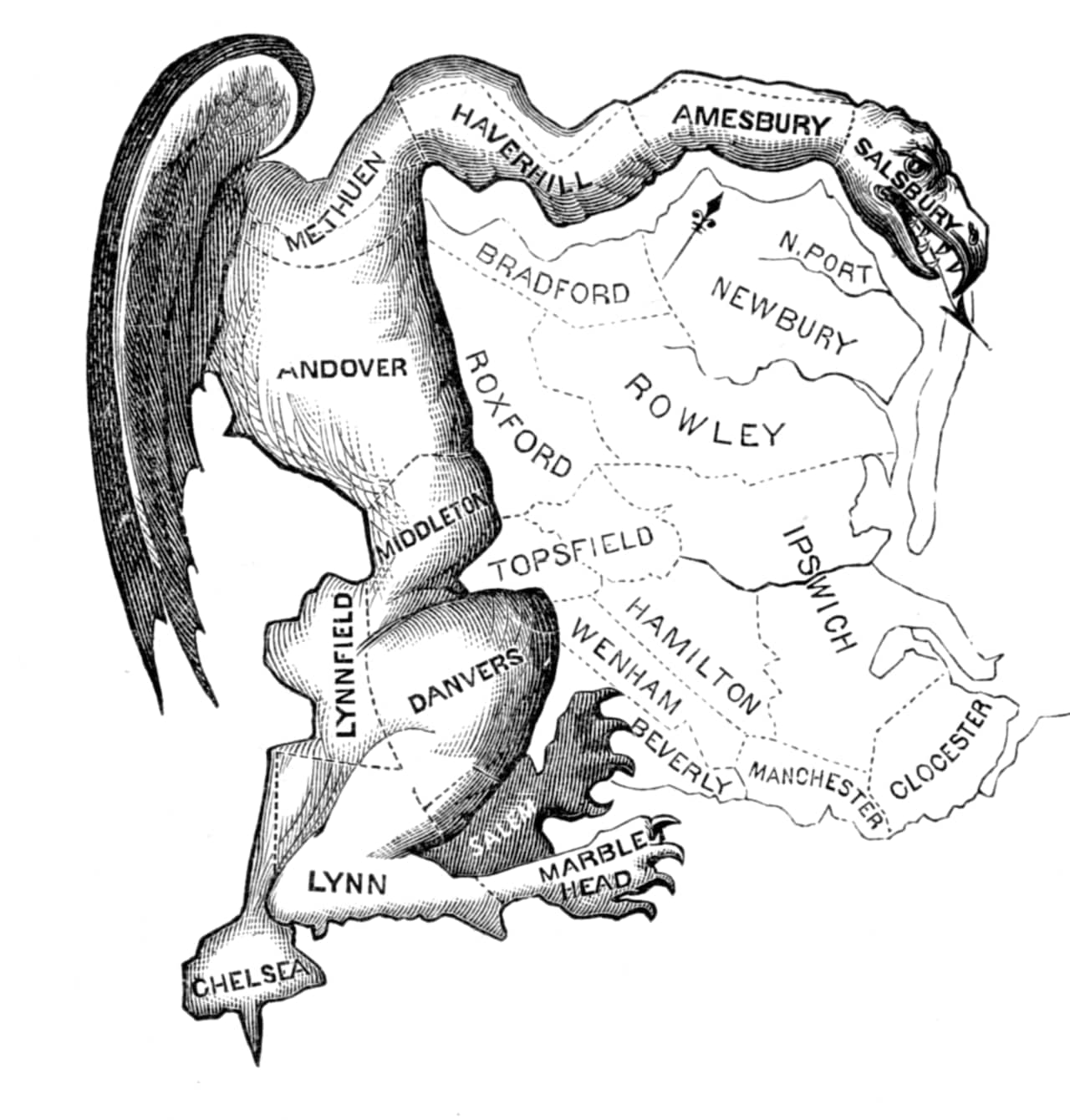
The resulting districts can take on strange shapes, drawn not to reflect communities, but to pack or dilute voters of a particular stripe.
The Illinois 4th district, drawn by Democrats along the Chicago waterfront, is nicknamed "the earmuffs".
Ohio's 9th, a Republican-drawn strip hugging the Lake Erie shoreline, is "the snake on the lake".
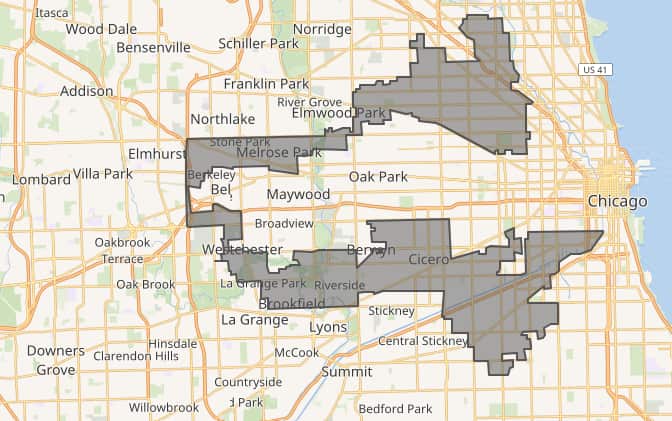
Maryland's 3rd — one of the most gerrymandered states in the country — has earned the title of the "broken-winged pterodactyl".
"You only have to look at the congressional maps themselves to see how awkward some of the shapes are," Mondschein said.
"It is very clearly gerrymandered — and it's something that's been going on for a long time."
So far, Republicans have passed maps increasing their advantage in around 13 seats across five states, according to the Reuters news agency. Democrats have gained ground in roughly 10 seats across three states. Some maps are still being challenged in court.
'As long as you don't say it's about race'
The US Supreme Court has waded in and potentially set the stage for further escalations.
Last week's ruling in Louisiana v. Callais narrowed a key provision of the Voting Rights Act that had previously protected majority-minority districts — or areas where non-white voters make up enough of the population to elect a candidate of their choice.
The ruling gives states far greater freedom to draw district lines for political gain.
Louisiana's Republican governor had suspended the state's upcoming primary election so the map could be redrawn, and now looks to seize more seats.
"The bar for being accused of, or winning in court for, violating the Voting Rights Act has been elevated," Mondschein said.
"As long as you don't say it's about race, you can make it about race."
Political observers now expect Republican-led states to target a dozen or more Democratic-held majority-Black and majority-Latino seats that previously enjoyed stauncher protections.
"We are now in a cycle of gerrymandering wars," Justin Levitt, a professor at Loyola Law School who maintains the website All About Redistricting, told Reuters. "What used to be a cold war has gotten very hot."
"I think it gets worse before it gets better," Levitt said. "And I think there's plenty of room for it to get worse."
Mondschein added: "I think we're going to see more states change their districts moving forward," he said. "I imagine Republicans may well lead this — but it cuts both ways."
Is gerrymandering actually helping Trump?
Trump's disapproval rating has hit a new high, according to recent polling conducted by ABC News US, The Washington Post and Ipsos.
That polling suggests Trump now has an approval rating of 34 per cent, compared to 64 per cent who disapprove.
Polls also predict the Republicans lose the midterms.
Mondschein says efforts to gain more seats could backfire in light of Trump's unpopularity.
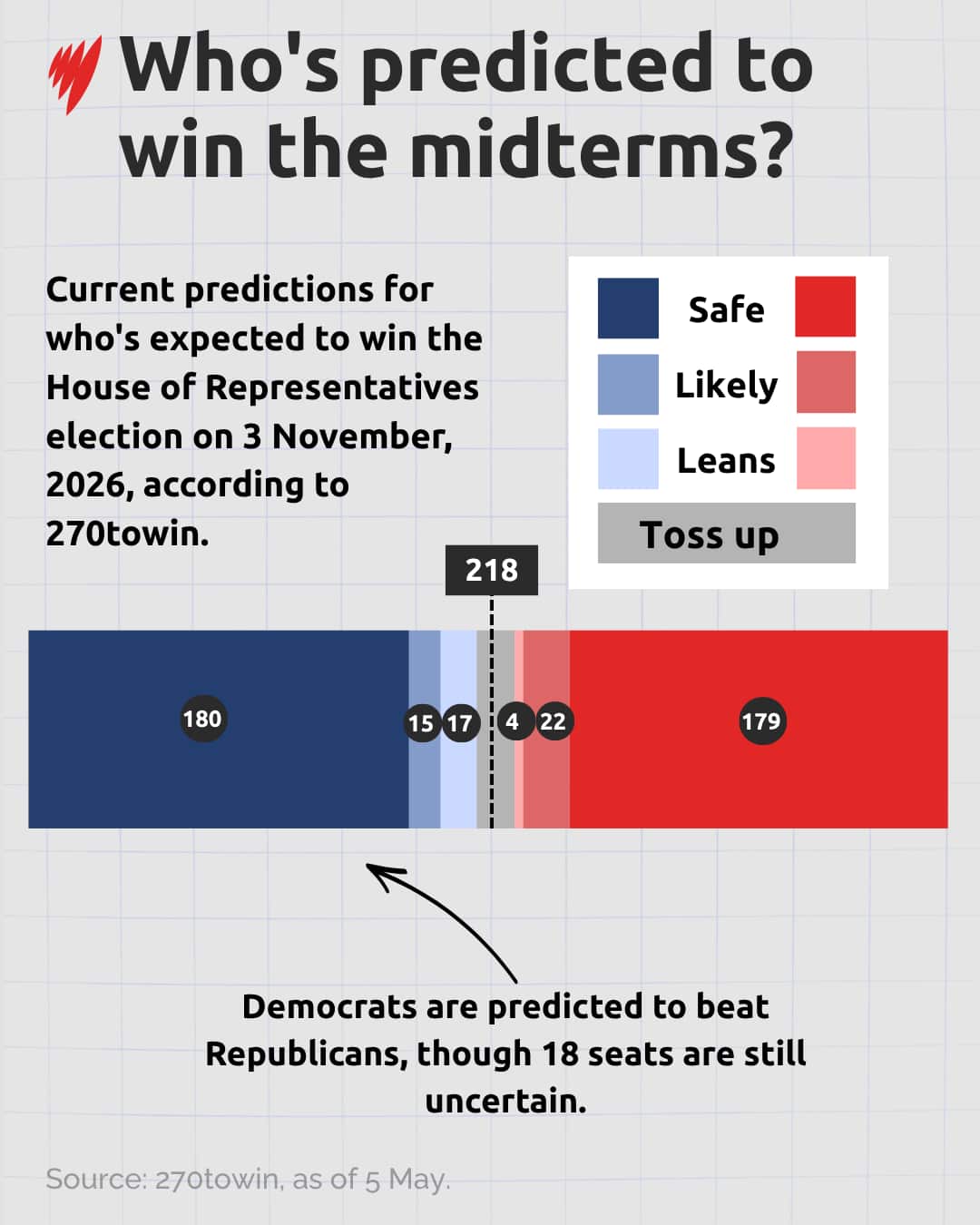
"When the US president has such a low approval rating, even gerrymandering could be disadvantageous to sitting Republican members of Congress," he said.
"What gerrymandering basically does is dilute Democratic districts into Republican districts — so instead of winning with maybe 60 to 70 per cent of the vote, those Republican districts are now down to 55 or 60."
"In a period in which Donald Trump has record-low approval ratings, that could actually endanger some Republicans."
He says he would be surprised if Republicans are able to fully retain control of the House after November.
"If you were to have the US election today, there's a very good chance that Donald Trump would not win if we were to rerun the exact same election that we had in November 2024."
Republicans currently hold the House by a margin of just three seats.
Beyond the immediate fight for the midterms, Mondschein says the redistricting wars point to something more troubling about the state of American democracy.
"It's a race to the bottom," he said. "At the end of the day, it's still unclear who's going to end up on top — but it is something that basically all governance experts and political scientists will tell you is not great for democracy."
With November less than six months away, the map war is far from over. But what's clear is that the battle lines, quite literally, are still being drawn.
— With additional reporting by Reuters.
For the latest from SBS News, download our app and subscribe to our newsletter.







