
Fifteen months after US President Donald Trump's return to the White House, his approval ratings are hovering near all-time lows.
But with the midterm elections in November looming, key questions are starting to emerge for his opposition: what shape are the Democrats in to capitalise on Trump's unpopularity, and who could surface as a viable successor?
For both parties, the economy will be central — as it was at the last election. Trump's 2024 campaign centred on economic issues, and he was re-elected on a vow to lower living costs and keep the United States out of "forever wars".
Since returning to office, though, he's imposed controversial tariffs that have been blamed for raising domestic prices and ordered military action in Venezuela and Iran, entangling the US in significant and costly conflict.
The ongoing war in the Middle East has only compounded domestic dissatisfaction, driving global economic shocks and surging energy costs with no end in sight.
News that makes sense
Your trusted source for staying up-to-date with the world around you. Get free daily news updates and analysis, straight to your inbox.
Republicans — who control both chambers of Congress — are now bracing for a potential backlash in November.
'A referendum on the party in power'
While the Democrats are favoured to retake control of the House of Representatives in November, they trail the Republicans by more than 4 points in overall party favourability, according to RealClearPolling averages.
That's despite Trump's net approval dropping to a record low -23 points late last month, according to a YouGov/Economist poll — a drop fuelled by declining support from his core backers.
Kyle Kondik, managing editor of Sabato's Crystal Ball — an election forecasting site run by the University of Virginia Center for Politics — says the president's waning popularity will be a defining feature of the vote.
"Midterms are much more of a referendum on the party in power than a choice between the two parties," Kondik tells SBS News.
"That is a good dynamic for Democrats, who have poor party favourability and internal party strife, because anti-Trump sentiment likely will be the main feature of the midterms."
However, the Democratic Party is yet to present a united message for its future direction. Since its bruising 2024 loss of both the White House and the Senate, it has been without a clear leader.
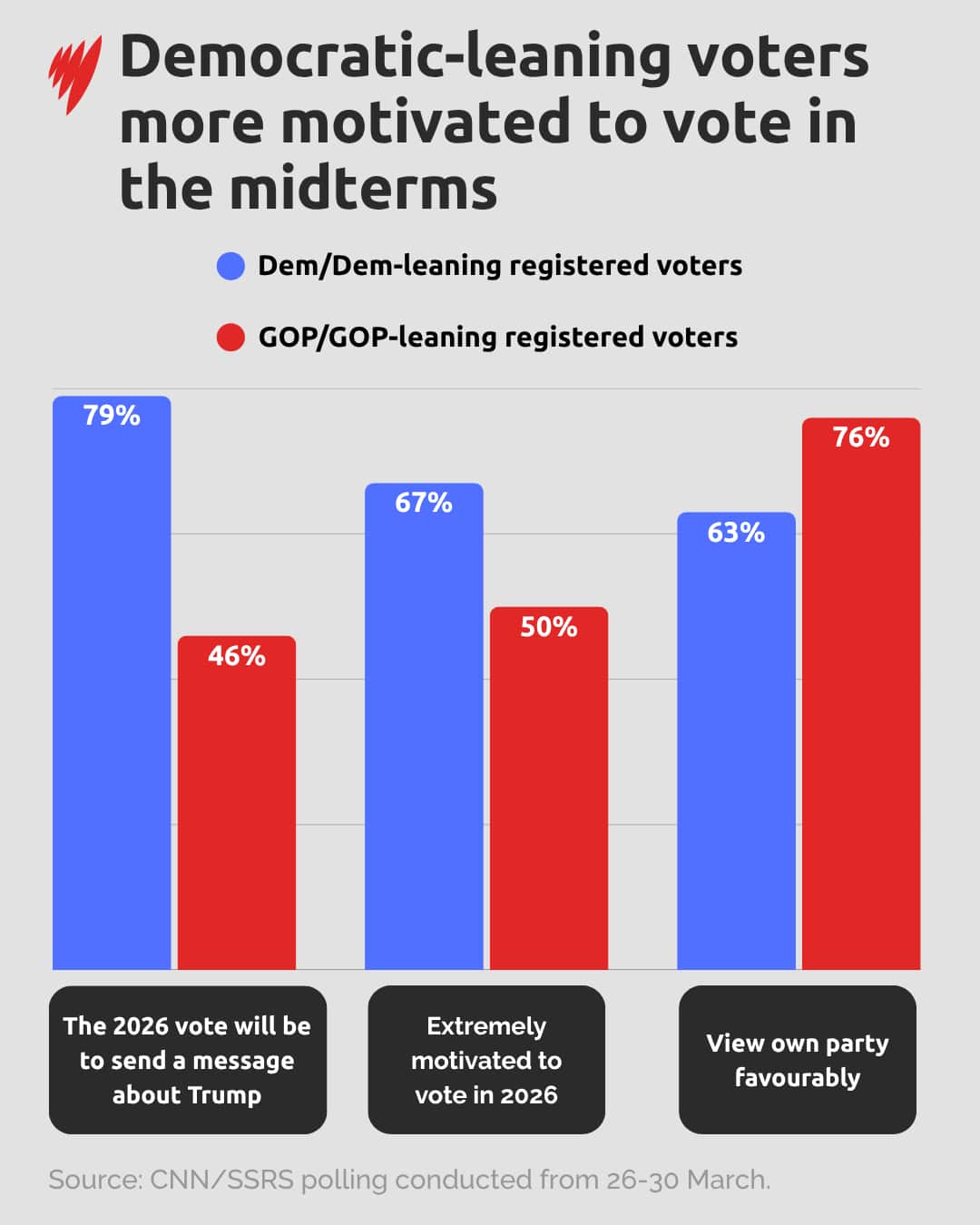
Illustrating the competing dynamics within the party, a recent CNN/SRSS poll found Democrat-leaning voters were more motivated than their Republican counterparts to vote in the midterm election, and more likely to view it as a referendum on Trump — yet less likely to view their own party favourably.
Bruce Wolpe, a US political commentator and former Democratic congressional staffer, predicts a strong reaction in favour of Democratic candidates across the country, as anger builds over the war and tough economic conditions.
"But [the] 2028 [election] is a whole different deal," he tells SBS News.
"That's a vote 'for' something, and what the 'for' is for the Democrats is yet to be defined.
"It will take a long time, and ultimately, what Democrats stand for will be the views of the candidate who is the Democratic nominee for president."
Who leads the Democrats?
A presidential election cycle takes nearly two years. That means by this time next year, candidates will likely have started announcing their intentions to run for president in 2028.
By midyear, primary debates — a series of televised contests between candidates from the same party vying for the nomination — will typically begin, followed by primary voting from early 2028.
With Trump's tenure capped at two terms, the contest to succeed him is quietly underway on both sides of the aisle.
But more than a year on, is it unusual that there's no clear opposition figure?
"What we're seeing is actually quite normal," David Smith, associate professor in American politics at the University of Sydney's United States Studies Centre, tells SBS News.
Often, after a bad loss … the party spends about a year in disarray.
In part, it comes down to the structure of the US political framework. Unlike in Australia's Westminster system, presidential candidates are not elected to parliament as party leaders. The losing nominee does not automatically retain a formal leadership role, which can leave a vacuum at the top.
This has been further complicated by the circumstances surrounding former President Joe Biden, who withdrew from the race just months before the election amid mounting pressure from Democrats concerned about his age and health. He announced in May that he had been diagnosed with an aggressive form of prostate cancer.
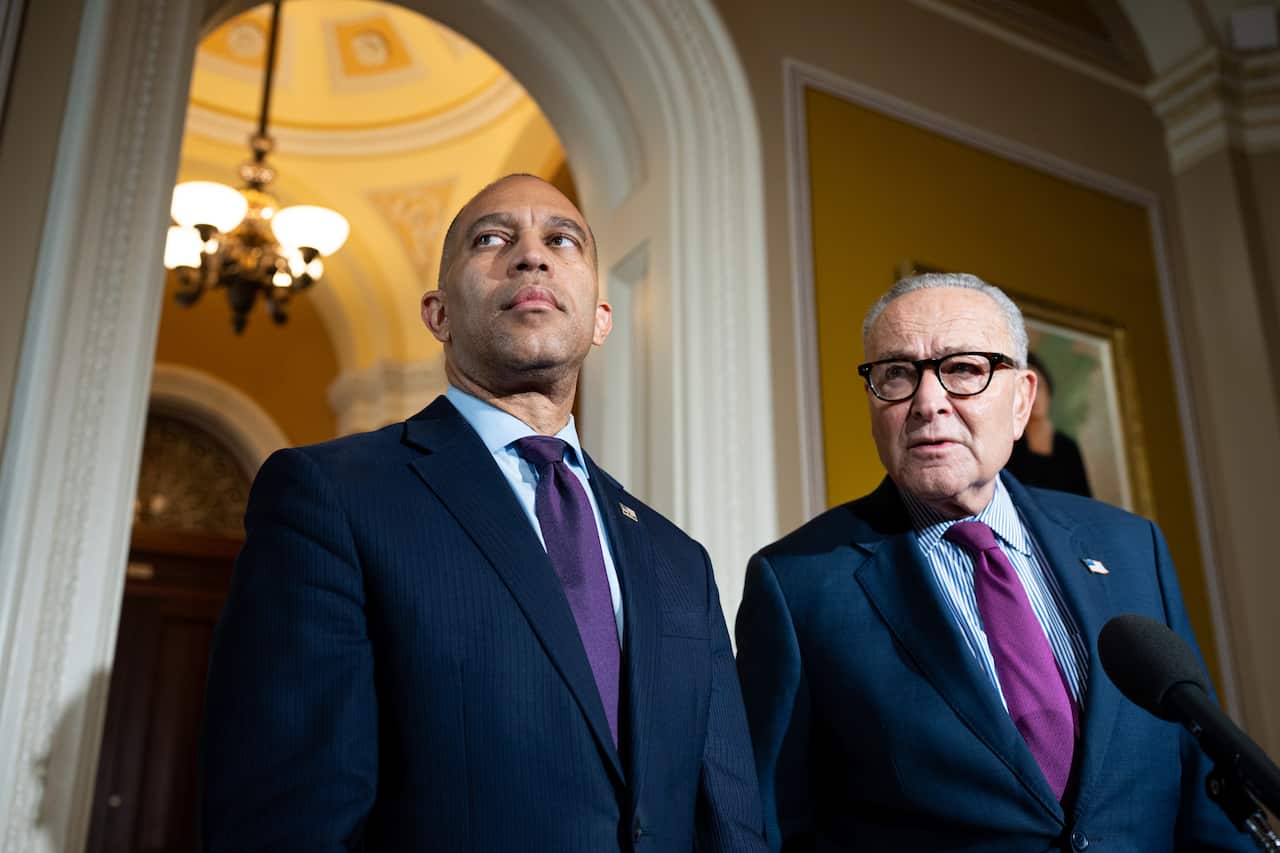
Chuck Schumer leads the Democratic minority in the Senate, and Hakeem Jeffries is his counterpart in the House of Representatives.
Both Schumer and Jeffries have been widely criticised by Democrats for failing to stand up to Trump and present a clear resistance, particularly in the early months of his presidency.
"There's no single person that the media can go to on any given day and say, what are the Democrats going to do about this?" Wolpe says.
"And that has hurt the effectiveness of the opposition, but it has increased the anger among Democrats around the country, [who are] saying: 'God damn it, let's go after this guy.'"
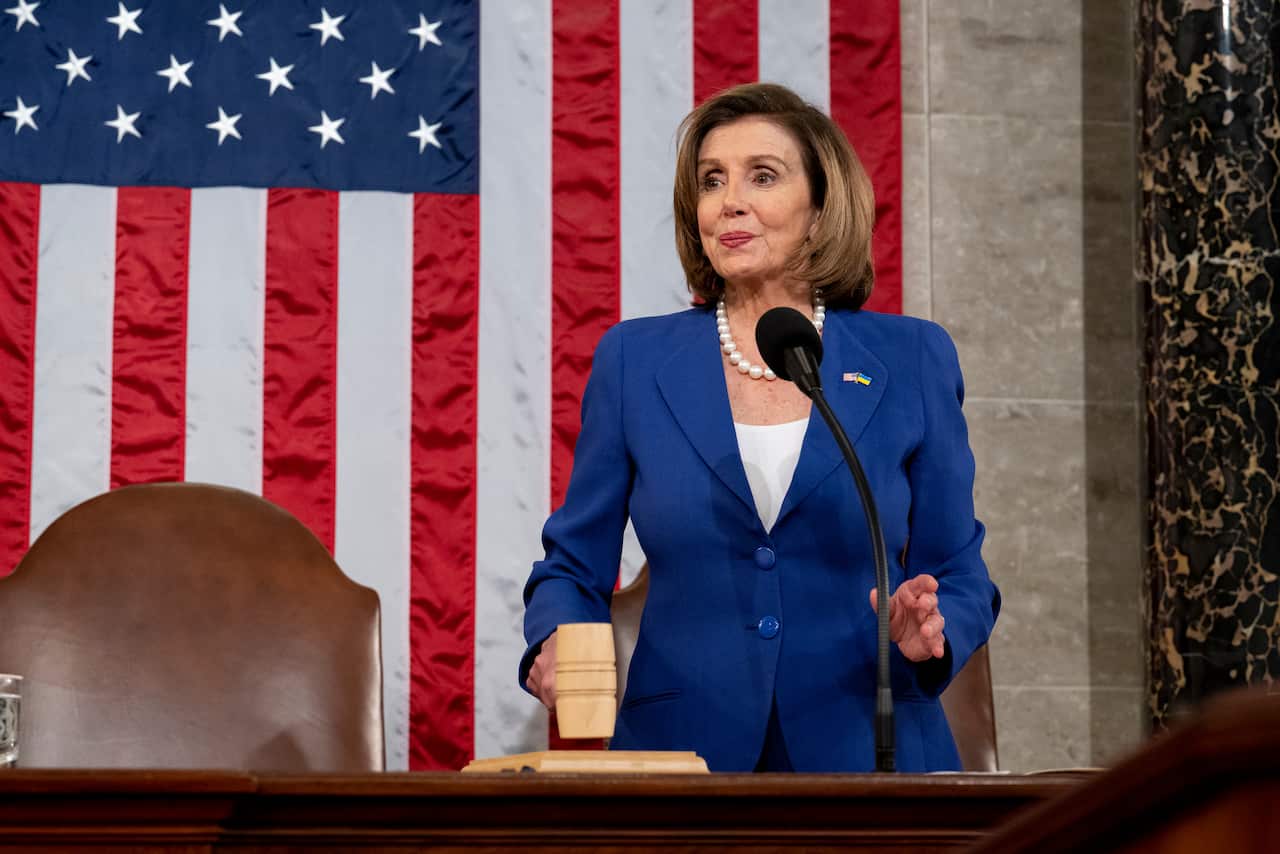
During Trump's first presidency, veteran Democratic leader Nancy Pelosi served as a fierce adversary of the White House, particularly after her party took back the House majority in the 2018 midterms and elected her as speaker.
She became one of the strongest opposition voices, helping shape the party's messaging.
After a midterm election, each party holds internal leadership elections before the new Congress starts in January. Should Democrats win control of the House this year, Jeffries would be considered the frontrunner to lead them.
But there are no guarantees.
"I think there's enough anger to displace him, and this happens from time to time when new Congresses are elected in a time of crisis," Wolpe says.
In a September survey, the Pew Research Center found 67 per cent of Democrats said their own party frustrates them, a marked increase from similar surveys in 2021 and 2019.
The most commonly cited reason was that the party had not pushed back hard enough against the Trump administration.
Which Democrats might run for president?
No hats are formally in the ring, but it's likely there'll be a large field of candidates.
Gavin Newsom, the governor of California, is among the most prominent possibilities. With his term set to expire next year, he is widely seen as a potential 2028 contender.
While he hasn't confirmed if he'll run, he's been building a national profile as a leading Trump critic, including during federal deployments to Los Angeles during protests last year, and in successfully countering Republican-led efforts to redraw electoral boundaries in Texas.
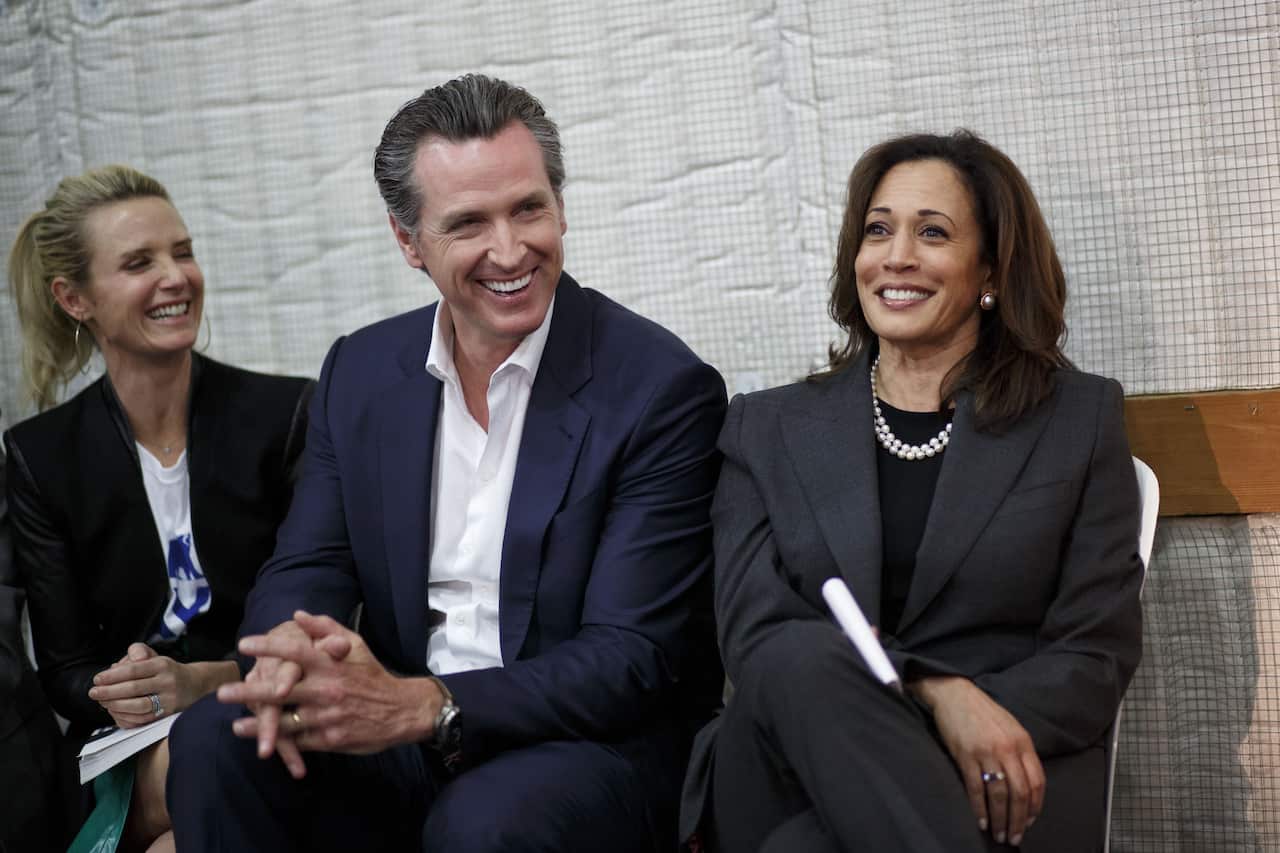
Former vice president Kamala Harris is another name in the mix. She's been on a book tour since September, offering a postmortem of her 107-day campaign as the party's pick — one of the shortest in modern history.
She acknowledged last week that she's "thinking about" running again.
However, her 2024 loss continues to raise questions within her party about her electability.
Two younger, more progressive figures, viewed as rising Democratic stars, Pete Buttigieg and Alexandria Ocasio-Cortez, are also possible entries to the race.
Buttigieg, who ran in 2020 and went on to serve as Biden's transport secretary, has been campaigning across the country for Democrats ahead of the midterms.
Ocasio-Cortez, 36, now comfortably clears the constitutional age threshold (35) to run for president, but she'd likely be the youngest in the field if she entered it.
However, the New York congresswoman, a galvanising force in progressive politics, is also said to be eyeing a bid for Schumer's Senate seat in 2028.
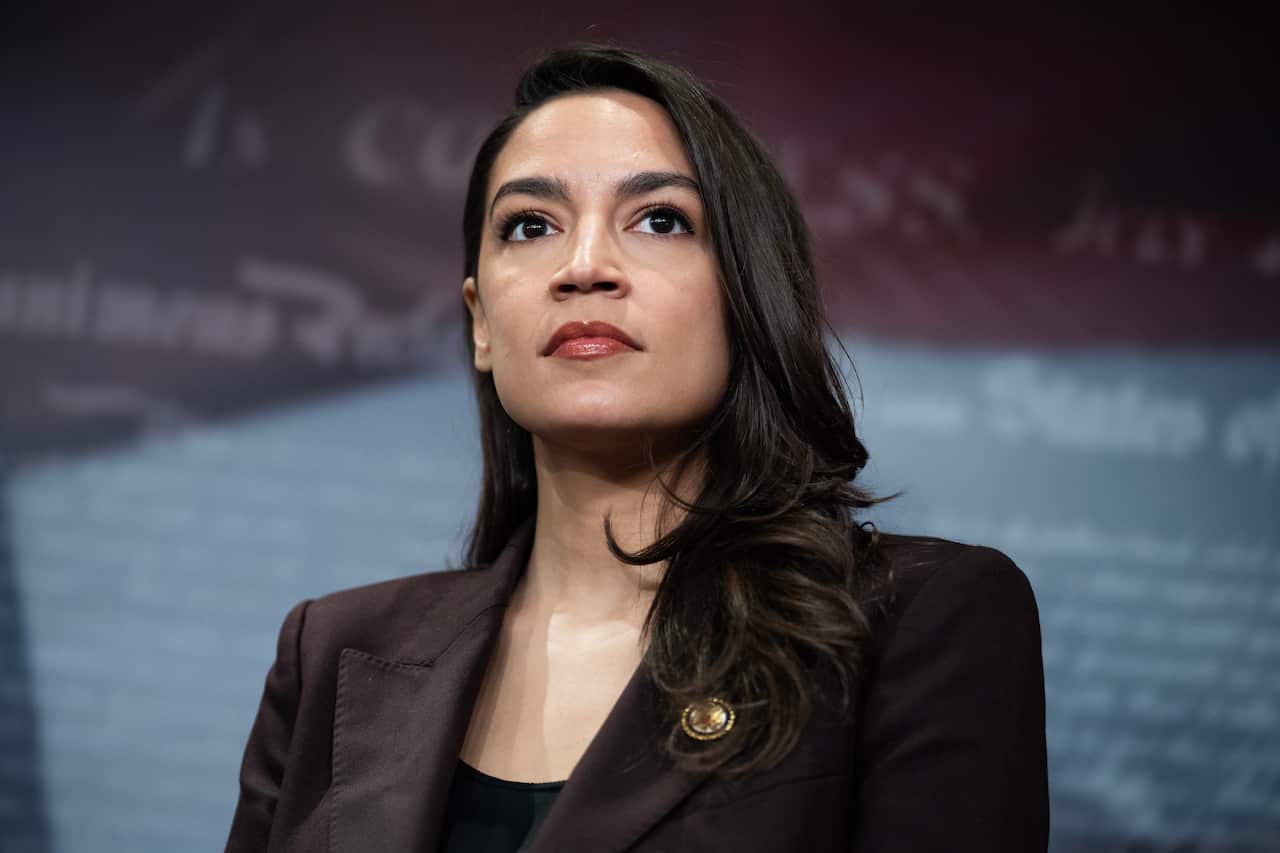
Name recognition is important in a crowded primary, but an association with the "old guard" can be a drag, according to Smith.
"The sort of ideal combination is someone who seems very fresh but is also very well known, which is a pretty difficult thing to accomplish."
Ocasio-Cortez strikes a decent balance between the two, he says.
"I think Gavin Newsom will be hoping that he can kind of thread that needle as someone who hasn't been in national politics before, but has this very high profile as governor of California.
On the other hand, though, it's entirely possible by 2028, people might be a bit sick of his antics, because he's been thrusting himself into the limelight for such a long time.
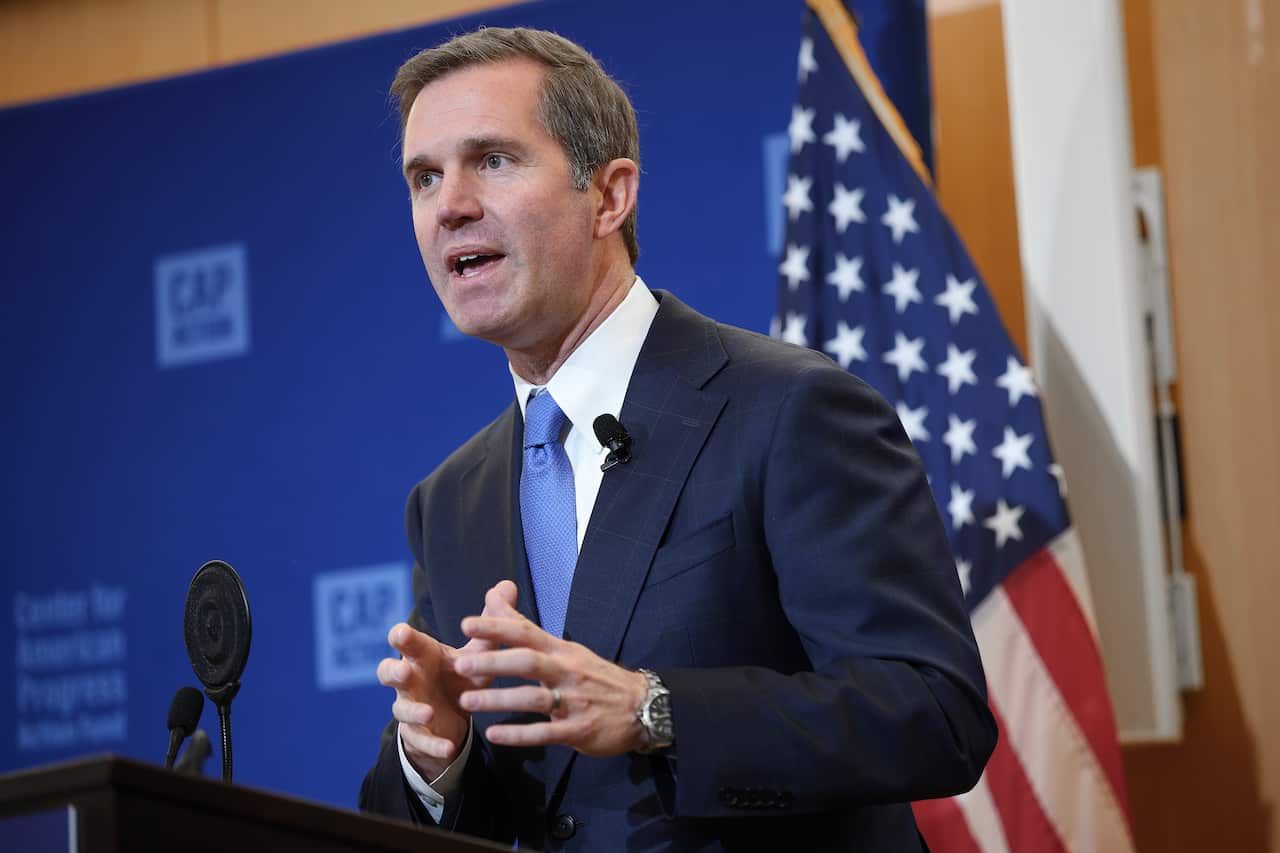
There are many other names in the mix, including Kentucky governor Andy Beshear, Pennsylvania governor Josh Shapiro, Illinois governor JB Pritzker and New Jersey senator Cory Booker.
What's the message?
The vision the Democrats will coalesce around — their rallying cry 'for' — depends on what works.
Newsom and Beshear are both clearly positioning themselves to run, but are pursuing divergent strategies. It's not yet clear from polling which of their approaches will resonate in 2028.
Newsom has been "really sort of fighting fire with fire when it comes to Trump, doing a lot of posting on social media … trying to match Trump in terms of the vulgarity that's involved," Smith explains.
Beshear, meanwhile, has argued that voters will be tired of the Trump conversation by 2028. The governor of a deeply conservative state, he says American will be looking to move forward and away from that brand of politics.
"He has argued that the next election shouldn't be all about Trump," Smith says.
"It really should be about an economic message. He said that Democrats haven't been able to talk about the economy in ways that people really understand or appreciate."
After Trump made gains with almost every demographic group in 2024, some Democrats argued that the party had focused too much on social issues like trans and immigrant rights, and not enough on affordability and other problems voters were struggling with.
While some interpreted this as a sign the party needed to become more moderate, analysts say a compelling candidate could matter more than ideological positioning.
Months after Trump's inauguration, New York saw the rise of mayor Zohran Mamdani, whose left-wing populist campaign focused on introducing cost-of-living relief measures, such as rent freezes, city-owned grocery stores and free public transport.
Almost one in 10 of his voters had also supported Trump - and many of his backers were voting for the first time, highlighting the allure of a candidate who can energise voters, increase turnout and promise to make their lives better.
"[Democrats] need a leader who is going to say, the government can do things for you," Smith says.
"That was Mamdani's message. That was Trump's message. That was also Barack Obama's message."
For the latest from SBS News, download our app and subscribe to our newsletter.







