In brief
- United States President Donald Trump says the US is preparing to leave Iran, but uncertainty over the Strait of Hormuz is growing.
- The impact on global oil — and Australia — may take months to fully unfold.
Uncertainty surrounds the next phase of the war in the Middle East, with the immediate question no longer only when the United States withdraws, but what will follow in the Strait of Hormuz.
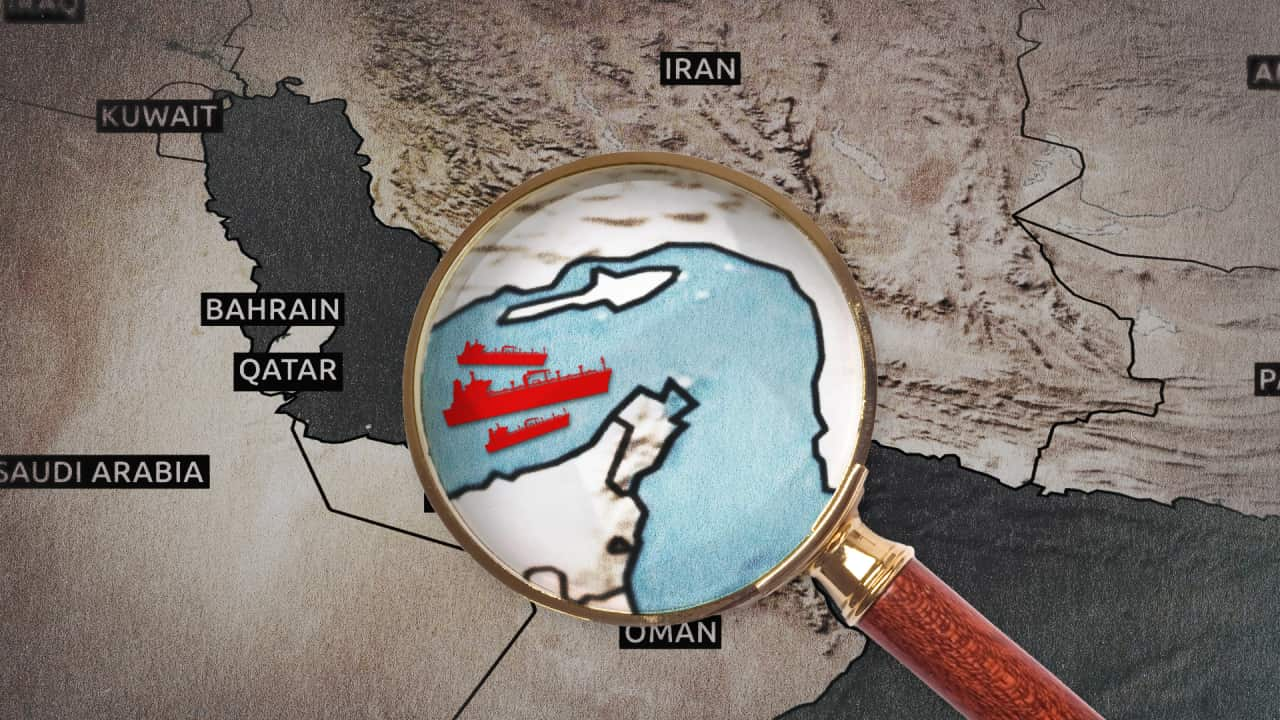
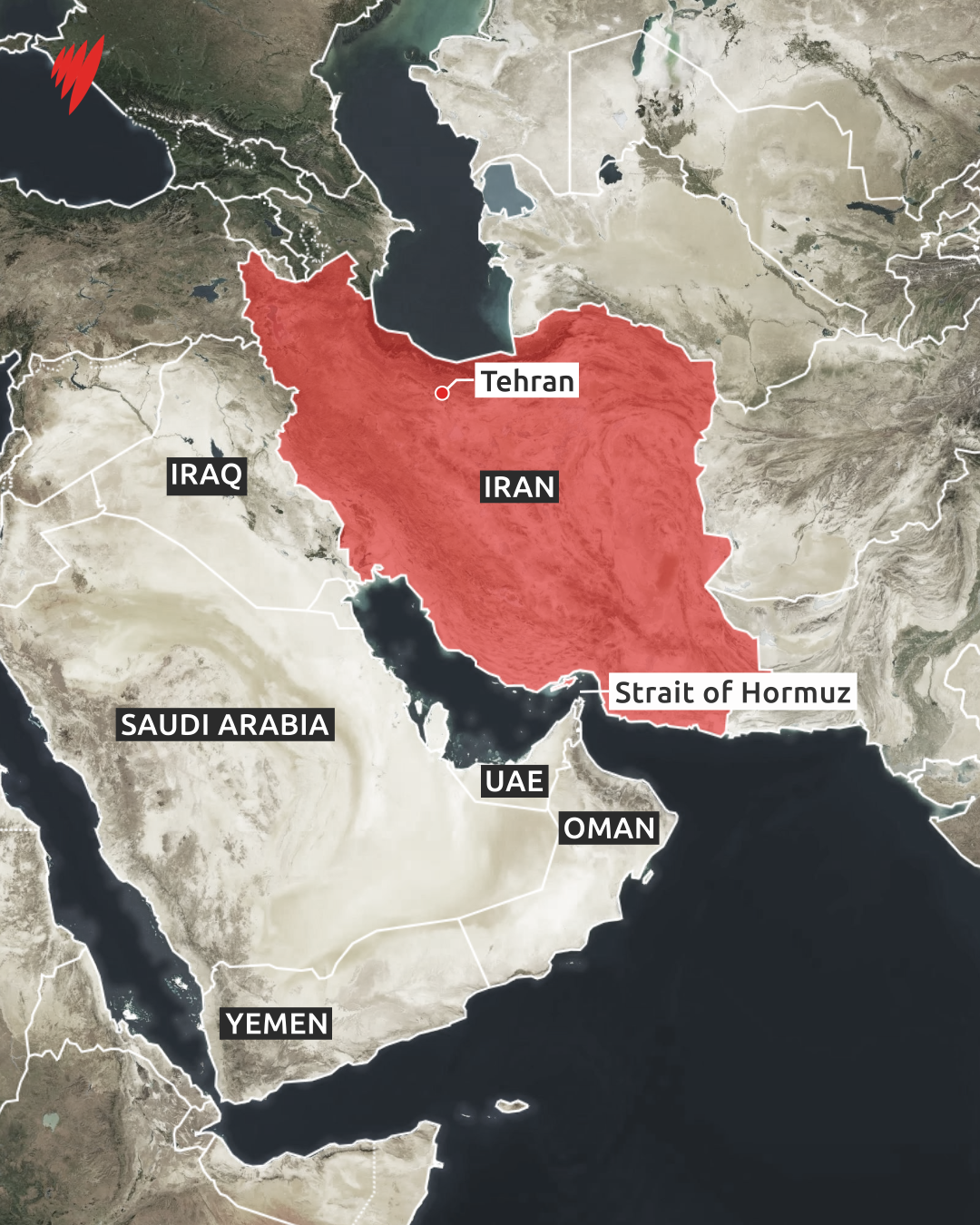
The narrow waterway, running between Iran and Oman, funnels oil from the Persian Gulf into global shipping lanes and carries about 20 per cent of the world's supply — a disruption now felt far beyond the Gulf.
US President Donald Trump said on Tuesday that the US would leave Iran "very soon", casting the end of the war as close, even as his later comments acknowledged how fluid the situation remains.
"We're negotiating with [Iran] right now," he said. "We're finishing the job, and I think within two weeks, maybe a couple of days longer, we'll [be done] with the job."
Trump also said a deal to end the war could still come sooner, while making clear that such an outcome was not, in his view, necessary for withdrawal.
News that makes sense
Your trusted source for staying up-to-date with the world around you. Get free daily news updates and analysis, straight to your inbox.
That position extended to Hormuz itself.
"We'll be leaving very soon, and if France or another country wants oil or gas, [then] they'll go right up the Hormuz Strait and they'll be able to fend for themselves," he said, indicating the US did not see the task of securing the passage as its own once it leaves.
However, Iranian foreign minister Abbas Araghchi has said that no negotiations are going on with Washington despite direct and indirect exchanges of messages.
Trump has made various conflicting claims about how long the war will continue, at times saying it would be days, then weeks, with experts cautioning that these statements could be said publicly for effect.
Iran's Revolutionary Guards hit back on Tuesday with a new threat against US companies in the region starting on Wednesday.
With energy markets rattled and fuel prices rising, consumers around the world are anxious to know when, and how, traffic through the Strait of Hormuz will be restored.
Lowering the temperature — but not restoring order
For Jennifer Parker, an adjunct professor at the University of Western Australia's Defence and Security Institute and former naval officer, a US exit would be, in broad terms, a stabilising development.
"If the US and Israel stop attacking Iran, you will see Iran stop attacking ships predominantly," she said.
"It's not in their interest to be attacking ships. It also undermines their economic prosperity."
That assessment matters, she said, because Hormuz is not 'closed' in the strict sense. However, Iran's attacks on about 22 ships in response to US and Israeli airstrikes have deterred commercial traffic and injected fear into the market.
The effect is not a formal shutdown so much as a strategic choking of confidence, Parker said.
Parker also urged caution in reading Trump's remarks as settled policy.
"I think that one of the things we need to realise, unfortunately, with President Trump's statements, is that they are said for effect. They're not always said with a clear intent or with a clear plan behind them," she said.
"Do I think that the US will walk away from this conflict without having a plan to reassure shipping after the war ends? No, I don't."
If the fighting stops, she suspects the next phase is likely to be a reassurance effort to draw tankers back through the passage.
Defence analyst and former Royal Australian Air Force officer John Blackburn said he also sees a US exit as preferable to a longer war.
"It might be a blessing in disguise," he said.
"The longer the president stays in control and doing stuff in that area, in the war with Iran, the more damage that will be caused."
How Iran may seek to shape Hormuz
Iranian state media reported this week that Iran's parliament had approved a plan to collect tolls on vessels travelling through the Strait of Hormuz.
The reported proposal would require agreement from other countries bordering the passage, and no toll amount was specified. State media also reported that vessels linked to the US, Israel and countries that have sanctioned Iran would not be able to pass under the plan.
That points to an effort by Iran to convert military pressure into economic leverage.
US secretary of state Marco Rubio said the US doesn't get much of its oil supplies from the Strait of Hormuz, so the rest of the world would have to face the problem alone if Iran imposes a toll.
"If in fact Iran decides to set up a toll, if in fact Iran decides that they are going to illegally control the Straits of Hormuz or decide they're going to try to do that, look, I imagine that'll be the President's call whether he wants to help, but this is a problem for the world," he told Fox News.
"It's countries around the world should be stepping up and dealing with that and saying that's intolerable."
But Parker said there are hard limits to how far that can go.
"This is highly unlikely in my view," she said of a permanent tolling system. "No country has the right to close it or to exact payment for doing that."
Additionally, Iran is not the only state bordering Hormuz, she said, noting that other Gulf states would play a direct role in how it's ultimately managed.
Any attempt to permanently charge or block ships would be "inconsistent with international law" — likely requiring regional agreement, she said, adding that after the war ends, a strong international response would be almost certain.
Blackburn was more open to the possibility that Iran may at least try to press that advantage.
"I can imagine they'll try and do that," he said. "In the end, the question is, do you pay something, or do you take the consequences of not having that 20 per cent supply?"

But he said Gulf states — whose economies are directly tied to the flow through Hormuz — ought to take the lead in resolving it.
"My personal view is keep a Western coalition the hell out of there," he added, contending any workable arrangement would need to be negotiated within the region.
The lagging impact on Australia
For Australia, the risk is less about running out of fuel than being caught in the scramble that follows a supply shock.
While only about 20 per cent of global oil passes through Hormuz, the remaining 80 per cent is produced or transported elsewhere, including in the Americas, Russia and West Africa.
Australia depends heavily on refined fuels from Asian refineries, and many of those refineries rely on oil that would ordinarily come through Hormuz.
As Blackburn put it, once that flow is interrupted, those countries have to seek replacement crude from the rest of the market, pushing everyone into competition for the same pool of supply.
"We have to face the reality," he said. "We're going to be trying to fit 100 per cent of demand into 80 per cent of the world's oil supply that is not interrupted."
Parker said the country would not run out of oil, but the price effects would persist until shipping volumes and market confidence recover.
"We will still continue to see oil price hikes until the markets become confident that the flow has increased," she said.
That adjustment, both analysts suggested, would not be immediate. Tanker flows would need time to normalise, supply chains would need to rebalance, and damaged Gulf infrastructure would need to recover.
"That is certainly months, not weeks," Parker said.
For the latest from SBS News, download our app and subscribe to our newsletter.







