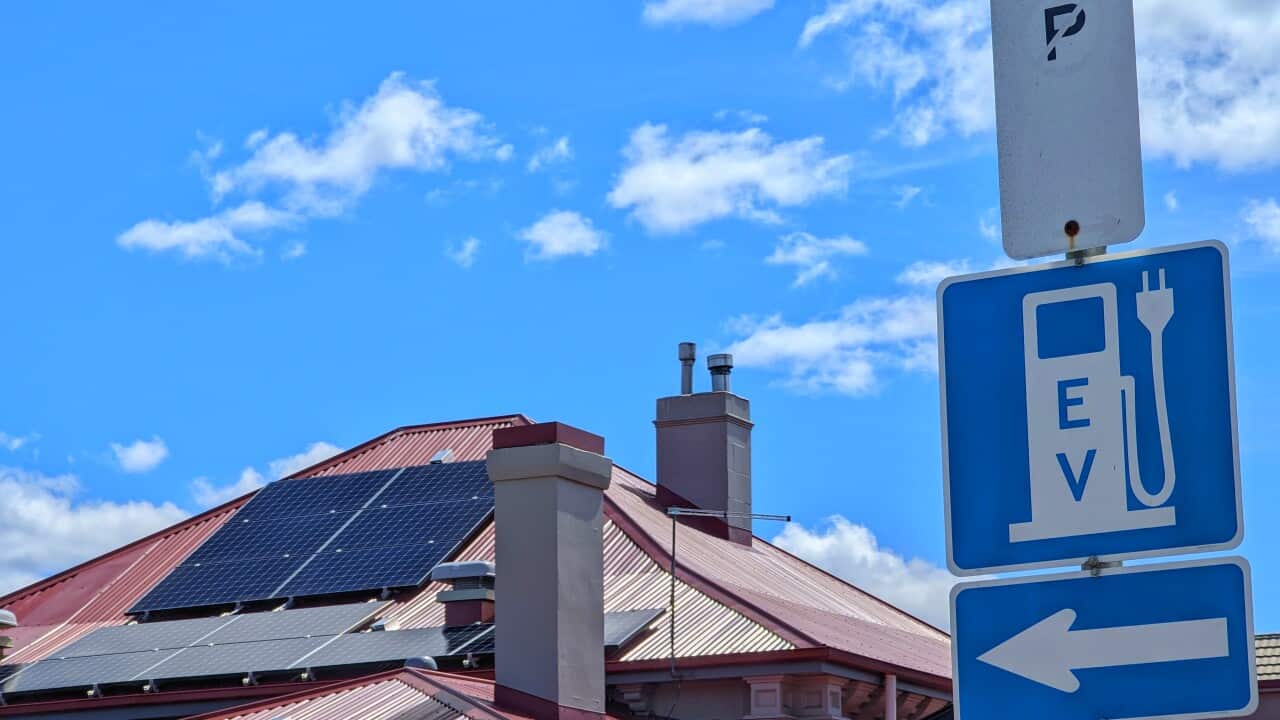
Cost of living pressures and rising energy prices have kept a spotlight on ways to reduce household expenses.
Across Australia, federal, state and territory governments offer a range of rebates and incentives aimed at lowering upfront costs for solar systems, batteries and electric vehicles (EVs).
Here's a guide to what’s currently on offer across Australia.
Solar panels and batteries
News that makes sense
Your trusted source for staying up-to-date with the world around you. Get free daily news updates and analysis, straight to your inbox.
Australia-wide
In 2011, the federal government introduced the Small-scale Renewable Energy Scheme, which offers discounted installation prices for solar photovoltaic, solar batteries, solar water heaters, wind turbines, hydro systems and air source heat pumps.
Households that install solar systems could sell the extra electricity generated through the systems to energy grids.
Users would be able to receive the solar feed-in tariff, a payment from energy retailers for the additional electricity. Currently, the scheme is available in NSW, Queensland, South Australia and Victoria.
The federal government also introduced the Cheaper Home Batteries Program last year, which allows households and businesses to install eligible small-scale batteries with a 30 per cent discount.
For residents of multi-unit dwellings, the federal government also introduced the Community Solar Banks Program, which supports apartment buildings to install solar panels.
The program is delivered through state-led projects. Currently, NSW, Western Australia, Victoria, the ACT, the Northern Territory and South Australia have partnered with the federal government to deliver the program.
NSW
In addition to the federal government's Cheaper Home Batteries Program, the NSW government introduced the Virtual Power Plant Initiative to support NSW residents for connecting their solar batteries to a virtual power plant.
The amount of the upfront payment will be determined by the usable capacity of the battery, with larger batteries getting a larger incentive.
ACT
Under the Home Energy Support Program, some homeowners will be eligible for interest-free loans for solar panels, while some others may be eligible got a rebate of 50 per cent of the total cost of the supply and installation, up to $2,500, of rooftop solar.
Queensland
The Queensland government late last year announced the Supercharged Solar for Renters program, providing eligible landlords with rebates of up to $3,500 to install solar photovoltaic systems on rental properties across the state.
Victoria
The Victorian Solar Homes Program offers up to a $1,400 rebate for installing solar panel systems.
Rental providers can also apply for a rebate of up to $1,400 for installing solar panels to a maximum of two rental properties per financial year, if the combined income of the renters are less than $210,000 per year.
North Melbourne residents of Coburg, Brunswick and Glenroy are eligible for the Merri-Bek council's Home Energy Subsidy program for up to $3,000 towards solar panels and their installation.
South Australia
The City of Adelaide operates the Sustainability Incentives Scheme for concession card holders, tenants and residents living in community buildings for a rebate of between $1,000 and $5,000, depending on the capacity of the solar photovoltaic system.
Western Australia
The Western Australian government's WA Residential Battery Scheme offers a rebate on home batteries — providing either $1,300 or $3,800, depending on the energy provider. Combined with the federal government's Cheaper Home Batteries Program, WA residents can receive a total rebate of $5,000 or $7,500 for a 10KWh battery, depending on provider.
Electric vehicles
There is limited federal assistance available for buying EVs. Eligible zero or low-emissions vehicles are exempt from the fringe benefits tax, but the exemption for plug-in hybrid electric vehicles ended in April 2025.
The scheme is under review, and the government is considering a distance-based national road user charge for EVs.
Queensland, NSW and Victoria ended their state-based rebates in 2024.
ACT
As part of the ACT's Sustainable Household Scheme, eligible residents of the country's capital can get a loan from $2,000 to $15,000 to buy an electric vehicle and electric vehicle charging infrastructure, with an interest rate of 3 per cent.
While a car buyer would be lucky to find a quality second-hand EV under $15,000, the scheme also allows for drivers to use the loan for a deposit on an EV.
The ACT also introduced the Business Electric Charger Rebates to encourage businesses to purchase and install EV charging infrastructure on their premises.
Eligible businesses could receive rebates of up to 50 per cent of the cost, with a maximum of $3,000 excluding GST.
Correction: A previous version of this article said the federal government had ended the exemption of EVs from the fringe benefits tax. This has been updated to reflect that the exemption of plug-in hybrid electric vehicles has ended. A previous version of this article said the WA government offered rebates of between $5,000 and $7,500 for home batteries. This has been updated to reflect that those amounts are combined with federal rebates.
For the latest from SBS News, download our app and subscribe to our newsletter.







