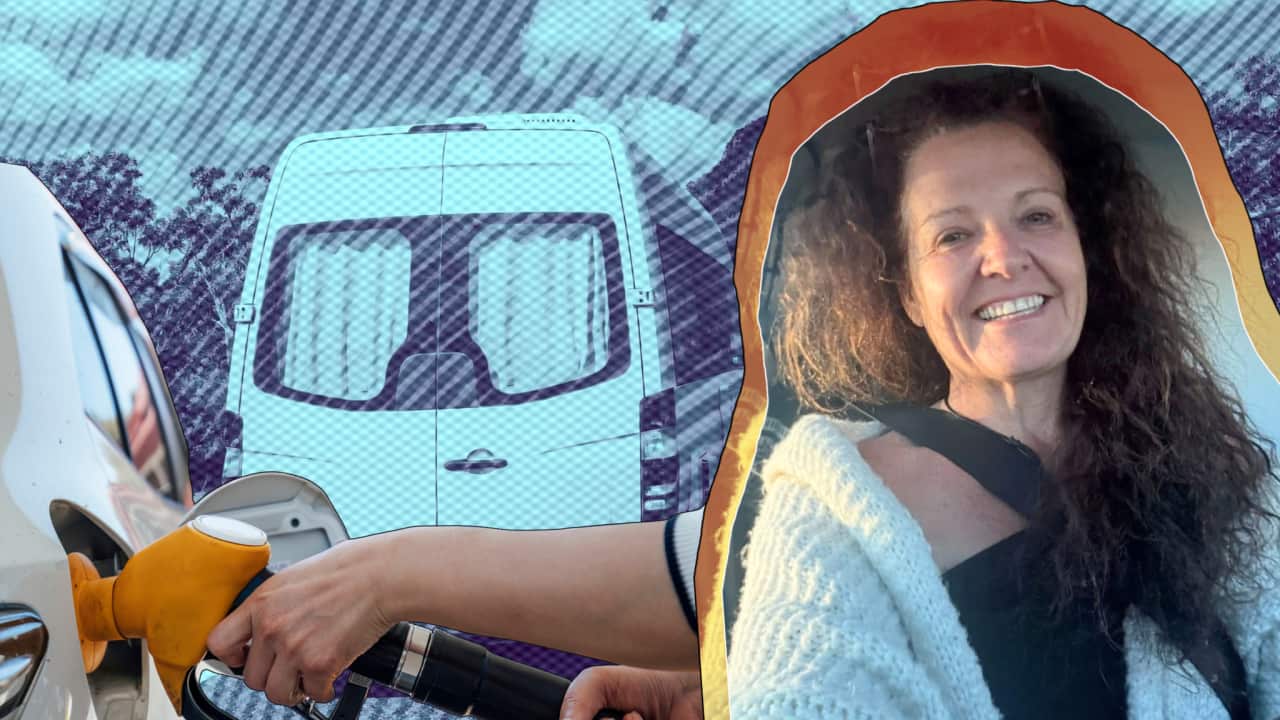
Sharon has spent the better part of a year preparing for what she describes as a long-overdue reward — a full lap of Australia in a custom-fitted van she's poured more than $65,000 into.
But rising fuel prices have thrown a spanner into her plans.
"I set the [petrol] budget at about $8,000 to do around 30,000 to 35,000kms," the 54 year-old told SBS News.
"Then the fuel went up and it's still going up every minute of every day. So my $8,000 is now $15,000."
But Sharon, who did not want her surname published, is not cancelling her trip. She's instead making concessions: caravan park stays are being swapped for free camps, and the bakery pies and coffee stops in country towns are out.
News that makes sense
Your trusted source for staying up-to-date with the world around you. Get free daily news updates and analysis, straight to your inbox.
"Instead of buying, being a patron within communities and towns, I'll have to transfer those funds to fuel because fuel's the main expense now," she said.
Sharon is one of thousands of so-called "vanlifers" — people living or travelling in converted vans or campervans, some by choice, others out of necessity — who are feeling the pinch of Australia's fuel crisis.
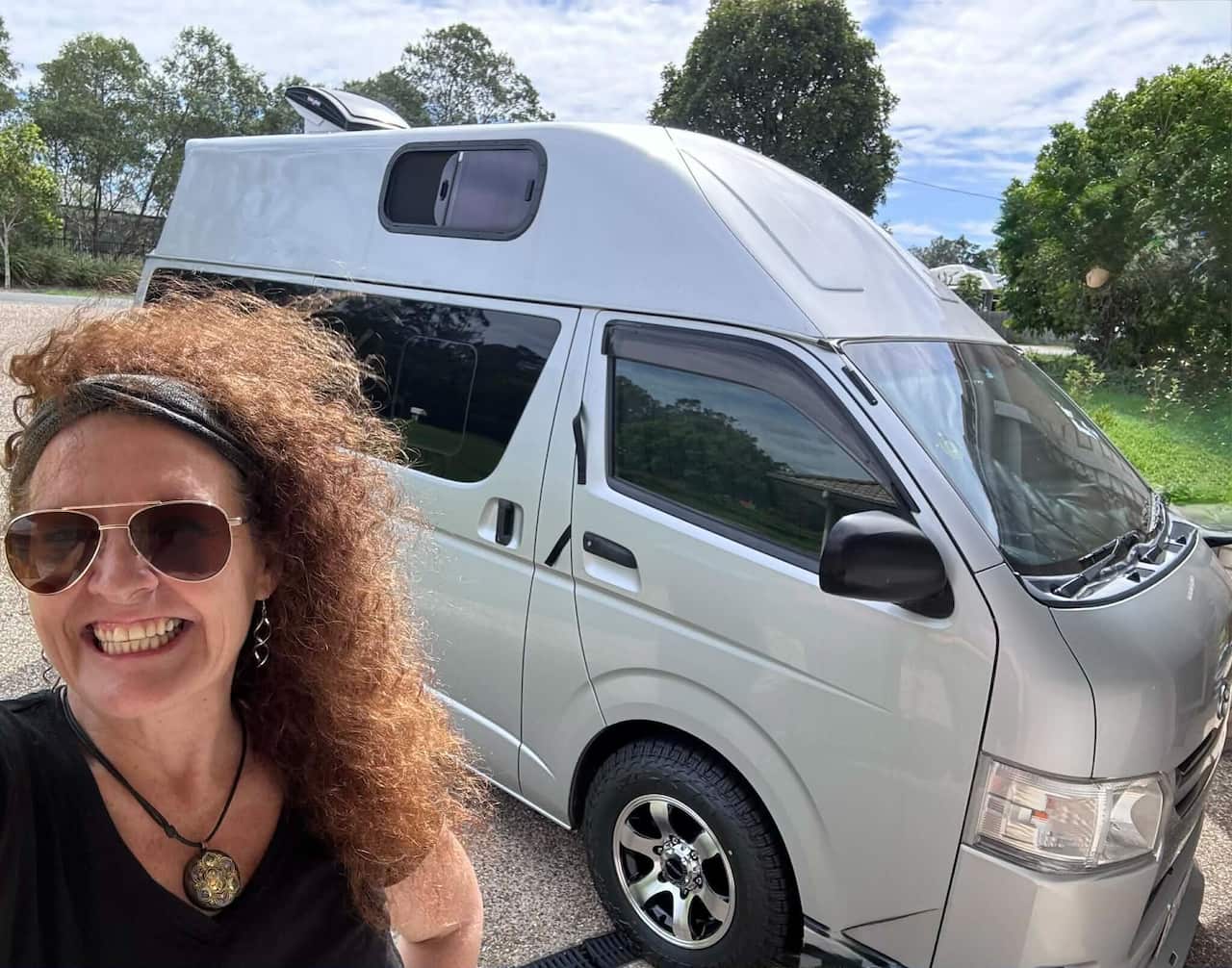
Sharon says she's more fortunate than most. She owns her own home in the Ipswich region and is planning to rent it out while she travels, with extra savings to draw on.
But filling her three-litre turbo diesel used to cost her around $114 to $140. Now, it's $245 to $260 every time — and she anticipates that could climb even higher.
"It's a big jump," she said.
"Some of the trip that I've sketched out, I'd have to fill up every day for six days.
"I wanted to be able to just have the freedom to drive around the country and enjoy it, instead of going, 'Oh, I better check to see where the petrol is'."
'I didn't choose this life'
For others, the fuel crisis is landing on ground that was already unstable.
Sharilee, a grandmother and mother of four, lives in her van on the streets of Brisbane — not by choice, but because she has nowhere else to go. She has been in this situation for around six weeks.
"I didn't choose this life," the 59-year-old, who also did not want her last name published, told SBS News.
"I was forced into it."
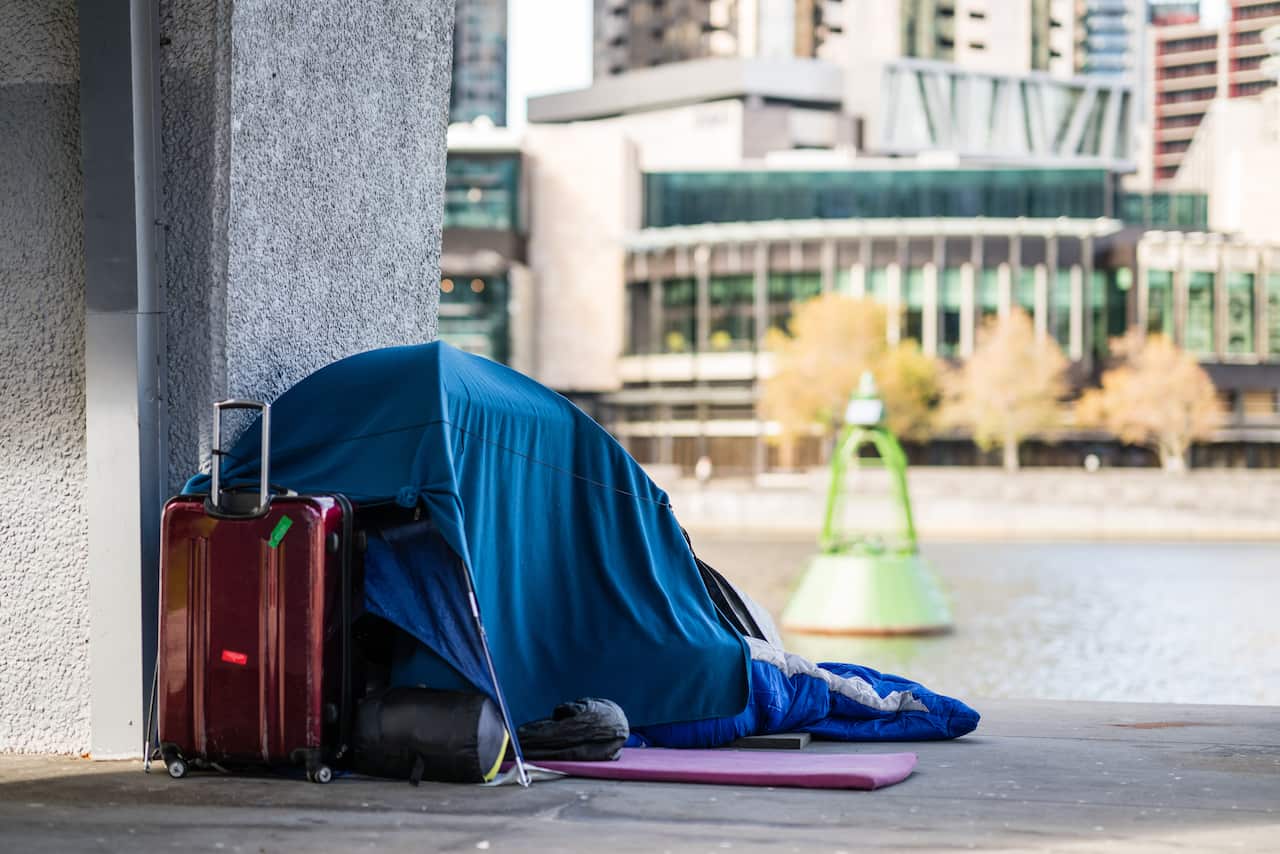
"Living in a van, most people would probably find exciting, but it's not."
Sharilee is on a disability support pension of $1,300 a fortnight, out of which she pays for fuel, food, medication, and a storage shed for the belongings that don't fit in her two-metre space.
"It doesn't go far. It does not go far at all."
The fuel crisis has made an already impossible situation worse and its impact stretches into every aspect in the cost of living.
Sharilee questions whether she will have to forgo medication because of the cost of fuel and food.
She goes days without a shower and says she struggles to eat properly. She can't find permanent or long-term housing, and the wait time for emergency accommodation is over five years.
"It's not a nice place to be where you're constantly on guard and you're constantly worrying about how you're going to get to appointments when you don't have money for fuel."
She also says she often doesn't feel safe as a woman.
"It's very, very scary," she said.
And yet, she considers herself one of the lucky ones — because she has a van, and isn't sleeping in a tent on the street.
"I'm sitting here feeling sorry for myself that I'm homeless and how hard it is," she said. "But I've got a van, I'm warm and I'm dry. There's hundreds of people out there living in tents of all ages and all backgrounds."
"People have a right to have a safe, secure home. To have food on their table. This government is failing its people. It's not right and it's sure as hell not the Australian way."
'May force people into homelessness'
Sharilee's situation is far from unique.
The number of women and girls experiencing homelessness rose 20 per cent between May 2022 and March 2025, from 24,517 to 29,449, according to analysis by Homelessness Australia. Nearly half had experienced domestic and family violence.
Marion Bennett from Mission Australia says the fuel crisis is hitting people who are already stretched to their limit.
"Fuel costs are yet another expense for people who are already struggling," Bennett told SBS News.
"People who are sleeping in their cars can't afford a private rental home and are likely on the waitlist for social housing. They're monitoring every dollar they spend and any increase in living expenses will hurt."
The impact goes beyond the hip pocket, with Bennett saying some people may choose not to spend fuel travelling to medical appointments or could become more isolated as they cut back on visiting friends and family.
For those on income support, the pressures are particularly acute.
"Anyone relying on income support payments like the Aged Pension, JobSeeker and Youth Allowance is particularly at risk," Bennett said. "The combination of the pre-existing cost-of-living crisis, the severe housing shortage and now this may well force some into homelessness."
The systemic picture is stark.
Around 640,000 households nationally are unable to access affordable housing, according to Mission Australia.
More than a quarter of a million households — 254,571 applicants — are waiting for social housing, including 122,457 people on priority waitlists, a 12 per cent increase from the previous year.
Frontline services are buckling under the pressure. According to a 2024 Homelessness Australia report, nearly 40 per cent of services were forced to close their doors during operating hours, 83 per cent were unable to answer phone calls at times, and 74 per cent were unable to respond to urgent emails.
Executive director of the Brotherhood of St. Laurence, Travers McLeod, says the compounding pressures are falling hardest on those with the least room to absorb them.
"What we're seeing with fuel prices, and the cost of living more broadly, is that these pressures are affecting more and more people in Australia. That means it's getting harder still for those already struggling," McLeod told SBS News.
"Every time a new pressure is added, life gets harder again."
'Fuel is our home'
Across the 'vanlifer' community more broadly, the belt-tightening is rippling through to other areas beyond fuel.
Pressures are compounded by rising campsite costs. Unpowered sites that cost $15 to $25 a night last year are now hitting $100 in some coastal areas, Sharon says.
"I won't stay and park on a patch of grass for $100. It's not financially viable," she said.
She says the tightening of belts ultimately means less money flowing through the small towns that depend on travellers stopping and spending.
"Fuel is our home," she said. "That's what we need to prioritise."
Free camping spots have been wound back across the country — abolished entirely in Victoria and limited in other states — amid concerns about so-called "ghost camping", where sites are booked but left vacant.
For people like Sharilee, the disappearance of free camps isn't simply a budget inconvenience — it's the difference between having somewhere to go and having nowhere at all.
She says while there are plenty of free campsites, the cost of driving there is becoming an issue.
"I can't afford to leave town. I put three-quarters of a tank in my van the other day because I was worried about the price hike. That cost me a hundred dollars.
"Can you imagine me driving around looking for somewhere to stay in Brisbane and every day I've got to put another hundred dollars in? I can't afford that."
Local councils across the country have been tightening overnight parking restrictions, leaving people with fewer places to stop that won't cost them money or land them a fine.
In the online vanlifer communities Sharon is part of, people are parking up, staying put, and looking for local work rather than being on the move. She checked in recently on a friend in New South Wales just to make sure she had enough to get by.
"It's terrible to think that there are people who are stuck. Parking up is a lot of what they're doing — hoping to keep getting work and delaying travel."
Calls for relief
What frustrates Sharon as much as the prices is the lack of a clear government response. She'd like to see the fuel excise dropped immediately, even temporarily.
"That's 50 cents off a litre," she says.
"I wish our prime minister would come out with a set plan and talk in litres as well instead of days. In a van, we talk in litres and kilometres. We don't talk in days."
Opposition leader Angus Taylor has called for the fuel excise to be halved — from 53 cents to 26 cents per litre — for three months.
Prime Minister Anthony Albanese stopped short of committing to price relief, saying the federal government was coordinating a "national response" to a "global crisis".
Energy Minister Chris Bowen said Australia's fuel supply would be maintained or increased over the coming weeks following emergency orders with suppliers.
"Things that would normally take 18 months, I’ve done it in three or four days," he said on Friday. "Our key focus is supply so that Australians can get access."
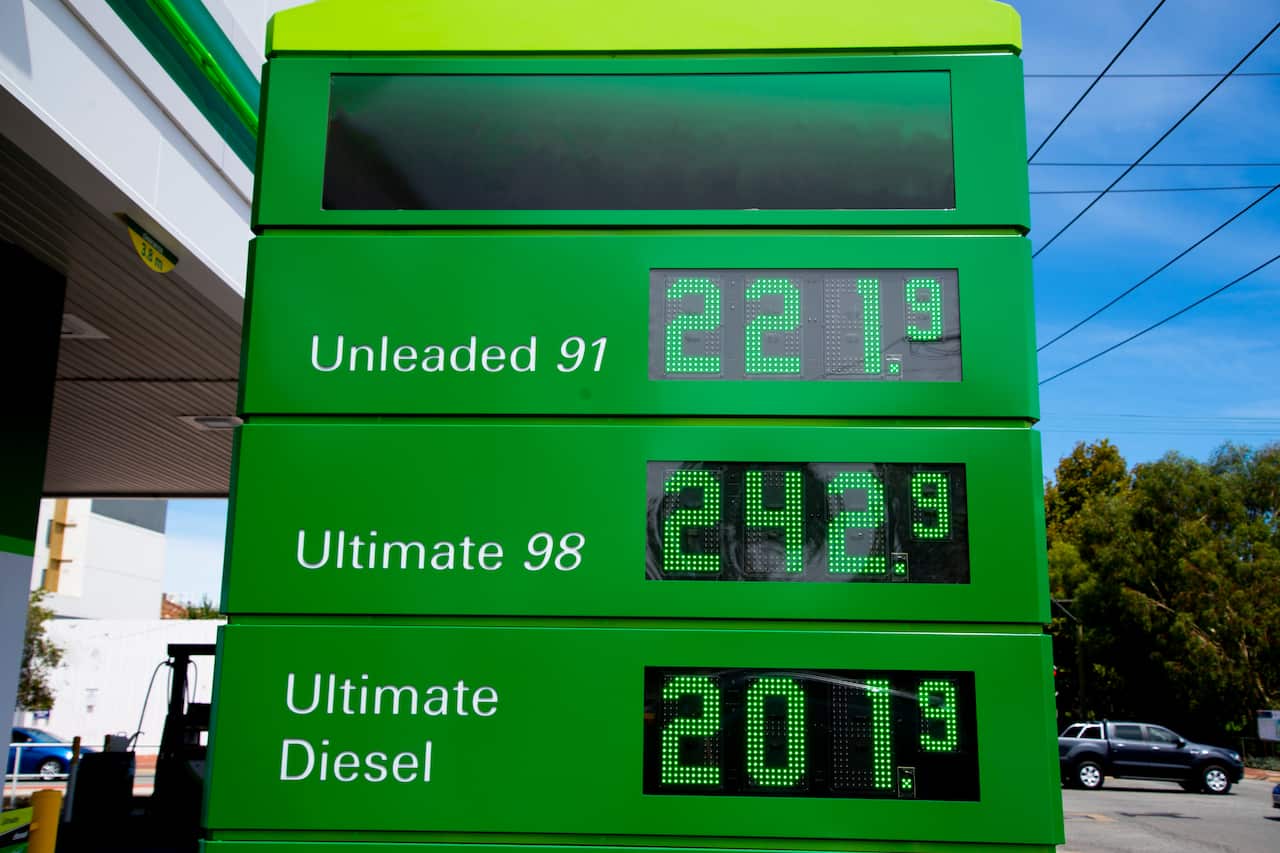
On Friday, the Australian Competition and Consumer Commission reported average diesel prices across the five largest cities hit 303.5 cents per litre — up 27.8 cents, or 10 per cent, in just one week.
Petrol rose by 18.1 cents to 252.2 cents per litre. In regional Australia, diesel averaged 307.6 cents per litre — a 28.6 cent weekly jump.
For Sharilee, the call for action is more urgent.
"The government needs to step up and do something because they just keep hitting us in the back pocket," she said.
"Some people are equipped and can deal with it. Those of us at the bottom of the barrel, we don't. We can't."
The federal government on Monday announced the fuel excise on petrol and diesel would be halved for three months, taking 26.3 cents a litre off the price at the pump.
Some economists, however, have warned that the move is a "band-aid" solution.
For the latest from SBS News, download our app and subscribe to our newsletter.







