Key Points
- The Liquid Fuels Emergency Act, if invoked, would give the energy minister significant control over fuel markets.
- However, it acts as a 'last resort' mechanism, and has never been triggered.
Pressure is mounting for the government to declare a national fuel crisis and trigger never-before-used emergency powers to respond to fuel uncertainty due to the war in the Middle East.
The government has responded to supply concerns with a series of measures — including releasing 20 per cent of fuel reserves, changing petrol and diesel standards and creating a new fuel taskforce. National Cabinet is also set to reconvene next week.
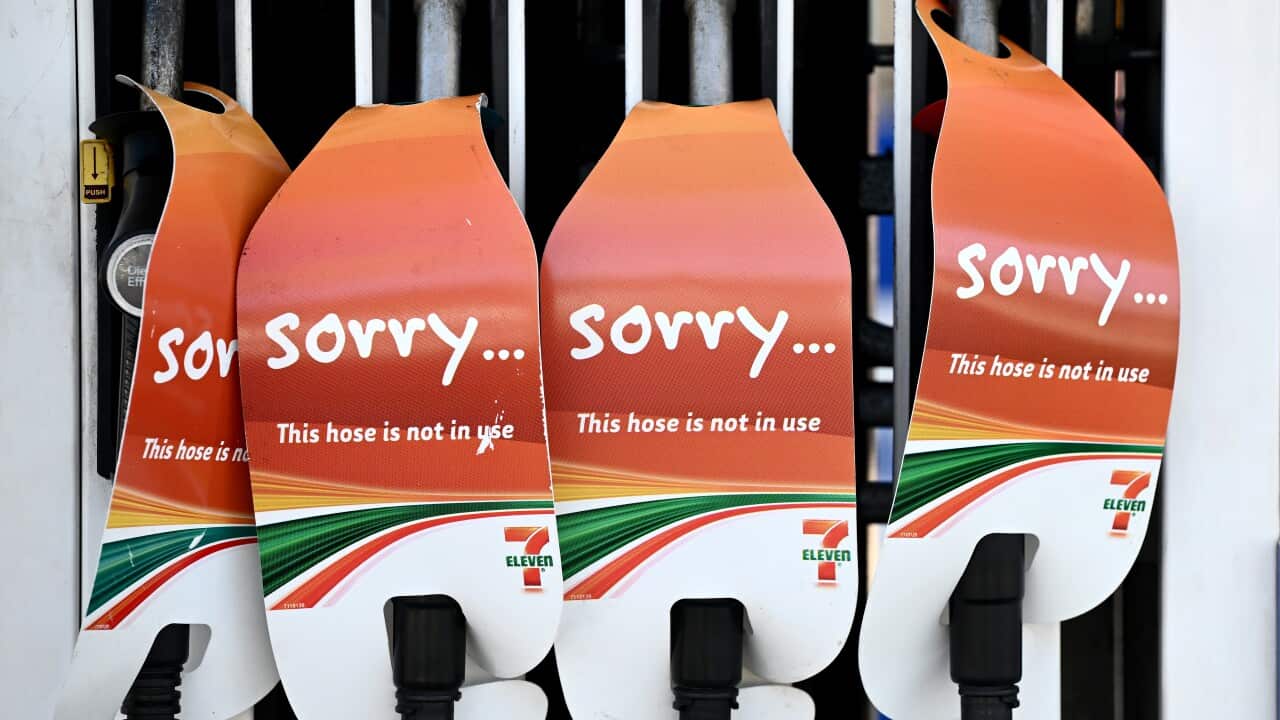
But as more than 400 petrol stations remain dry of at least one type of fuel and diesel surpasses $3 in every capital city except Darwin, there are calls for the government to do more.
Opposition defence spokesperson James Paterson accused Energy Minister Chris Bowen of "not rolling up his sleeves" and using the far-reaching emergency powers.
The powers would grant the energy minister direct control over the oil market, including the implementation of fuel rationing and allocating where fuel goes.
News that makes sense
Your trusted source for staying up-to-date with the world around you. Get free daily news updates and analysis, straight to your inbox.

"It gives them visibility of the supply-and-demand issues across the economy, and great authority to lean on energy companies, fuel companies, distributors, wholesalers, intermediaries to make sure that supply gets to where it needs to go," he told Sky News on Thursday.
It's a sentiment echoed by One Nation MP Barnaby Joyce, who called on Bowen to "take control" and "pull the trigger" on the laws.
Bowen has repeatedly poured cold water on suggestions that the powers need to be invoked, arguing people were jumping "several stages ahead".
"That's a legitimate thing to ask me, but it's not actually where we are or what we're contemplating needing just right now, " he told the 7AM podcast on Thursday.
Tony Wood, senior fellow of the Grattan Institute's energy program, said it's time the government communicated the severity of the situation and its next steps, including the emergency powers.
"It behoves the government, federal and state and territory governments, to be very clear on 'this is where we're at'," Wood told SBS News.
"'We don't think we need to pull the trigger yet, but this is how we will do this, so that everybody knows what's going on'", is what governments should communicate, he said.
What is the Liquid Fuel Emergency Act?
The Liquid Fuel Emergency Act was passed in 1984 in response to the 1970s energy crisis, a period of high oil prices and shortages.
It grants the energy minister powers to respond to a national fuel crisis.
The threshold for the act is so high that it has not been triggered in four decades, even through two Gulf wars and the COVID-19 pandemic.
The governor-general must declare a national liquid fuel emergency, on the advice of the energy minister, that there is a serious shortage of fuel that requires government authority across supply, allocation and rationing.
The energy minister must feel confident that the crisis cannot be averted by increasing supply, having consulted with all state and territory energy ministers first.
This differs from the Fuel Security Act, which sets minimum stockholding obligations for importers and refiners.
What are the emergency fuel powers?
These are far-ranging powers that give the energy minister significant control over the oil market.
Under the legislation, Bowen could direct companies to maintain certain quantities of fuel at certain locations, direct the movement of fuel, direct refineries to produce specific types and quantities, or prohibit supply.
It would centralise federal control, overriding state or territory laws, and would allow him to designate both essential and bulk users.
Bowen has said it's too soon to consider fuel rationing, arguing the government has several other measures at its disposal.
States and territories also have separate legislation granting their relevant minister powers with a lower threshold to control the distribution of fuel.
This includes the ability to direct producers, declare high-priority users, impose rationing restrictions or limit the quantity of fuel that can be purchased.
Wood says enacting the powers would be ideal, arguing it would stop inconsistency across the states and ensure a better buy-in from Australians.
"Ideally, the federal government should do this so we don't have different states doing it differently," he said.
"Australians will support the government on this, I believe, if they think the government's doing A, what's necessary and B, is doing it fairly."
For the latest from SBS News, download our app and subscribe to our newsletter.







