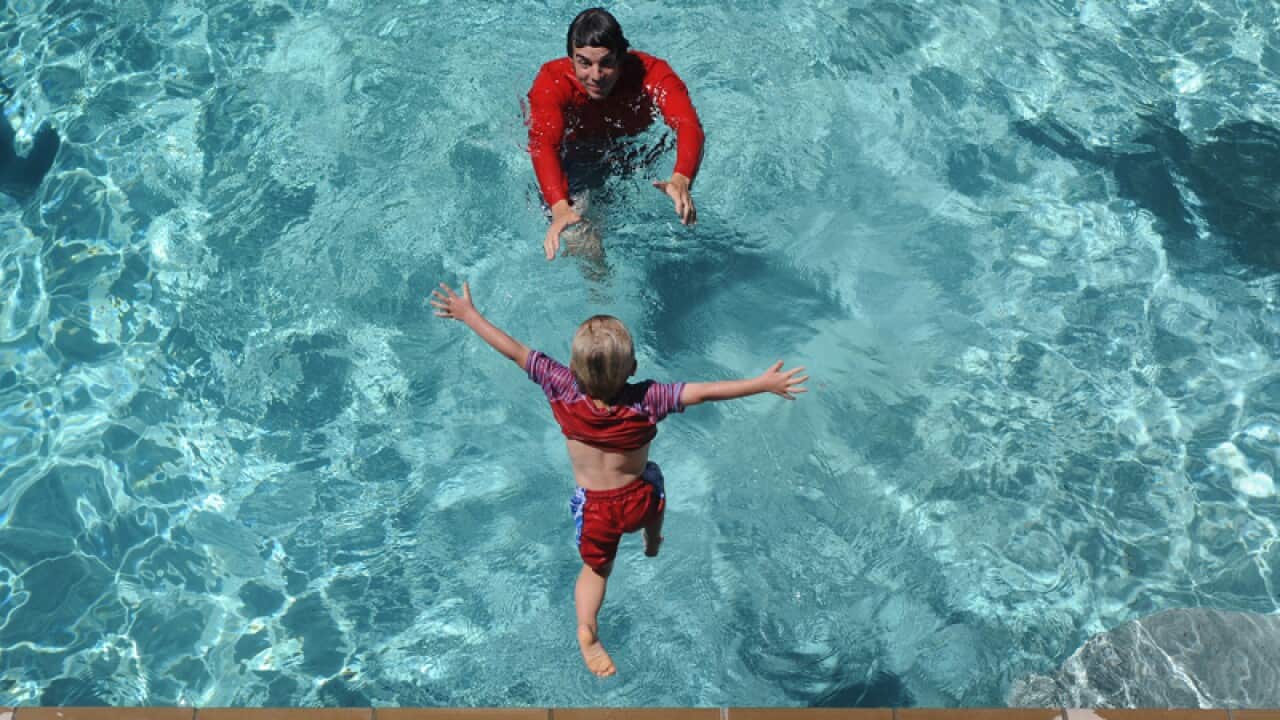
There have been renewed calls for swimming education to be mandatory in the national school curriculum, following the release of the National Drowning Report.
Melbourne woman Nicole Guest is among those who think it’s time for a change.
Nicole's cousin drowned while on a family holiday in Mexico three years ago.
"They got in caught in a rip and just couldn't get out," she said. "The family were on the shore watching them getting caught in the rip and called for help.
“They had to pull them both from the water and unfortunately we lost my cousin."
News that makes sense
Your trusted source for staying up-to-date with the world around you. Get free daily news updates and analysis, straight to your inbox.
Nicole was the first from her Indian-Australian family to learn how to swim.
She said the skill was a gap in knowledge for many migrant families who came here.
"If people swim in India it's usually at the beach, so you're wading around and fighting with the current and waves, but not actually structured swimming," she said.
She said it was a skill that could have saved her cousin’s life.
“For me, it cements the importance of being able to swim. And not even just being able to swim, but understanding water safety,” she said.
“You know, ‘What do you do in a rip? How do you spot a rip?’
“If you’re not aware and you don’t know how to spot them in a panicked situation…. It’s a terrible situation to be in.”
Drowning statistics ‘alarming’
The latest drowning report reveals 271 people drowned in Australia in the last year.
Of them, about one in five was suspected to be from migrant backgrounds.
Dr Bernadette Matthews, from Lifesaving Victoria, said this number could be much higher because country of birth is not often reported in drowning incidents.
“Often people who are newly arrived to Australia are not aware of the different conditions around waterways,” she said.
"If people swim in India it's usually at the beach, so you're wading around and fighting with the current and waves, but not actually structured swimming."
“They might be from landlocked areas, so they're not used to swimming in water.”
Children aged under five were also overrepresented in drowning deaths.
After a downward trend for most of the past decade, drowning has spiked 30 per cent among infants this past year, compared to the previous year.
Dr Matthews said these statistics were alarming.
"We're concerned that this increase will be an ongoing trend,” Dr Matthews said.
“Thankfully we've seen an overall decrease with the legislation around private swimming pools, but unfortunately we're seeing a number of cases where pool fences are not maintained properly, and so we're concerned that this increase may continue in future years."
At the other end of the scale, adults over 55 made up the largest overall number of drowning deaths.
Health Minister Sussan Ley launched the report on Tuesday and said more could be done to prevent these deaths.
"For all of our commitments - $11 million annually to water safety initiatives, including $15 million over five years for our water safety reduced drowning program - I am determined that we do more,” she said.
A national approach
Nicole takes her children to swimming lessons, but her local school didn’t offer them as part of the curriculum.
She said that on top of programs that teach migrants how to swim when they arrive in Australia, lessons should be compulsory across Australian schools.
And advocates agree.
Dr Matthews said the number of schools that teach swimming varies, because it isn’t compulsory.
“It depends which state you’re in,” she said. “In Victoria, it’s part of the curriculum but it’s not mandatory.
“We’d like to see a national consistent approach and have swimming mandatory in all primary schools across Australia.”
Members of the YMCA also advocate for a change.
State-funded swimming programs are offered in some states and territories.
But they are not always compulsory and do not necessarily provide full coverage for all children.
A spokesperson for the Federal Minister for Education said swimming lessons were a state and territory responsibility.
“The Minister would strongly support any state or territory wanting to increase the teaching of these programmes but ultimately it is a matter for each individual jurisdiction,” the statement said.







