
Key Points
- Russia has announced a crackdown on VPN usage, tools used by millions to access blocked apps and websites.
- At least 19 people were arrested at peaceful protests against restrictions on internet freedom Sunday.
Russia's government has moved to crack down on Virtual Private Networks (VPNs) — tools used by millions of Russians to get around the country's growing online censorship — as its war on internet freedom escalates.
Digital minister Maksut Shadayev confirmed the new push earlier this week, saying authorities were working to "reduce VPN usage" with minimal impact on users.
He said access to a number of unnamed foreign platforms had also been restricted.
It comes as at least 14 people were arrested at a peaceful protest against the restrictions on Sunday, part of what Human Rights Watch (HRW) is calling "blatant violations" of Russians' freedom of expression.
It's the latest in what, according to the Reuters news agency, senior foreign diplomats are privately calling a potential "great crackdown" online.
News that makes sense
Your trusted source for staying up-to-date with the world around you. Get free daily news updates and analysis, straight to your inbox.
Experts say the end game may be akin to China's so-called Great Firewall that cuts Russians off from the global internet.
A game of cat and mouse
The Kremlin says foreign platforms have failed to abide by the law and that mobile internet restrictions are needed to counter mass Ukrainian drone strikes, which can use cellular networks for navigation.
Kremlin spokesman Dmitry Peskov confirmed the restrictions to the Reuters news agency, saying they are "partly related to the fact that a number of foreign companies refuse to comply with the norms of Russian legislation, and partly due to security measures against the threat of Ukrainian drones".
But for many Russians, the practical effect is a daily scramble to stay connected.
Office workers are battling a blocked internet, teenagers are constantly switching VPNs, and taxi drivers are struggling to find their way around the capital, Moscow, without online maps.
By mid-January, Russia had blocked more than 400 VPNs, 70 per cent more than late last year, according to the Kommersant newspaper.
But it is a game of cat and mouse; as soon as one VPN is taken down, another appears, with many young Russians changing their VPNs daily, according to the Reuters news agency.
VPNs are often used to make it appear as though the internet user is in another country, therefore bypassing restrictions that may be imposed in their country.
What has been blocked so far?
Russia's assault on internet freedom has accelerated sharply since its full-scale invasion of Ukraine in 2022.
After the invasion, Russia imposed the most repressive laws seen since Soviet times, ordering censorship and bolstering the influence of the Federal Security Service, the main successor to the Soviet-era KGB.
Facebook, Instagram and X were blocked. YouTube is also banned. Online streaming services such as Netflix and financial platforms such as Apple Pay have also withdrawn their business from Russia.
But in recent months, the crackdown has intensified sharply.
In recent weeks, the Kremlin has moved to block Telegram and WhatsApp, while promoting the state-backed 'super-app' Max, which has drawn comparisons with the Chinese social media app WeChat.
With an estimated one billion users in China and hundreds of millions more worldwide, WeChat combines messaging, social media and mobile payments under one platform. However, it has drawn criticism for surveilling and censoring its users.
Mobile internet has been repeatedly blocked across Moscow and other cities, with HRW documenting outages in parts of Moscow for close to three weeks in March, later spreading to Saint Petersburg.
Kommersant estimated businesses in Moscow were losing up to one billion roubles ($18 million) each day of the March shutdown.
Yulia Navalnaya, the widow of opposition leader Alexei Navalny who Western nations believe was killed with a lethal toxin while jailed in Russia, this week accused tech giant Apple of removing "numerous" VPN services from its app store.
"Tools that had allowed Russians to bypass censorship," she wrote on social media. "A remarkable stroke of luck for [Russian President Vladimir] Putin to have such 'friends' in Big Tech."
In 2024, Reporters Without Borders said nearly 100 VPN apps had been removed from Apple's Russian App Store, citing research by GreatFire — a project originally created to monitor censorship in China.
At least 25 removals came at the request of Russia's media regulator Roskomnadzor.
Apple told Reporters Without Borders not complying with these requests would mean it would "no longer be able to operate and app store or distribute content in the country".
It said the United States government has "encouraged companies to continue to make communications services available to the Russian people" in order to best aid "democratic principles.
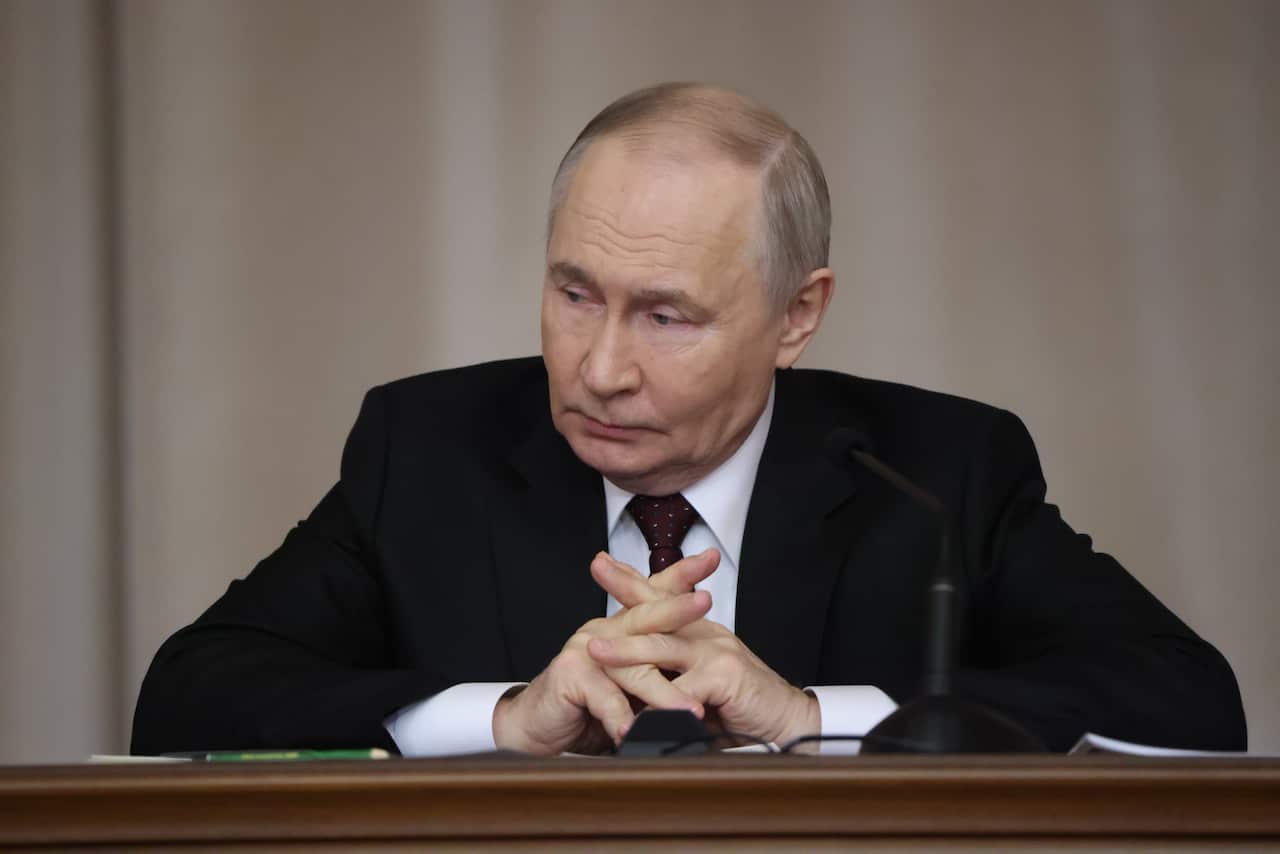
The shutdowns have also sparked public dissent including Sunday's protest in Moscow that led to 14 arrests. Five more people were arrested in other cities, with two reporting they were beaten, according to HRW.
"Russia’s internet shutdowns and the crackdown on peaceful protesters are blatant violations of Russia’s obligations to respect freedom of expression, of information and of assembly," said Hugh Williamson, Europe and Central Asia director at Human Rights Watch.
Authorities had already moved to block protests in 40 cities, citing what HRW calls "bogus pretexts" ranging from COVID-19 restrictions, snow tree inspections, and sports festivals.
Why is Russia doing this?
The broader aim, according to diplomats who spoke anonymously to Reuters, is to shore up domestic control in the context of the war against Ukraine.
Should the conflict drag on, it could increasingly strain popular support, the envoys said. Should the war end, Russian officials are likely keen to prepare for any dissent that may ensue, they added.
One said Moscow had assembled powers that gave it the option to enact a "great crackdown" online.
Andrei Soldatov, a Russian investigative journalist who is an expert on the country's security services, noted that Russia's leaders haven't forgotten the social upheaval that followed the end of the Afghanistan war in 1989 and the Soviet collapse.
"The country collapsed, the security services were split apart — it was a disaster," Soldatov told Reuters. "The security services are trying to create a situation in which — if Putin signs a peace deal or if Putin goes for a protracted war — it would not destroy the whole thing."
Mohiuddin Ahmed, associate professor in cybersecurity at Adelaide University, told SBS News the disruptions look like a testing phase towards a Russian version of China's Great Firewall — a state-run internet censorship and surveillance system.
Central to that is what authorities call a "whitelist" — a government-approved roster of websites that stay available during the shutdowns. Those include state media, Russian social media, and have also expanded to include online shops, food delivery, banks and major taxi services.
But HRW has warned that the whitelists are an escalation of online censorship and make it difficult to circumvent censorship and access information.
"A government has no legitimacy to determine what is 'essential' for an average internet user in Russia or limit internet access to a handful of state-approved resources," Williamson said.
"Neither should it prevent people from peacefully protesting its assault on their right to access an open and free internet."
— With additional reporting by the Reuters news agency and Wing Kuang.
For the latest from SBS News, download our app and subscribe to our newsletter.







