In brief
- Poland's prime minister said the country had intelligence that Russia planned a "provocation" in the coming months.
- Experts say it’s unlikely Russia would risk outright war with Europe, but wants to test NATO’s strength.
For years, Poland has been preparing its citizens for war with Russia, turning metro stations into bomb shelters and teaching citizens survival skills. Now, the Polish government fears a Russian "provocation" is imminent.
"I don't mean to scare anyone, but the coming months may truly be critical," Poland's Prime Minister Donald Tusk told the media last week.
Tusk relayed a message he said came directly from United States intelligence: that Russia is preparing to attack Poland to test NATO.
Polish media reported the US warned Russia was planning a "provocation" in the coming months, which could be anything from a drone strike against critical infrastructure to a small-scale ground incursion on Polish territory.
"Poland is preparing very intensively for various scenarios," Tusk said.
News that makes sense
Your trusted source for staying up-to-date with the world around you. Get free daily news updates and analysis, straight to your inbox.
"Let's not be afraid ... but we cannot ignore them."
Poland, along with its Baltic Sea allies Finland, Lithuania, and Estonia, blame growing Russian aggression for cyber attacks and drone incursions they say are testing their defences.
Now, as tensions between the US and Europe threaten to come to a head again at the NATO summit in Türkiye, questions remain about how far Russia would go to exploit Europe's weaknesses.
'Poke and provoke'
Meanwhile, Mick Ryan, senior fellow for military studies at the Lowy Institute, told SBS News the threat of Russian aggression should be taken "very seriously".
"It's become more apparent that Russia just can't win the [Ukraine] war, but equally, Putin cannot bring home a losing army," Ryan said.
"So somehow he has to manufacture a victory, either through Ukraine or something else."
It's the "something else" Ryan said should concern NATO members.
The reported goal of Russian provocation would be to test NATO resolve and force Ukraine's allies to suspend aid, according to The Telegraph in the United Kingdom.
Article 5 of the NATO treaty requires member states, including the US, to come to the collective defence of another member if it is attacked.
According to The Telegraph, Polish security forces suspected Russia would potentially stage an accidental incursion, such as a GPS failure leading to an incursion on Polish territory, to provoke a NATO negotiation rather than an armed response.
They believed Russia would then use those talks to reduce Western support for Ukraine.
Bart Hogeveen, senior fellow at the Australian Strategic Policy Institute, told SBS News this is consistent with Russia's history.
"There are things in the Russian playbook they could use to just poke and provoke Poland, and by extension the European partners and NATO allies," he said.
"Poland is an important supporter of Ukraine, both in material terms as well as logistically ... so it's heavily directed at Poland, but it's there to undermine support to Ukraine."
Train stations into bunkers
Poland's proximity to Russia and its ally, Belarus, means it has long felt Russia's presence on its doorstep. In recent years, Poland has blamed Russia for growing acts of aggression against its territory.
"We've seen drone incursions in Polish airspace, which last year had to be taken down by fighter jets ... we've seen the sabotage of Polish railway infrastructure, which is used for [sending] military supplies to Ukraine," Hogeveen said.
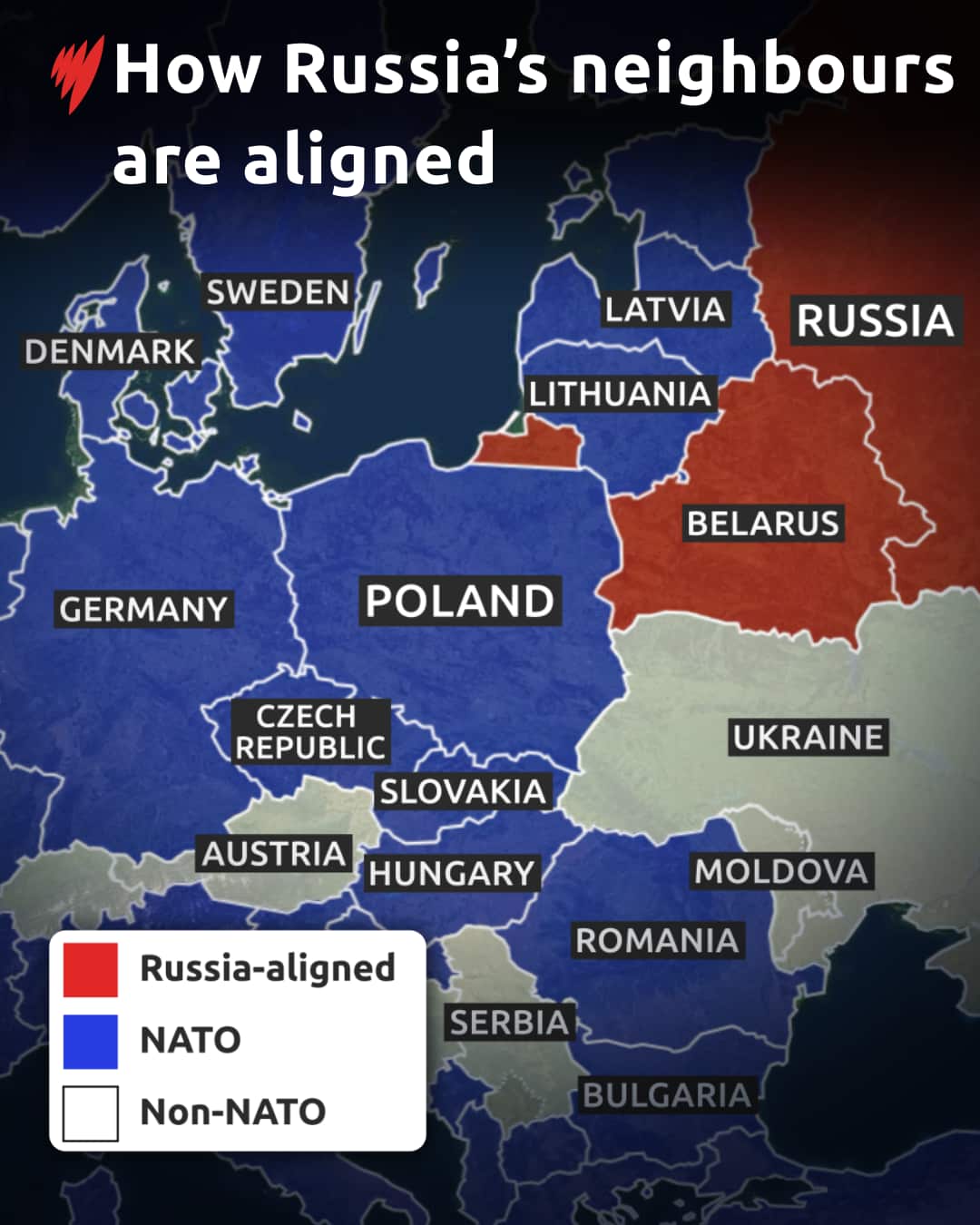
In response, Poland has embarked on a massive military build-up, spending 4.48 per cent of their GDP on defence in 2025, according to NATO calculations.
The average spend for members of the European Union is 2.5 per cent of GDP, with Australia sitting at 2.8 per cent.
Ryan said Poland's military is the most "capable" in Europe, with one of the region's largest inventories of assets such as tanks, air defence systems and drones.
"They've built their military up to one of the largest and most capable in Europe ... You've also seen NATO change its contingency plans over the last couple of years for deterring and responding to Russia," he said.
Training programs offer weekend courses to teach civilians survival skills like how to light and extinguish fires, all with the aim of preparing citizens for war.
In late 2025, the Polish capital, Warsaw, announced plans to upgrade its underground train network to function as bomb shelters in the event of military attacks.
Russia's 'bloody nose'
Both Hogeveen and Ryan told SBS News they thought a conventional military attack against Poland was unlikely.
"Russia has no prospect of a successful military campaign against Europe," Ryan said.
"They're weaker, they're poorer, and they're very run down after Ukraine."
However, Russia could exploit cracks in the relationship between Europe and the US, which reached a breaking point last year as Trump threatened to annex Greenland.
In January this year, NATO sent troops to Greenland following Trump's threats, pitting the alliance against one of its founding members.
Hogeveen said stoking those tensions would be in Russia's interest.
"Russia would love us to have a debate about Article 5, where the main question is, will the US come to the defence of its allies or not?" he said.
"If Europe is bogged down into that debate that distracts from support to Ukraine, and distracts from potential issues for a negotiated settlement."
Ryan said it is "difficult to foresee" how the US would respond to an attack against Poland, but he was certain that Russia wouldn't risk open warfare against Europe with or without Trump's backing.
"I think [Russia] would receive a very significant bloody nose."
In a call on the US' 250th birthday celebration, Putin reportedly told Trump that Russia was advancing confidently on the battlefield against Ukraine.
On the front lines, Russian forces have made almost no progress in recent months, largely due to the presence of drones, which hinder the movement of heavy vehicles and inflict heavy losses on both sides.
Diplomatically, negotiations are at an impasse, with Moscow demanding the withdrawal of Ukrainian forces from the entire Donetsk region — a demand Kyiv rejects.
For the latest from SBS News, download our app and subscribe to our newsletter.







