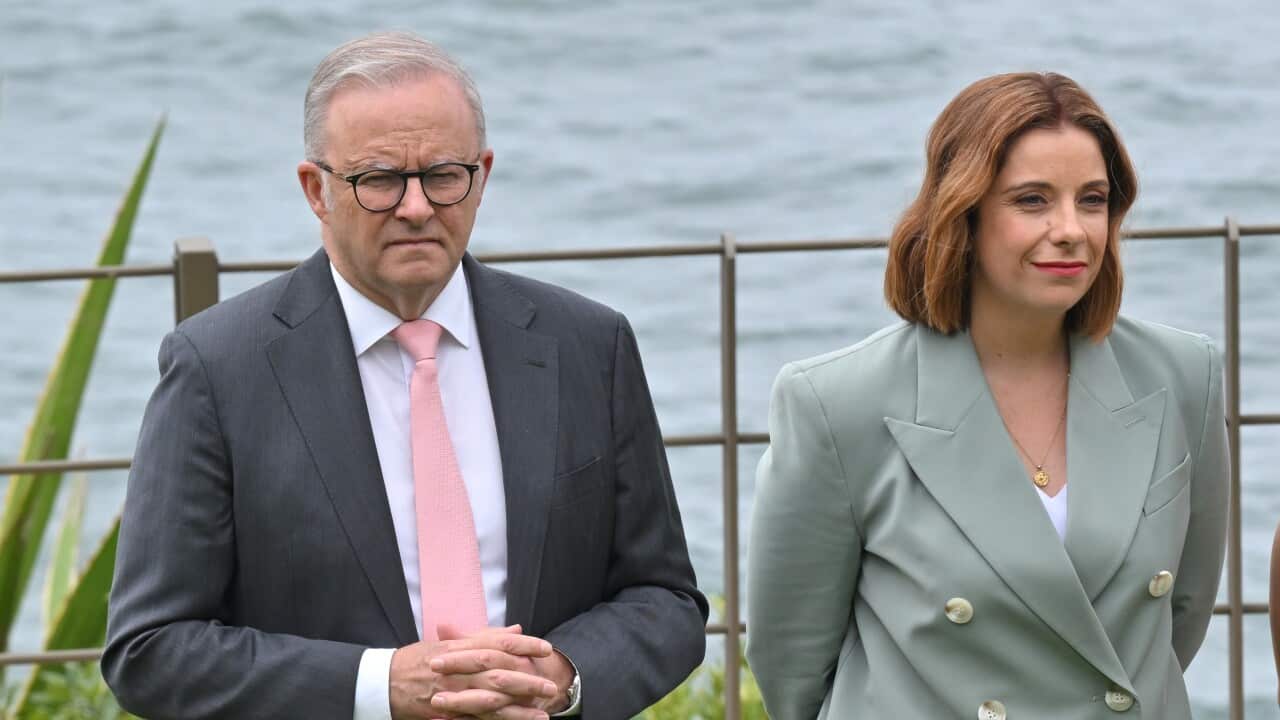
Prime Minister Anthony Albanese has acknowledged the social media ban "won't be perfect" but insists it will change lives, as the new restrictions appeared to face "teething issues" on their first day.
The new laws came into force on Wednesday and ban teenagers aged under 16 from holding accounts on some social media platforms, including Instagram, Snapchat, TikTok, and seven others. Other platforms could be added down the track.
There were reports under-16s could create accounts on some platforms, subject to the ban as it came into force. They are required to take reasonable steps to block children from accessing their services, or face fines of up to $49.5 million per breach.
Albanese told reporters at a press conference on Wednesday the "world-leading" legislation was "Australia showing enough is enough".
"This will make an enormous difference. It is one of the biggest social and cultural changes that our nation has faced," Albanese said.
News that makes sense
Your trusted source for staying up-to-date with the world around you. Get free daily news updates and analysis, straight to your inbox.
He said it was a "big change" and the ban "won't be perfect", but there was "success in the fact it's happening".
"Make no mistake — this reform will change lives," he said. "For Australian kids, and allowing them to just have their childhood. For Australian parents, enabling them to have greater peace of mind. But also for the global community, who are looking at Australia, and saying: 'well, if Australia can do it, why can't we?'."
Communications Minister Anika Wells and eSafety Commissioner Julie Inman Grant also conceded there would likely be issues during the early stages of the ban.
"They might have avoided it [the ban] today does not mean they can avoid it in a week's time or a month's time because these social media platforms have to go back and routinely check under-16s' accounts," Wells told reporters.
She said social media companies have years of data they can use to ascertain a person's age, including previous searches or the subjects of conversations children may have.
"Because you've had your older brother scan their face for you today which has bought you a bit of time, doesn't mean that these accounts aren't going to see you talking to other 14-year-olds," she said.
Wells said more than 200,000 TikTok accounts have been deactivated so far.
Inman Grant said some companies have come into the ban "kicking and screaming", but she believes they have the "technical capability" to enforce the ban.
"There will be teething issues, and kids are ingenious; they will be finding ways around it," she told ABC News on Wednesday morning.
"But the way that we are looking at compliance and enforcement is around systemic failures, and I 100 per cent believe that these companies have the technical capability to achieve this."
Later, while speaking alongside the prime minister, Inman Grant compared the social media ban to gun and tobacco reform, predicting the world would follow suit.
"The world will follow like nations once followed our lead on plain tobacco packaging, gun reform, water and sun safety," she said. "How can you not follow a country with clearly prioritising teen safety ahead of tech profits?"
Some experts have been divided over the ban, saying it will have positive and negative effects, while others have argued social media is an important tool for young people to have access to.
Albanese acknowledged it would be a "difficult period" for affected teenagers.
In a video posted to social media, Albanese encouraged teenagers to use the ban as an opportunity to "spend quality time" face-to-face with family and friends.
Tech companies are expected to use a range of methods to verify a user's age, including face scans with artificial intelligence, sophisticated analysis of people's posting patterns and language, and digital IDs.
Some platforms, such as YouTube, will still be accessible without an account, but it will be harder for algorithms to target content to children.
The government says the onus is on social media companies, not parents, to enforce the ban.
It is also examining how to regulate artificial intelligence chatbots and bring in a "digital duty of care" next year.
For the latest from SBS News, download our app and subscribe to our newsletter.







