
In brief
- The new changes are set to come into effect from the start of the new financial year.
- Wealthy superannuants will see the greatest changes to their nest eggs.
The government's key superannuation reforms are set to soon become law after passing the Senate on Tuesday night, which will see major amendments for low income earners, and those with super balances above $3 million.
The Treasury Laws Amendment (Building a Stronger and Fairer Super System) Bill 2026 passed without amendment after the Greens backed down on demands for Labor to go further.
The Liberals and the Nationals both opposed the legislation, forcing Labor to negotiate with the Greens to get their legislation through the Senate.
The government has described their reforms as important for low-income workers and in making the super system "fairer from top to bottom", but doubling the tax for the highest earners.
"This means more super for workers on low incomes and more sustainable tax breaks for people with the biggest balances", Treasurer Jim Chalmers said.
News that makes sense
Your trusted source for staying up-to-date with the world around you. Get free daily news updates and analysis, straight to your inbox.
The treasury estimates these changes will boost super balances for roughly 1.3 million Australians, many of whom are women or people under the age of 30.
At the upper end, they claim that their reduction in tax concessions for the wealthiest Australians will affect "less than 0.5 per cent" of the population over the coming financial year.
Despite their misgivings, Senator Nick McKim said the Greens backed the bills as "a down payment on genuine, progressive tax reform" in the upcoming budget.
"This budget is a once-in-a-generation opportunity for ambitious tax reform, and we are opening the door for Labor to walk through," he said.
Though he added the bill "barely scratches the surface" on the changes needed to fix a tax system "turbocharging intergenerational inequality".
Chalmers thanked the Greens for their "constructive" engagement on the new laws, which were first proposed in 2023.
"We are helping workers earn more, keep more of what they earn and retire with more, while also strengthening Australia’s world‑class superannuation system", he said.
The superannuation changes coming
The bill marks a major shift in how high-balance super accounts are taxed, while simultaneously providing a boost to low-income earners.
Here's what will change:
New division 296 tax on large balances
From 1 July this year, the tax rate on superannuation investment earnings for those with balances above $3 million will be doubled, from 15 per cent to 30 per cent.
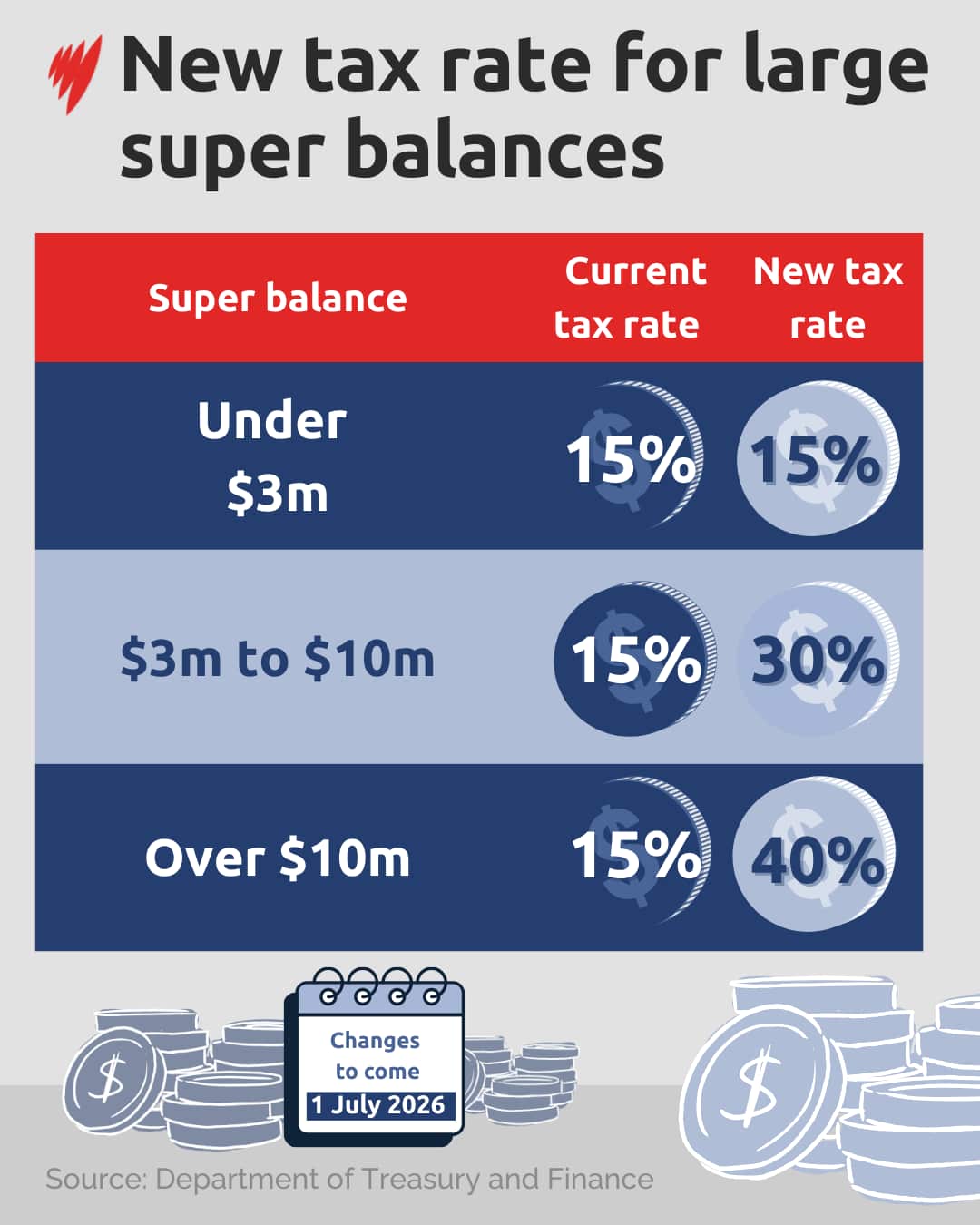
Those with balances above $10 million will have their earnings taxed at 40 per cent — higher than the original proposal.
Both changes will be indexed to keep the number of Australians affected by the shift from rising over time.
For Australian's with superannuation balances under $3 million, they will remain on the existing rate of 15 per cent tax.
The changes will apply only to realised investment earnings, not unrealised or "paper" gains, after push-back from the opposition.
Low-income superannuation tax offset
From 1 July 2027, the low-income superannuation tax offset (LISTO) threshold will rise from $37,000 to $45,000. Workers earning under the new upper limit will effectively pay nothing on their super.
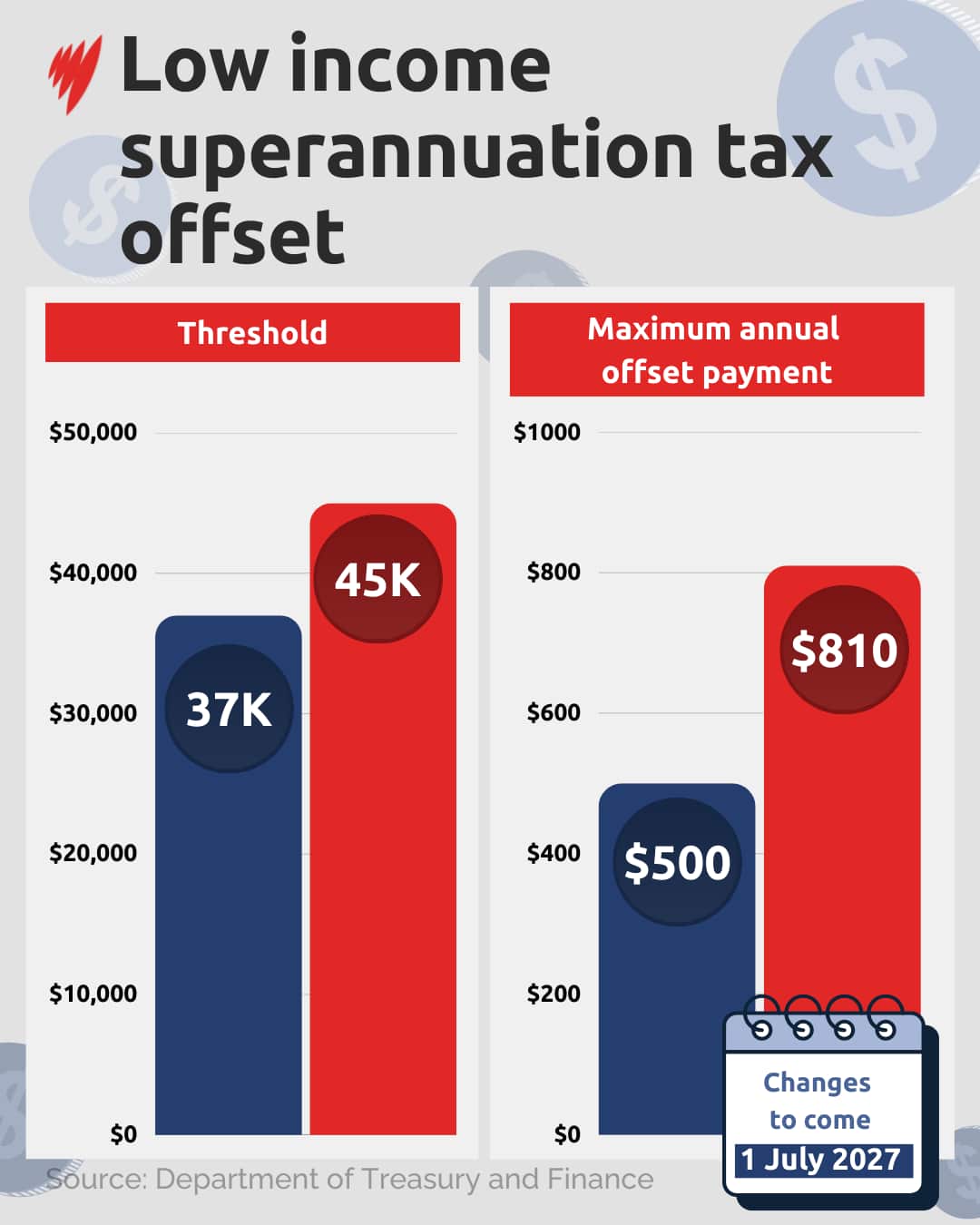
In addition, the maximum annual offset payment has risen from $500 to $810. This means low-income earners will get more back at tax time on superannuation payments automatically taken by the government throughout the year.
Other financial changes on the way
Included within the new legislation are measures to prevent convicted child sexual abusers from hiding assets in their superannuation to avoid paying court-ordered compensation.
Also included is a general ban on advertising specific superannuation funds during employee on-boarding so as to prevent workers being nudged into under-performing funds.
These changes join already-announced measures ahead of the 2026-27 Australian Federal Budget, which is due to be handed down on 12 May.
Those measures include the changes to "payday super", legislation passed by the government that requires employers to pay superannuation at the same time as salary and wages are paid. This will come into effect from 1 July.
The 16 per cent tax rate, which applies to those earning between $18,201 and $45,000 will be reduced to 15 per cent from 1 July as well.
There is also further funding for Fair Work Commission award wage increases for aged care nurses, which will come into play on 1 August.
In addition, the treasury is reportedly investigating lowering the 50 per cent discount on capital gains for investment properties held for longer than 12 months.
— With additional reporting by the Australian Associated Press.
For the latest from SBS News, download our app and subscribe to our newsletter.







