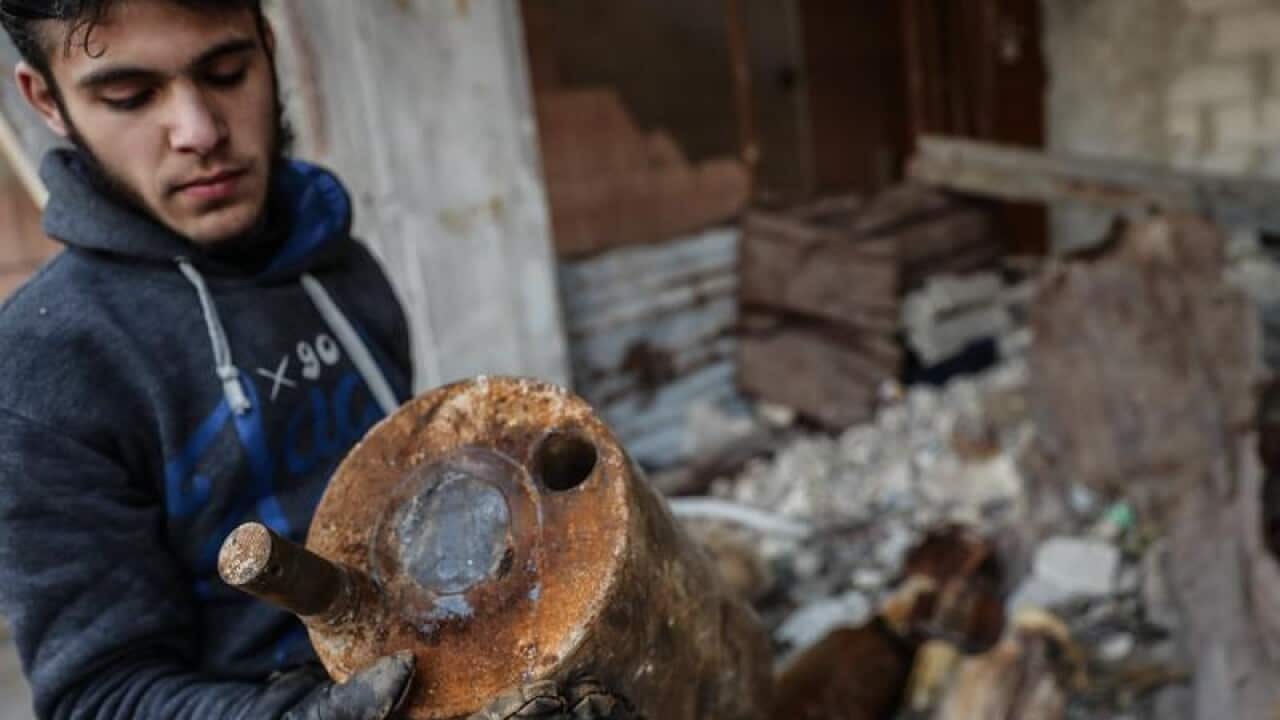
The Syrian government may be developing new types of chemical weapons and US President Donald Trump is prepared to consider further military action if necessary to deter chemical attacks, senior US officials say.
President Bashar al-Assad is believed to have secretly kept part of Syria's chemical weapons stockpile despite a US-Russian deal under which Damascus was supposed to have handed over all such weapons for destruction in 2014, the officials said on Thursday.
Assad's forces have instead "evolved" their chemical weapons and made continued occasional use of them in smaller amounts since a deadly attack last April that drew a US missile strike on a Syrian air base, the officials told reporters in a briefing.
News that makes sense
Your trusted source for staying up-to-date with the world around you. Get free daily news updates and analysis, straight to your inbox.
Characteristics of some of those recent attacks suggest that Syria may be developing new weapons and methods for delivering poison chemicals, possibly to make it harder to trace their origin, the officials said, speaking on condition of anonymity.
A deadly sarin attack on a rebel-held area in April prompted Trump to order a missile strike last year on the Shayrat air base, from which the Syrian operation is said to have been launched.
"We reserve the right to use military force to prevent or deter the use of chemical weapons," one official said, while declining to specify how serious a chemical attack would have to be to draw a fresh US military response.
A second official said, however, that the Trump administration hopes that stepped-up international sanctions and diplomatic pressure will help rein in Assad's chemical weapons program.
If the international community does not act quickly to tighten the screws on Assad, Syria's chemical weapons could spread beyond its borders and possibly even "to US shores," the second official said.
"It will spread if we don't do something," the official warned.
The officials echoed US Secretary of State Rex Tillerson's recent accusation that Russia, Assad's ally in Syria's multi-sided civil war, bears some responsibility for failing to enforce the chemical weapons ban.
Russia has denied any complicity, and the Syrian government has said it has not carried out any of the attacks.
Western officials have cast suspicion on the Syrian government for a chlorine gas attack on a rebel-held enclave east of Damascus last week that sickened at least 13 people.
State Department spokeswoman Heather Nauert on Thursday said the US is "extremely concerned" about reports that Syrian forces had carried out another chlorine gas attack this week in the eastern Ghouta area.







