
In brief
- The government has pointed to previously legislated changes as examples of its cost-of-living relief measures.
- Chalmers has dampened expectations of major fiscal benefits as the war in the Middle East drives up inflation.
As further tax changes are flagged in the upcoming federal budget, Australians taxpayers are being told they will benefit from previously legislated reforms due to take effect in the coming months.
From 1 July, adjustments to the income rate and superannuation will take effect.
Meanwhile, Treasurer Jim Chalmers has been signalling that "intergenerational fairness" is a key theme of the 2026 budget, while keeping expectations somewhat muted around cost-of-living relief.
Already, changes to the capital gains tax (CGT) discount and negative gearing are widely expected to be included in the forthcoming financial plan, the extent of which will be revealed next Tuesday night.
"The best way to build trust is to make the right decisions for the right reasons," Chalmers said on Monday.
News that makes sense
Your trusted source for staying up-to-date with the world around you. Get free daily news updates and analysis, straight to your inbox.
"This budget is not about and never will be about setting some Australians against other Australians. It's about recognising some of these legitimate intergenerational concerns, which, in my experience ... are often shared by older Australians."
The treasurer has flagged the budget will be impacted by volatility with the war in the Middle East and the need to manage the ripple effects in Australia, not wanting to increase inflation.
Chalmers has recently emphasised that the government's fiscal response would show "restraint", amid tougher economic conditions and said the government wants to play "a helpful, not a harmful, role in the fight against inflation".
However, a range of cost-of-living alleviation measures will be included in the budget, Chalmers said, while pointing to tax burden reductions already secured as an example of relief the Labor government is delivering.
Tax bracket changes coming from 1 July
An income tax rate reduction is the headline change being delivered in the coming months.
From 1 July, the 16 per cent rate on the lowest marginal tax bracket will be reduced to 15 per cent. This means anyone earning between $18,201 and $45,000 will pay one cent less in tax for every dollar earned.

Taxpayers earning $45,000 or more will receive the full benefit of the reduction — a total of $268 per year, or roughly $5.15 per week.
For the following financial year, that 15 per cent rate will drop once again to 14 per cent, as legislated in the Treasury Laws Amendment (More Cost of Living Relief) Bill 2025.
Figures released by the prime minister's office show that all 14 million taxpayers will benefit from the change, which they argue will push back bracket creep and increase the financial rewards from work.
Australian Taxation Office figures show 14.3 million people submitted tax returns
Superannuation shifts
"Millions of Australians" are expected to benefit from payday super laws, according to the government, which will require employers to deposit contributions to their employees' accounts at the same time that they pay their wages.
The change updates current requirements that contributions are made at least four times a year, and is expected to reduce the number of employers avoiding paying superannuation.
A bill outlining superannuation tax concessions changes passed both houses of parliament earlier this year, which are also slated to take effect from 1 July.
The introduction of a new tax on high balances will mean those with $3 million to $10 million in their super accounts will pay an additional 15 per cent tax.
The total effective tax rate for those adding to their balances will rise to 30 per cent, while those in the retirement phase will pay 15 per cent on the excess.
People with superannuation balances over $10 million will pay an additional 25 per cent tax, resulting in a total effective rate of 40 per cent. The change will only apply to realised earnings.
In addition, those on paid parental leave will also receive superannuation contributions from July. The ATO will automatically add to an employee's nominated super fund after the relevant financial year, starting from this year.
Inflation an issue
Economic stimulus policies would only make the Reserve Bank's job of tackling inflation harder, HSBC Australia's chief economist Paul Bloxham told the Australian Associated Press. He called for comprehensive reform beyond simply adjusting property tax breaks.
Inflation reached a three-year high in March, climbing from 3.7 per cent to 4.6 per cent annually. On Tuesday, the RBA increased the cash rate to 4.35 per cent in a bid to drive down spending that has been exacerbated by the war in the Middle East.
In its pre-budget submission, the Business Council of Australia called for spending discipline and changes to improve productivity long-term.
"This budget should include reduced spending to curb inflation, significant reductions in red tape and tax changes which drive investment and lift living standards," the council's chief executive Bran Black said.
NDIS overhaul
Some savings have already been flagged, including plans to remove at least 160,000 people from the National Disability Insurance Scheme (NDIS) by 2030 as the government seeks to curb growth in spending on the scheme.
The change will form the foundation of budget repair, providing more than $35 billion in forecast savings.
The overhaul is set to return the government program to its "original purpose" and prevent the system from becoming unsustainable, Prime Minister Anthony Albanese said in announcing the changes to the $50 billion service.
However, questions remain over how new standardised, evidence-based tools — expected to be deployed in January 2028 — will be used to determine eligibility.
States have also pushed back on the changes, arguing that they had been given little notice on the reforms and weren't well placed to shoulder additional expenditure.
Further income tax cuts
Speculation has grown over the upcoming changes to negative gearing and CGT, both of which are expected to be reformed in the coming budget.
Together, these policies have made housing more attractive than other investments and have been blamed for driving up house prices well ahead of wages, contributing to the current housing crisis.
The CGT discount — which cuts the tax burden on investment profits by 50 per cent — is likely to be overhauled, and the discount could return to the pre-1999 level, which was equal to inflation.
Whether those changes will apply only to housing or to all investments, as has been suggested elsewhere, remains to be seen. So too does the scope of the changes, which may only apply to new assets or to future gains on those assets.
Negative gearing — which enables a reduction in taxable income through investment losses — is also widely expected to be grandfathered into existing assets, meaning no change for current investors.
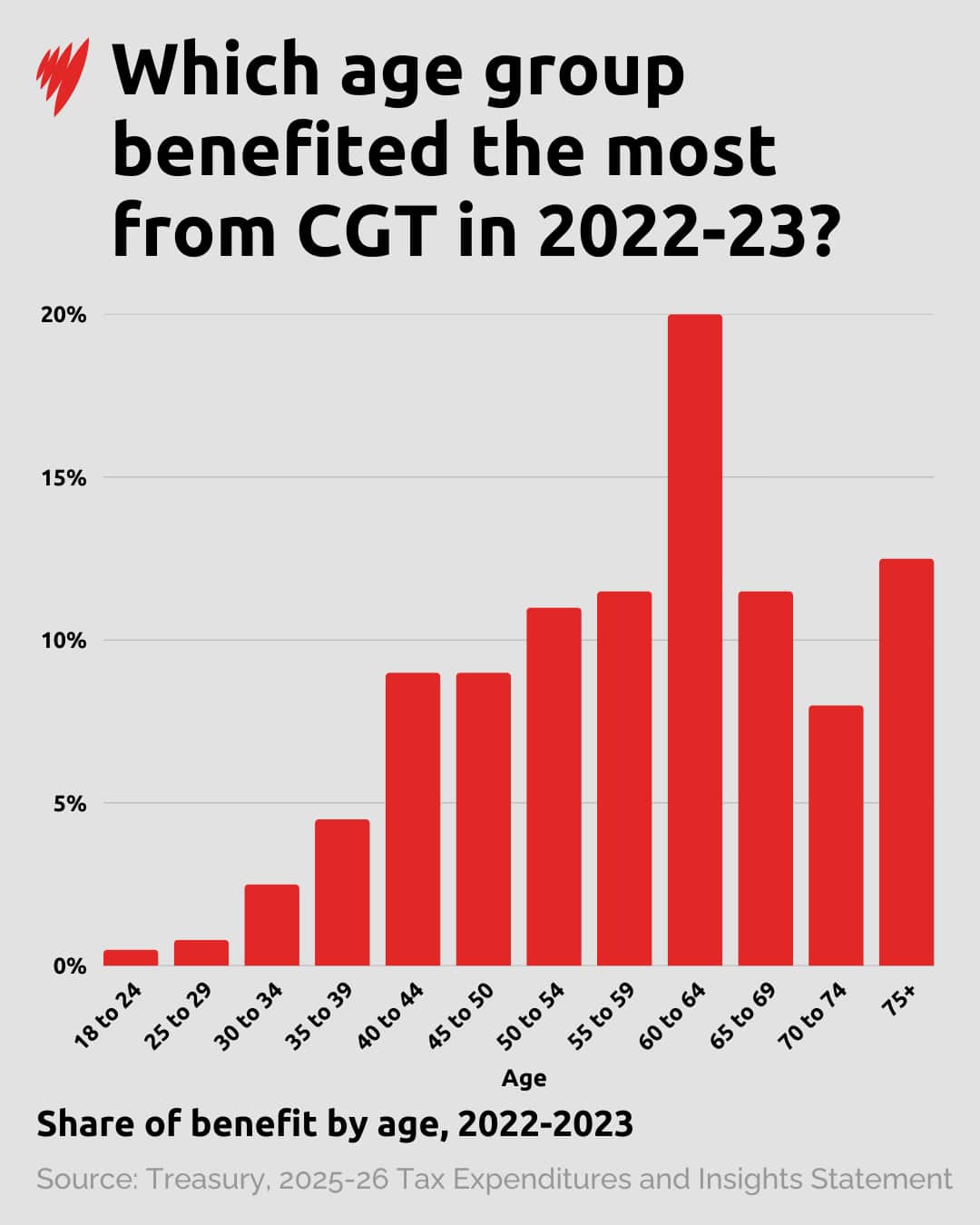
Whether Labor will cap the number of properties that investors can negatively gear, limit the policy to new builds, or seek to phase it out is yet to be determined.
In a speech to the Australian Chamber of Commerce and Industry in Melbourne on Monday, Opposition treasury spokesperson Tim Wilson painted the expected tax changes as an "assault on family".
"Their capital gains tax applies to everyday Australians, mums and dads, but probably won't to industry super funds nor foreign investors in renewable energy," he told the business group.
"Labor is building a class of Australians dependent on them being in office. This government is not about a better Australia; it is about securing power."
Trust changes
Changes to the ways that discretionary trusts are taxed are allegedly being floated, with some media outlets reporting that the legal structures for managing financial assets could receive a 30 per cent minimum tax on distributions.
Labor's 2019 election policy could be resurrected to deal with data showing discretionary trusts in Australia have doubled in the past two decades, from 400,000 to 800,000.
The practice allows high-income earners to pay substantially less tax by dividing their income among beneficiaries in order to reap the tax-free rewards.
Modelling by independent MP Allegra Spender found that a worker on $100,000 could almost halve their tax bill through the use of a trust.
"These advantages are manifestly unfair to wage-earners who have no opportunity to split their income, and pay much more tax on similar total family income," she wrote in her April tax white paper.
— with additional reporting from the Australian Associated Press.
For the latest from SBS News, download our app and subscribe to our newsletter.







