IN BRIEF
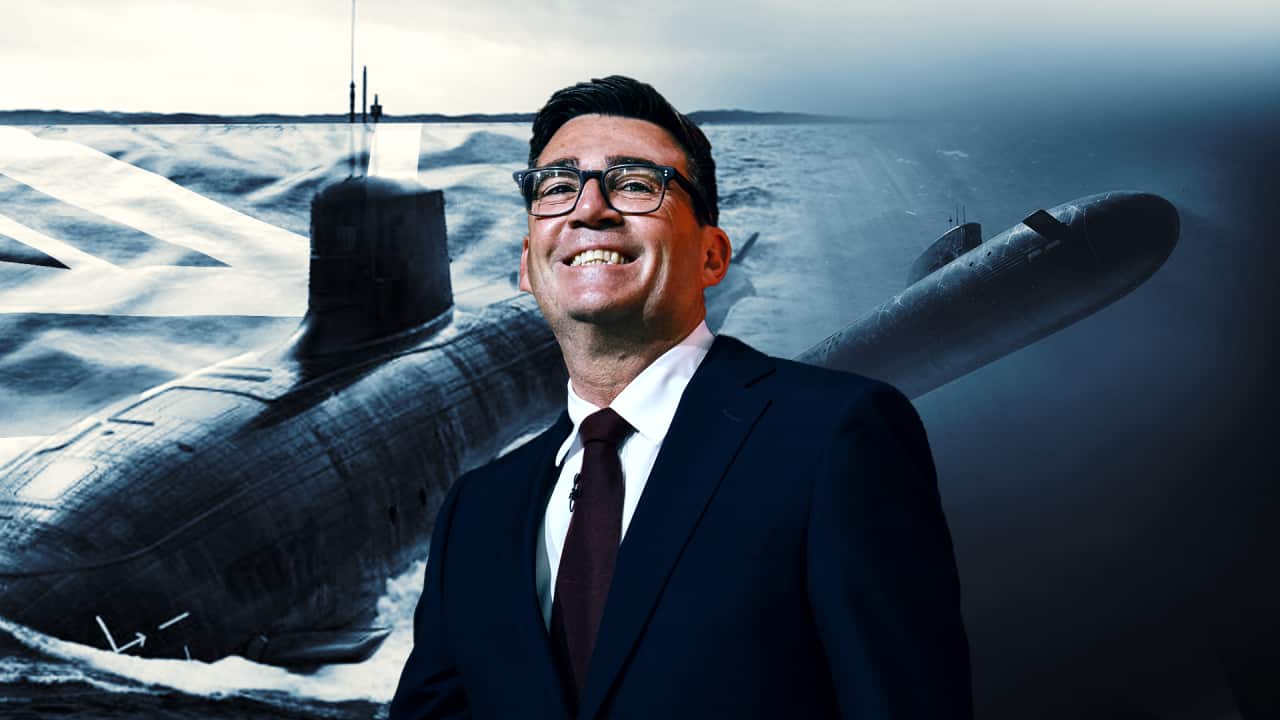
- On Monday, former Manchester mayor Andy Burnham succeeded Keir Starmer as the United Kingdom's prime minister.
- Experts say the change in leadership could impact the UK's investment in defence but is unlikely to impact AUKUS.
Labour leader Andy Burnham has become the United Kingdom's seventh prime minister in a decade — but experts say it remains unclear how the former mayor of Greater Manchester will approach the country's most important strategic partnership with Australia.
Newly departed UK Prime Minister Keir Starmer suffered a high-profile split with his defence secretary, John Healey, over a perceived failure to properly fund the department.
Burnham now inherits Starmer's £298bn ($573b) defence spending commitment over the next four years, £4.7b ($9b) of which is unfunded and will need to make up part of Burnham's first budget.
Experts have said that, while Burnham is unlikely to renegotiate the AUKUS agreement, defence is likely to play a central position in the new UK leader's job description, given the growing threat of Russia to NATO members.
Jennifer Parker, a non-resident fellow at the Lowy Institute, told SBS News that policymakers in Australia will be watching Burnham's approach to foreign affairs closely.
News that makes sense
Your trusted source for staying up-to-date with the world around you. Get free daily news updates and analysis, straight to your inbox.
"I think there are broader questions about the implications of Andy Burnham's views on defence and the defence investment plan in the UK ... [but] in many ways, AUKUS is critical for the UK," Parker told SBS News.
The UK, alongside Australia and the United States, entered into trilateral AUKUS security agreement in 2021.
The deal is divided into two key pillars: Australia's acquisition of conventionally-armed, nuclear-powered submarine capability and the development and delivery of advanced capabilities such as underwater drones.
In July 2025, Australia also entered into a bilateral agreement with the UK dubbed the Geelong Treaty. The 50-year agreement enables the cooperative design, building, operation, sustainment, and disposal of nuclear-powered submarines known as SSN.
Will Burnham deliver on the UK's AUKUS commitments?
Since 1968, the UK has been a member of the Nuclear Non-Proliferation Treaty and is recognised as one of the five permanent members of the United Nations Security Council.
Parker said since the end of the Cold War the UK has operated ballistic missile submarines called SSBNs:
"Now, you need to have SSN's — attack submarines — to be able to protect your ballistic missile submarines. AUKUS, for the UK makes designing, building and operating SSN's cheaper. So, it makes it easier."
That's why she believes the UK, whether led by current UK Prime Minister Keir Starmer or the incoming Burnham, will continue to uphold its AUKUS commitments.
"If the UK can't achieve AUKUS ... the long-term impact is quite significant in terms of the UK ceases to be a nuclear weapons power. Which really changes its global status."
According to the Australian government, the UK will deliver its first SSN's by the late 2030s. Defence Minister Richard Marles said the first class of Australian-built submarines is intended to enter service by the early 2040s.
"It is a project which will see the development of thousands of jobs in Australia and the most high‑tech production line in Australia," Marles said at the time of signing the Geelong Treaty last year.
David Andrews is a senior policy adviser at the Australian National University's National Security College and believes that AUKUS will remain a priority for the UK.
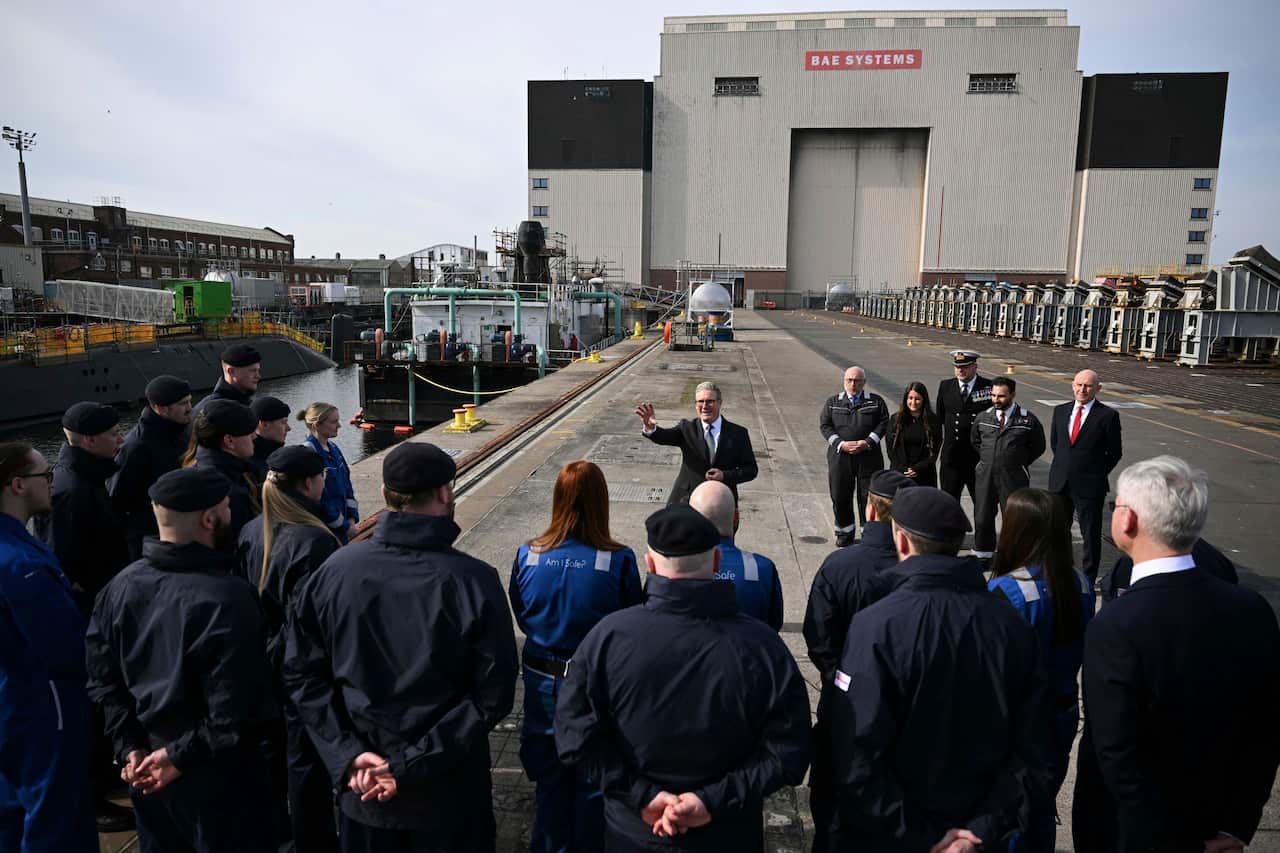
"Sort of the original founding premises of AUKUS is that both the US and the UK were in the process of replacing or developing the next generation of nuclear-powered attack submarines," Andrews told SBS News.
He also believes that Burnham's experience as the mayor of Greater Manchester could make him more likely to value investment in the defence sector.
"If we look at it from the perspective of Andy Burnham casting himself as representing the north of England ... and representing that more kind of industrial working class perspective of the Labour Party, there are a lot of jobs in AUKUS in Barrow [a port town in England] and in other parts of the UK where these vessels are being designed and built."
Burnham has been nicknamed "the King of the North" and gained a reputation for criticising what he called a "London-centric" approach by politicians during the COVID-19 pandemic.
Local media has reported that Burnham is even considering moving parts of the prime minister's office from its traditional site of 10 Downing St, London, north to Manchester.
Watching on from afar
Following Burnham's leadership succession, Andrews said the Australian government will likely monitor the UK's approach to defence.
"Both the previous Conservative government and now the Labour government that was led by Keir Starmer, there's been, I think, quite the consistency in engagement and support from the UK. Not just from their government but from defence committees, from parts of their civil service, who have lots of labour groups tied to Australia."
Parker from the Lowy Institute also believes the Australian government will watch to see if the UK takes "strides" to address what she described as capability constraints facing UK submarine industrial bases.
"The UK actually did announce in the last month ... they've actually cut steel on their first SSN. So, I think Australia will be watching closely to see if they are on track with those things.
"As much as I'm confident they'll make it [AUKUS] work, whether they'll make it work within the stated time frames is genuinely an open question."
The UK's defence committee has launched an inquiry into its military resilience and preparedness. It follows a July report by its defence ministry, which found that 47 out of 49 major defence projects in the UK were delayed or over budget.
In a statement, Dan Jarvis, the newly appointed defence secretary, said:
"Many projects had been announced with insufficient or no funding at all. The consequences were profound: limited availability of warships and aircraft, an army facing a recruitment crisis, morale weakened and renewal of our nuclear deterrent delayed."
For the latest from SBS News, download our app and subscribe to our newsletter.







