
In Brief
- Meteors are expected every hour between 11pm and 6am (AEST).
- Fewer meteors are expected to be visible in the southern hemisphere than the northern hemisphere.
Interested in all that space has to offer after this month's Artemis mission? You're in luck as one of the oldest celestial events will make its annual return to our skies tonight.
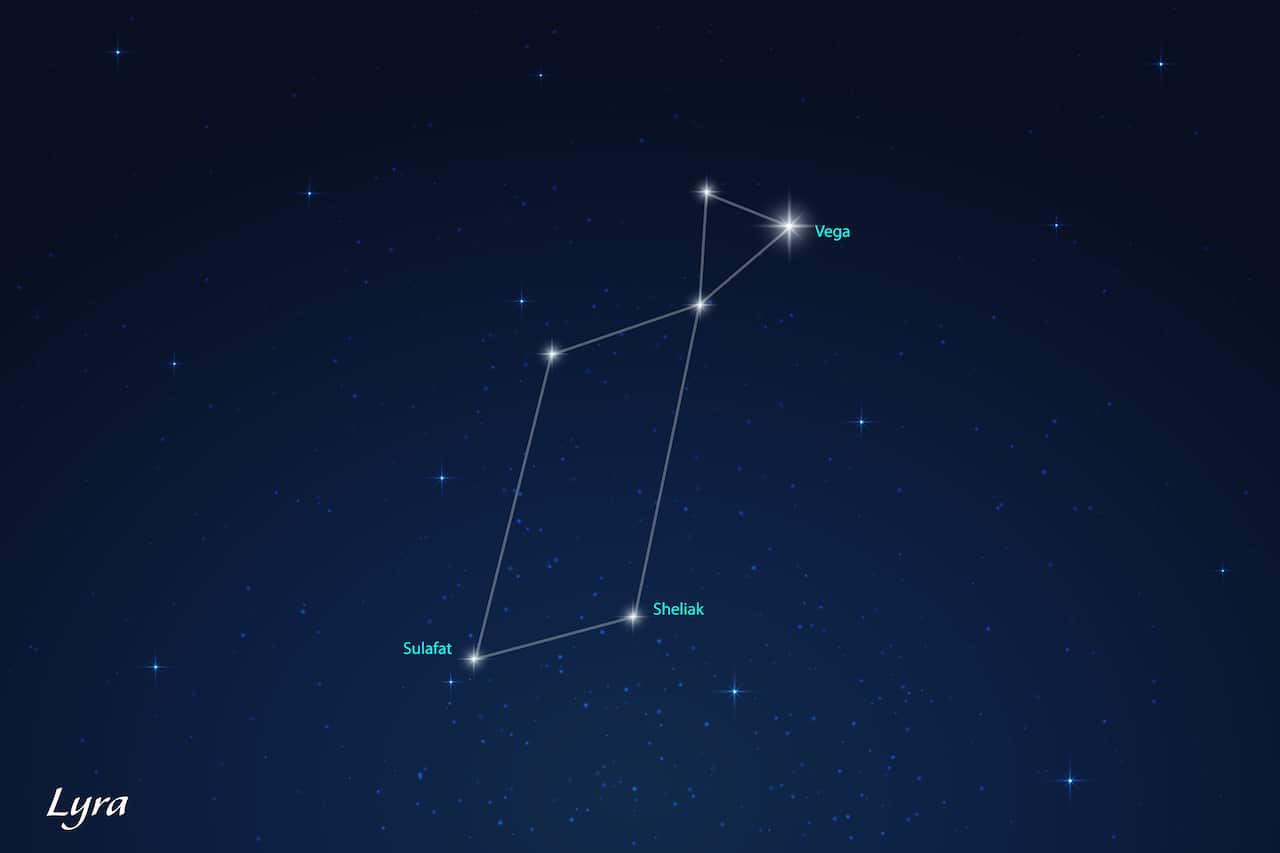
The Lyrid meteor shower has been recorded for over 2,700 years, and reoccurs every April to light up the night sky.
Between April 16 and April 22, stargazers will have the opportunity to observe the event, but some may have clearer vision than others.
What is the Lyrid meteor shower?
While it's often overshadowed by other major celestial events that appear later in the year, such as the Geminid meteor shower, Lyrids maintain their significance for their history as one of the oldest meteor showers.
News that makes sense
Your trusted source for staying up-to-date with the world around you. Get free daily news updates and analysis, straight to your inbox.
The Lyrids emanate from dust particles in the trail of the comet Comet C/1861 G1 Thatcher. It takes the comet 415 years to orbit the sun, but each April, the Earth passes through a debris trail from the comet. As the dusty trail collides with our atmosphere, its fragments disintegrate and cause the colourful displays we see from Earth.
Dr Laura Driessen from the University of Sydney explained that each year we pass through a slightly different trail, and the trail slowly disperses over time, which is why the number of shooting stars from the comet changes every year. It's still around another 200 years until Comet Thatcher zips past again and refreshes the trail of dust.
"The Lyrids are extra cool because there are records in Chinese texts of it being seen in 687BC. So humans have been looking at this meteor shower for hundreds of years. That's hundreds of years before we worked out what meteor showers are and where they come from," Driessen said.
Where will the meteor showers be most visible?
Professor Jonti Horner at the University of Southern Queensland said the general rule of thumb with this meteor shower is that the further north you are, the better show you will get.
Cosmic enthusiasts in Brisbane are more likely to view it than those further south in Melbourne. Those in Sydney and Perth will enjoy similar displays.
People living in regional and rural communities across the country will have better viewing opportunities as chances of visibility are higher, as light pollution is less than it is in major urban cities.
While you won't require any fancy equipment to see the Lyrids, getting away from artificial city lights will give you the best view.
"If you were someone with really good eyesight, who was an experienced observer and you were out for an hour somewhere really dark, so your eyes were fully dark-adapted, you would see at most maybe six or seven, maybe eight meteors in an hour," Horner explained.
What time can you see them?
If you're willing to stay up, the best time to view the Lyrids will be at 2am (AEST).
However, you might be able to see a few meteors any time from 11pm to 6am.
Should you manage to catch them, and are in the ideal conditions, you could witness anywhere from five to fifteen shooting stars each hour.
Horner noted that stargazers should be aware that while it may still be worth it for some, those in the southern hemisphere won't experience the stars as vividly as those in the northern hemisphere.
In the right circumstances, Driessen advised that around every 60 years, the Lyrids become a "storm", with tens of shooting stars per hour.
The last time that happened was 1982.
In this storm, Lyrids have been known to occasionally produce bright meteors known as 'fireballs', which are created by the debris they pass through.
Are there any other cosmic events happening soon?
Horner told SBS News that Saturn, Mercury and Mars are due to draw closer together in the coming days, and that in the hour before sunrise, even the naked eye will be able to see their sights.
"For about the next week or so, you've got the added spectacle of this planetary conjunction with three planets close together tomorrow morning. The moon is [also] very close to them, but then it gets out of the way."
There is also the Eta Aquariid meteor shower, which is expected to peak next month. It will offer an even greater look at the cosmos.
For the latest from SBS News, download our app and subscribe to our newsletter.







