IN BRIEF
- More than 2,500 Australians died from drug-induced overdose in 2024, the highest on record.
- Older Australians accounted for almost half of reported deaths.
This article contains references to substance abuse and suicide.
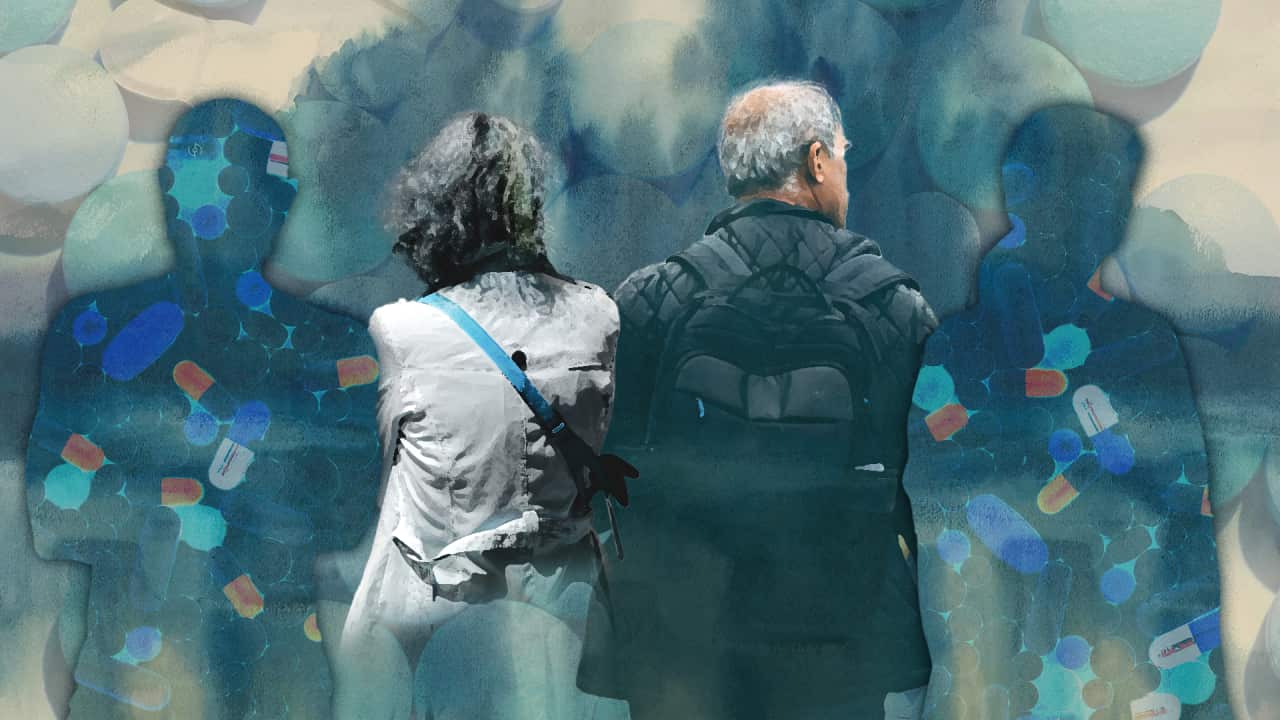
Drug-induced deaths have hit a record high, with older Australians accounting for more than half of the fatalities.
Australia's Annual Overdose Report, released by the Penington Institute, documented 2,596 drug-induced deaths in 2024, with 80.5 per cent being from unintentional overdose.
Since 2008, more Australians have died from drug-induced deaths than road fatalities — with an average of 31 years lost per death.
"The data is quite confronting," Jake Dizard, director of research at the Penington Institute, told SBS News.
News that makes sense
Your trusted source for staying up-to-date with the world around you. Get free daily news updates and analysis, straight to your inbox.
The report found that the median age of people dying from drug overdose is increasing.
For the first time, those aged between 50 and 59 accounted for almost half of all unintentional overdose deaths.
Dizard said it could be attributed to "an ageing large cohort of people who started using drugs in the 1990s and early 2000s".
"As that cohort has got older, they have become more vulnerable to drug-induced death because of the length of time that they have been using drugs and the accumulating sort of comorbidities," he said.
The report also noted that of the 428 drug-induced suicides, 39 per cent were people aged 60 and over.
Australian Alcohol and Other Drugs Council CEO Melanie Walker said the report confirms that overdose is not a "young people problem".
"Overdose is something that affects the whole community," she told SBS News.
"It affects young people. It also affects older people. Overdose can be from illicit drug use, or it can be from prescription drug use."
The report also found that men accounted for 72.7 per cent of unintentional drug-induced deaths, people living in regional and rural areas had higher rates of death than those living in capital cities, and Aboriginal and Torres Strait Islander people experienced higher rates of overdose.
In 2024, Aboriginal and Torres Strait Islander people experienced an overdose rate of 29.3 per 100,000 compared to 6.6 per 100,000 for non-Indigenous people.
Opioids were responsible for 42 per cent of all drug-induced deaths in 2024, with heroin-related deaths rising from 101 deaths in 2001 to 488 deaths in 2024.
Amphetamines were involved in 772 deaths, a record high for the drug, and cocaine was involved in 141 deaths. Benzodiazepines, alcohol and antidepressants also contributed to drug-induced deaths.
Dizard said that the use of prescription opioids, such as oxycodone, has declined since 2021 — a trend seen across "a number of categories of prescription drugs".
Cocaine was the only recorded drug that saw a decrease in the median age of people dying from overdose.
Two-thirds of Australians turned away from services
The majority of drug-induced deaths in Australia are preventable, Dizard said.
The report listed a range of recommendations to reduce the number of deaths, including increased access to the medicine naloxone.
"It's an opioid overdose reversal drug, which is very safe and can be administered by anybody," Dizard said.
"It's important not just for people who habitually or routinely use opioids, but also people who might be using other drugs, including cocaine, that might be contaminated with some sort of opioid."
Dizard noted the importance of community education on how to identify signs of overdose and respond — and greater investment in services, specifically opioid pharmacotherapy.
While stigma hinders people's ability to seek support for drug and alcohol addiction, Dizard said a major issue is a lack of funding for services.
He said law enforcement is heavily funded, and a "more balanced approach to drug policy" is needed.
"Funding has been incredibly unbalanced throughout the last several decades of Australian drug policy."
Australia's National Drug Strategy has three pillars: supply reduction, which includes law enforcement; demand reduction, which refers to treatment; and harm reduction, including preventative measures such as drug checks.
"The supply reduction pillar has traditionally had double the funding of treatment," Walker said.
She said that more than two-thirds of people seeking help for drug and alcohol use have been turned away from services because of funding insufficiency.
Walker said there's currently no forum for governments, both federal and state and territory, to come together and "talk about the implementation of the national drug strategy and do coordinated planning".
"For at least the last 10 years, half a million Australians have been missing out on getting to alcohol and other drug treatment because there's simply no place for them," she said.
"It's really obvious what the problem is in terms of why overdose deaths are rising, and until we come to terms with that and get proper resources — I can't see that changing."
SBS News has contacted the Department of Health for comment.
Readers struggling with their use of alcohol and other substances can contact the National Alcohol and Other Drug Hotline on 1800 250 015 for free and confidential support 24 hours a day, 7 days a week. More information is available via Lifeline.
Readers seeking crisis support can ring Lifeline on 13 11 14 or text 0477 13 11 14, the Suicide Call Back Service on 1300 659 467 and Kids Helpline on 1800 55 1800 (for young people aged up to 25). More information and support with mental health is available at beyondblue.org.au and on 1300 22 4636.
Embrace Multicultural Mental Health supports people from culturally and linguistically diverse backgrounds.
For the latest from SBS News, download our app and subscribe to our newsletter.







