This article contains references to rape and sexual assault.
Suppression orders are in the headlines after the name of a "high-profile" Melbourne man convicted of rape was able to be publicly revealed more than a year and a half after he was charged.
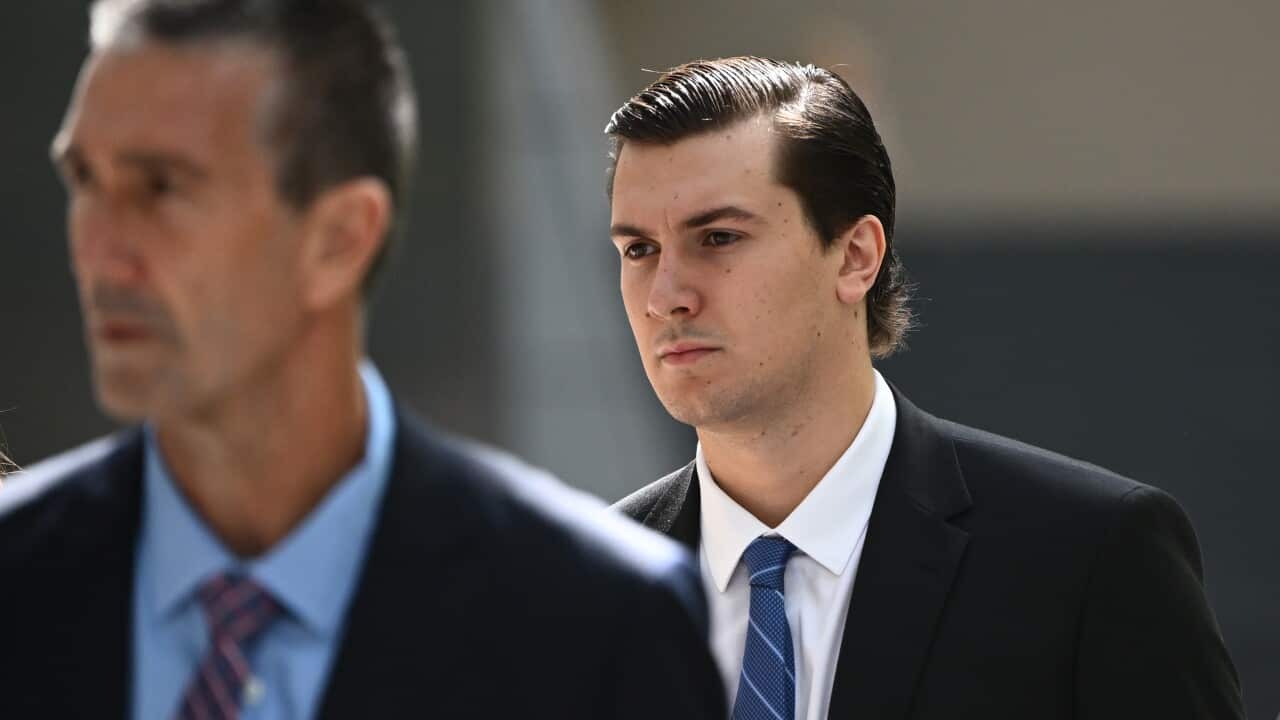
Tom Silvagni — the son of AFL great Stephen Silvagni and television personality Jo Silvagni — was convicted of two counts of rape last week, after being charged in June 2024.
The media had been prohibited from publishing any information that could identify the accused at that time, as his lawyers successfully sought to have his case suppressed multiple times.
On Thursday, County Court Judge Andrew Palmer ruled that the order should be lifted.
News that makes sense
Your trusted source for staying up-to-date with the world around you. Get free daily news updates and analysis, straight to your inbox.
So what are suppression orders, under what circumstances are they granted, and do they have limitations?
What is a suppression order?
Suppression orders are directives of a court intended to prohibit and restrict the publication or other disclosure of any information in connection with a legal proceeding.
Contravening an order — by publishing details of a case that had been suppressed, for instance — can result in strict penalties, including potential prison sentences.
Orders are often made to suppress information that could prevent the course of justice if it were publicly known, threaten domestic or international security interests or risk someone’s safety.

In some cases, such as in proceedings related to sexual or family violence charges, suppression orders are also used to avoid causing undue stress or embarrassment to victims or witnesses.
In Silvagni’s case, his lawyer argued that media coverage of the trial could cause his mental health to deteriorate and posed a risk of him taking his own life, citing psychiatric evidence.
In June 2024, the Herald Sun was ordered to take down two stories it published about the case, which did not directly name Silvagni, and was made to pay $36,000 of his legal fees.
Increase in suppression orders on mental health grounds
Jason Bosland, an associate professor at the University of Melbourne law school, said there had been an increase in suppression orders being sought for mental health reasons in recent years.
"Often, the application will have a psychologist who provides expert evidence, and it’s very difficult to argue against that expert evidence," Bosland said.
Bosland expressed concern that there may not be equal access to seek suppression orders on mental health grounds, as those with more money can afford to seek evidence and more court time.
"That's another dimension to it as well, that it's often wealthier people who can afford it."
Bosland’s research led to the Victorian Open Courts Act 2013, which extended powers to make an order to protect a person’s safety.
"Previously it was limited to physical safety, but now it’s just safety, and that’s been interpreted to mean mental safety as well," he said.
The law also gave the media a statutory right to challenge a suppression order.
On Thursday, County Court judge Andrew Palmer ruled that the order should be lifted as it was no longer necessary following Silvagni’s conviction. He said the risk to Silvagni’s mental health would be reduced in custody as he would be closely monitored.
Palmer also noted that Silvagni’s identity was being widely discussed online and was a "matter of common knowledge within Melbourne", while senior crown prosecutor Elizabeth Ruddle said the continuation of the suppression order could bring the court into disrepute as it would look like the court is giving special treatment.
Victim-survivor delivers court statement
On Friday, at a pre-sentencing hearing, the woman Salvagni raped in 2024 said she had since been diagnosed with post-traumatic stress disorder.
"Your actions have changed the way I trust, the way I sleep, and the way I move through the world," the victim-survivor said while delivering her impact statement.
Bosland told SBS he believed that suppression orders in some cases involving sexual assault removed the right of victim-survivors to discuss their experiences.
"The more capacity we give victims to speak out and tell their stories, the better victims will be, and also the better society will be," he argued.
"A fundamental principle of the justice system is that it is open to the public and the public has a right to know, particularly in criminal matters, everything about a case."
If you or someone you know is impacted by sexual assault, call 1800RESPECT on 1800 737 732, text 0458 737 732, or visit 1800RESPECT.org.au. In an emergency, call 000.
For the latest from SBS News, download our app and subscribe to our newsletter.







