IN BRIEF
- The US is demanding a "unified" response from Iran on their peace talks.
- Experts argue Iran's Revolutionary Guard Corps has an important role in the talks.
As the United States calls for a single position from Iran on peace talks, a key question remains: who is the regime's 'final decision-maker' — if there is one?
The White House press secretary, Karoline Leavitt, has said recently that US President Donald Trump is looking for a "unified" response from Iran, adding that "there is a lot of internal division" in Iran.
"This is the battle between the pragmatists and hardliners in Iran right now," she said.
This comes just days after the US government's unilateral announcement that it would extend the ceasefire agreement between the countries for the peace negotiations to continue.
The previous 14-day ceasefire has ended, with the countries failing to reach an agreement on Iran's nuclear capabilities in their talks in Pakistan — it is still unclear if there will be any next rounds of negotiations.
News that makes sense
Your trusted source for staying up-to-date with the world around you. Get free daily news updates and analysis, straight to your inbox.
This time, the US government says it has not set any "firm deadline" for Iran's response.
Experts are questioning who can give the final green light on a potential deal in the country's restructured political system following the loss of its supreme leader over a month ago, in US-Israeli airstrikes on the first day of the war.
Is there any 'final decision-maker'?
Until 28 February, when he was killed, the answer to the question of Iran's ultimate decision-maker was almost indisputable: it was Ali Khamenei, the former supreme leader.
"We know that if, ironically, if the former supreme leader, Ali Khamenei, were still alive, he would be the one that they would refer to, and he would say yes, no," Ian Parmeter, a Middle East expert at the ANU Centre of Arab and Islamic Studies, told SBS News.
"[A decision] one could assume it was agreed to entirely by the Iranian side, but at this stage, there appears to be no final decision-maker."
Shortly after Khamenei's death, his son Mojtaba Khamenei was chosen as the regime's new supreme leader — a figure who has not been seen or heard from since.
Since Mojtaba Khamenei's appointment, only written statements of his were shared in the state media, with some media and US officials claiming he may have been badly injured in Iran during the war.
"We don't know what's happened to Mojtaba Khamenei ... The extent to which he is acting as any sort of final arbiter is extremely hard to tell, but it seems as if he isn't," Parmeter said.
On Tuesday, US news outlet Axios reported that Trump extended the ceasefire while waiting for Khamenei's green light, according to a regional source familiar with the mediation efforts and an Israeli source.
The 'hardline' negotiator
While Khamenei has not appeared publicly since taking power, some Iranian politicians have appeared in the media frequently and have been involved in the negotiations. It's unclear if they can make the final decision.
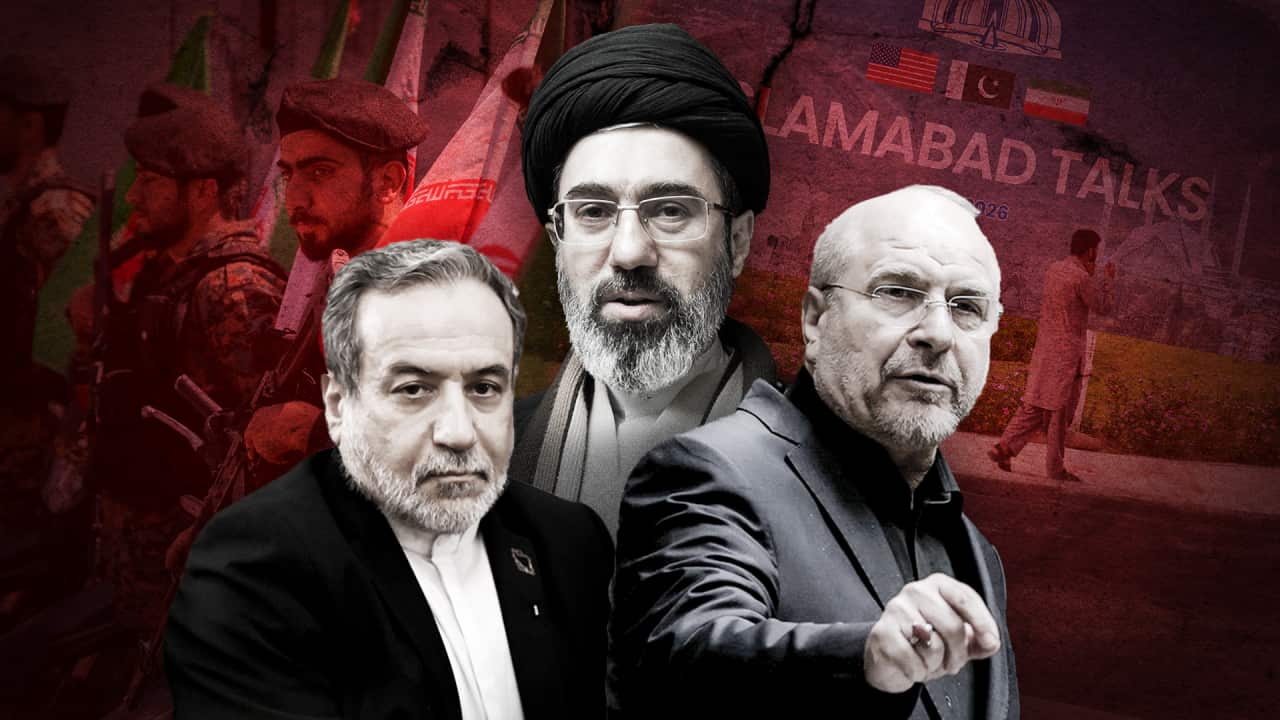
One of them is Mohammad Bagher Ghalibaf, the Iranian parliament speaker, who was in charge of the Iranian negotiating team in Islamabad.
Dara Conduit, a senior lecturer in political science at the University of Melbourne, said his role has become more important in the regime after "a lot of other people involved in the leadership" were killed during the war.
"There has actually been quite a lot of turnover among the upper echelons of the Iranian region," she said.
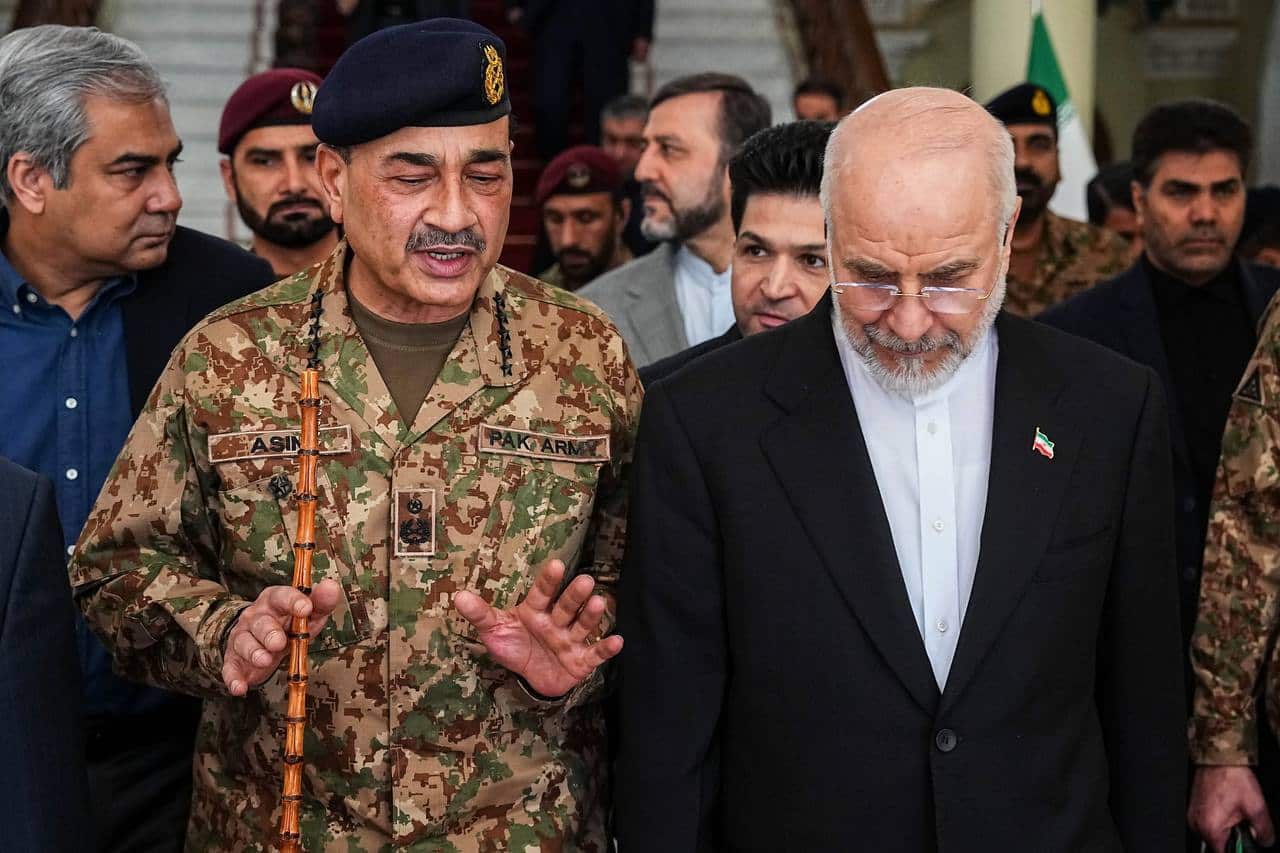
He has been involved in Iran's political leadership for several years, is a former Islamic Revolutionary Guard Corps (IRGC) member and is known to be in the hardliner spectrum of the regime.
The IRGC is a branch of the Iranian armed forces, separate from the army, tasked with defending the regime from foreign and domestic interference. Australia considers it a sponsor of terrorism,
Ghalibaf is accused of violent suppression of Iranian students in the early 2000s, when he was head of Iran's police force.
"Ghalibaf has always been seen as a representative of the hardline elements of the state," Conduit said.
"He has also run for the presidency and was seen, certainly among many in the West, as an extremely hard-line candidate, someone who would return the Iranian regime to some of its more radical positions.
"It's quite incredible now that he's sort of had this Renaissance where he's being viewed by the Trump administration as a key figure."
The 'diplomatic' and the IRGC side
Another figure in Iran's negotiation team was its foreign minister, Abbas Araghchi, who has been involved in Iran's nuclear negotiations for over a decade.
He was part of Iran's negotiating team that reached a nuclear agreement with the US, United Kingdom, France, Germany, Russia, and China, known as the Joint Comprehensive Plan of Action in 2015.
The United States withdrew from the agreement in 2018, and Iran later breached some of its limitations.
"What we're seeing now with these two key players that are involved in the talks, Ghalibaf on one hand and Araghchi on the other, is this longstanding split between the hardline elements of the regimes, such as the IRGC and the foreign ministry," Conduit said.
"Araghchi would be viewed as a representative of the foreign ministry and the more diplomatic sides of the Iranian state, and therefore would have a fairly limited ability to operate without the approval of the other half of the state."
Ghalibaf and Araghchi, however, were not Iran's only representatives in Pakistan, as Iran's team involved 70 people.
Conduit suspects this means that within that group, there were "representatives of the IRGC".
"You can assume that the Islamic Revolutionary Guard Corps is playing an active role in this and is taking a strong interest because obviously any peace deal that is reached would have significant ramifications for their ability to operate."
'Division' in Iran, or an 'excuse' for Trump?
According to the Axios report, US officials observed disagreements within Iran's negotiating team during discussions in Islamabad, particularly when IRGC commander Ahmad Vahidi and his aides rejected many of the points raised by Iran's own negotiators.
Ghalibaf was also criticised by some within the regime after the first round of negotiations.
"He's got a really strong and longstanding relationship with the IRGC, and that's always been seen as something that he's very close to. But we've also seen in recent days quite a lot of disquiet about the talks in Iran," Conduit said.
"I don't think we can view the IRGC or Ghalibaf or anything like that as a monolith, because it's quite clear there's actually, particularly among IRGC ranks, a lot of opposition to these talks."
State media also criticised Araghchi’s social media post declaring the Strait of Hormuz open — a move Iran later reversed, saying it would close the waterway again in response to the US blockade.
On the other hand, some argue that the Trump administration's call for a "unified" response from Iran might have another reason.
David Smith, an associate professor at the United States Studies Centre at the University of Sydney, said this "is really an excuse for the fact that Iran is not making the concessions that they want".
"I think Trump is very frustrated by the lack of progress in negotiations. And so he is making this claim that the only reason why they're not progressing is because the Iranians don't have a unified response," he told SBS News.
"The fact that there were so many Iranian negotiators there suggests that whatever factional disputes might be happening, they are actually presenting a unified front in negotiations."
For the latest from SBS News, download our app and subscribe to our newsletter.







