In brief
- Donald Trump has followed through on a threat to tax foreign-made pharmaceuticals.
- Health Minister Mark Butler said the decision would create uncertainty for exporters, but would not affect medicine prices for Australians.
United States President Donald Trump has slapped a 100 per cent tariff on some pharmaceutical drugs made outside the US, with Australian-made products facing the highest levy despite carve-outs for other countries.
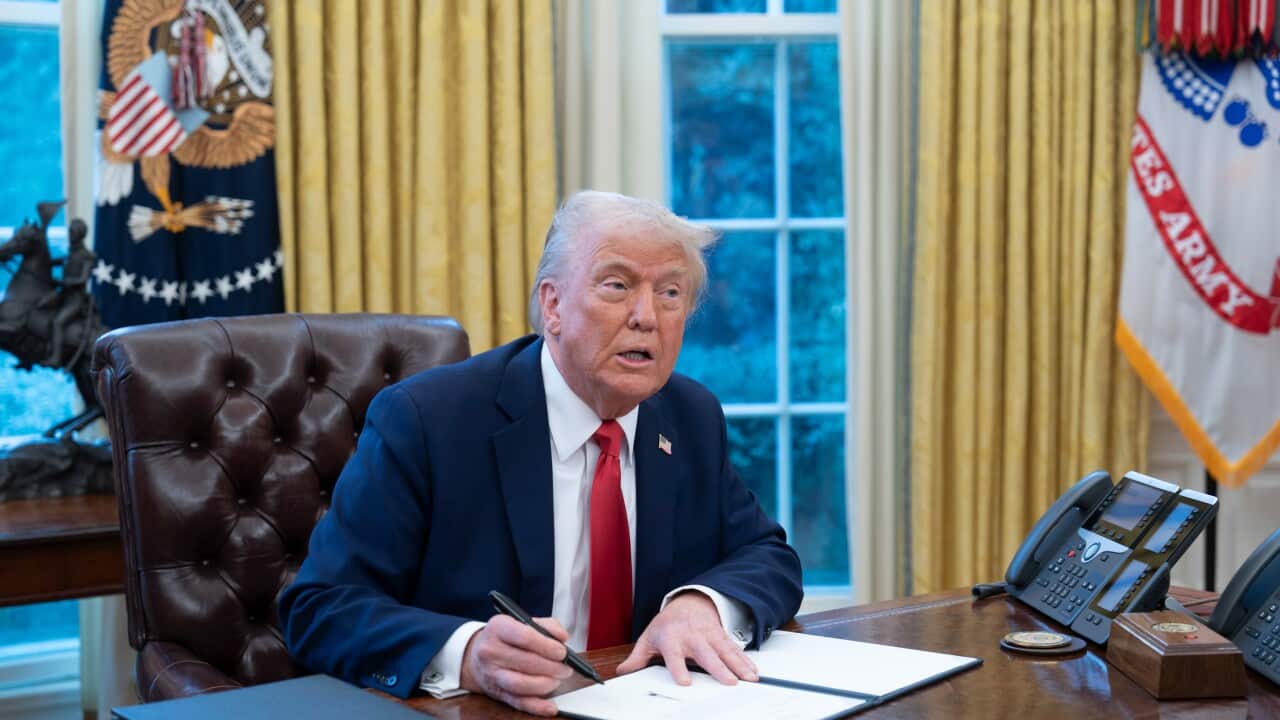
Trump signed the executive order overnight, delivering on a long-standing promise to tax foreign-made pharmaceuticals in a bid to pressure manufacturers to shift production to the US.
On Friday, Health Minister Mark Butler said the announcement was "deeply disappointing and deeply concerning".
"It's not the act of a friend," he said at a press conference. "A friend that has shared for more than 20 years free and fair trade, including pharmaceutical exports going from both different directions to the benefit not just of our mutual economies but to the benefit of patients here in Australia and patients over in America."
He said the government would work with companies and exporters in Australia that might be impacted.
News that makes sense
Your trusted source for staying up-to-date with the world around you. Get free daily news updates and analysis, straight to your inbox.
"We're obviously very concerned about their businesses and the jobs of people that they employ," he said.
"I want to be clear though that this will have no impact on medicine prices in Australian pharmacy cabinets," he added, noting they are protected by the Pharmaceutical Benefits Scheme (PBS).
Australia exported about $1.91 billion worth of pharmaceuticals to the US last year, according to UN Comtrade data.
Trump's order states that companies that move production to the US will face a reduced tariff of 20 per cent.
A significant share of Australian exports is produced by Melbourne-based manufacturer CSL, which makes blood plasma derivatives and vaccines. The biotech company has been investing heavily in US manufacturing to sidestep the tariff.
CSL said it had invested more than $3 billion in US operations since 2018, creating more than 6,500 US jobs. Reacting to the tariff news on Friday morning, Butler told Channel Seven's Sunrise he was "pretty confident" CSL would receive a carve-out due to its manufacturing presence in the US.
A CSL spokesperson told the Guardian the company was reviewing information from the US but did not anticipate material impact from tariffs.
Australia's PBS — under which the federal government negotiates medicine prices directly with suppliers to make them cheaper for Australians — has long been criticised by the US pharmaceutical lobby.
Last year, a US pharmaceutical industry representative body wrote to US trade representative Jamieson Greer, arguing that Australia's PBS represented "damaging pricing policies" that undervalued US innovation and risked billions of dollars in lost sales.
The group called for tariffs on Australian-made drugs, but Butler said on Friday the government would not negotiate with the US on changes to the scheme.
"We keep sending this clearest of possible messages to the US because we know they get the big drug companies in their ear, trying to unpick the PBS here in Australia and equivalent schemes in other countries around the world," he told Sunrise.
Opposition leader Angus Taylor said the Coalition would work with the government to have the tariff removed or secure an exemption for Australian exports.
Under the executive order, the standard rate is 100 per cent. However, drugs produced in the European Union and countries including Japan, South Korea, Switzerland, and the United Kingdom will be subject to lower levies under existing trade deals.
A White House official told the Sydney Morning Herald: "While we are always working with our trading partners and close allies like Australia, Australia does not have a special pharma tariff rate."
The tariff has been implemented under a section of trade law designed to protect US national security, meaning it is not affected by a Supreme Court decision in February that struck down levies implemented under emergency orders.
For the latest from SBS News, download our app and subscribe to our newsletter.







