
In brief
- Conservative media figure Tucker Carlson has apologised for supporting Donald Trump, saying he's "sorry for misleading people".
- While it's hit snags over the years, an expert says Carlson's latest remarks indicate the relationship might have run its course.
Right-wing commentator Tucker Carlson has reached his breaking point with United States President Donald Trump, despite promising earlier this year he would "always love him no matter what he says about me".
The former Fox News host was once one of the most prominent and influential Trump supporters in the US media landscape, and campaigned to return Trump to the White House.
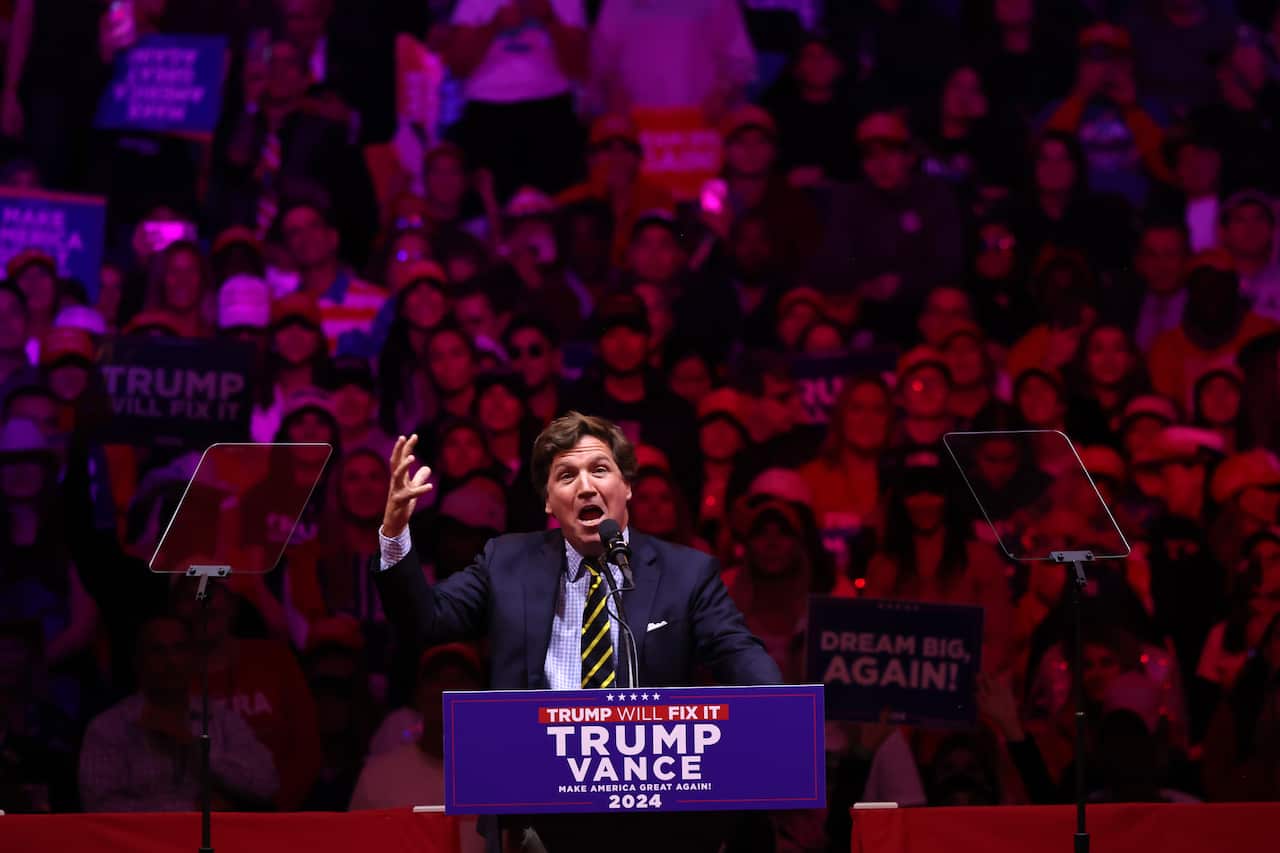
Addressing the 2024 Republican National Convention, Carlson suggested Trump survived an assassination attempt in Butler, Pennsylvania, days earlier, due to divine intervention.
But this week, speaking on his podcast to his brother Buckley, Carlson apologised for helping bring Trump to power.
"You and I and everyone else who supported him — you wrote speeches for him, I campaigned for him — we're implicated in this for sure," Carlson said on The Tucker Carlson Show.
News that makes sense
Your trusted source for staying up-to-date with the world around you. Get free daily news updates and analysis, straight to your inbox.
"It's not enough to say, 'Well, I changed my mind.' Or, like, 'Oh, this is bad, I'm out.' It's like, in very small ways, but in real ways, you and me and millions of people like us are the reason this is happening.
"So, I do think it's, like, a moment to wrestle with our own consciences.
"We'll be tormented by it for a long time. I will be. And I want to say I'm sorry for misleading people. It was not intentional."
A long and at times rocky relationship
Before departing Fox News in 2023, Carlson hosted Tucker Carlson Tonight, the most-watched cable news show in the country, a combative and polarising program that leaned into controversy and provocation.
At its ratings peak in 2020, the show drew more than five million viewers a night.
Carlson was a dominant force in spreading Trump's false claims about the 2020 election results.
Fox News' role in amplifying those claims led to a US$787 million ($1.1 billion) settlement with voting systems company Dominion, which sued the broadcaster for defamation.
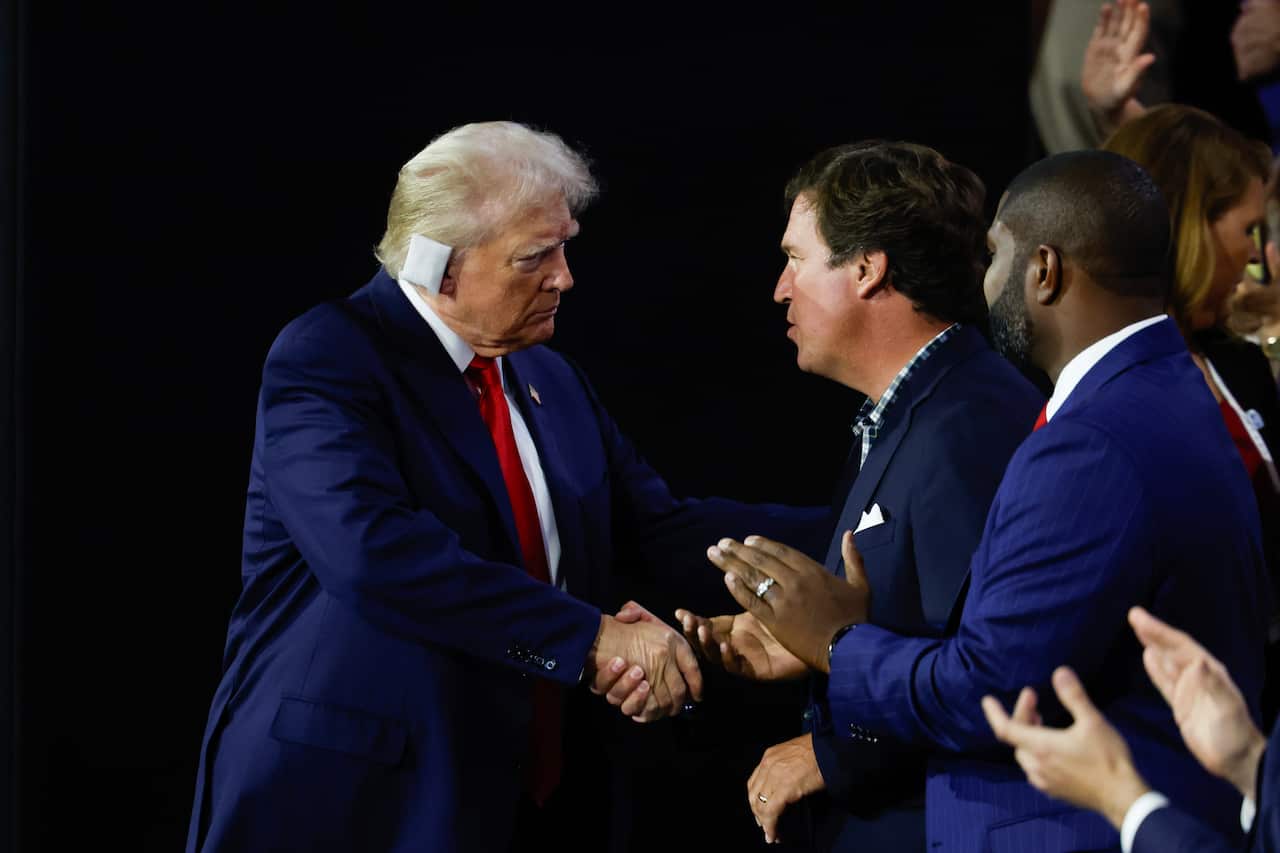
Court filings from that case exposed texts from Carlson to colleagues that painted Trump in a far less positive light than he typically would on the air.
"We are very, very close to being able to ignore Trump most nights," Carlson wrote in a text sent on 4 January 2021. "I truly can't wait."
"I hate him passionately," he added.
But the relationship stabilised, and Carlson was a key force in the push to return Trump to power.
Just last month, Carlson had told the Status News newsletter: "There are times I get annoyed with Trump, right now definitely included. But I'll always love him no matter what he says about me."
The 'unofficial leader' of anti-Trump MAGA?
The most recent flare-up followed weeks of tensions between Trump and Carlson over the White House's decision to attack Iran with Israel on 28 February.
Carlson has accused Trump of initiating the conflict with no plan, in a betrayal of past promises not to involve the US in foreign wars.
This time, the break-up seems more absolute, according to David Smith, an associate professor in American politics and foreign policy at the University of Sydney's United States Studies Centre.
"[Trump] has lost not only the support of the independents who got him over the line in 2024, he's starting to lose support from his own base," he told SBS News.
"Carlson might be making the calculation that [Trump] is not coming back with [the base] because he's broken too many promises, and he has not governed as they thought that he would govern."
As Trump's approval rating hovers near historic lows, polls indicate he's bleeding support even from some of his most reliable voting blocs.
"Certainly, the part of the base that Trump is losing is the part of the base that would be listening most to Tucker Carlson," Smith said.
"I don't think Carlson is going to want to come back into the Trump fold after this. I think he's kind of charted his own course as basically the unofficial leader of ... anti-Trump MAGA."
Fault lines in MAGA base over Iran
Carlson is not the only Trump acolyte to publicly fall out with him since his return to office.
Last year, Marjorie Taylor Greene, who had been one of his fiercest and most conspiratorial backers in Congress, shattered their alliance, apologising for her role in "toxic politics" over the years.
While the rift was tied in large part to disagreements over the administration's handling of the Jeffrey Epstein files, Greene, an anti-interventionist, had strayed from Trump on an array of issues in the lead-up — including his decision to strike Iranian nuclear sites last June.
The war against Iran has inflamed Trump's relationships with several prominent MAGA podcasters, most notably Carlson, former Fox News host Megyn Kelly and conspiracy theorists Alex Jones and Candace Owens.
All four were outspoken in their criticisms of the war. Owens and Jones even called for Trump's removal from office, as did Greene.
The four commentators received a furious response from Trump earlier this month.
"They're not MAGA, they're losers," Trump said in a post on his Truth Social platform.
"As president, I could get them on my side anytime I want to, but when they call, I don't return their calls because I'm too busy on world and country affairs."
Despite some dips, Trump still maintains high support among Republicans overall.
"There always have been a lot of conflicting currents going on in MAGA," Smith explained.
"Even though there's this anti-interventionist version of it, there's also this very ... domination-oriented version of it, which wants to wage wars in order to seize other countries' oil and things like that."
Carlson's shifting ideologies
Carlson has repeatedly repositioned himself over the years, not just on Trump.
In his early career, he was considered an establishment conservative. Over time, his rhetoric shifted toward a more populist and confrontational style.
Carlson has become increasingly critical of Israel and the US relationship with its ally, during both the wars in Gaza and Iran under Trump and former president Joe Biden, drawing accusations of antisemitism which he denies.
His rhetoric has been credited by some commentators as driving factor in a generational rift emerging among conservatives, as younger Republicans increasingly question US support for Israel.
"I think that he is tormented not just by his past support for Trump, but actually by his past support for George W Bush," Smith said of Carlson.
During Bush's presidency, Carlson largely backed the agenda at the time, including the Iraq war — a stance he later sharply reversed.
"He kept quiet about his own scepticism because he saw himself as a team player. He saw himself as someone whose job in the media was to defend the Republican Party," Smith said.
"I think that now he probably feels that he made the same mistake again with Trump."
For the latest from SBS News, download our app and subscribe to our newsletter.







