In Brief
- US vice president JD Vance reportedly shocked Israeli officials with his recent public rebukes.
- US criticism of Israel has historically been behind closed doors, analysts say.
At the White House press briefing room, the United States vice president JD Vance recently delivered a scathing rebuke to Israeli cabinet ministers critical of the United States' deal with Iran.
"Donald J Trump is the only head of state in the entire world who is sympathetic to the nation of Israel at this moment in time," he said late last week.
"If I was in the cabinet of the Israeli government, I might not be attacking the only powerful ally that I have anywhere left in the entire world."
It was, in some respects, extraordinary. US leaders have previously expressed frustration — even sworn — at Israeli officials in private. But the comments from Vance so publicly putting Israeli officials in their place were unexpected.
"Since really the Eisenhower administration [1953-1961], the United States has tended to criticise Israel behind closed doors, not in public, so this criticism in public is fairly unprecedented," Brendon O'Connor, a professor of US Politics and US Foreign Relations, told SBS News.
News that makes sense
Your trusted source for staying up-to-date with the world around you. Get free daily news updates and analysis, straight to your inbox.
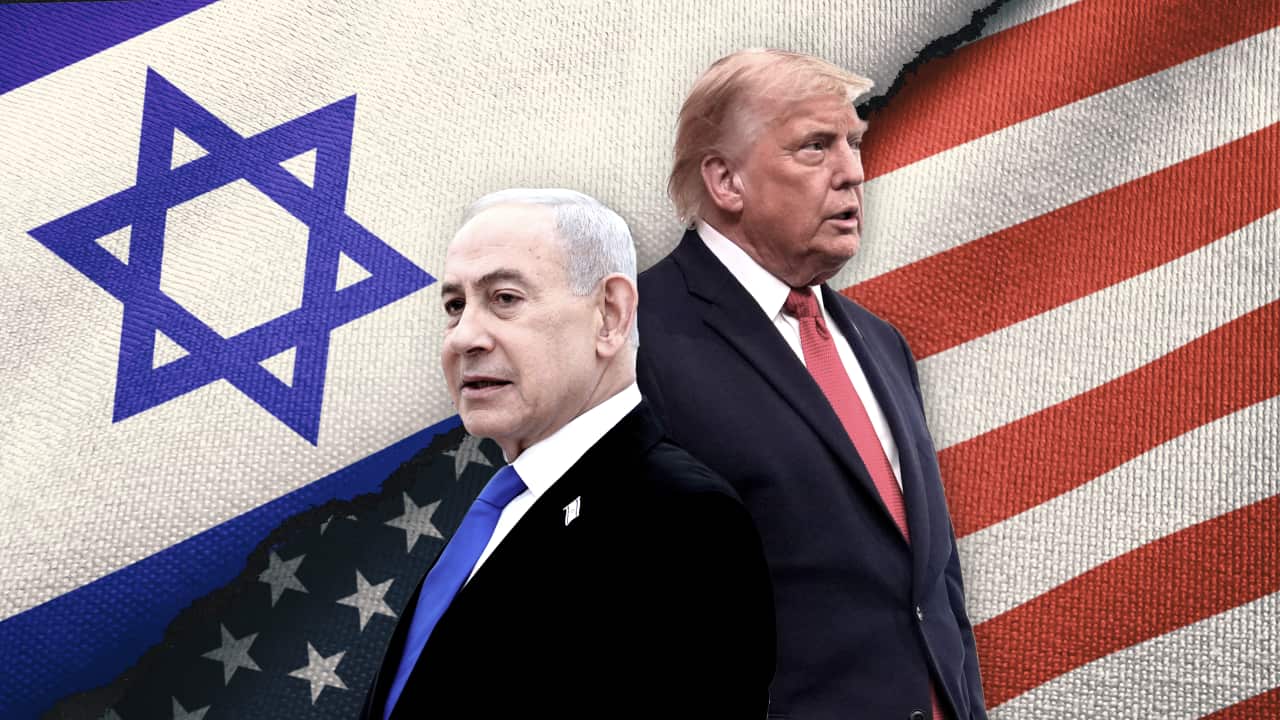
The comments, along with plummeting American public sentiment towards Israel and the war in Iran, have raised questions about the future of what has been dubbed as the "special relationship".
Trita Parsi, executive vice president at the Washington-based Quincy Institute for Responsible Statecraft, says the Trump administration is taking the first steps toward "de-specialising" the US-Israel relationship.
"What the administration is doing now is beginning to be what I would think is the contours of a deep specialisation of the US-Israeli relationship, meaning that it is a very important relationship, but it is downgraded to being at the same level as the US has with France, for instance," he told CNN.
US presidents clashed with Netanyahu
In June, US President Donald Trump called Netanyahu "f---ing crazy" over Israel's military escalation in Lebanon. Last week, he said Israeli Prime Minister Benjamin Netanyahu had "no f---ing judgment" after Israeli strikes targeted Beirut amid ongoing Iran war negotiations.
This may be the first time that a sitting US president has publicly attacked an Israeli prime minister, but it's not the first instance in private. Bill Clinton, for example, is said to have been incensed after a 1996 meeting with Netanyahu, reportedly telling aides: "Who the f--- does he think he is?"
More recently, then president Joe Biden is reported to have called Netanyahu a "f---ing liar" about a Gaza military decision.
O'Connor says Netanyahu's relationship with Democrat leaders had always been "pretty bad" behind closed doors, but he doesn't consider the recent comments from the Trump administration as a fork in the road in US-Israeli relations.
"I wouldn't underestimate the staying power over the next few years of American support for Israel," he told SBS News.
"Israel is still going to have a lot of Congressional support, and a lot of support within the Republican party, and a very probably significant amount of the Democratic party."
O'Connor said Trump's remarks should not be taken in isolation, pointing to his praise of Netanyahu at last week's G7 meeting in France, at which Trump said that while Netanyahu "is not the easiest guy to deal with," that is "what makes him great".
"These comments, there is definitely some frustration," O'Connor said of Trump and Vances' remarks.
"But the relationship is still incredibly strong."
US military support
In his remarks, Vance also reminded Israel of the US' significant military support, saying two-thirds of weapons that have protected Israel in recent months were built and paid for by Americans.
Israeli officials were, according to Israeli newspaper Yedioth Ahronoth, not just shocked by Vance's remarks, but fearful over the implied threat of a weapons embargo.
Israel has received $38 billion in US military aid as part of a 10-year deal which is set to expire in 2028, inked under the Obama administration.
Bruce Wolpe, a United States Studies Centre senior fellow, said it's likely the Obama-era aid deal will be up for debate as its renewal date emerges.
"There won't be any immediate replication of what ... the Obama program was," he said.
Wolpe said if the Democrats gain control of the House of Representatives and/or the Senate in the midterm elections, there may also be more questioning of the US assets to Israel.
"I think you will see them act quite visibly in putting conditions on US aid to Israel, and what it can be used for, and what it should not be used for," he told SBS News.
"There have been some efforts over the past couple of years to do that, the amount of arms that can be shipped, when they can be used for, and I think we'll see more of that."
Sentiment in US towards Israel
Another factor casting a shadow over relations between the two allies is the growing negative opinion polling towards Israel in the US.
Sixty per cent of Americans now have an unfavourable view of Israel— in 2022 it was 42 per cent, according to a recent Pew Research Center poll. While overall more Republicans continue to view Israel positively, unfavourable opinions among those under 50 are growing — from 50 per cent last year to 57 per cent.
"The post-Gaza period is very significant," O'Connor said.
"There might be a reckoning with those events. Maybe combined with this Iran war, I think that is a kind of tide slowly turning in America."
On the other hand, Wolpe said if Trump pressures Israel to withdraw from Lebanon, that may provoke a rift within the Republican party.
"If Trump sided too much with Iran, so that Israel was continuing to be shelled from the north, I think ... a lot of Republicans in Congress would be very, very unhappy about that," he said.
"I think it would hurt Republican chances in the midterm elections."
For the latest from SBS News, download our app and subscribe to our newsletter.







