
Aboriginal and Torres Strait Islander people should be aware that this article contains names and images of people who have passed.
Indigenous men and women served in Australia's defence forces in World War One — despite the government's refusal to recognise their rights as citizens.
When war broke out in 1914, Aboriginal and Torres Strait Islander people were still denied full citizenship rights in Australia — rights that would not be fully realised until decades later.
The Defence Act at the time also prevented Indigenous Australians from entering military service, with doctors often making assessments based on skin colour.
Michael Bell, Indigenous Liaison Officer at the Australian War Memorial, says there were around 1,200 attempts by Indigenous Australians to enlist. Of those, 870 were successful.
News that makes sense
Your trusted source for staying up-to-date with the world around you. Get free daily news updates and analysis, straight to your inbox.
"It was the subjective nature of the medical authorities that applied the colour bar," Bell told NITV Radio.
"It was an implication of the restrictions imposed by the government after the White Australia Policy — the Defence Act was amended to reflect that people of non-substantive European heritage or origin are exempt from service."
Despite this, hundreds volunteered anyway.
'The quintessential Australian'
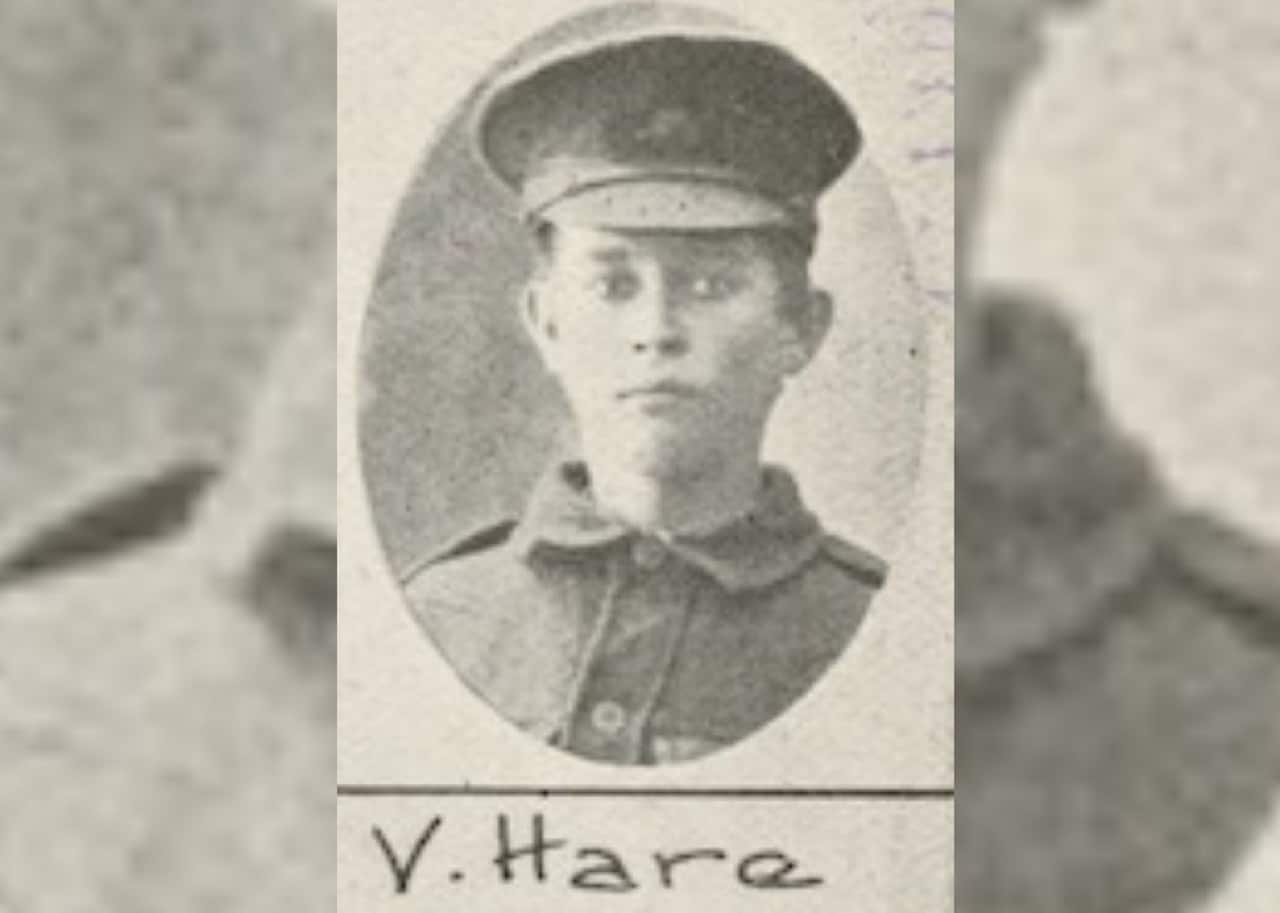
Among them was Valentine Hare — a relative of NITV's Kerri-Lee Barry — who was one of approximately 140 Aboriginal men from Queensland who enlisted and part of a group who became known as the Boys from Barambah.
His niece, respected elder Nana Iris Glenbar, said the family believes he wasn't quite the age he put on his forms.
"He wasn't 20, but they put their ages up, like most of them did in those days," she told NITV Radio in 2020.
Official records show Hare enlisted in 1917 into the 2nd Light Horse Regiment — the mounted troops who patrolled the deserts of Palestine and Syria, and who became one of the most recognisable symbols of the Australian war effort.
Bell says Indigenous men from Queensland were a natural fit for the regiment.
"Our men, especially from Queensland, had already worked on stations, could manage and control and could ride horses," he says. "So rather than having to train somebody to do it, they could put men that already had that skill and ability."
"They strike a symbol of the quintessential Australians — with the emu plume, the slouch hat — made famous by the charge of Beersheba."
Return to inequality
After sustaining a gunshot wound to the leg, Hare was medically discharged and returned to Australia near the end of the war.
While he had been treated as an equal during military service, coming home meant returning to deep inequality.
"Our men came out of and went back to a desperately unequal society," Bell says.
"They were fighting for rights that they weren't allowed to have in their own home country. They were fighting for freedom when we had segregation.
"They were fighting for a fair and balanced Australia, which we weren't receiving, which we weren't in receipt of."
Before the war, many of Valentine's family had been forcibly removed from their homes and sent to the Cherbourg mission — a strict, state-run and ration-controlled government site in rural south-east Queensland.
When Hare returned and went to see his family, he was not allowed to stay.
Nana Iris recalled what happened when he came back from Egypt.
"They only allowed him to stay for two weeks, because he didn't actually reside there. He had to move on," she said.
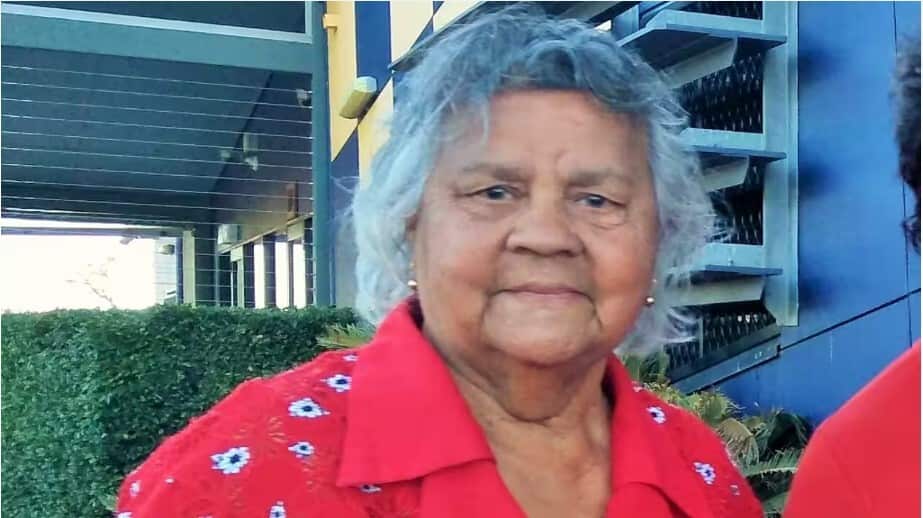
"So he went back up north to his other brother in Yarrabah, which is outside of Cairns … he couldn't stay there as well."
Bell says many Aboriginal veterans were seen as a direct threat to the authority of mission managers.
"They'd had a taste of equality. They knew about equality, and they had had an equal pay — so they were deemed threats," he says.
"Spreading ideas about equality wasn't seen fit and becoming, and a lot of our men weren't allowed back into their home communities."
'Nobody knew where he was'
For close to 100 years, the family lost all trace of Valentine entirely.
His service records had been altered and his name changed, and the family's attempts to find him kept failing.
In a yarn with NITV Radio in 2020, the late Nana Iris Glenbar recounted how the family tried relentlessly to reconnect with him — with no clue except bits of information gleaned from conversations with her mother.
"He was too young to enrol. Many of them were too young to enlist. His name at the time was Valentine Hares (with an S), they changed it to Hare, then Ayr," she said. "They misspelt Valentine as well. So, we couldn’t find him at all."
The forced displacement of Indigenous people added another layer of complexity.
Valentine's mother and siblings had been removed from the Burdekin River area to Cherbourg — leaving Valentine and his brothers behind in the north.
A breakthrough came in 2015, through a Logan City Council project documenting the stories of Indigenous World War One servicemen. Nana Iris' daughter was working there at the time and was able to include Valentine's story in the research.
When historians finally traced him and showed Nana Iris the records, one detail stopped her.
"I was just blown away because his handwriting was exactly the same as my mother’s writing."
"When I saw that, I couldn’t talk for a while."
The family were eventually able to locate his grave, previously unmarked.
The Department of Veterans Affairs provided an official plaque, which now adorns his resting place.
This Anzac Day, the Australian War Memorial will hold a dedicated Indigenous service on its grounds.
For Nana Iris, the search that consumed 40 years of her life gave her family something they didn't have before.
"Now Anzac Day every year means something to my family, and we can identify with it now," she said. "We didn't identify with it before."
For the latest from SBS News, download our app and subscribe to our newsletter.







