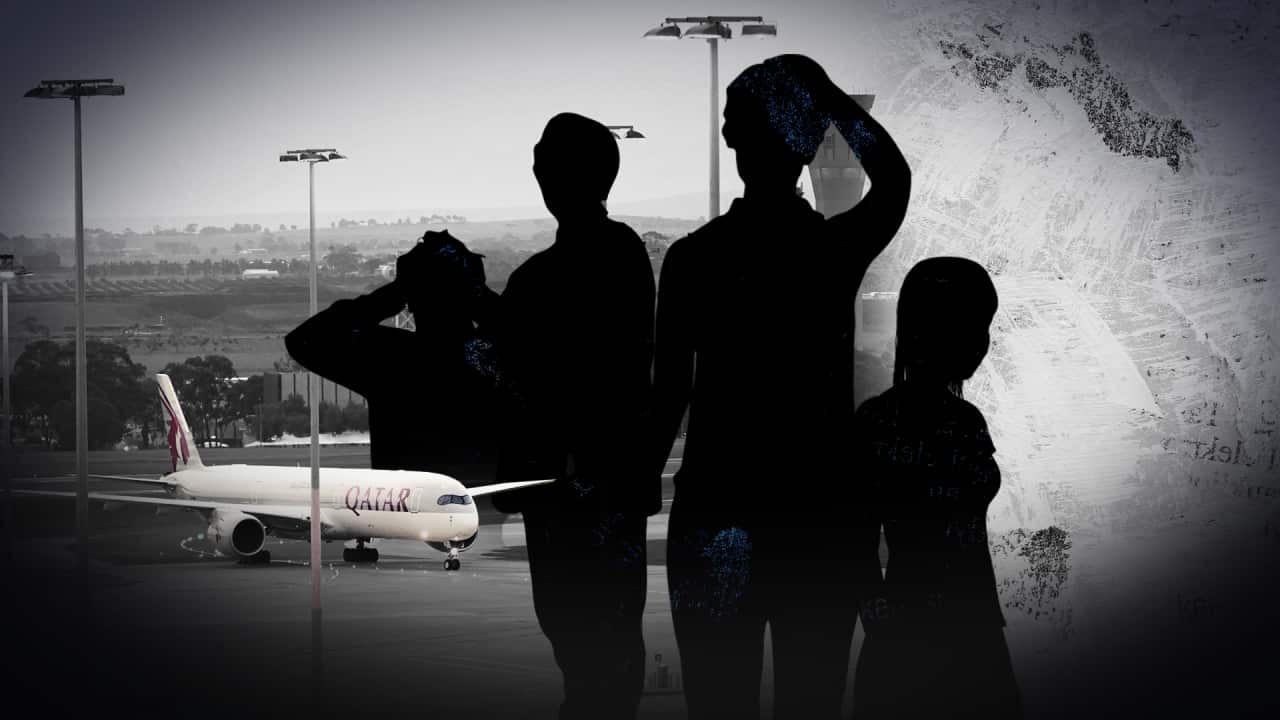
Shelan Khodedah has lived in Australia for nearly 10 years, and is glad to call it home. But she and fellow members of the Yazidi community in Wagga Wagga are reeling after a group of families linked to the self-proclaimed Islamic State (IS) group touched down here on Thursday night.
Khodedah is a community worker with the Wagga Wagga Multicultural Council, who also provides translation services for Yazidis.
She told SBS News the community has been "very stressed and worried" about the return of the IS group-linked cohort to Australia, and it has brought up traumas for victims who suffered violence at the hands of the IS group.
Some in the community felt as though "here in our country, we thought we safe, but we are not safe here", she said.
"They have more counselling sessions, and they having more medication. They go into hospitals, they collapsing. And it's really, I can't imagine how hard it is."
News that makes sense
Your trusted source for staying up-to-date with the world around you. Get free daily news updates and analysis, straight to your inbox.
Three women have been charged after landing in Australia on Thursday as part of a larger group of women and children linked to the IS group, after spending around seven years in a northern Syrian refugee camp.
Two of the women were arrested on arrival into Melbourne, while another was arrested in Sydney.
A 53-year-old and a 31-year-old faced the Melbourne Magistrates Court on Friday morning charged with several crimes against humanity offences allegedly committed in Syria.
Detectives allege the 53-year-old travelled to the region with her husband and children in 2014, and was complicit in the purchase of a female slave for $US10,000 ($14,000), and knowingly kept the woman in her home.
It is alleged the younger woman also had knowingly kept a female slave in her Syrian home in 2014. Police said the pair were detained by Kurdish forces in 2019 and held with other family members in the Al Roj detention camp.
A third woman, 32, is facing charges of entering a prohibited area and being a member of a terrorist organisation.
The arrests followed a nearly decade-long investigation, which began after the women travelled to the Middle East with their partners or male family members who intended to fight for the IS group.
Australian Security Intelligence Organisation (ASIO) chief Mike Burgess said earlier this week that the return of the group did not change the national terrorism threat level and "if they start to exhibit signs that concern us, we and the police through the joint counter-terrorism teams will take action".
The Australian government has insisted it did not assist the group's return.
Who are the Yazidi people?
Yazidis are a minority group that had settled in northern Iraq, near a number of their holy sites in Sinjar and Shekhan, as well as parts of north-west Syria and south-east Turkey. They are connected by a shared ethnic and religious identity.
Their people believe Yazidism, which incorporates aspects of Islam and Christianity and some of its own unique elements, is the oldest religion in the world. One cannot convert to Yazidism — it is only possible to be born into it.
Yazidi people have faced persecution for decades as a result of their unique religious beliefs.
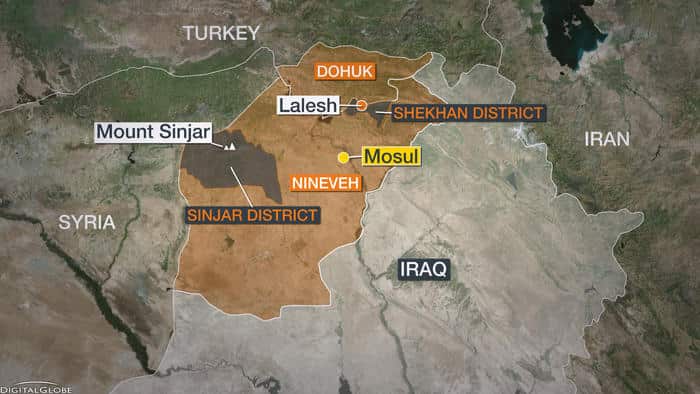
In 2014, IS group militants seized parts of northern Iraq in a campaign that left thousands dead and forced hundreds of thousands of Yazidis to flee their homes.
The United Nations and the Australian government have recognised the atrocities by the IS group against the Yazidi people in Iraq and Syria as a genocide.
A UN body established to investigate human rights violations in Syria said in a 2016 report that the IS group had committed genocide, war crimes and crimes against humanity against Yazidis, thousands of whom were held captive in Syria.
The report found that the IS group had subjected Yazidis to killings, sexual slavery, enslavement, torture and other "almost unimaginable horrors".
According to Nadia's Initiative, an advocacy group supporting the minority group to rebuild, more than 400,000 Yazidis were displaced, more than 6,000 women and children were enslaved and more than 5,000 people were killed. Many Yazidis displaced by the IS group continue to reside in camps and informal settlements in Iraq.
The displacement crisis led to the resettlement of tens of thousands of Yazidis around the world, in countries including Australia, Germany, Canada and the United States.
Minority community members distressed
Members of Australia's Yazidi community have expressed distress and disappointment over the return of the women.
Thousands of Yazidis settled in Australia after the government committed to accepting 12,000 refugees affected by the conflict in Iraq and Syria in 2014.
The communities are largely based in regional NSW and Queensland, in areas including Wagga Wagga and Toowoomba.
The Syriacs are a separate minority group from northern Iraq and Syria that share a history of persecution by IS and displacement from the same region.
Mukleas Habash, a member of Australia's Syriac community, said people have shared they are also disappointed with the way the Australian government has handled the return of IS-linked families from Syria.
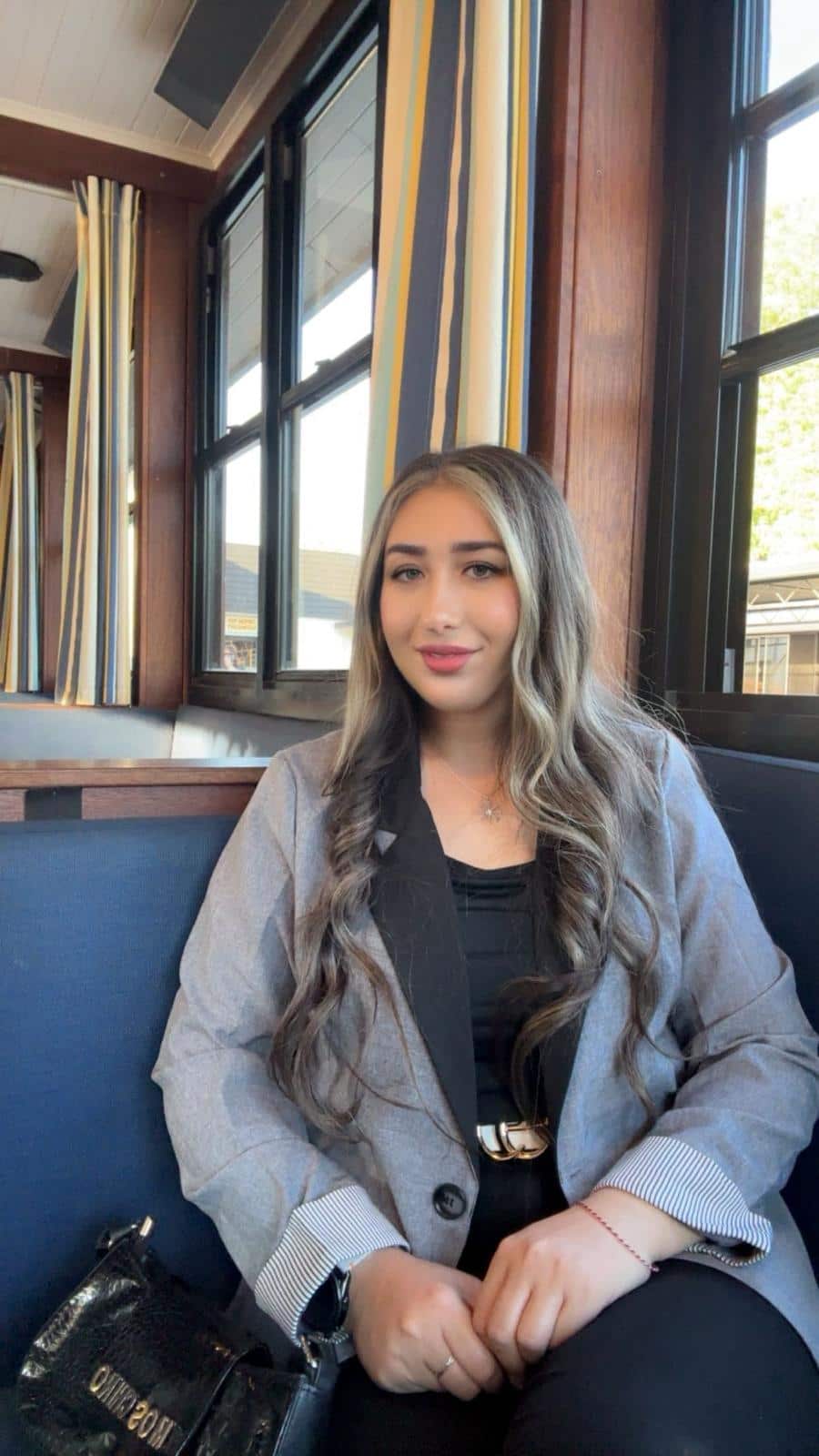
Speaking to SBS Arabic, Habash said the government failed to consult with communities that suffered directly under the IS group in Iraq in 2014.
"We came to Australia hoping to begin a healing journey and leave those traumatic memories behind us," he said.
Khodedah said Multicultural Centre leaders had contacted Nationals MP Michael McCormack, whose electorate of Riverina includes Wagga Wagga, to request a meeting and discuss how the development is impacting the community.
McCormack told SBS News he had scheduled a meeting next week, and Yazidis were "obviously concerned" about the return of the IS-linked women.
"We've got a lot of Yazidi people, beautiful people, [who] contribute mightily to the Wagga Wagga community and our society, and I'm happy to do anything I can to make sure they feel safe and protected," he said.
"I think we really need to take into account the feelings of the Yazidi population, some of whom were persecuted by ISIS ... I know they're feeling unsafe."
Andreia Schineanu is a researcher in the School of Nursing, Paramedicine and Health Sciences at Charles Sturt University, who has researched refugee and migrant mental health, including work with Yazidi communities in regional Australia.
She told SBS News an event like this can shatter feelings of safety for traumatised people.
"For the Yazidi people, who have been enslaved, beaten, abused, they felt so safe in Australia because they knew there was no way they were ever going to come across anyone that has harmed them," she said.
"Now ... they will always wonder the person in front of me the checkout might be connected to the experience."
She said it would be helpful for the government to engage with community members and hear their concerns.
PM denies government 'brought back' the group
The story has generated significant political debate and criticism of the government, which has limited powers to prevent Australian citizens from returning home.
Opposition figures have accused the government of facilitating the return, an allegation the government denies, beyond meeting its legal obligation to supply passports.
Prime Minister Anthony Albanese said on Friday he was sympathetic for the children, but denied that the government supported the group's return.
"One of the things that divides our society from the lawless barbarity of ISIS is we believe in the rule of law and that means if you are an Australian citizen, you have some entitlements," he said.
"I have seen comments from various Coalition figures and some in the media that they know are simply not true. We provided no support for these people. They were not brought back.
"It is correct the US government and others urged us to do so. We chose to make our own decisions as a sovereign state and not provide them with any support because I have absolutely zero sympathy for these people. I have sympathy for the children, who are victims of decisions their parents have made."
A senior Australian Federal Police officer would not answer questions about the fate of the children, many of whom were born in Middle Eastern prison camps notorious for squalid conditions and the presence of extremist groups.
The children are expected to take part in community integration programs to receive support to help them adjust to life in Australia, as well as countering violent extremism programs.
Proponents for the return of the group, which include humanitarian groups, have argued that the Australian children are innocent victims who should not be punished for the alleged actions of their parents or be separated from their mothers.
Save the Children Australia is among those groups.
"It is our longstanding position that if any of the returned Australian women have committed crimes, those matters should be addressed through the Australian justice system," its CEO Mat Tinkler said in a statement to SBS News.
"We encourage all parties to trust in Australia’s robust national security and judicial architecture to manage these matters and ensure community safety."
He said Save the Children recognised and understood "the pain and distress felt by the Yazidi community in Australia at this moment".
"Yazidi families suffered brutal atrocities in Iraq and Syria, and today are still living with the impacts of genocide," he said.
— With additional reporting by SBS Arabic and Australian Associated Press
For the latest from SBS News, download our app and subscribe to our newsletter.







