
Above Video: Is Muay Thai an ancient art form or child abuse? Watch Thailand's Child Fighters On Demand.
In November 2018, the combat sport Muay Thai drew international attention when 13-year-old Anucha Tasako died following a fight in Thailand, which prompted calls from within the country to limit the age and increase safety requirements for young fighters.
Inside the country of the martial art’s birthplace, children take to the ring in front of packed crowds, and prize money compels many young people to risk their lives.
Anthony Manning, the General Secretary of Muaythai Australia (MTA), the peak governing body recognised by the Australian Sports Commission, told Dateline the MTA has a unified set of rules and operates under the higher standard of Australian sporting principles to avoid tragedies like in Thailand.
“We’re generally much safer,” Manning said. “In Thailand, it’s more of an integrated cultural art without those safety regulations we encourage in Australia. Our organisation has strict guidelines on everything from medicals, age matching weight, headgears, the rounds and the time kids fight and compete. They’re very strict guidelines that are unheard of in Thailand.
News that makes sense
Your trusted source for staying up-to-date with the world around you. Get free daily news updates and analysis, straight to your inbox.
“For every competition, there’s two people competing, but five officials focused only on those two people. Plus there are doctors and first aid people at every single competition, every day.
“A lot of people think it’s an aggressive and tough sport – and it is a hard sport – but when you’ve trained at it correctly or have the correct rules, regulations and best trained officials, it is very safe and well-practiced.”
The majority of Muay Thai participants in Australia practice the martial art for health and fitness benefits rather than professional fights or tournaments.
Despite the push to make the combat sport safer in Australia, Manning says it still faces challenges when it comes to regulation.
“Muay Thai in Australia is rather complicated because we have a federation of states,” Manning said. “Every state has varied sports legislation which overrides the production of Muay Thai in its truest sense because we’re bound by sporting legislation in each state.
“There’s a still a lot of work to be done on educating the public. Separating the true art (of Muay Thai) in a sporting respect is different to boxing and different to kickboxing and MMA (mixed martial arts). However state governments, in the lack of efforts to learn the sport, clump them together and don’t see the respect and safety side of true Muay Thai.”
In Australia, the separate state legislature provide rules for age restrictions – if any – that can prohibit children from competing.
Twelve-year-old Blair Geraghty has been training rigorously since the age of four and today he is one of Australia’s leading fighters for his age.
“The scariest thing about being in the ring is knowing that it’s a combat sport, there is going to be big shots thrown, so there is a chance that you get hurt,” Blair said.
“But when it happens, you know you’ve been hit with a big shot but you just shake it off.”
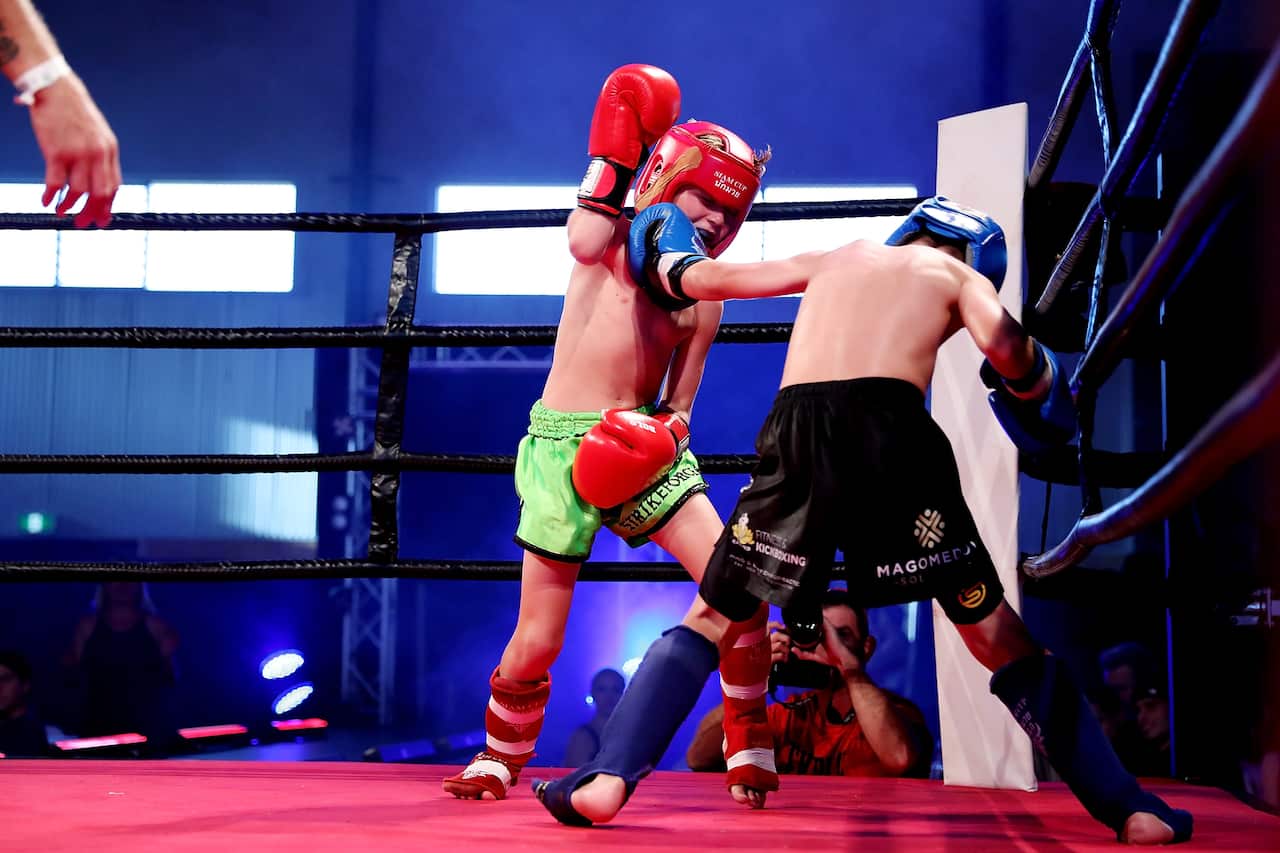
While Queensland has been criticised for lacking regulation for combat sports, Manning says issues like this and age restrictions should be addressed with the help of people familiar with the sport to mitigate safety concerns.
“When it comes to children, it’s not a unified sport,” Manning said. “There are many different standards across Australia. Government legislation does not help us develop as a sport because they strictly control, from a limited bias, the age kids can compete.
“So in some states like New South Wales kids can’t compete until they’re 14 or 15. Whereas in Queensland’s there’s no regulation or safety requirements whatsoever.
“Anyone in Queensland could run a competition and put an eight year old [in the ring] and copy what they do in Thailand – we’re adamantly against that.
“That’s one of the challenges of running the sport. In some ways it’s very much over-regulated but they don’t let the people that know about the sport – whose main focus is safety – run the sport.”

Dateline is an award-winning Australian, international documentary series airing for over 40 years. Each week Dateline scours the globe to bring you a world of daring stories. Read more about Dateline

Have a story or comment? Contact Us







