
Watch SBS Dateline's latest episode, Grow Chocolate, Not Cocaine, now on SBS On Demand.
Growing coca has been a constant in Wilson Mora’s life — it's how his family has survived. They have been growing the raw ingredient for cocaine for generations.
"When I was born, there was coca. It’s been my whole life. It’s something cultural," Wilson, 32, tells Dateline.
His family's 10-hectare farm is in Colombia’s Putumayo region in the country's south, and is one of its biggest coca-growing hubs.
News that makes sense
Your trusted source for staying up-to-date with the world around you. Get free daily news updates and analysis, straight to your inbox.
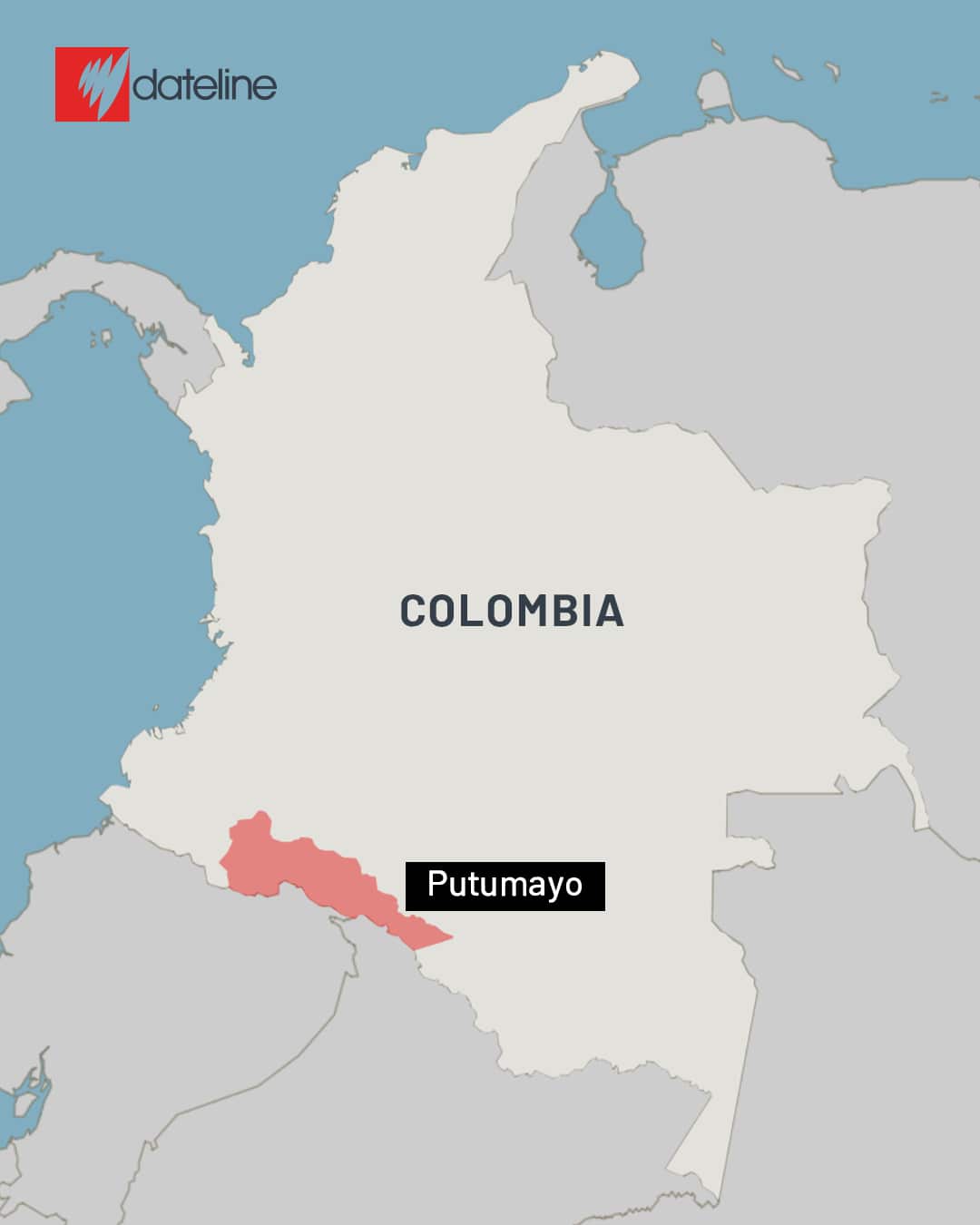
In this area’s lush tropical climate, coca is a reliable crop, harvested up to six times a year.
Wilson says his parents started growing the illicit crop out of obligation.
"My parents just didn’t have any other options. Imagine, we were hungry, they had to pay rent, they had no choice. The only thing was that crop. What could we do?"
The role of armed groups in Colombia’s drug trade
Putumayo’s coca-growing areas are now largely controlled by the armed group known as the Comandos de la Frontera or Border Command.
Wilson says his family didn’t work in collaboration with members of the rebel group, but he says it was clear who was in control of the trade.
"When the farmer decided to plant a coca plant, they’d feel forced to sell it to a certain person. It had to be that way. They weren’t partners or allies or anything. That’s just how it works," he says.
Now married with a three-year-old son, Wilson decided to change his family’s farming choices.
They’ve joined the Colombian government’s crop substitution program, which encourages farmers to voluntarily replace illicit crops with legal ones such as cacao or coffee, which grow well in similar conditions to the coca plant.
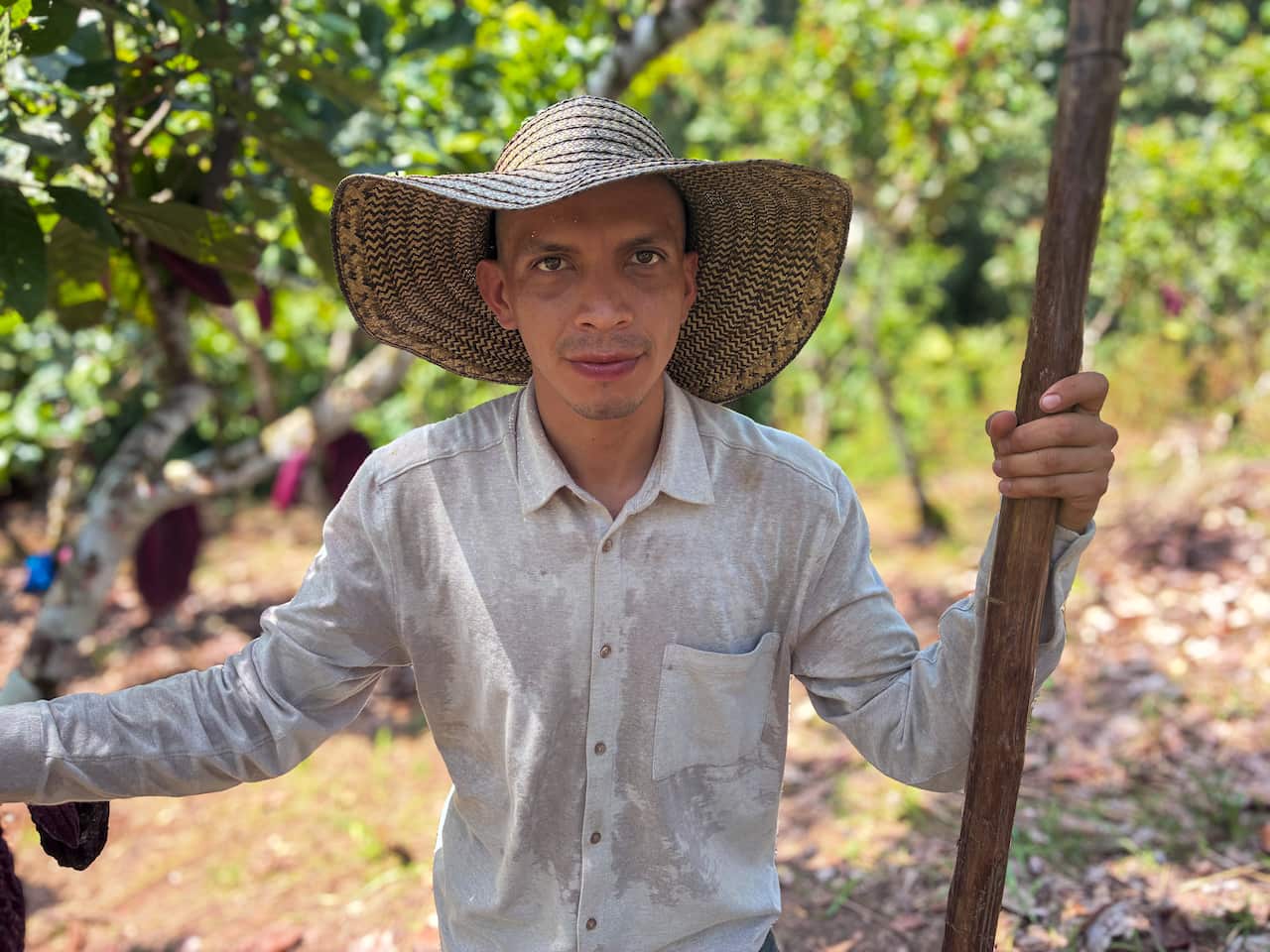
Farmers get financial support to plant the legal crop, but only if they agree to remove their illicit crops.
As he pulls the coca plant from its roots to prevent it from growing, Wilson laments its negative reputation. Coca leaves can be chewed and have been traditionally used as a suppressant for hunger and fatigue, and to treat altitude sickness.
"The coca plant is not bad; we need to remember that. It is an excellent plant with many good properties. The bad thing is what we do with it."
Wilson and his family are replacing their coca plants with cacao trees. Cacao is the raw ingredient for chocolate.
Unlike coca, where armed groups often set the price, cacao beans are traded on international markets, helping avoid the market gluts that undermined earlier crop substitution programs.
Wilson says cacao is now bringing in nearly twice as much income as coca for his family
He says a kilogram of cacao beans fetches between 6,500 and 8,000 Colombian pesos ($2.50-$3)
Meanwhile for a farmer like him, a kilogram of coca paste (the product of adding acid and other chemicals like petrol and ammonia to the coca leaf) is worth 2,600 Colombian pesos or one Australian dollar.
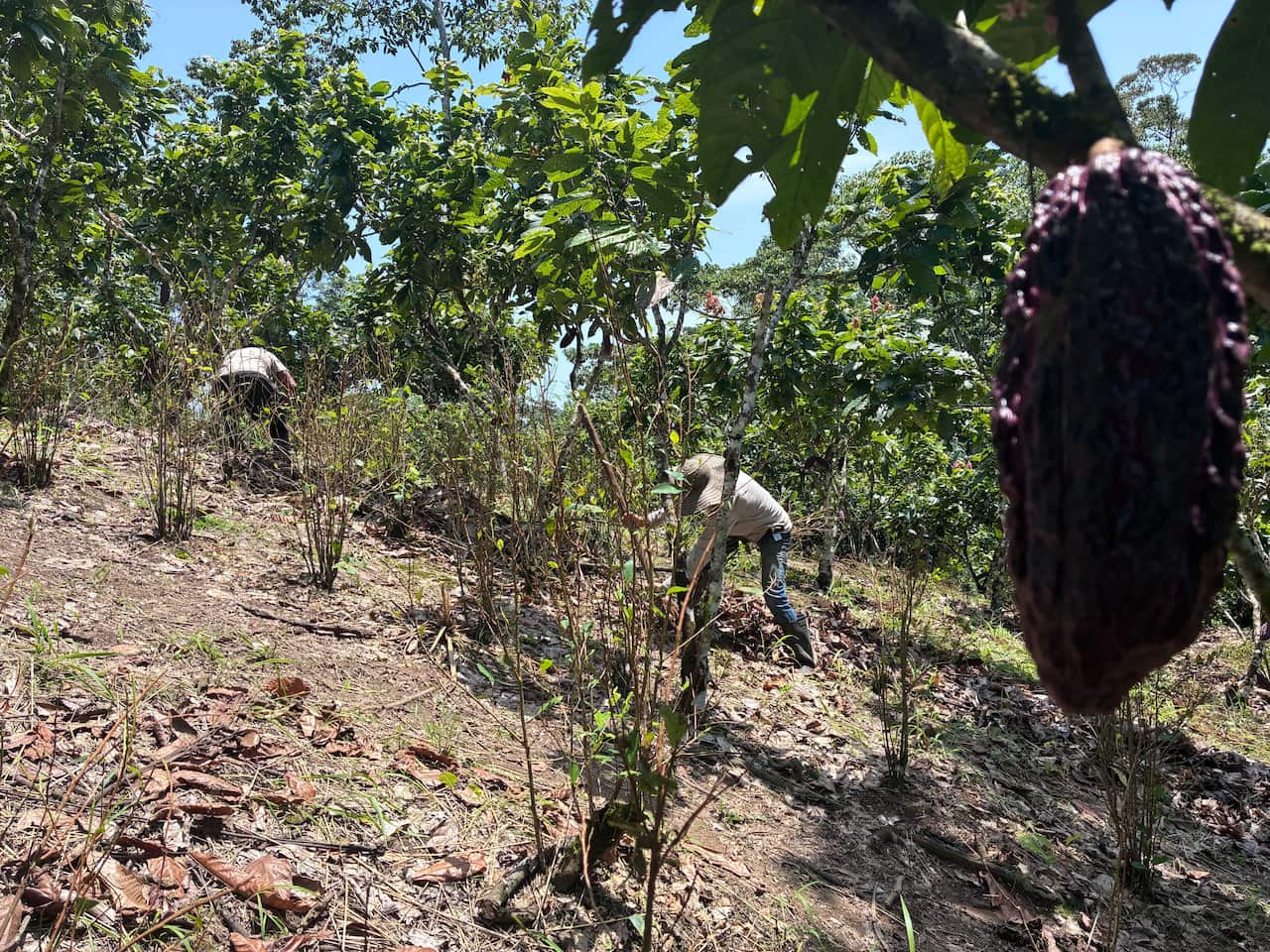
With the Comandos de la Frontera in peace talks with the government, for now, there’s little resistance in this region to crop substitution.
The epicentre of Colombia’s cocaine war
For more than 50 years, Colombia has been waging war against cocaine. It's a conflict that’s claimed thousands of lives.
Along the border with Venezuela, Catatumbo is the epicentre of the cocaine trade in northern Colombia.
Each year the region produces hundreds of tonnes of cocaine, worth billions globally.
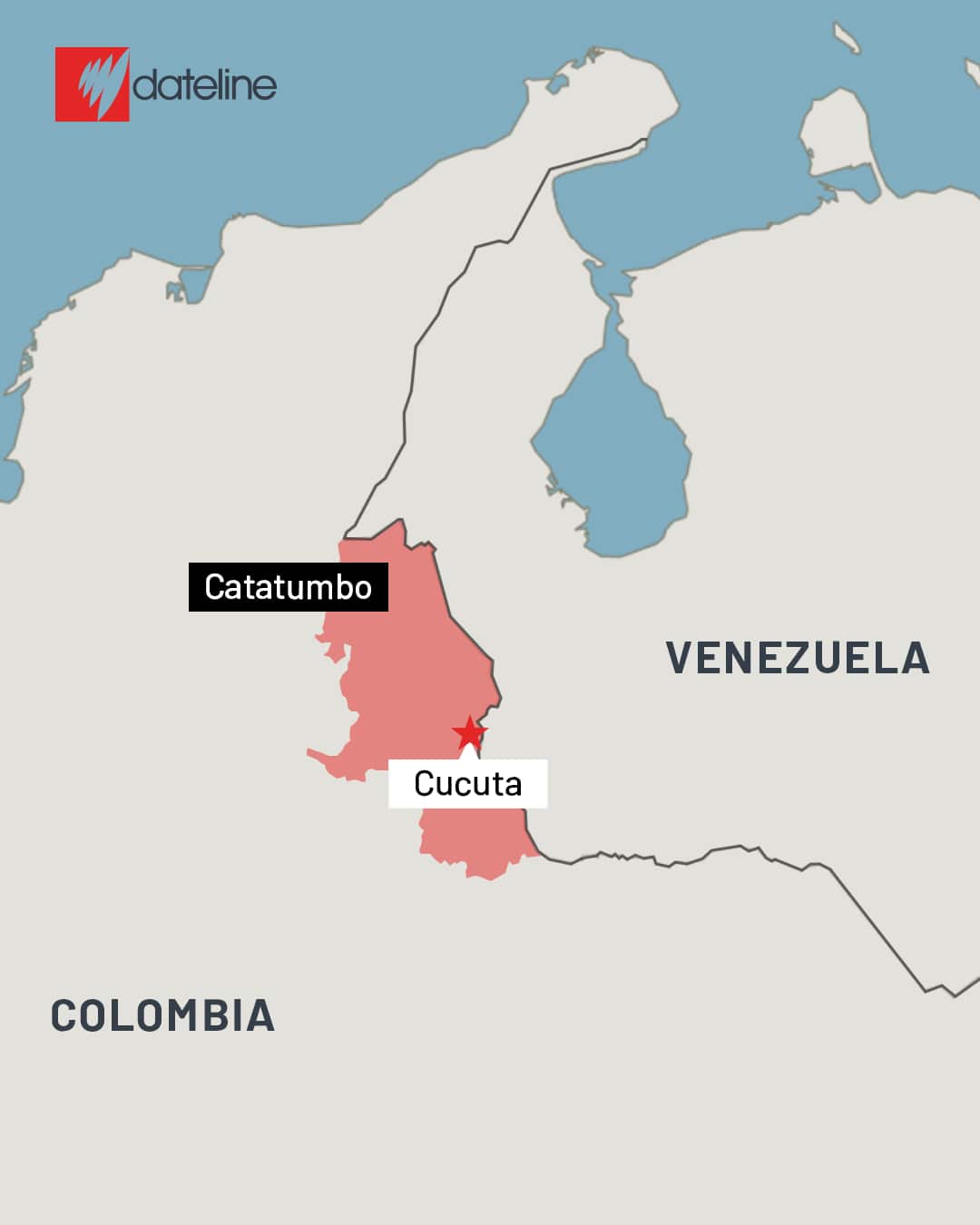
Those profits have turned it into a battleground and one of the most violent regions in the country. In January 2025, violence between rival factions in Catatumbo led to at least 80 deaths.
Armed groups such as the National Liberation Army (ELN) and the dissident Revolutionary Armed Forces of Colombia (FARC) faction, Front 33, are fighting for control of the cocaine trade.
Since 2025 alone, more than 100,000 people have been driven from their homes.
Many have fled to the border city of Cúcuta where Carmen García has set up the Mothers of Catatumbo for Peace refuge.
"I would say that, in total, more than 7,000 people have been helped by this refuge, even if it was just for one night," she tells Dateline.
Civilians are caught in the middle — and their children are increasingly being recruited.
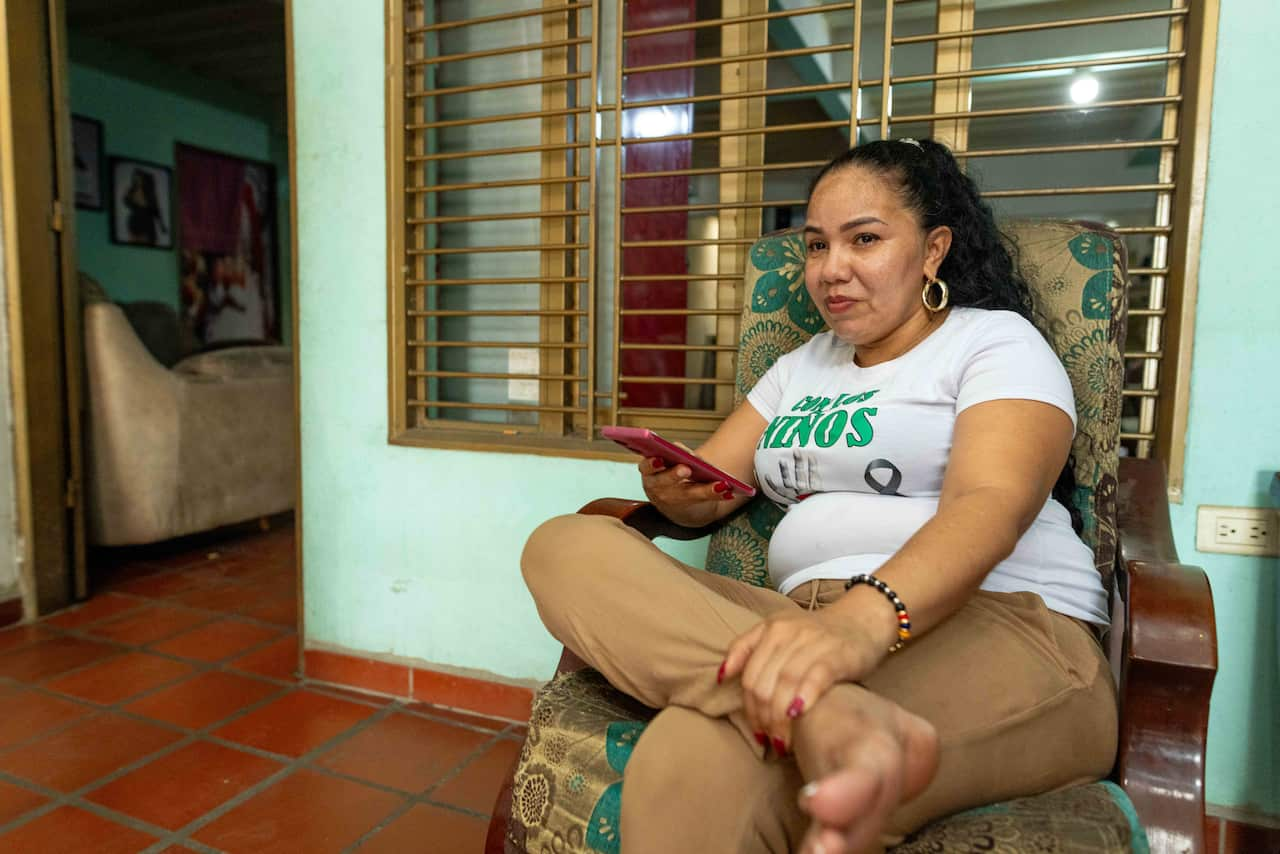
Carmen is from Catatumbo and knows the war firsthand.
In 2008, her husband was killed by the military, falsely accused of links to the drug trade as part of a push to boost kill counts.
Last year, her son was kidnapped and killed by the ELN.
"You try to ensure it doesn’t happen to another mother, that this doesn’t happen to anyone else, but you can’t cure it. It’s a wound that stays with you until the day you die."
She has a message for cocaine users in Australia.
"I’d say don’t do it, that you have no idea how many young lives, and tears, are in a single gram."
Colombia’s new approach to the war on drugs
President Gustavo Petro, Colombia’s first left-wing leader, believes the war on drugs can’t be won through force alone.
Historically, Colombian governments have taken a more militarised approach to addressing the country’s war on drugs. He's taken a different approach, negotiating with armed groups and criminal networks under a program called Total Peace.
It’s a strategy that has made him powerful enemies and the target of an alleged assassination attempt. In Petro's first interview with an Australian network, he told SBS Dateline he believes a crop substitution program could help end the war on drugs for good.
The Colombian government says 44,000 hectares of illicit crops have been replaced with legal ones.
But despite record cocaine seizures under Petro, coca cultivation and potential cocaine production are on the rise.

He denies his strategy has failed, instead blaming consumption.
"The problem is the demand. If you want to reduce the trade of any goods, you not only have to seize the supply, but also decrease the demand. Mafias have expanded worldwide across fundamental market areas. Australia is one of those fast-growing markets."
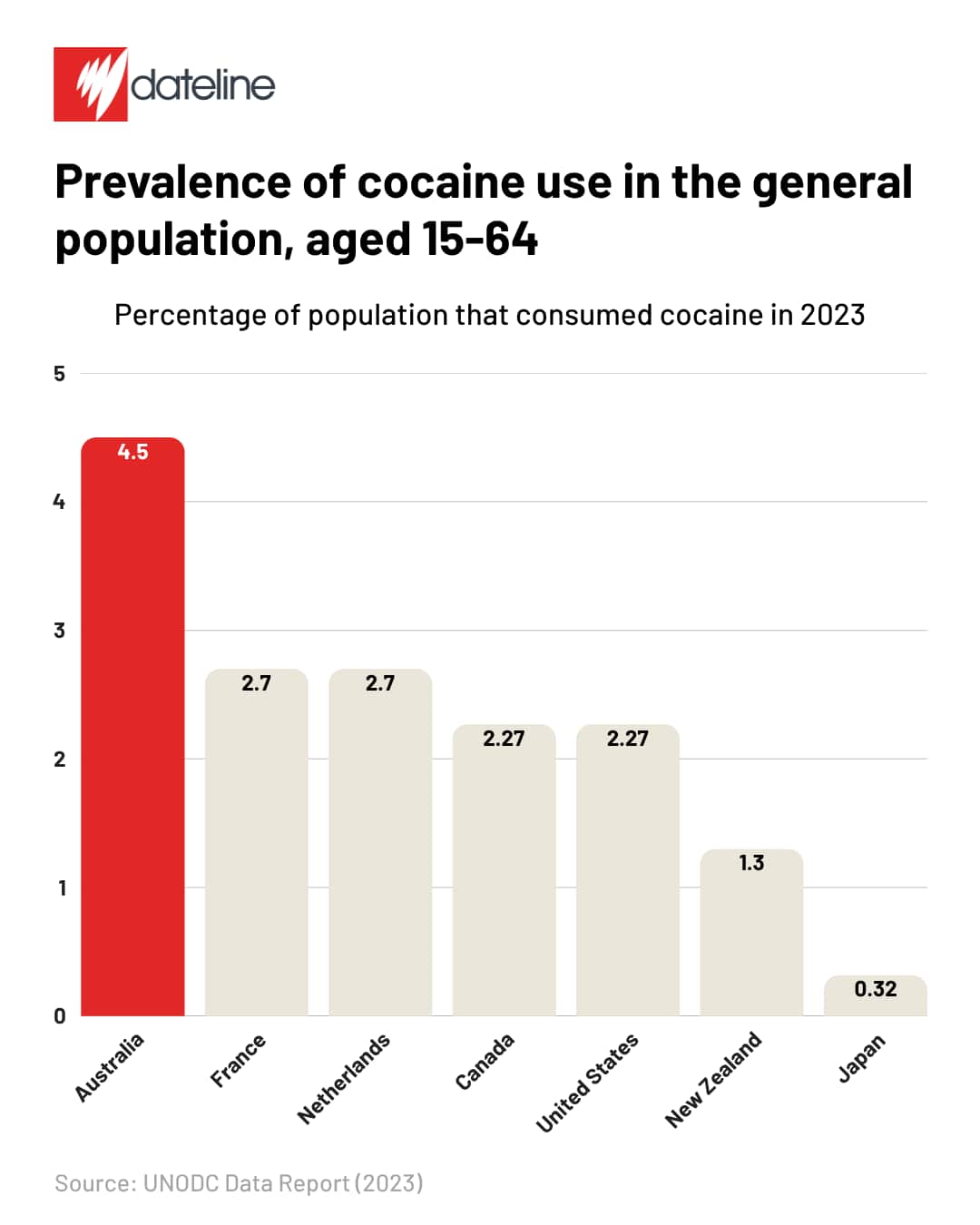
Australia has the highest per capita consumption of cocaine in the world.
Around 3 per cent of people aged 15-64 used it in 2023, the United Nations Office on Drugs and Crime said in its latest report.
Australia is also one of the most expensive places to buy cocaine, at $250 to $400 a gram.
Petro says the Australian government can also play its part in reducing the drug trade in Colombia.
"From the regions where coca is grown, we could create a regional substitution brand. If the Australian government bought coffee from those regions, along with cacao and coconut oil, we could comprehensively solve the increasing problem in Australia which also returns to haunt us as violence."
A spokesperson for the Australian government said in a statement that: "Australia works closely with Colombian authorities to reduce illicit drug supply and disrupt the flow of money from drug sales".
He says legalisation of cocaine is the ultimate solution worldwide.
"It would put an end to the mafia and the violence. But it must be decided by the international community, and many have different beliefs, different opinions and cultures that prevent them from understanding it."
Tensions with Washington
Petro’s new approach to the war on drugs comes amid tensions with the US , Colombia’s biggest backer in the fight.
The 65-year-old former member of the Marxist guerrilla group M-19 has accused the US government of murder, following its military campaign against alleged drug trafficking vessels in the Caribbean and Pacific Seas.
Dozens of boats have been destroyed in US strikes and more than 160 people killed in what rights groups have labelled extra-judicial killings.
In response to Petro's comments, US President Donald Trump cut aid to Colombia, slapped sanctions on Petro and his family and accused the Colombian leader of drug trafficking, without providing evidence.
"They make cocaine in Colombia and he's no friend of the United States. He's very bad, very bad guy. And he's got to watch his ass," Trump said in December about his Colombian counterpart.
He threatened to invade Colombia after the US capture of Venezuelan President Nicolas Maduro in January.
But shortly after Maduro’s arrest, the tensions between the two leaders calmed after a phone call.
That was followed up with a cordial White House meeting in February.
"We are different. But we were able to reach agreements despite our differences," Petro said.
He also told the US president about Colombia’s farming substitution program, which farmers like Wilson and his family are engaging in.
For Wilson’s mum Ana, the decision to transition from an illicit crop is easy.
"We think about our children, so they don’t inherit this problem. So, they don’t grow up believing coca is the only way to survive. Because wherever there are illicit crops, armed groups follow, and there’s no peace."
Wilson is optimistic.
"I've always thought that while we are victims of the armed conflict, we shouldn't play the victim," he said.
"We have a great opportunity now.
"So it's time to stop seeing ourselves as victims, and realise that we have the solution in our hands."
Data visualisation by Yasmine Harvey.
This article has been updated.
Watch your favourite Dateline episodes around the clock on SBS On Demand's dedicated Dateline channel. For the latest from SBS News, download our app and subscribe to our newsletter.

Dateline is an award-winning Australian, international documentary series airing for over 40 years. Each week Dateline scours the globe to bring you a world of daring stories. Read more about Dateline

Have a story or comment? Contact Us







