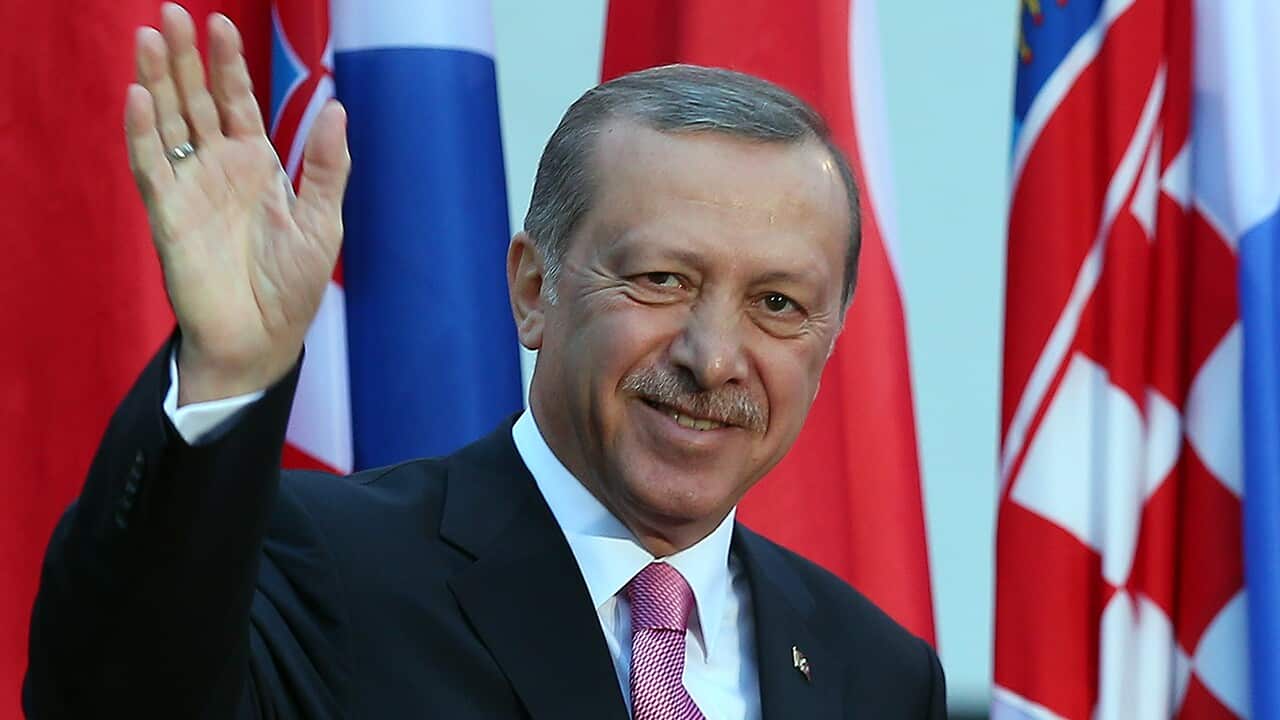
As Dateline reports on the debate over press freedom in Turkey, we’ve been looking at his government’s record on domestic and international affairs.
Terrorism
President Erdoğan has labelled terrorism “the biggest obstacle in front of democracy and economic development in Turkey.”
Three separate, mass-casualty blasts have rocked the nation’s capital Ankara since October last year, with multiple other suicide and car bombings around the nation.
Attacks have been claimed by Islamic State jihadists and Kurdish armed groups.
News that makes sense
Your trusted source for staying up-to-date with the world around you. Get free daily news updates and analysis, straight to your inbox.
Erdoğan’s government is fighting IS as part of a US-led coalition, and battling the Kurdistan Workers Party (PKK) in its south east.
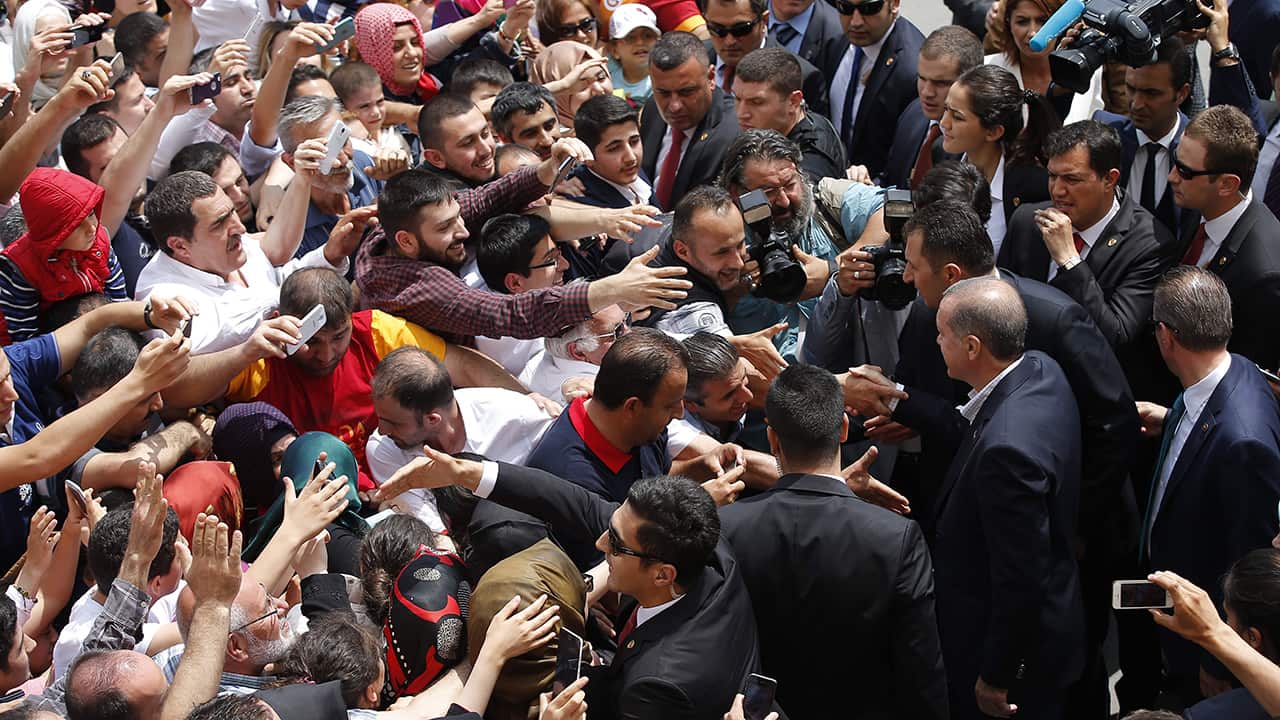
“We will not allow those who attempt everything to divide this nation and dismantle this country,” he tells a huge crowd of supporters in Dateline’s story.
Syrian Refugee Crisis
Turkey is a central player in the current migrant crisis facing Europe. It shares a border with Iraq and Syria, and was one of the first countries to open its doors to those displaced.
Turkey is now home more than 2.5 million Syrian refugees, which is the world's largest refugee population.
“We have put one extra plate on our tables for them,” he told the International Student Meeting in Istanbul this month.
But Turkey’s record as a secure place for refugees has been questioned by Amnesty International. It says it’s documented unlawful detentions and deportations and says many refugees live in terrible conditions without access to education.
Economy
In less than a decade, per capita income has nearly doubled and Turkey is now the 18th largest economy in the world.
Since taking office, President Erdoğan has introduced a series of liberal economic policies, overseeing the recovery of the economy since it crashed in 2001.
The government is also trying to attract more foreign investors to Turkey by lifting regulations and investing in infrastructure such as new roads, airports and a high-speed train network.
“Turkey’s progress is a success story that inspires many countries,” Erdoğan said in a recent business speech.
But growth has moderated since 2012. After growing 4.2 percent in 2013, the economy slowed to 2.9 percent in 2014. And the unemployment rate has increased from 10.3% in 2002 to 11% in 2010.
Domestic Issues
“Health and education are the two fields of services with which we have pleased our citizens the most,” President Erdoğan said in a recent speech at the opening of a new health centre in Istanbul.
President Erdoğan says that as well as renovating existing medical facilities, his government has built 2,500 new ones and increased the number of medical personnel from 178,000 to 780,000.
“We have turned from a country that used to demand health services into a country that provides health services,” he said.
On education, the government says the number of teachers has risen from 543,896 in 2002 to 923,133 in 2016.
“We have realised a great revolution in education… we endeavour to provide the best education for our children,” he said in another recent speech.
European Union
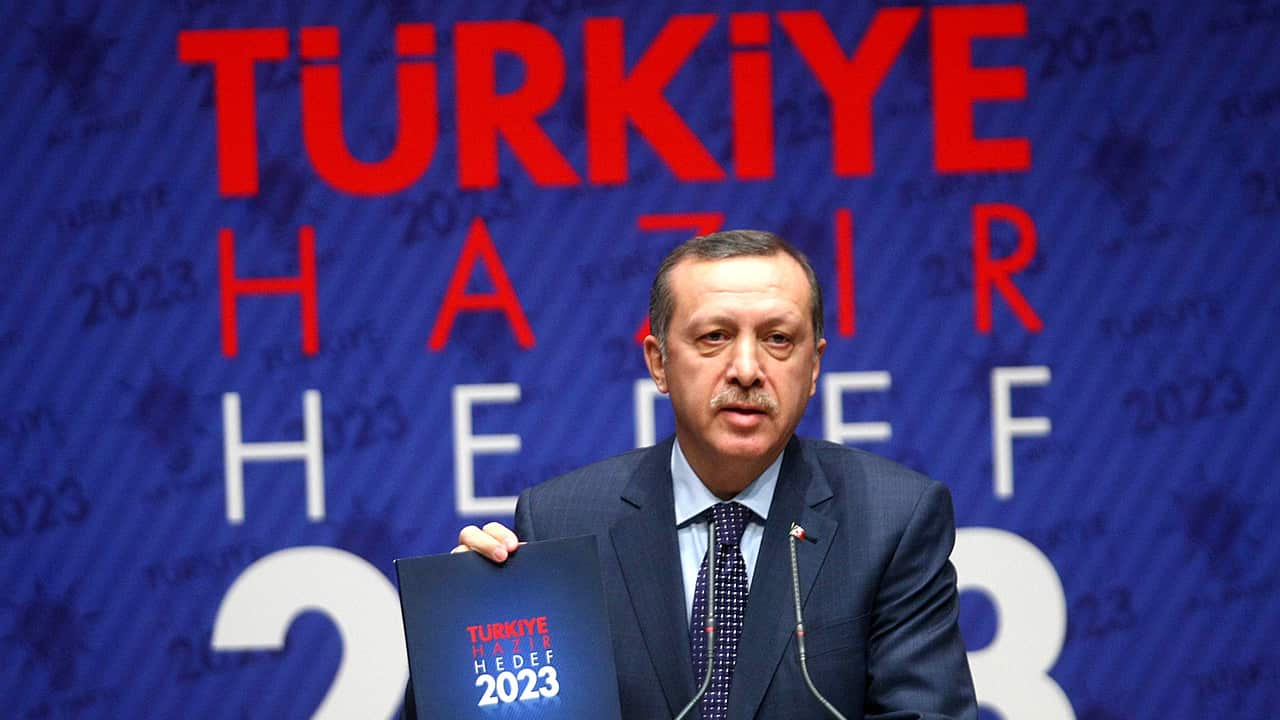
As part of his '2023 vision' Erdoğan's government is overseeing accession negotiations for Turkey’s membership of the European Union.
President Erdoğan is also using refugee policy as a bargaining chip with EU leaders to gain the long sought after prize of visa-free travel for Turkish citizens into the European Union.
But Turkey must still fulfil five of more than 70 requirements laid down by the EU before its citizens can qualify for visa waivers.
The most difficult benchmark for Ankara to complete could be revising laws and practices to balance the fight against terrorism with respect for human rights.

Dateline is an award-winning Australian, international documentary series airing for over 40 years. Each week Dateline scours the globe to bring you a world of daring stories. Read more about Dateline

Have a story or comment? Contact Us







