
Above: How is the city of Mosul is adjusting to life after I.S. rule? Watch more here.
Families and human rights groups are calling for international support as the fates of thousands of people who were captured by IS remains unknown.
A report by the human rights group Syrian Network for Human Rights detailed IS’s policy of arbitrary arrests and mass abductions during areas of its control and that ‘IS arrested at least 8,143 individuals since its establishment until March 2019; even after the elimination of ISIS in most areas of Syria, their fate remains unknown.’
Though mass graves have been uncovered in Syria’s Raqqa and Deir al-Zor governorates, the logistics of collecting and organising information about the recovered bodies has proved challenging for the First Responders Team responsible for the work. Though the Raqqa Civil Council received funding from the US for the First Responders Team, it has not been enough to provide the training and technical assistance to effectively complete the work.
As the so-called Caliphate was falling in March, a mass grave including 50 decapitated heads of Yazidi women was unearthed in the Syrian town of Baghuz as international forces closed in on the group.
News that makes sense
Your trusted source for staying up-to-date with the world around you. Get free daily news updates and analysis, straight to your inbox.
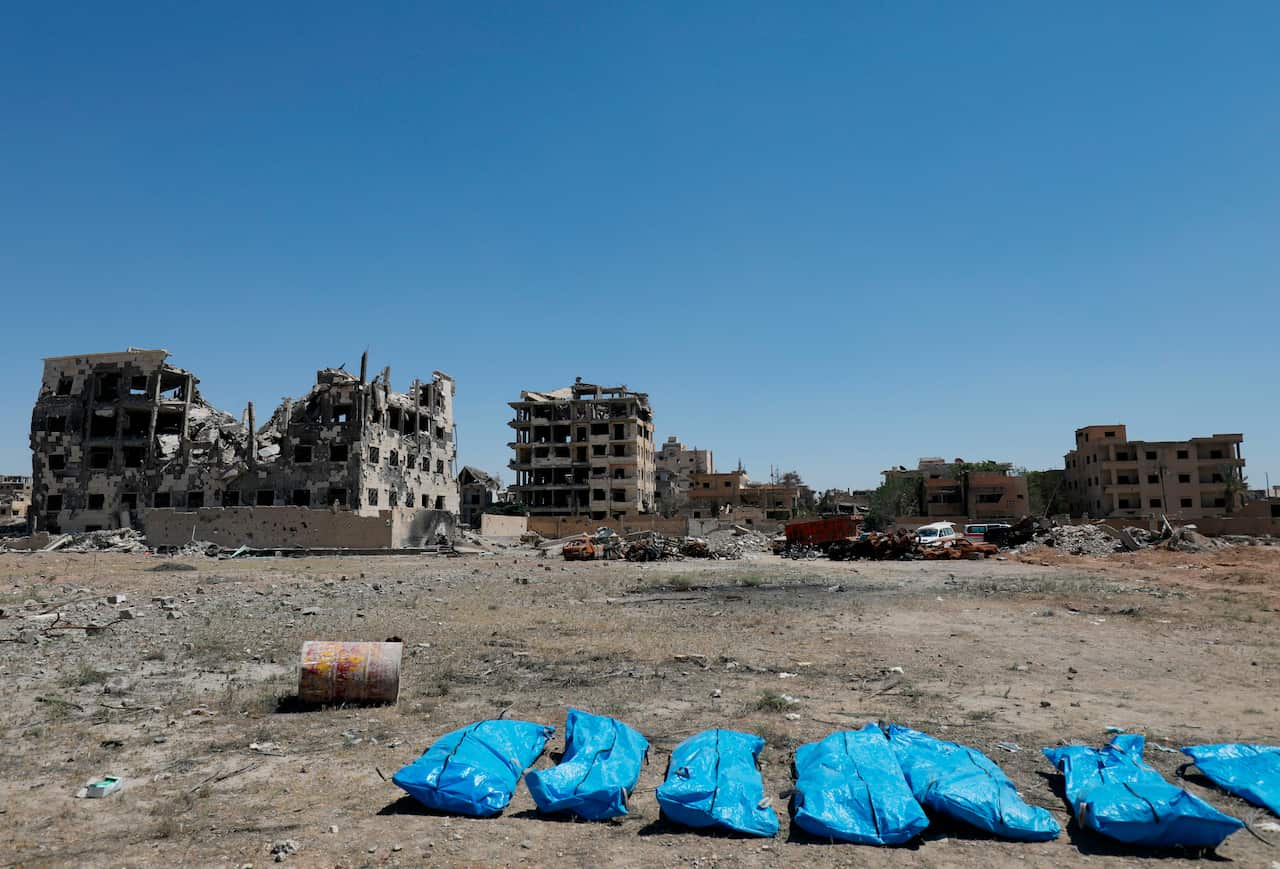
Mass graves of hundreds of bodies dumped by the group were also uncovered in previously held territory in Iraq. In 2017, mass grave sites were also found to be laden with landmines and other improvised explosive devices.
Now Human Rights Watch has called for the nations who fought in the region against IS to support the under-resourced teams exhuming bodies and collecting data to identify the individuals and establish a formal practice to address the issue of the thousands of missing people.
Following the defeat of IS on the battlefield, neither the Syrian Democratic Forces (SDF) or US-led coalition has created a mechanism or entity to handle queries from family members, Human Rights Watch reported.
The international organisation also revealed the SDF found no detainees when they captured prisons and detention facilities from IS’s last remaining forces.
However, the end of IS control in the territory offers an opportunity to provide answers to some families of those whose relatives went missing.
“Now that the territorial battle against ISIS is over, the anti-ISIS coalition should address the terrible ISIS legacy,” said Nadim Houry, terrorism/counter-terrorism director at Human Rights Watch.
“A critical issue for thousands of families is uncovering what happened to those ISIS abducted.”
“Those forces now controlling former ISIS territory and their international backers can provide answers to families if they make this issue a priority.
“This is a crucial step for the victims’ families and for broader efforts for justice in Syria.”
While IS has its territory in Syria and Iraq, the group’s presence is rising in other regions such as the Philippines and Congo.

Dateline is an award-winning Australian, international documentary series airing for over 40 years. Each week Dateline scours the globe to bring you a world of daring stories. Read more about Dateline

Have a story or comment? Contact Us







