
Watch ICE: America's Turning Point? now on SBS On Demand.
It's a frigid winter's morning in Minneapolis, Minnesota, with temperatures outside hovering at around -14C. On an average street, in a typical outer neighbourhood, Hanad stands at a living room window observing the morning snowfall outside. He's been trapped in this house for two months.
A stranger walks by and Hanad quickly closes the blinds. No one — apart from he and the owner — knows he's living in this house and anyone outside could be a potential informer for Immigration and Customs Enforcement—– also known as ICE.
News that makes sense
Your trusted source for staying up-to-date with the world around you. Get free daily news updates and analysis, straight to your inbox.
Hanad is not this man's real name, but his plight is very real. Since ICE began roving patrols of Minneapolis' streets looking for undocumented migrants in December last year, he's been in hiding.
"Before these guys started their operation, life was good for me. I was living at my own place and paying for my rent," he tells SBS Dateline.
Somali-born Hanad initially stayed there when ICE's operations began. But soon, the risk became too great.
"We could not leave our homes because ICE agents were waiting for us at the parking lot. So, we couldn't even leave our homes and go to work. There were days that we could not even go out to get food."
He eventually snuck past the ICE teams and fled to this safehouse. Hanad was born in Somalia, but says he was forced to leave in 2024 for his own safety after his father and brother were killed by militants from the terrorist group al-Shabaab.
"I passed through 12 countries. Sometimes we went for more than 10 days without food. So, it was a very difficult journey," he says. "Our objective was to reach America. We were in search of better life and safety."
Hanad applied for asylum but, as an interim, was granted temporary protection status (TPS). In the US, TPS can be granted to people of designated countries experiencing things like civil war or environmental disasters. People on the TPS can't be removed from the US and can get authorisation to work. For Hanad, it was his lifeline as he awaited a ruling on his asylum claim.
He chose Minnesota because it has the largest population of Somali immigrants in the US. Many of them live in the Ceder Riverside neighbourhood, which became ground zero once Trump's ICE crackdown on immigration — known as Operation Metro Surge — reached the city.
How fraud allegations laid the groundwork for ICE
In September 2022, the Biden administration announced the indictment of 47 people in Minnesota accused of defrauding US$250 million ($351 million) from a state-run, federally funded child nutrition program during the COVID-19 pandemic.
The founder and executive director of the nonprofit at the centre of the fraud scheme was not Somali, but most of her employees, associates and co-defendants were Somali Americans.
In December last year, after a video by a conservative influencer alleging other daycare centres had committed fraud went viral, President Trump, Republicans and conservative media jumped on the scandal as evidence of widespread abuse of public funds by illegal immigrants, escalating attacks on the entire Somali American community to legitimise the administration's mass deportations focus on Minnesota.
"Somalians (sic) ripped off that state for billions of dollars," Trump claimed at the time.
"I don't want them in our country, I'll be honest. Their country stinks. We are gonna go the wrong way if we keep taking garbage into our country."
In January, at the same time as some 3,000 ICE agents and 1,000 Border Force agents swarmed Minnesota, Trump scrapped temporary protection status for people from Somalia like Hanad.
"My asylum application is still pending and yet to be decided by the court," he says.
"When my TPS expires on March 17, I have no other immigration status in this country."
Hanad fears he may die if he's forced to return to Somalia.
"Sometimes I have scary dreams of getting caught by the authorities and deported back to where I came from," Hanad says.
"The problems that existed in Somalia when I left ... still exist. The problems that led to the killing of my father and myself getting tortured."
Blue state retribution
Minnesota was key to US President Donald Trump's 2020 election loss when he failed to flip the state. He made unsubstantiated claims of widespread voter fraud by non-citizens.
The state has voted Democrat since 1972. Minneapolis has also declared itself a 'sanctuary city', with its leaders consistently refusing to assist federal immigration enforcement.
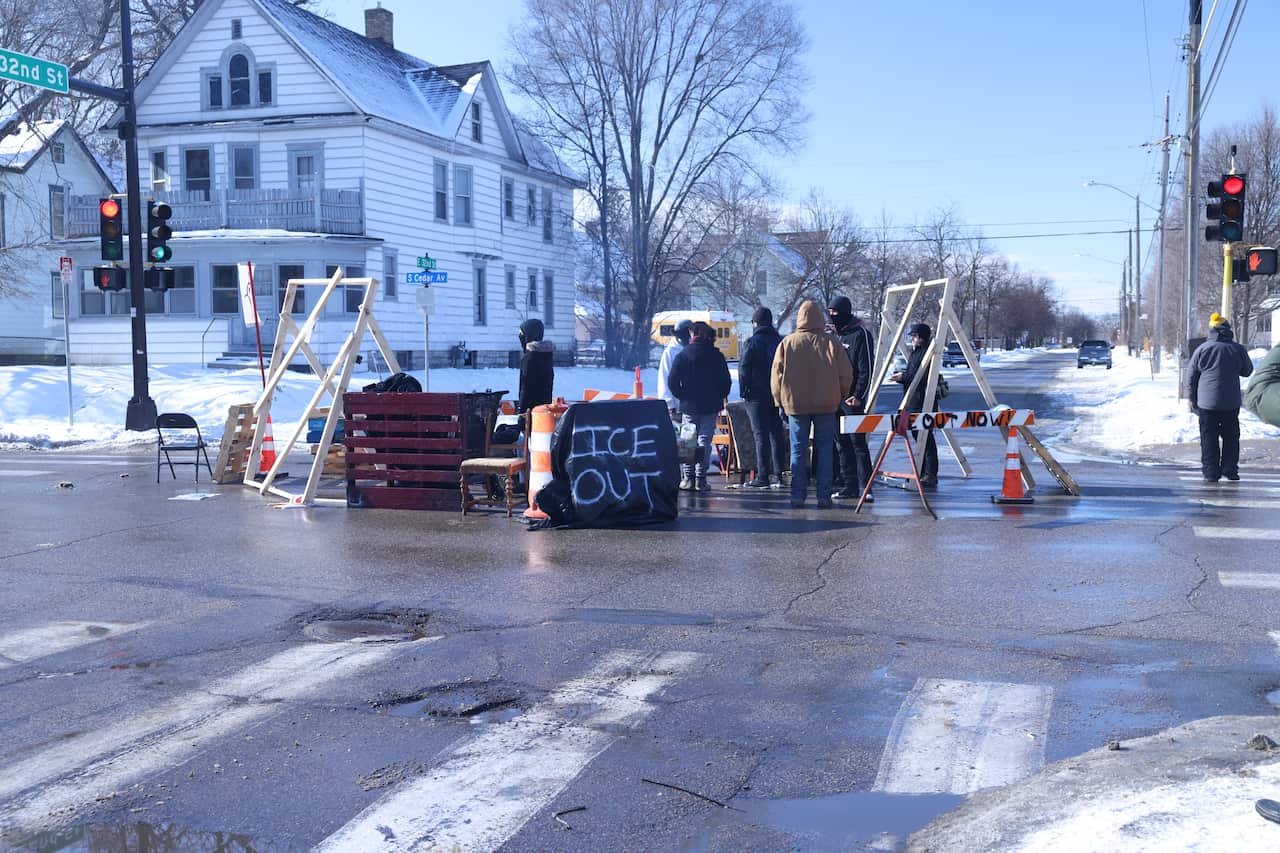
When ICE operations began in Minnesota in December 2025, federal authorities claimed it was to remove dangerous criminals who'd entered the US illegally. But critics allege it was a retributive act for directly opposing Trump's mass deportation policy. They say it's resulted in significant violations of law against minorities and US citizens alike, including the killing of two anti-ICE protesters — Renee Good and Alex Pretti.
After Good's death, Minneapolis mayor Jacob Frey, a Democrat, told NPR the Trump administration "is not doing this for safety but for politics, is not doing this to drive down crime but for retribution".
Becoming an ICE target
The same day Good was shot by an ICE agent, Ahmed Bin Hassan was working as a local Uber driver. He was watching videos about Good's killing when a Border Force agent knocked on his window.
The agent asked if Ahmed was a US citizen. Born in Somalia, he moved to the US when he was 17 and has been a citizen for a decade. Believing his rights were being infringed, he refused to answer the agent's questions. Within minutes, Ahmed's car was surrounded by at least six more agents.
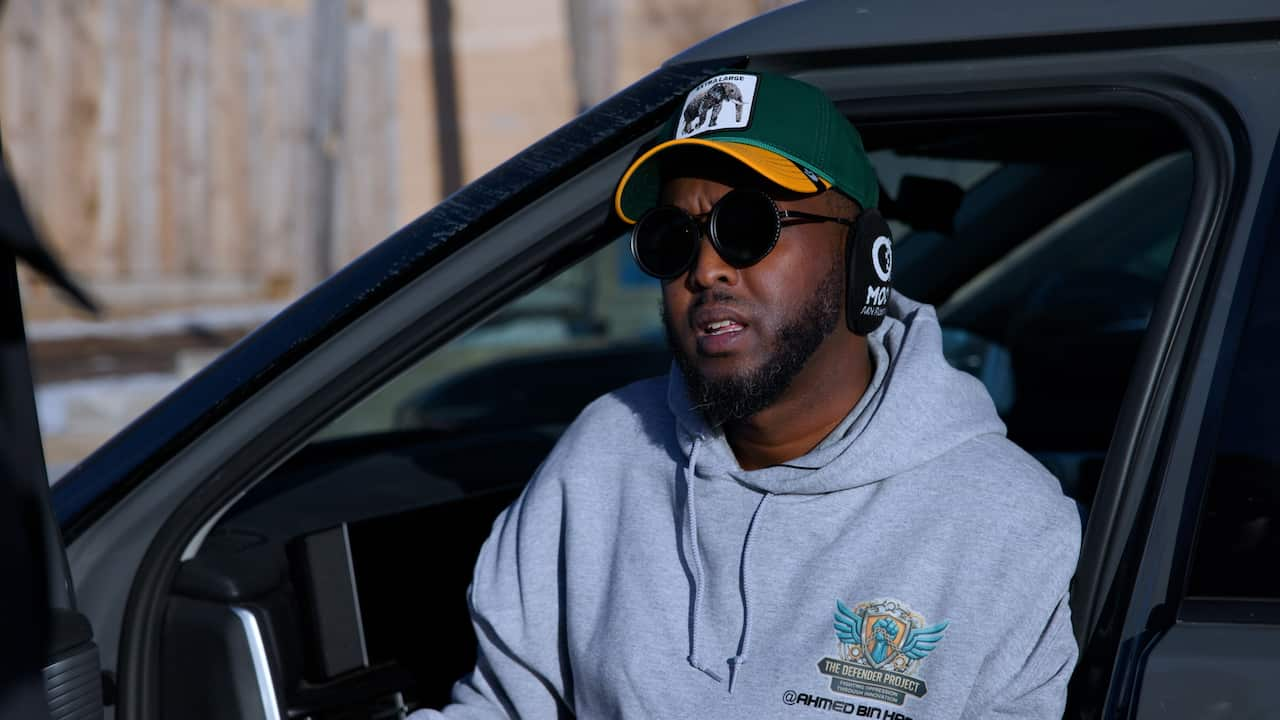
"A guy said, 'I'm an immigration officer, can't you read?' So that kind of pissed me off a little bit because they were going off of what the fake propaganda MAGA media put out there, that Somalians are not able to spell or read."
"They target whoever they want. When it comes to minorities, they see a Black person, they approach them, 'Where's your ID? Where's your US citizenship? Where were you born?' Questions like that."
Civic resistance and community networks
When the ICE surge reached Minnesota, local communities began organising and fighting back. Lizzie is involved in a community network tracking ICE agents' whereabouts. She says observing involves looking out for tagged or known ICE vehicles and sharing the information with community networks.
"It's people who are medics, it's people who are delivering groceries, it's people who are bringing people to the doctor or to their court meetings. And it is incredibly organised," she says.
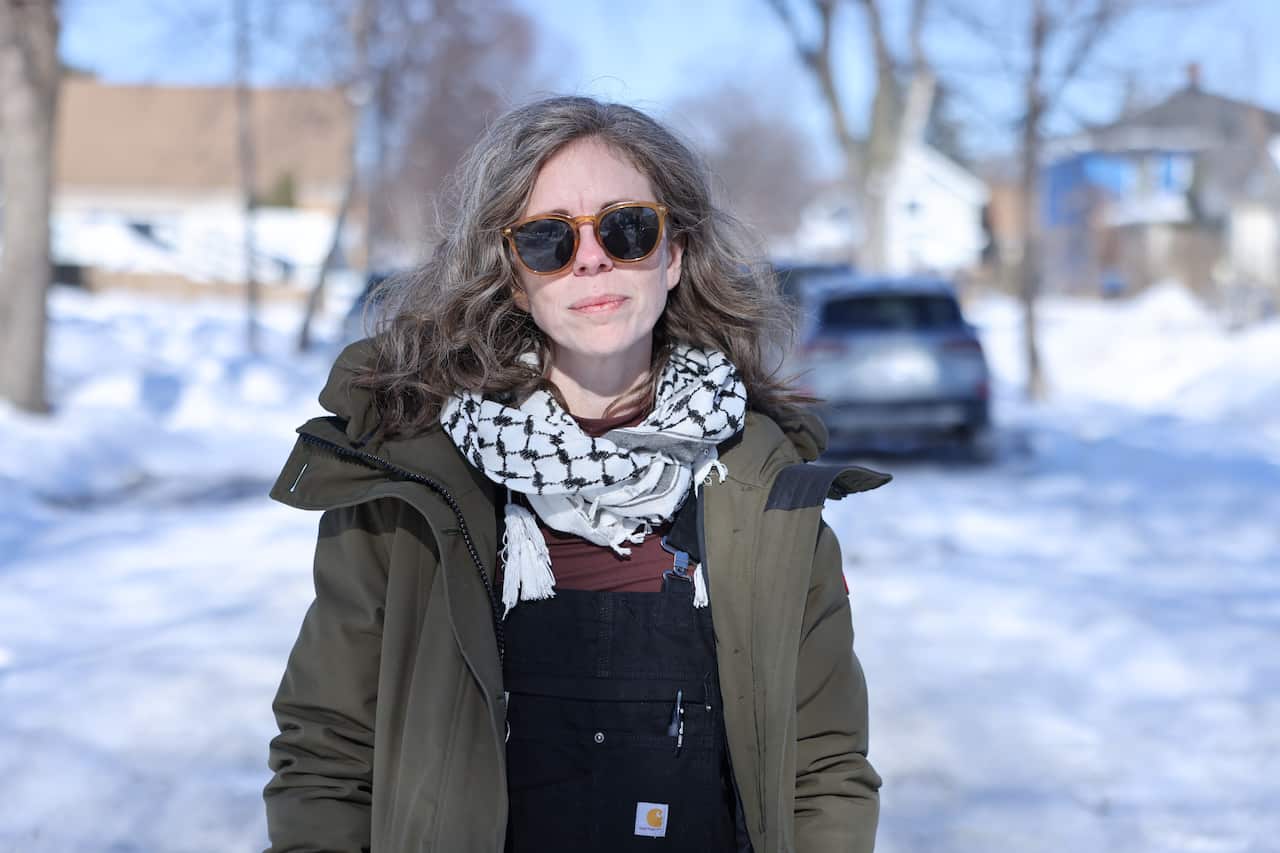
Lizzie believes the ICE operation in Minnesota marks a dangerous turning point for the country.
"This is the stuff that I learned about in school, the little history that we were taught here. This is the Anne Frank, hide your neighbours in your attic moment."
"As a pessimistic optimist? I think we're f—ked."
After the ICE surge
In mid-February, amidst growing political backlash, the Trump administration announced the ICE surge in Minnesota was ending.
Tim Homan, known as Trump's 'border tsar', took command of immigration enforcement in Minnesota after Good and Pretti's deaths. In a press conference, he announced 700 agents would leave Minnesota and said the operation was a success, but acknowledged it wasn't "perfect". He also said the operation had become "more streamlined".
According to Homan, ICE and Border Patrol had arrested some 4,000 undocumented migrants, "including murderers, sex offenders, national security threats, gang members, and other violent criminals".
Independent monitors, though, claim the vast majority of detainees have no criminal record.

Minneapolis locals say the damage will take years to repair. Many are still in hiding, and the Trump administration is now aggressively pursuing observers like Lizzie through the courts.
Lizzie received a text message shortly after speaking with SBS Dateline advising she had until 8.45am the following morning to hand herself into City Hall or face arrest.
She surrendered herself the next day and was charged over a run-in with ICE agents while she was acting as an observer. They allege she struck their vehicle and interfered with an operation.
Lizzie denies the allegations and maintains it was her constitutional right to observe their activities.
In his State of the Union address on Tuesday 24 February, Trump referenced the Somali community again, referring to the "Somali pirates who ransacked Minnesota".
People like Hanad are struggling to understand his targeting of their community.
"I cannot understand why he is targeting us, Somalis, in particular. We are hardworking people. We are a community."
Watch your favourite Dateline episodes around the clock on SBS On Demand's dedicated Dateline channel. For the latest from SBS News, download our app and subscribe to our newsletter.

Dateline is an award-winning Australian, international documentary series airing for over 40 years. Each week Dateline scours the globe to bring you a world of daring stories. Read more about Dateline

Have a story or comment? Contact Us







