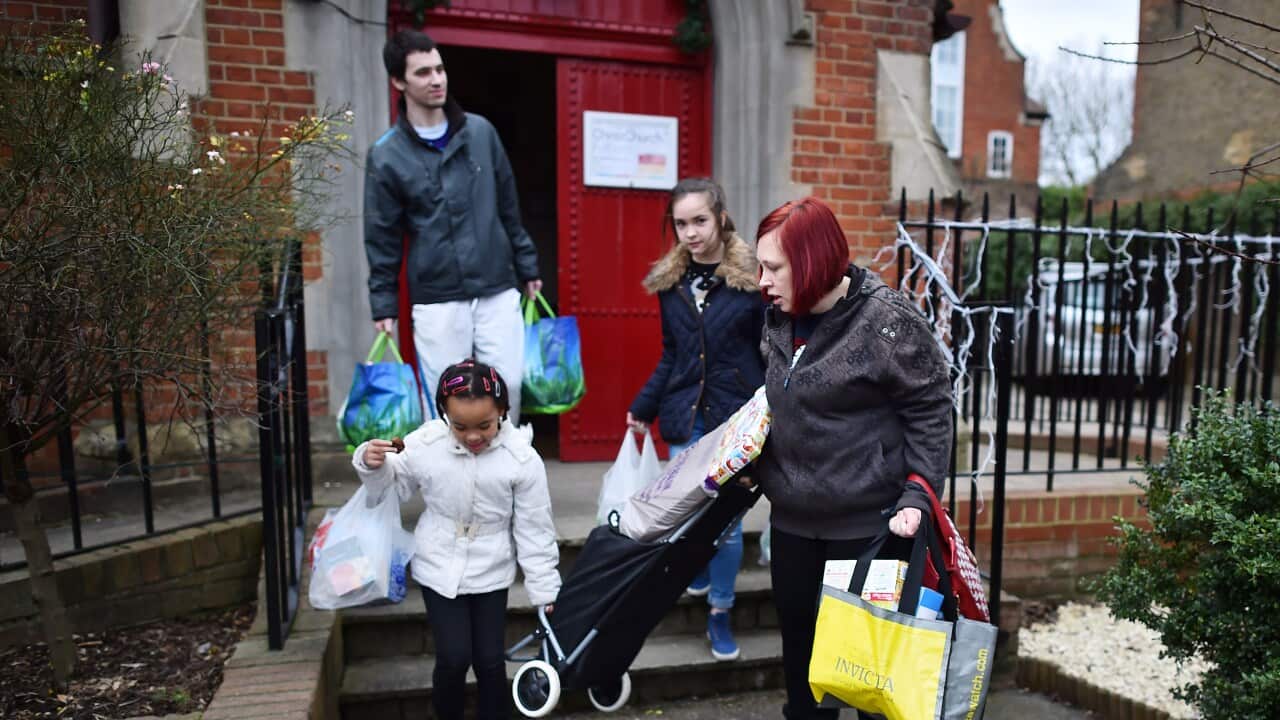
Above: A growing number of Australians are going hungry as they cannot afford food. Watch the Full episode on SBS On Demand.
A string of government cuts to welfare in the UK have left thousands of poor families in England without enough food to eat, a new report on austerity cuts has found.
The report, “Nothing Left in the Cupboards: Austerity, Welfare Cuts, and the Right to Food in the UK” released by Human Rights Watch (HRW) details how austerity-motivated cuts to benefits and the introduction of a new welfare scheme, the Universal Credit system, have left families unable to afford food and become dependent on food charities.
Many of these families are single parent households led by women, HRW found.
An analysis of public spending data by HRW found between 2010 and 2018 public welfare to assist children and families fell by 44 per cent.
News that makes sense
Your trusted source for staying up-to-date with the world around you. Get free daily news updates and analysis, straight to your inbox.
The drop in government welfare spending was coupled with the introduction of the Universal Credit system in 2012, which had been instigated to streamline social security benefits. However, a switch from advanced payments to one that only pays when certain conditions at met, have led to a surge in hunger in the UK according to HRW.
“The wait for payment is a significant source of delay and debt. It also relies on a punitive system that sanctions claimants by withholding funds from those who do not meet conditions, usually related to showing evidence of being in or seeking employment, while making it extremely difficult to appeal such decisions,” the report read.
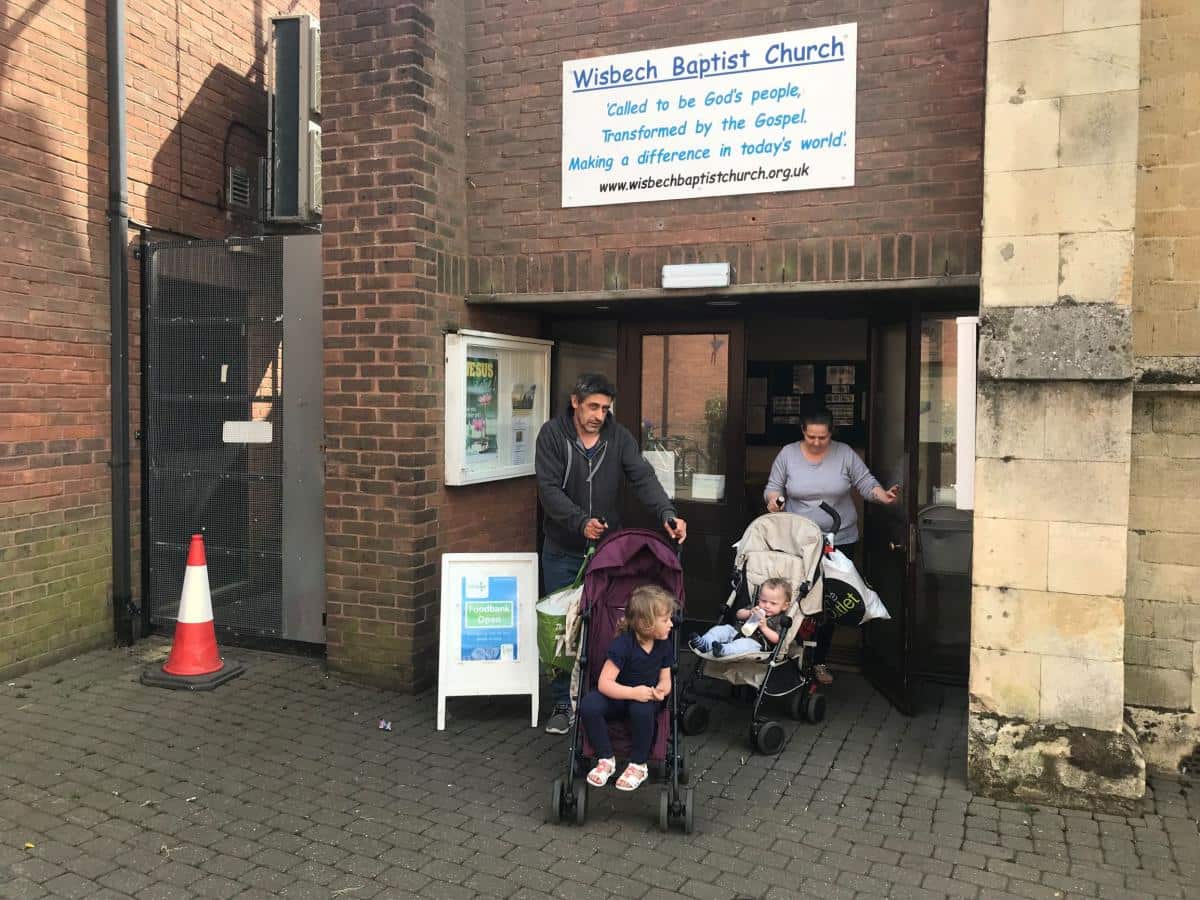
‘Sarah Nor,’ a 23-year-old woman with a four-year-old daughter told HRW:
“Often, I have nothing left at the end of the week. When you’re a single mum there are very few jobs you can do that let you drop your child to school in the morning, then go to work and be back at 2.30 to pick them up. I skip meals, so my daughter can eat, and coming to a food pantry … means we can both eat. When I skip meals, I get easily tired and don’t have energy, but you get used to it. I’d rather that she have something to eat than me.”
‘Joanne’, a 47-year-old single mother of four said she visits food banks when she fails to meet the requirements for the Universal Credit scheme.
“The only time I come [to the food bank] is if my benefits have been stopped or cut. I had a sanction once, so they stopped the payment completely … I’ve had cuts to my benefits.… At least the children get a hot meal at school. But they break up for half term on Friday. And until my money gets sorted, it’s going to be a long few days. As a parent you really feel like you’ve let your kids down.… I’ll have to gather my pennies together for a loaf of bread and 50p of butter, so they have some toast.”
The report focused on high deprivation (high unemployment and low pay rates) areas in Hull, Cambridgeshire and Oxford, and spoke with families affected by food poverty, volunteers, and staff in food banks as well as community centre and school staff.
“During a group meeting with seven young mothers claiming benefits, four expressed a concern that one impact of the benefit cuts includes the fear that they may lose their children because they cannot support them,” the report added.
Analysis of date from the UK’s largest national food bank charity, the Trussell Trust, found a 5,146 per cent increase in emergency food parcels distributed between 2008 and 2018. In that same period, the Trussell Trust went from distributing just under 26,000 parcels a year to handing out more than 1.33 million of them.
Kartik Raj, Western Europe researcher at Human Rights Watch, criticised the UK government for ignoring the evidence of a lowering standard of living for the country’s poorest residents.
“This rise in hunger has the UK government’s fingerprints all over it,” he said.
“The way the UK government has handled its reduction in welfare spending has left parents unable to feed their children in the fifth-largest economy in the world,” he said.
“The UK government should ensure everyone’s right to food rather than expecting charities to step in and fill the gap.
“Standing aside and relying on charities to pick up the pieces of its cruel and harmful policies is unacceptable. The UK government needs to take urgent and concerted action to ensure that its poorest residents aren’t forced to go hungry.”

Dateline is an award-winning Australian, international documentary series airing for over 40 years. Each week Dateline scours the globe to bring you a world of daring stories. Read more about Dateline

Have a story or comment? Contact Us







