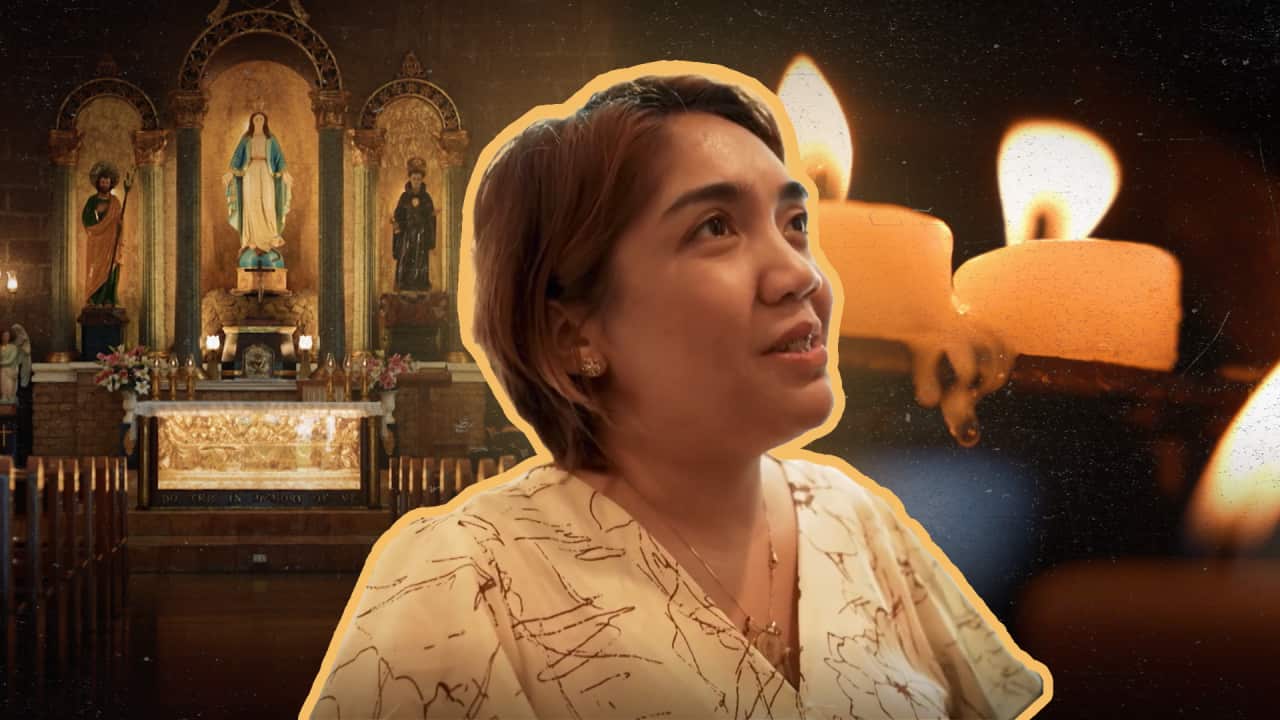
Watch Dateline's latest episode, Philippines: Speak of the Devil, on Tuesday 2 June at 9.30pm AEST only on SBS and SBS On Demand.
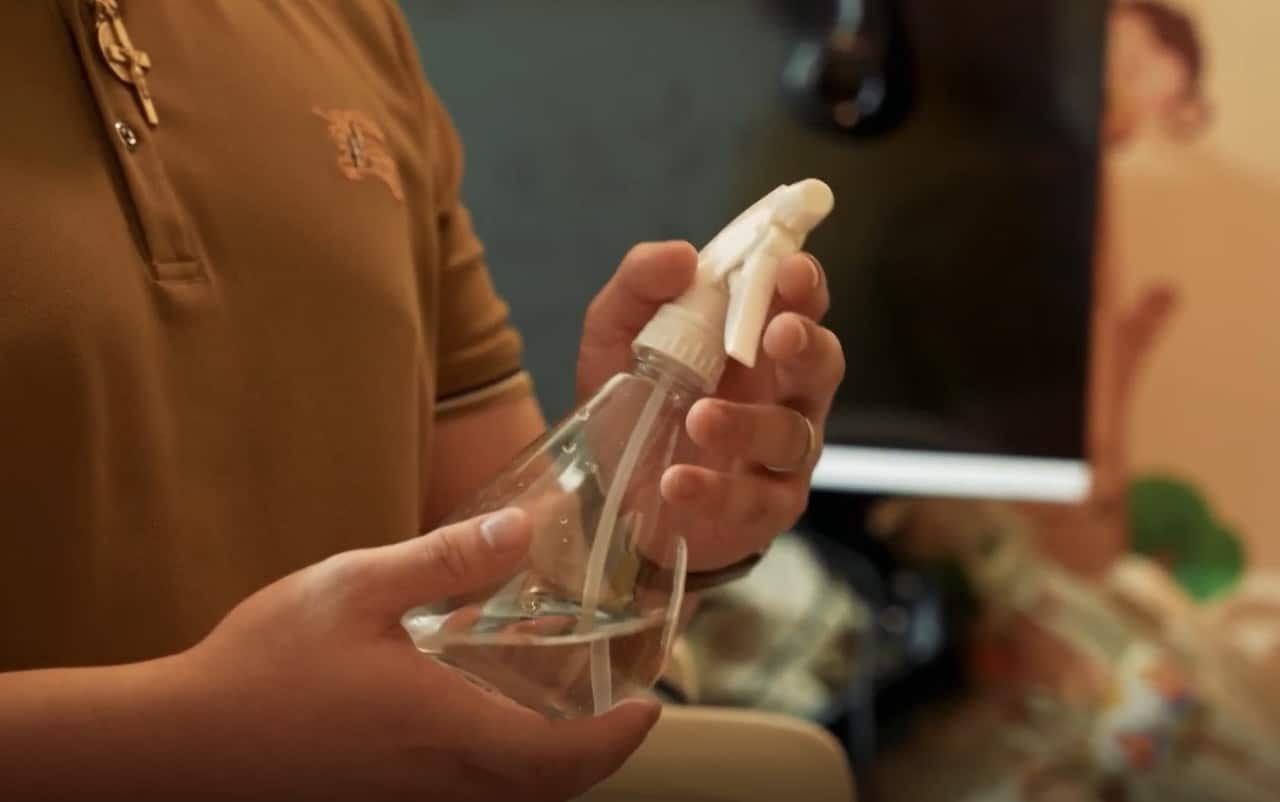
When a visitor steps through the front door of Mary Rose's home in Manila, they're greeted with a warm welcome and a spray of holy water.
This has become a habit for Mary Rose, who's a devout Catholic. The water has been blessed by a priest, and she believes it will protect people from evil spirits.
"We do that often, even with our family members," Mary Rose says.
News that makes sense
Your trusted source for staying up-to-date with the world around you. Get free daily news updates and analysis, straight to your inbox.
As with many people in the Philippines, faith is woven deeply into her daily life. More than 78 per cent of Filipinos identify as Roman Catholic, making it Asia's largest Catholic nation.
Mary Rose is deeply devoted to her faith. But over the last few years, it has been repeatedly tested. She believes she is a victim of possession — that evil spirits take control of her body.
Her home is full of Catholic symbols: a large poster of Jesus hangs above a table, where a crucifix and a small statue of the Virgin Mary are on display.
There's also a handbook of deliverance prayers, which followers of Catholicism recite when they're seeking protection from dark forces. Mary Rose opens it every day, convinced dark forces have possessed her.
Why Mary Rose believes she is possessed
According to Mary Rose, she hears voices and can lose control of her body at any time.
"Something inside me is getting angry," she says.
"I'm getting angrier and angrier and it feels like I just want to hurt everybody."
In situations like this, her husband Theos doesn't call for medical help. Instead, he starts to pray.
This has become routine over the past two years, with Theos describing the family's ordeal as "a horror movie".
Mary Rose has undergone 10 exorcisms in two years in the hope of ridding her body of what she calls 'demonic forces'.
Her priest and Manila's chief exorcist, Father Jose Francisco "Jocis" Syquia, says exorcisms are on the rise across the Philippines, with the country's 200 Catholic exorcists struggling to keep up with demand.
Exorcisms are officially recognised by the Catholic church and continue to be practised to this day, including in Australia.
Jocis' fellow priests also say demand for exorcisms is rising. During a private meeting with Pope Leo XIV in March, representatives from the International Association of Exorcists — which trains priests to perform exorcisms — warned of "increasingly widespread" cases across the world.
During one incident where she believes she was possessed, Mary Rose tried to choke her two young daughters.
"Life is very tough, you know, fighting the devil," she says.
"It's difficult not to lie, it's difficult not to steal. It's difficult not to fight with my husband or it's difficult not to curse my children."
Exorcisms in schools
Mary Rose is not alone in her experience. Exorcism extends beyond homes and churches across the Philippines — it also occurs in schools.
At a school about 90km from Manila, students were forbidden from entering a locked classroom after four teenage girls started convulsing and speaking in tongues inside the room.
Two weeks earlier, students say they witnessed a similar "mass demonic possession" affecting 20 children. But instead of calling a doctor or an ambulance, the principal called in a priest.
Life is very tough, you know, fighting the devilMary Rose
What exorcism involves
Jocis performs at least two exorcisms a day, and each intervention can last hours. Those being exorcised must sometimes be held down by church volunteers as they scream, cry, kick and vomit.
Jocis estimates he has performed thousands of exorcisms over the past two decades.
"When the devil attacks, he has certain patterns and we have seen that again and again," he says.
He also says the majority of people who need exorcisms are teenagers. There's a gender split too — Jocis estimates 75 per cent of his cases are women.
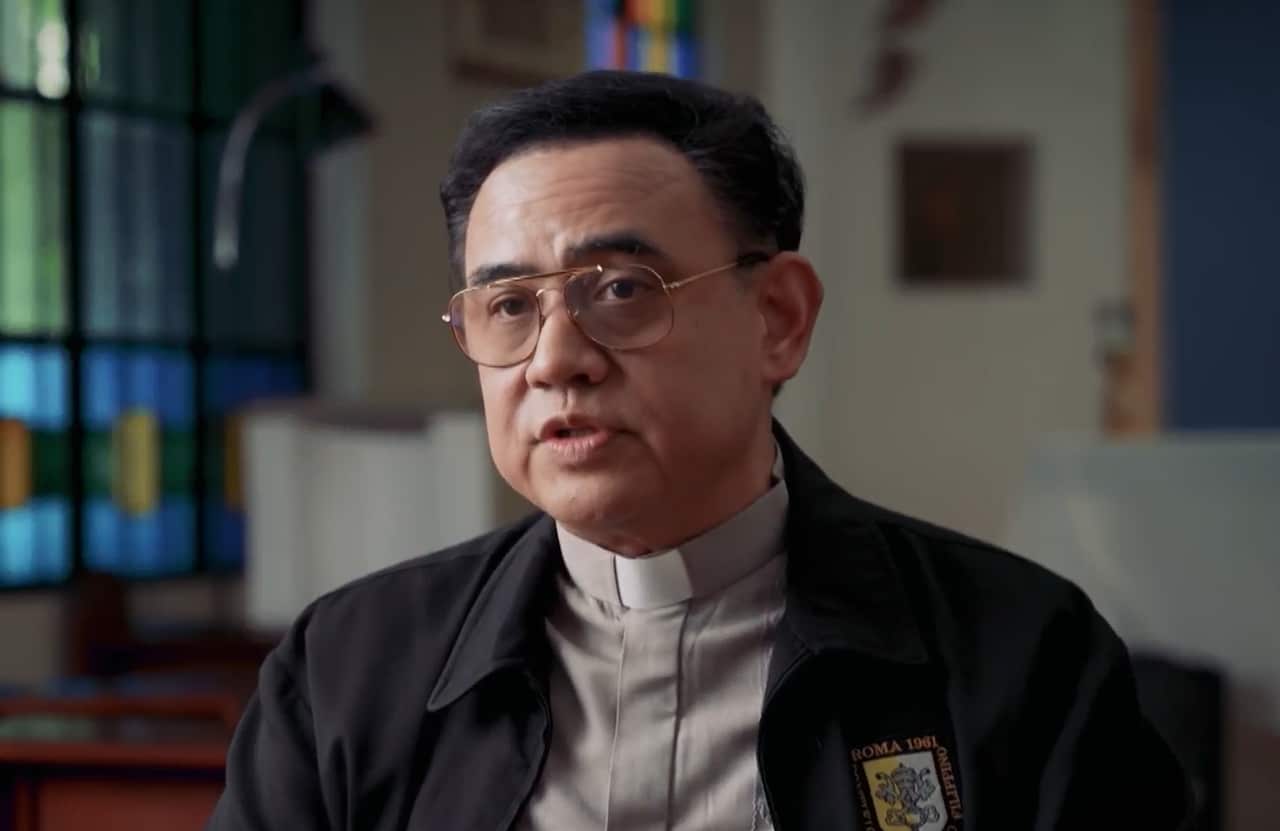
Exorcisms are regulated by the Vatican, which says they must be performed free of charge. Health professionals are also required to assess cases before any spiritual intervention is considered.
In 1999, the Vatican revised its guidelines for the first time in 400 years, adding that the exorcist should consult "with experts in medical and psychiatric science".
"If there are indications that it's more or less psychological, then we tell them to go to psychiatrists or psychologists," Father Jocis says.
Father Jocis holds a master's in psychology and says both science and spirituality can help people.
"You cannot separate the body from the soul or the spirit," he says.
"Usually, the doctors are the ones who say [I think] you'd better call a priest."
Mary Rose says she had a difficult childhood, and Jocis suspects childhood trauma has made her vulnerable to demonic attacks.
Psychology versus spirituality
The Philippines is experiencing a severe shortage of psychologists, with fewer than 3,000 registered psychologists in a country of more than 115 million people.
Dr Hazel Malazarte is one of them. She's worried about people turning to exorcisms as a solution to their problems.
Mary Rose has attended counselling sessions with volunteer psychologists at her local church, but she hasn't been given any formal diagnosis. However, she feels the sessions have helped her accept her past.
Watching footage of Mary Rose's most recent exorcism, Malazarte suspects there is a medical explanation for her extreme behaviour: dissociative trance disorder.
It's a mental health condition in which a person can enter an altered state of consciousness and lose awareness of their identity and surroundings. Medical experts say psychological trauma and stress can trigger the disorder.
During the exorcism, Mary Rose vomited — a very common occurrence sometimes considered a sign of a demon leaving the body. Malazarte thinks there may be another reason.
"Her caseworker decided to put [the rubbish bin] to her face and by default, she would react [and] vomit," she says.
"I believe that she might be mirroring certain practices deemed acceptable by the societal norm because this is the only way that she can process what has been happening to her."
Medical conditions mistaken for demonic possession
Malazarte says serious psychiatric and neurological conditions like schizophrenia, epilepsy and bipolar disorder can be mistaken for demonic possession, especially in a country where faith and superstition run deep.
Most people living with such conditions never receive a diagnosis, with the World Health Organization estimating in 2020 that fewer than one in five Filipinos with schizophrenia receive appropriate treatment. It's even less for illnesses such as epilepsy and bipolar disorder.
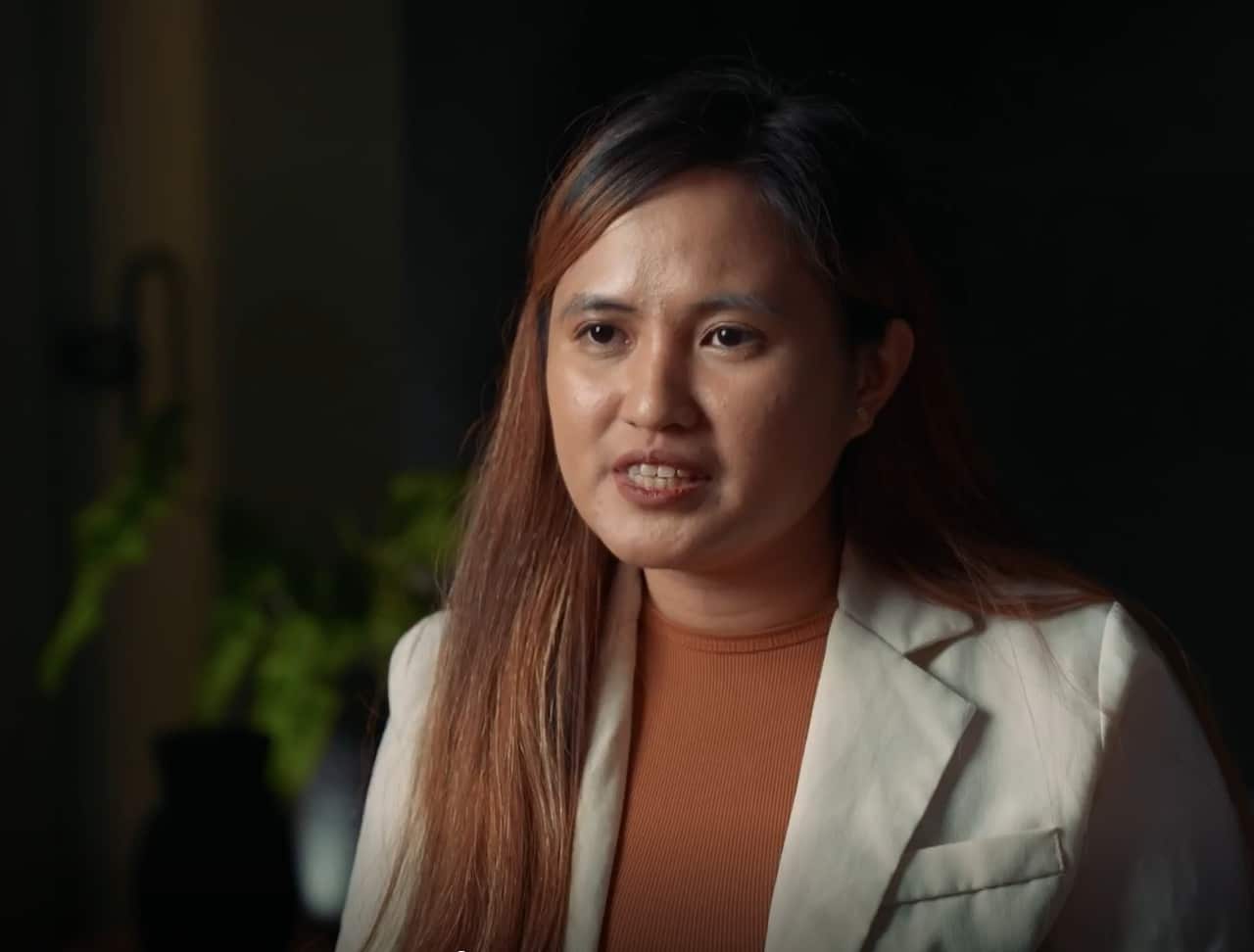
"Some cases are very complex," Malazarte says.
"I do believe there's a lot of room for error in misdiagnosing."
She warns people may delay seeking medical treatment while pursuing spiritual intervention.
"I think that could be very traumatising for the person," she says.
"It can make them a lot worse, because the provision of proper care is delayed."
But for Mary Rose, the spiritual path still feels like her only hope. After enduring her eleventh exorcism, she's exhausted but relieved — and hopes this time will be the last.
"It feels like a heavy weight is lifted again. It feels like this is my second chance to live."
Watch your favourite Dateline episodes around the clock on SBS On Demand's dedicated Dateline channel. For the latest from SBS News, download our app and subscribe to our newsletter.

Dateline is an award-winning Australian, international documentary series airing for over 40 years. Each week Dateline scours the globe to bring you a world of daring stories. Read more about Dateline

Have a story or comment? Contact Us







