
Watch Nepal's Gen Z Uprising on Tuesday 10 March at 9.30pm AEDT on SBS and SBS On Demand.
Shantanu Dhakal is only now telling his story. That's because for months, a tracheostomy tube in his throat allowed him to breathe, but not to talk.
For the schoolboy, slowly recovering from a bullet to the jaw — fired by police during Nepal's gen Z uprising in September — the tube's removal just days before his interview with SBS Dateline at his rural home in Nepal was a milestone.
"A very proud moment," says his father, Mahesh Dhakal, who has been doubtful his 18-year-old son would ever be able to speak again.
Shantanu's road to recovery, however, is far from over.
News that makes sense
Your trusted source for staying up-to-date with the world around you. Get free daily news updates and analysis, straight to your inbox.
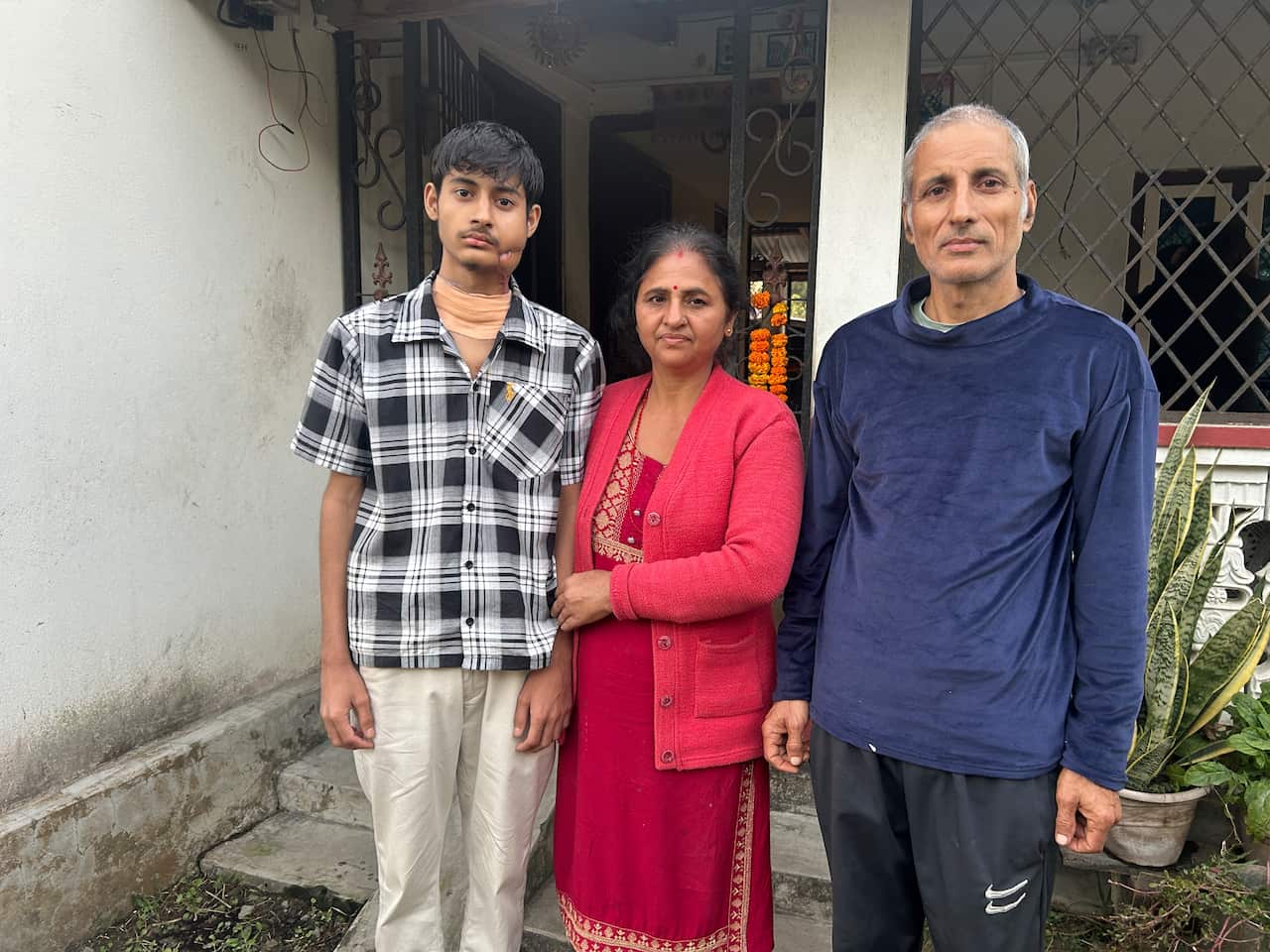
Shantanu's treatment to this point is temporary; a patch job, if you will, to cover the gaping hole the bullet made in his left cheek.
He says a new jaw needs to be fashioned out of bone from his leg, and extensive, remedial plastic surgery is required.
The family doesn't know if Nepal has the capacity to perform the treatment. They certainly don't have the money for it.
Nepal's gen Z uprising
Shantanu was shot in the face on 8 September 2025, in the eastern city of Itahari, when he and some school friends attended their first protest.
That day, in cities and towns across the country, young people flooded the streets demanding a better future.
The spark for the widespread uprising was a social media ban on 26 platforms, including Facebook, Instagram, WhatsApp, and YouTube, imposed by Nepal's government after the tech giants refused to sign up to restrictive regulations. Tech companies would have been required to register with the Nepali government and to moderate certain content.
The government's push to control social media followed the viral #NepoBaby trend, where images of the children of Nepal's politicians and the elites enjoying lavish lifestyles were juxtaposed against images of local poverty.
Critics say the government's social media ban was an attempt to quash the "nepo baby trend", which they say was essentially an anti-corruption campaign.
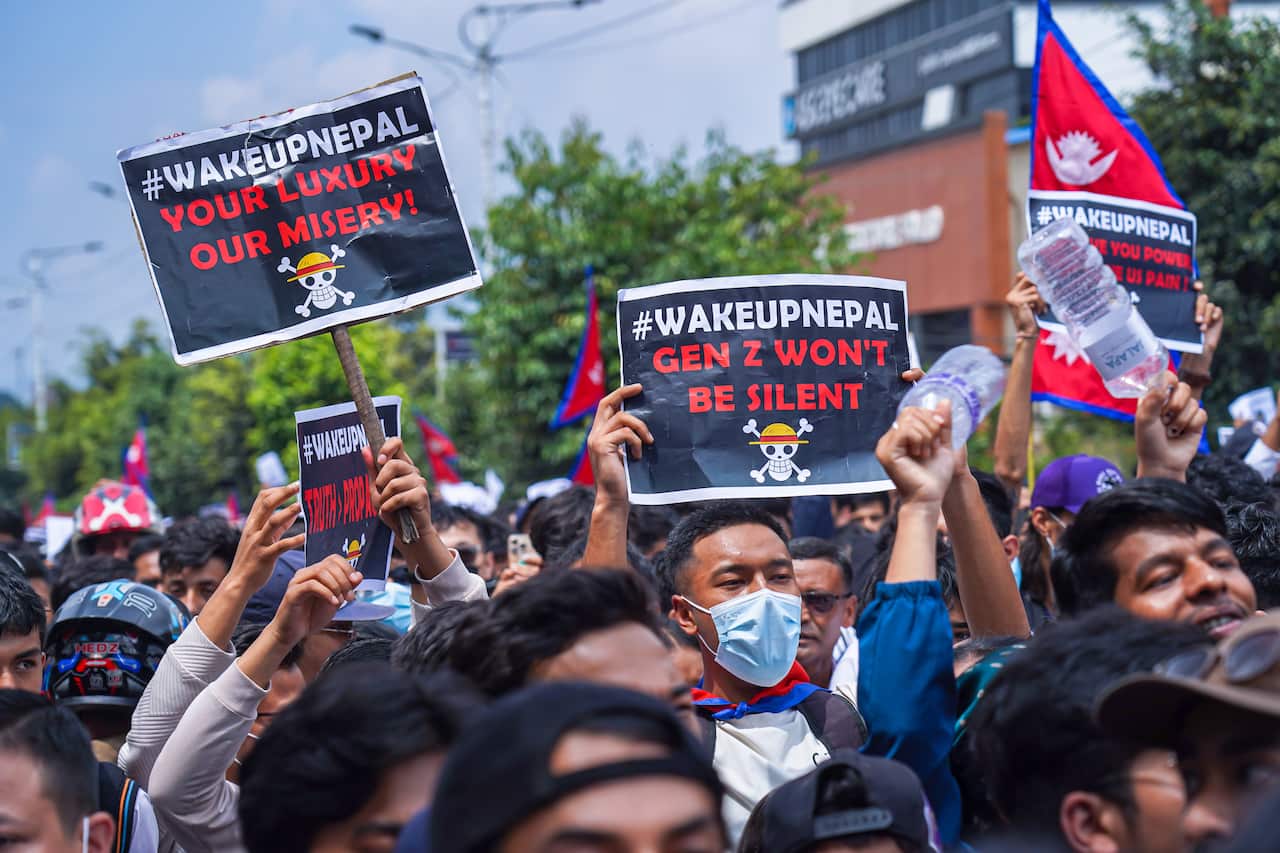
But when gen Z protesters took to the streets that day, access to Instagram and TikTok wasn't their core issue; instead, they came out denouncing corruption and poor governance.
How the uprisings escalated
Security forces responded to the protests with violence. At least 19 people were killed in the clashes and more than 100 were injured.
Shantanu never saw the police officer who shot him.
The next day, on 9 September, public outrage over the young deaths and injuries saw the protests swell beyond the gen Z demographic.
Government buildings and police stations across the country were torched.
A total of 76 people were killed and more than 2,000 were injured in the two days of unrest.
The government of then-prime minister KP Sharma Oli reversed the social media ban and resigned. An interim government, led by former chief justice Sushila Karki, was tasked with holding elections on 5 March.
In Nepal, around 46 per cent of the population is under the age of 24, making them a significant voting bloc.
The interim government also opened a public inquiry into violence, which is ongoing. It announced that compensation would be paid to the killed protesters, and free treatment would be provided to the injured.
Shantanu says he's been issued a gen Z victim ID card and compensated for 20,000 rupees (about $194).
Mahesh, his father, says their hospital expenses are about 50,000 rupees (around $485) and counting.
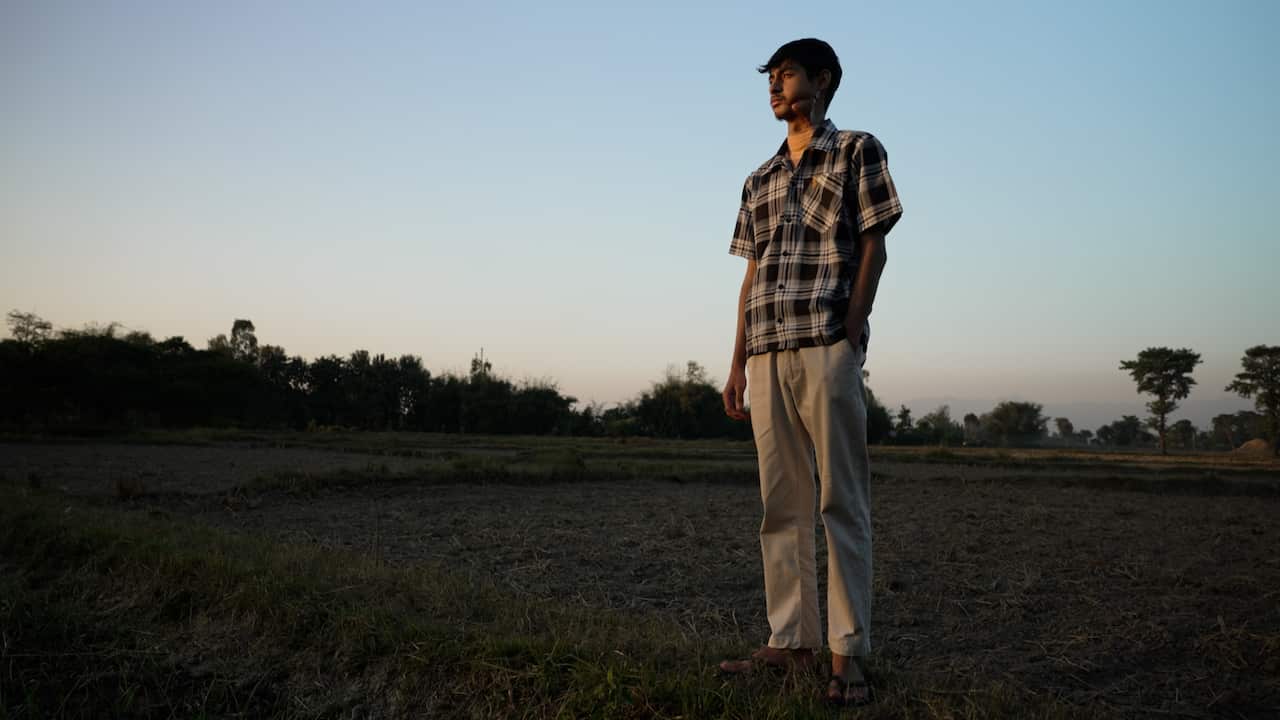
And his mother, Premkala, says the compensation so far "is nothing".
"He's now disabled," she says of the couple's only son.
"He can't really do physically demanding tasks. See, we are farmers; we toil in the fields. He's now not capable of such work."
Gen Z's continued fight for change
For gen Z activist turned political aspirant Kishori Karki, the fight that started on the streets in September is not over.
Like Shantanu, her experience at the protests was blood-soaked. She rescued a shot protester in Kathmandu by driving him to safety on a motorbike. Video of the rescue then went viral.
Today, the 26-year-old is among the few young protesters seeking to become elected politicians. In the country's 5 March elections, she ran in her home village of Okhaldhunga.
"I'll keep knocking on the door, keep prodding. That's why I entered politics," she says.
She has visited injured protesters, both those still in hospital and others, like Shantanu, who are finally home, and champions their cause.
In a social media video recorded with Shantanu, she questions the interim government: "When an 18-year-old gets shot like this, and he has to bear all the expenses himself, then what kind of government is this? This is shameful."
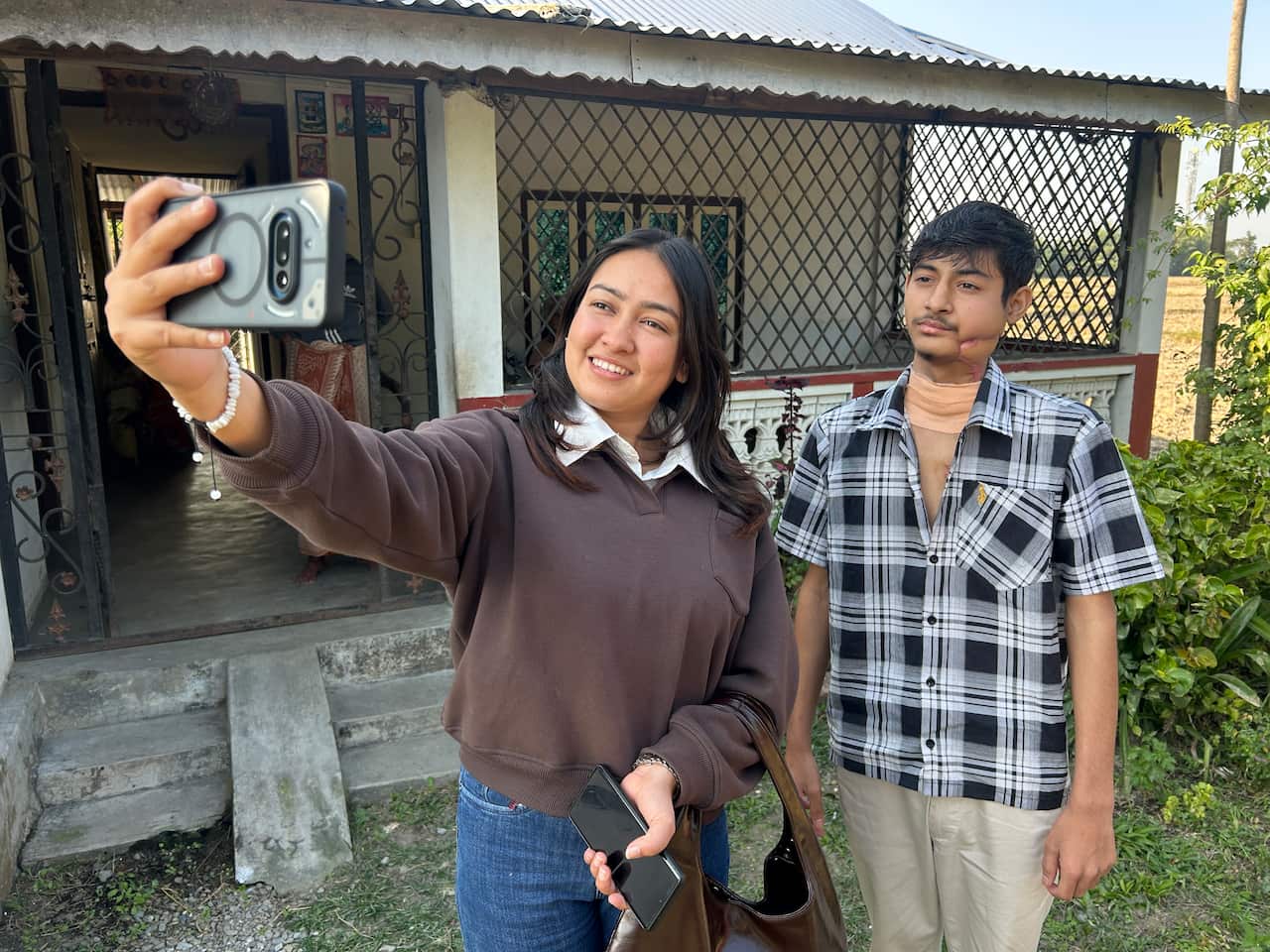
Kishori has called on the interim government to sign an agreement with Shantanu and his family.
"Only when their demands are met can we move forward," she says.
The question of who will pay for Shantanu's face reconstruction will fall to the soon-to-be-elected government.
A newcomer party — Rastriya Swatantra Party (RSP) — with former rapper Balendra Shah as its main candidate is heading toward a landslide victory in Nepali elections, according to early results on Sunday.
For Shantanu, the daily, painful ritual of cleaning the temporary skin graft patch on his face endures, as do two questions that circle through his mind:
"What happened to me? What will happen to my future?"
Watch your favourite Dateline episodes around the clock on SBS On Demand's dedicated Dateline channel. For the latest from SBS News, download our app and subscribe to our newsletter.

Dateline is an award-winning Australian, international documentary series airing for over 40 years. Each week Dateline scours the globe to bring you a world of daring stories. Read more about Dateline

Have a story or comment? Contact Us







