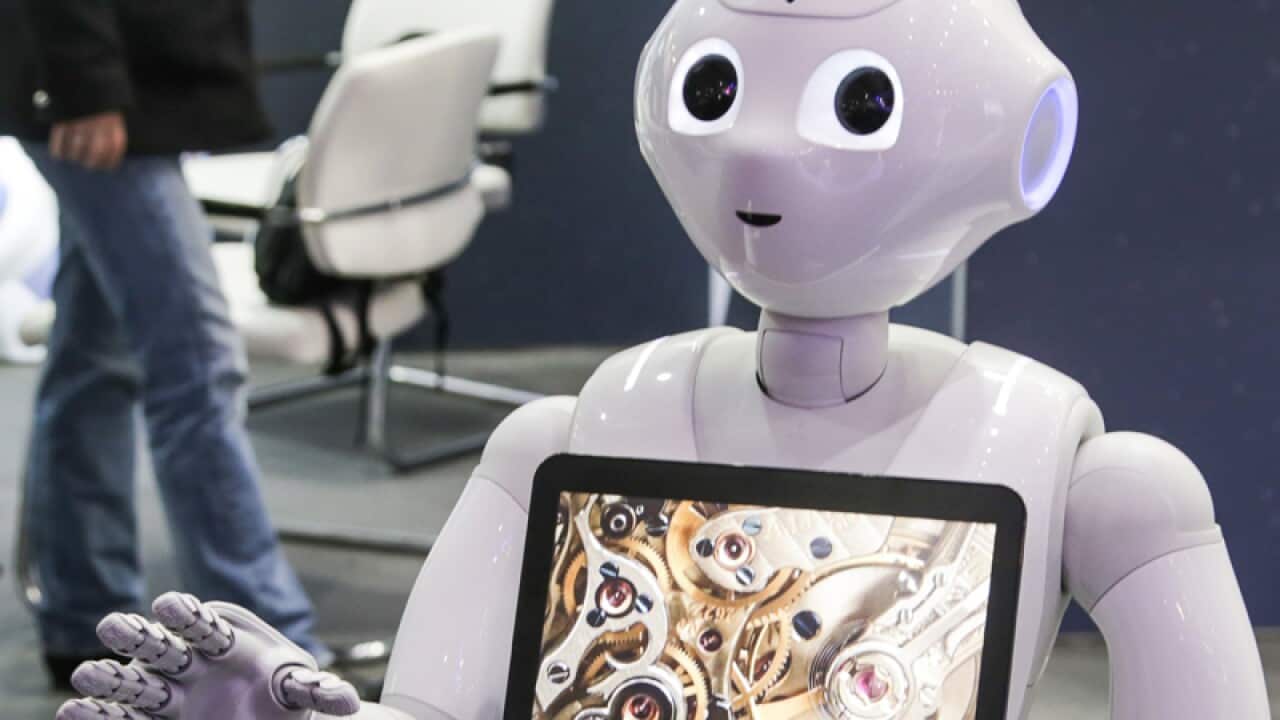
Jobs will change rather than disappear over the next decade as robots are increasingly used in the world of work, a study says.
Up to one-third of existing jobs could face automation by the early 2030s but new Artificial Intelligence technologies could boost production and generate more jobs, PwC says.
Its analysis found the UK has fewer jobs at potential risk of automation than in other countries including Germany, the US and Japan.
Dateline: Robot Love in Japan
News that makes sense
Your trusted source for staying up-to-date with the world around you. Get free daily news updates and analysis, straight to your inbox.
Jobs in transportation and storage, manufacturing and retail are most likely to be automated, while the lowest risks are in education, health and social work, the report said.
PwC's chief economist in the UK, John Hawksworth, said a key driver of the industry-level estimates was the fact that manual and routine tasks were more susceptible to automation, while social skills were relatively less so.
"That said, no industry is entirely immune from future advances in robotics and AI," he said.
"Automating more manual and repetitive tasks will eliminate some existing jobs but could also enable some workers to focus on higher-value, more rewarding and creative work, removing the monotony from our day jobs."
"By boosting productivity, a key UK weakness over the past decade, and so generating wealth, advances in robotics and AI should also create additional jobs in less automatable parts of the economy as this extra wealth is spent or invested."

Dateline is an award-winning Australian, international documentary series airing for over 40 years. Each week Dateline scours the globe to bring you a world of daring stories. Read more about Dateline

Have a story or comment? Contact Us







