
Air bubbled through the surface of the water making it look like boiling lava, then slowly a head emerged through the bubbles, then a face, a thin plastic tube clenched between his teeth.
It was 16-year-old Gerald and he had been 30 feet below the surface for three hours, compressed air forced into his lungs by an old petrol-driven pump.
We are on the far east coast of the Philippines’ main island of Luzon, Asia’s Gold Coast, filming for Dateline.
Gerald had been down there chiselling away at a seam of gold bearing rock in a narrow cavern under the river, neck deep in water.
News that makes sense
Your trusted source for staying up-to-date with the world around you. Get free daily news updates and analysis, straight to your inbox.
“I do get afraid,” he tells me, very quietly spoken. “It’s hard chiselling and I fear the earth collapsing and getting caught underneath.”
Gerald is involved in what’s called compressor mining – a form of searching for gold where the miners hold the compressor hose in their teeth, descend 30 or more feet into the completely submerged mine shafts and hack away searching for tiny specks of gold.
If the tube gets blocked, twisted or broken, the air stops and the miner suffocates and drowns. Children are often used as their lungs have not yet been damaged by exhaust fumes sucked into the tubes.
It’s so dangerous it has been specifically banned in the Philippines, yet there is little sign of enforcement.
The authorities tell us they feel they need to turn a blind eye to compressor mining, as there is no alternative for the miners to make money to feed their families.
The local Mayor tells me they try to intervene but more and more children are forced into gold mining to help their fathers earn just enough to feed their families. There are 15,000 miners in this region alone.
I had seen some pictures of compressor mining, but I was not prepared for the level of danger to these men and children once I was there.
It was bad enough when I was on the bamboo and palm leaf rig used by the teams to dive from into the depths below the river surface.
To see them disappear beneath the surface into the gloom was much worse.
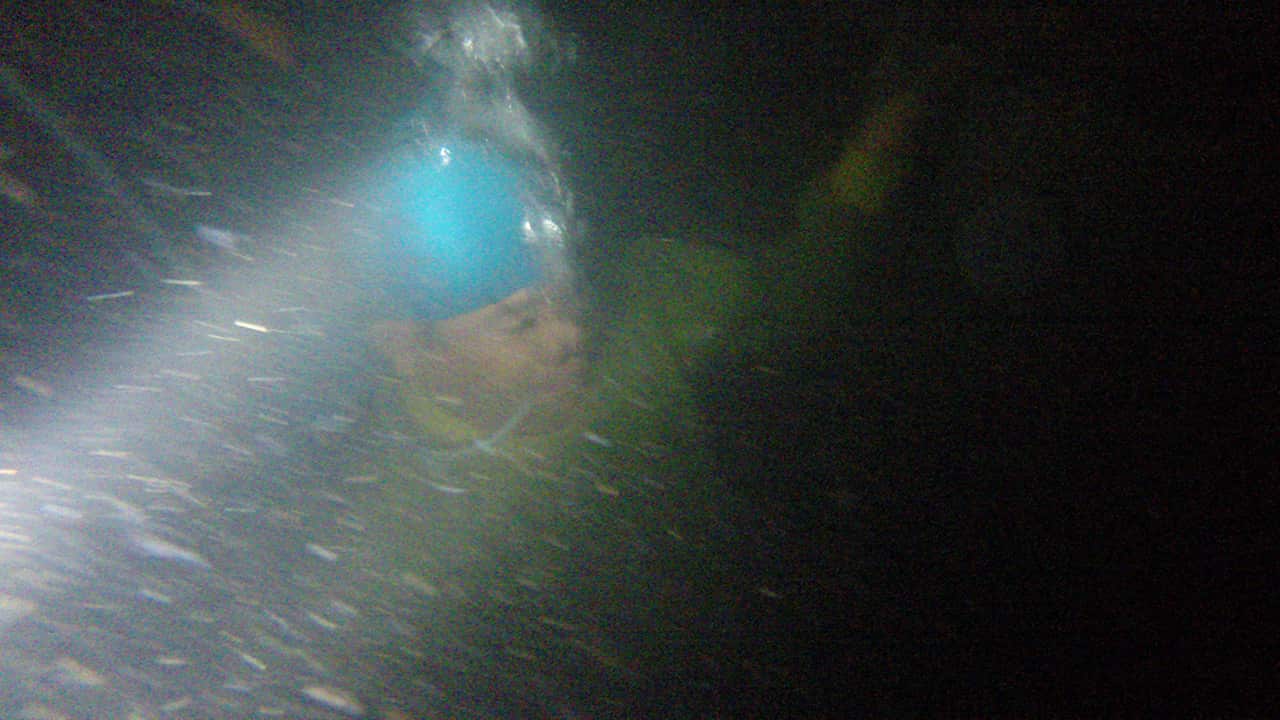
But then Gerald and two other miners said they’d be happy to put small go-pro cameras on their heads and go down the flooded shaft so we could see the conditions they work in.
The cameras were strapped firmly to their heads so they did not interfere with their work or make it any more dangerous. They were happy to take the cameras down there to help show people what it’s like.
The images we got back are some of the most haunting pictures I have seen.
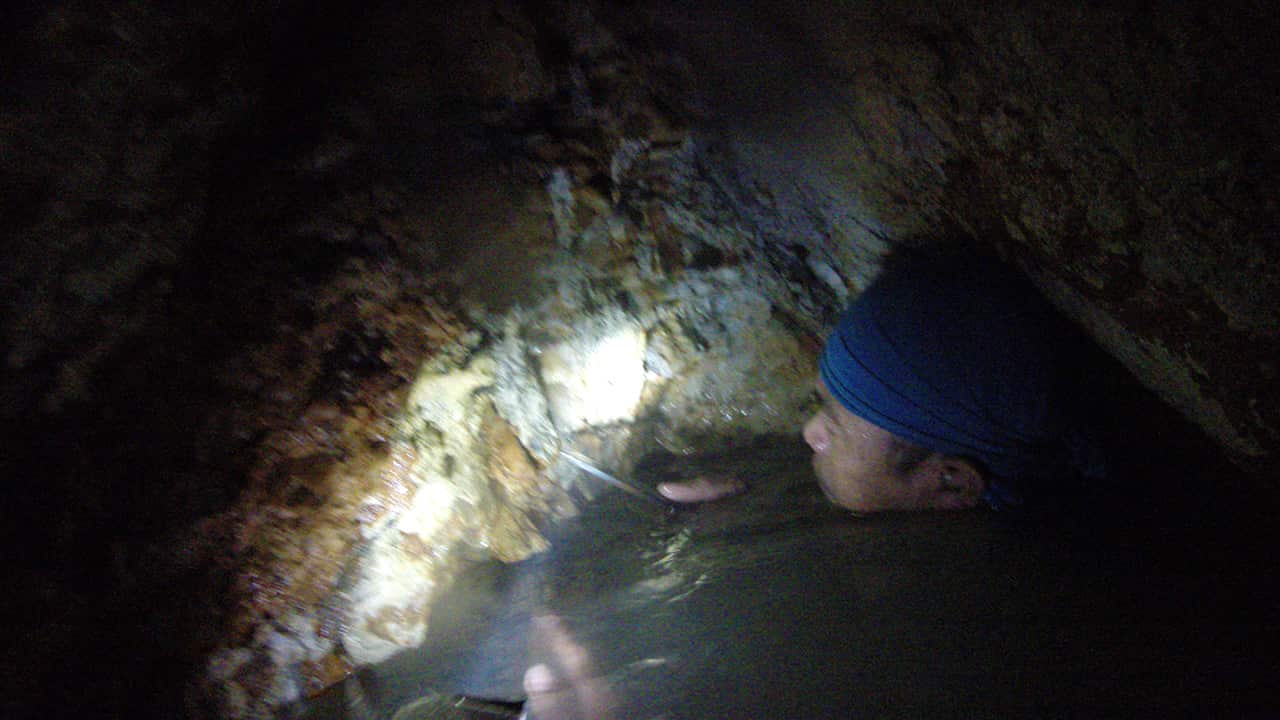
We follow Gerald’s face as he dives deeper in the gloom, pushing himself down the narrow bamboo walls of the mine shaft, the tube between his teeth the only lifeline of air pumped from the surface.
For this he earns not more than a few dollars a day, but he does it to help feed his five younger brothers and sisters. He doesn’t do it every day but is here enough to know the risks.
As he gets deeper the water turns to black, the sounds eerie. Once he reaches the bottom he swims a further 20 feet under the river bank and emerges in a small cavern neck deep in water.
Here Gerald and the other men chisel the seam of gold bearing rock, filling bags that are then hauled to the surface by the same men watching their air tubes.
The rocks are scoured for even the tiniest speck of gold to be processed with mercury – a poisonous metal causing brain and organ damage especially in children.
The gold is then largely sold to brokers who repress the process to increase their profits. They sell largely on the black market to avoid taxes and much of the gold goes to China and then the rest of the world.
Many of the children we met work in gold mining because it helps their fathers almost double what they can earn. Without them they can’t afford to feed and school their large families.
But poverty creates a vicious cycle. The search for gold means many children are missing their education and without an education they remain trapped in a cycle of poverty... and danger.
See Evan's story in full here:
More

Dateline is an award-winning Australian, international documentary series airing for over 40 years. Each week Dateline scours the globe to bring you a world of daring stories. Read more about Dateline

Have a story or comment? Contact Us







